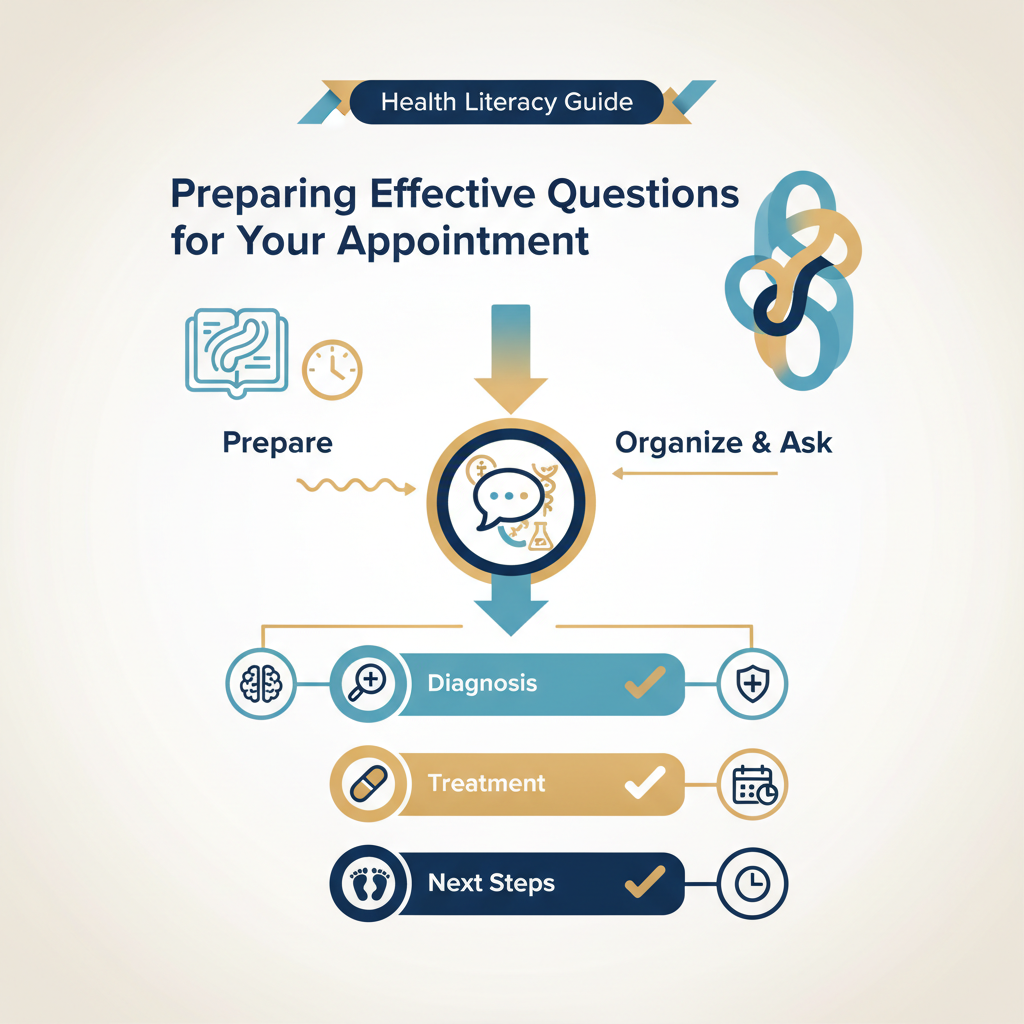
Health Literacy Guide: Preparing Effective Questions for Your Appointment

تعزيز الثقافة الصحية: كيف تستعد لموعدك الطبي بأسئلة فعالة ومدروسة

Author: Feras Alayed - Therapeutic & Behavioral Nutrition Specialist

Published:

Updated:

Category: appointment-questions-gulf

Reading Time: 8 minutes

Empowering Health Literacy: How to Prepare for Your Medical Appointment with Effective Questions

Health literacy is the cornerstone of building a conscious society capable of effectively managing its quality of life. At ATHAR Center, we believe that the patient is not just a recipient of service, but a fundamental partner in the health process. Preparing in advance for a medical appointment is not merely an organizational procedure; it is an investment in your time and health, ensuring you gain the maximum possible benefit from the specialist's expertise. When you enter the clinic armed with the right information and precise questions, you contribute to reducing the chances of misunderstanding and accelerate the process of reaching a clear action plan.

1. The Importance of Pre-Appointment Preparation in Enhancing Personal Health Literacy

Preparing for a medical appointment is the first step toward health empowerment. Often, visitors feel confused or forgetful as soon as they enter the examination room, leading to missed opportunities to ask essential questions. Pre-preparation helps organize thoughts and identify health priorities, making the dialogue with the specialist more focused and profound. Possessing high health literacy means the ability to access, understand, and use health information to make informed decisions, and this starts at home before heading to the health center.

When you dedicate time to writing down your concerns and recent health history, you build a bridge of effective communication with the medical team. This approach reduces the stress associated with appointments, as you feel in control and ready for discussion. Additionally, preparation helps ensure that minor symptoms, which might be key to understanding the broader picture of your condition, are not overlooked. Health literacy is not just about knowing diseases; it is about how to manage interaction with the health system efficiently, which good preparation achieves.

Good preparation for a medical appointment transforms the visit from a mere passing consultation into an interactive educational session that enhances your awareness of your body and its needs.

2. Understanding Basic Medical Terminology: How to Request Clarification of Complex Concepts

Medical language sometimes represents a barrier to a full understanding of one's health status. Terms like "chronic," "acute," "idiopathic," or "physiological response" may seem complex to the average visitor. Enhancing health literacy requires the courage to ask for simplification. Never hesitate to say: "Could you explain this term in simpler language?" or "What does this mean for my daily life?". The goal of the appointment is mutual understanding, and specialists appreciate the visitor who seeks deep comprehension.

One effective technique in this context is the "Teach-back method," where you explain what you understood in your own words to the specialist to ensure the accuracy of the information. For example, you could say: "So, what you mean is that I should do (this) because (that), is my understanding correct?". This ensures the removal of any ambiguity in technical terms. It is also always preferable to ask to write down key terms on a separate piece of paper to research later in reliable sources, which enhances your health knowledge base and makes you more capable of following your condition in the future.

3. The Methodology of Journaling Health Habits for Accurate Sharing with the Specialist

Accuracy in conveying information is the key to correct diagnosis and precise recommendations. Relying on memory alone can be misleading, especially when talking about recurring daily habits. Journaling health habits for a week before the appointment provides objective data for the specialist. This journal should include sleep patterns, the quality and quantity of meals, physical activity levels, and any stress triggers or mood changes. Any physical symptoms should also be recorded with their timing, duration, and intensity.

Using a simple table or a note-taking app can reveal patterns that you might not notice in passing. For example, you might discover that your feeling of lethargy is linked to a certain type of food or a lack of sleep on specific days. When sharing this data with the specialist, you provide them with a comprehensive view of your lifestyle, helping them offer customized advice that fits your daily reality rather than general tips. This methodology enhances your sense of responsibility toward your health and makes you more aware of the impact of your daily behaviors on your well-being.

4. Formulating a List of Questions Related to Understanding General Recommendations and Next Steps

To achieve maximum benefit, your questions should be strategic and forward-looking. Instead of closed questions that can be answered with "yes" or "no," use open-ended questions starting with "how" and "why." It is important that your list includes questions about the short-term and long-term goals of the recommendations provided. For example: "What expected changes should I notice in the coming weeks?" or "What is the next step if we don't see the desired improvement?".

Also, focus on understanding the "why" behind each recommendation. Understanding the reason increases adherence to the health plan. Ask about available alternatives and how to integrate new recommendations into your busy schedule. The list of questions should be written and arranged by importance to ensure the most pressing issues are raised first if appointment time is limited. Remember that your role is to inquire about everything related to your health, and there is no "simple" or "unimportant" question when it comes to understanding how to better care for your body.

5. Methods for Evaluating Health Information Derived from Digital Sources Before the Appointment

In the era of digital openness, many turn to search engines before visiting a doctor. While this reflects an interest in health, it can lead to unnecessary anxiety due to inaccurate or disproportionate information. To enhance your health literacy, you must learn how to evaluate sources. Always look for websites affiliated with international health organizations, academic universities, or recognized specialized centers. Avoid relying on public forums or social media posts that lack scientific attribution.

When you find information that interests or worries you, write it down and discuss it with the specialist during the appointment. You can say: "I read about (a certain topic) in a reliable source, how does this apply to my case?". This approach transforms digital information from a source of stress into a tool for scientific dialogue. The specialist can help you filter this information and clarify what is relevant to your specific case and what is just general or incorrect information. Remember that a digital diagnosis never replaces a direct clinical evaluation.

6. Skills for Reading Labels and Instructional Guidelines with Clarity and Accuracy

A fundamental part of health literacy is the ability to understand food labels and instructions attached to health products or supplements. Before the appointment, it might be helpful to bring samples or photos of the products you use regularly. Learning to read the ingredients list and understanding serving sizes helps you ask precise questions about the suitability of these products for your health plan. Pay attention to misleading terms and look for clear nutritional facts.

Also, understanding usage instructions, such as "take before eating" or "store in a cool, dry place," is vital. If you find difficulty understanding the symbols or tables on labels, make this part of your discussion with the specialist. Ask them to clarify how to read this data and what elements you should focus on based on your specific health needs. Mastering the skill of reading labels gives you greater independence in making smart daily health choices and protects you from inaccurate marketing claims.

7. Practical Tips for Note-Taking During the Appointment to Ensure Accurate Home Follow-up

Information fades quickly after leaving the clinic, so taking notes during the appointment is a necessary practice to ensure continuity. Do not rely on your memory alone; carry a special notebook or use the notes app on your phone. Record key points, upcoming appointments, and any lifestyle changes agreed upon. If the specialist speaks quickly, politely ask them to pause for a moment so you can write, or ask if you can record parts of the dialogue (after asking for permission, of course).

At the end of the appointment, dedicate two minutes to review your notes with the specialist to ensure you have recorded everything accurately. Ask them to review the "action plan" you have written down. These notes will be your primary reference at home and will help you explain your condition to family members or any other specialist you might see in the future. Note-taking reflects the visitor's seriousness and keenness to implement recommendations, which builds a relationship of trust and mutual respect with the medical team and ensures the best possible health outcomes.

Educational Checklist for Appointment Preparation

ItemAction RequiredDone?
Symptom ListNote when they started, severity, and what improves or worsens them.
Health HistoryPrepare a list of any previous or current health conditions.
Current ProductsWrite down the names of all supplements and health products currently used.
Key QuestionsPrepare 3-5 fundamental questions you want answers to.
Recording ToolsBring a pen and paper or ensure your phone is charged for note-taking.

Related ATHAR paths

Feel Great products - appointment-questions-gulf context

Explore health education step by step

Use the educational guides and practical tools to choose your next learning step.

تعزيز الثقافة الصحية: كيف تستعد لموعدك الطبي بأسئلة فعالة ومدروسة

تعد الثقافة الصحية حجر الزاوية في بناء مجتمع واعي وقادر على إدارة جودة حياته بشكل فعال. في مركز ATHAR، نؤمن بأن المريض ليس مجرد متلقٍ للخدمة، بل هو شريك أساسي في العملية الصحية. إن التحضير المسبق للموعد الطبي ليس مجرد إجراء تنظيمي، بل هو استثمار في وقتك وصحتك، يضمن لك الحصول على أقصى فائدة ممكنة من خبرة المختص. عندما تدخل العيادة وأنت مسلح بالمعلومات الصحيحة والأسئلة الدقيقة، فإنك تساهم في تقليل احتمالات سوء الفهم وتسرع من عملية الوصول إلى خطة عمل واضحة.

1. أهمية التحضير المسبق للموعد الطبي في تعزيز الثقافة الصحية الشخصية

يعتبر التحضير للموعد الطبي الخطوة الأولى نحو التمكين الصحي. في كثير من الأحيان، يشعر المراجعون بالارتباك أو النسيان بمجرد دخول غرفة الفحص، مما يؤدي إلى ضياع فرصة طرح استفسارات جوهرية. التحضير المسبق يساعد في تنظيم الأفكار وتحديد الأولويات الصحية، مما يجعل الحوار مع المختص أكثر تركيزاً وعمقاً. إن امتلاك ثقافة صحية عالية يعني القدرة على الوصول إلى المعلومات الصحية وفهمها واستخدامها لاتخاذ قرارات مدروسة، وهذا يبدأ من المنزل قبل التوجه إلى المركز الصحي.

عندما تخصص وقتاً لكتابة مخاوفك وتاريخك الصحي القريب، فإنك تبني جسراً من التواصل الفعال مع الفريق الطبي. هذا النهج يقلل من التوتر المصاحب للمواعيد، حيث تشعر بأنك مسيطر على الموقف ومستعد للنقاش. بالإضافة إلى ذلك، يساعد التحضير في ضمان عدم إغفال الأعراض البسيطة التي قد تكون مفتاحاً لفهم الصورة الأشمل لحالتك. الثقافة الصحية لا تتعلق فقط بمعرفة الأمراض، بل بكيفية إدارة التفاعل مع النظام الصحي بكفاءة، وهو ما يحققه التحضير الجيد.

إن التحضير الجيد للموعد الطبي يحول الزيارة من مجرد استشارة عابرة إلى جلسة تعليمية تفاعلية تعزز من وعيك بجسدك واحتياجاته.

2. فهم المصطلحات الطبية الأساسية: كيف تطلب توضيح المفاهيم المعقدة

تمثل اللغة الطبية أحياناً عائقاً أمام الفهم الكامل للحالة الصحية. المصطلحات مثل "مزمن"، "حاد"، "مجهول السبب"، أو "استجابة فيزيولوجية" قد تبدو معقدة للمراجع العادي. تعزيز الثقافة الصحية يتطلب الجرأة في طلب التبسيط. لا تتردد أبداً في قول: "هل يمكنك شرح هذا المصطلح بلغة أبسط؟" أو "ماذا يعني هذا بالنسبة لحياتي اليومية؟". الهدف من الموعد هو الفهم المشترك، والمختصون يقدرون المراجع الذي يسعى للفهم العميق.

من التقنيات الفعالة في هذا السياق هي تقنية "إعادة الصياغة" (Teach-back method)، حيث تقوم بشرح ما فهمته بأسلوبك الخاص للمختص للتأكد من دقة المعلومة. على سبيل المثال، يمكنك القول: "إذاً، ما تقصده هو أنني يجب أن أقوم بـ (كذا) لأن (كذا)، هل فهمي صحيح؟". هذا يضمن إزالة أي لبس في المصطلحات التقنية. كما يفضل دائماً طلب كتابة المصطلحات الأساسية في ورقة خارجية للبحث عنها لاحقاً في مصادر موثوقة، مما يعزز من مخزونك المعرفي الصحي ويجعلك أكثر قدرة على متابعة حالتك في المستقبل.

3. منهجية تدوين يوميات العادات الصحية لمشاركتها بدقة مع المختص

الدقة في نقل المعلومات هي مفتاح التشخيص الصحيح والتوصية الدقيقة. الاعتماد على الذاكرة وحدها قد يكون مضللاً، خاصة عند الحديث عن عادات يومية متكررة. تدوين يوميات العادات الصحية لمدة أسبوع قبل الموعد يوفر بيانات موضوعية للمختص. يجب أن تشمل هذه اليوميات أنماط النوم، نوعية وكمية الوجبات، مستويات النشاط البدني، وأي محفزات للتوتر أو تغيرات في المزاج. كما يجب تسجيل أي أعراض جسدية مع توقيت ظهورها ومدتها وشدتها.

استخدام جدول بسيط أو تطبيق لتدوين الملاحظات يمكن أن يكشف عن أنماط قد لا تلاحظها بشكل عابر. على سبيل المثال، قد تكتشف أن شعورك بالخمول مرتبط بنوع معين من الأطعمة أو بقلة ساعات النوم في أيام محددة. عند مشاركة هذه البيانات مع المختص، فإنك تمنحه رؤية شاملة لنمط حياتك، مما يساعده على تقديم نصائح مخصصة تتناسب مع واقعك اليومي بدلاً من النصائح العامة. هذه المنهجية تعزز من شعورك بالمسؤولية تجاه صحتك وتجعلك أكثر وعياً بتأثير سلوكياتك اليومية على عافيتك.

4. صياغة قائمة الأسئلة المتعلقة بفهم التوصيات العامة والخطوات القادمة

لتحقيق أقصى استفادة، يجب أن تكون أسئلتك استراتيجية وتركز على المستقبل. بدلاً من الأسئلة المغلقة التي تحتمل الإجابة بـ "نعم" أو "لا"، استخدم الأسئلة المفتوحة التي تبدأ بـ "كيف" و "لماذا". من المهم أن تشمل قائمتك أسئلة حول الأهداف قصيرة وبعيدة المدى للتوصيات المقدمة. على سبيل المثال: "ما هي التغييرات المتوقعة التي يجب أن ألاحظها في الأسابيع القادمة؟" أو "ما هي الخطوة التالية إذا لم نلاحظ التحسن المطلوب؟".

ركز أيضاً على فهم "لماذا" وراء كل توصية. فهم السبب يزيد من الالتزام بالخطة الصحية. اسأل عن البدائل المتاحة، وعن كيفية دمج التوصيات الجديدة في جدولك المزدحم. قائمة الأسئلة يجب أن تكون مكتوبة ومرتبة حسب الأهمية، لضمان طرح القضايا الأكثر إلحاحاً أولاً في حال كان وقت الموعد محدوداً. تذكر أن دورك هو الاستفسار عن كل ما يخص صحتك، ولا يوجد سؤال "بسيط" أو "غير مهم" عندما يتعلق الأمر بفهم كيفية العناية بجسدك بشكل أفضل.

5. طرق تقييم المعلومات الصحية المستمدة من المصادر الرقمية قبل الموعد

في عصر الانفتاح الرقمي، يلجأ الكثيرون إلى محركات البحث قبل زيارة الطبيب. ومع أن هذا يعكس اهتماماً بالصحة، إلا أنه قد يؤدي إلى قلق غير مبرر بسبب المعلومات غير الدقيقة أو غير المتناسبة مع الحالة الفردية. لتعزيز ثقافتك الصحية، يجب أن تتعلم كيفية تقييم المصادر. ابحث دائماً عن المواقع التابعة للمنظمات الصحية العالمية، الجامعات الأكاديمية، أو المراكز المتخصصة المعترف بها. تجنب الاعتماد على المنتديات العامة أو منشورات وسائل التواصل الاجتماعي التي تفتقر إلى الإسناد العلمي.

عندما تجد معلومة تثير اهتمامك أو قلقك، دونها وناقشها مع المختص خلال الموعد. يمكنك القول: "لقد قرأت عن (موضوع معين) في مصدر موثوق، كيف ينطبق هذا على حالتي؟". هذا الأسلوب يحول المعلومات الرقمية من مصدر للتوتر إلى أداة للحوار العلمي. المختص يمكنه مساعدتك في تصفية هذه المعلومات وتوضيح ما هو ذو صلة بحالتك الخاصة وما هو مجرد معلومات عامة أو مغلوطة. تذكر أن التشخيص الرقمي لا يغني أبداً عن التقييم السريري المباشر.

6. مهارات قراءة الملصقات والتعليمات الإرشادية بوضوح ودقة

جزء أساسي من الثقافة الصحية هو القدرة على فهم الملصقات الغذائية والتعليمات المرفقة مع المنتجات الصحية أو المكملات. قبل الموعد، قد يكون من المفيد إحضار عينات أو صور للمنتجات التي تستخدمها بانتظام. تعلم قراءة قائمة المكونات وفهم أحجام الحصص الغذائية يساعدك في طرح أسئلة دقيقة حول مدى ملاءمة هذه المنتجات لخطتك الصحية. انتبه للمصطلحات المضللة وابحث عن الحقائق الغذائية الواضحة.

أيضاً، فهم تعليمات الاستخدام، مثل "يؤخذ قبل الأكل" أو "يحفظ في مكان بارد وجاف"، يعد أمراً حيوياً. إذا وجدت صعوبة في فهم الرموز أو الجداول الموجودة على الملصقات، اجعل هذا جزءاً من نقاشك مع المختص. اطلب منه توضيح كيفية قراءة هذه البيانات وما هي العناصر التي يجب أن تركز عليها بناءً على احتياجاتك الصحية الخاصة. إتقان مهارة قراءة الملصقات يمنحك استقلالية أكبر في اتخاذ خيارات صحية يومية ذكية ويحميكم من الادعاءات التسويقية غير الدقيقة.

7. نصائح عملية لتدوين الملاحظات أثناء الموعد لضمان دقة المتابعة المنزلية

تتلاشى المعلومات بسرعة بعد مغادرة العيادة، لذا فإن تدوين الملاحظات أثناء الموعد هو ممارسة ضرورية لضمان الاستمرارية. لا تعتمد على ذاكرتك فقط؛ احمل معك دفتراً خاصاً أو استخدم تطبيق الملاحظات في هاتفك. سجل النقاط الرئيسية، المواعيد القادمة، وأي تغييرات في نمط الحياة تم الاتفاق عليها. إذا كان المختص يتحدث بسرعة، اطلب منه بلطف التوقف قليلاً لتتمكن من الكتابة، أو اسأل إذا كان بإمكانك تسجيل أجزاء من الحوار (بعد الاستئذان طبعاً).

في نهاية الموعد، خصص دقيقتين لمراجعة ملاحظاتك مع المختص للتأكد من أنك سجلت كل شيء بدقة. اطلب منه مراجعة "خطة العمل" التي دونتها. هذه الملاحظات ستكون مرجعك الأساسي في المنزل، وستساعدك في شرح حالتك لأفراد الأسرة أو لأي مختص آخر قد تراجعه مستقبلاً. تدوين الملاحظات يعكس جدية المراجع وحرصه على تطبيق التوصيات، مما يبني علاقة ثقة واحترام متبادل مع الفريق الطبي ويضمن تحقيق أفضل النتائج الصحية الممكنة.

قائمة التحقق التعليمية للاستعداد للموعد الطبي

البندالإجراء المطلوبتم؟
قائمة الأعراضتدوين متى بدأت، شدتها، وما الذي يحسنها أو يزيدها سوءاً.
التاريخ الصحيتجهيز قائمة بأي حالات صحية سابقة أو حالية.
المنتجات الحاليةكتابة أسماء كافة المكملات والمنتجات الصحية المستخدمة حالياً.
الأسئلة الرئيسيةتحضير 3-5 أسئلة أساسية ترغب في الحصول على إجابات لها.
أدوات التدوينإحضار قلم وورقة أو التأكد من شحن الهاتف لتدوين الملاحظات.

مسارات مرتبطة داخل ATHAR

Feel Great products - appointment-questions-gulf context

استكشف المعرفة الصحية خطوة بخطوة

اطّلع على الأدلة التعليمية والأدوات العملية لاختيار خطوتك المعرفية التالية.

Frequently Asked Questions

لماذا يعد تحضير قائمة بالأسئلة قبل الموعد أمراً ضرورياً؟

يساعد تحضير الأسئلة في تنظيم أفكارك وضمان عدم نسيان أي تفاصيل مهمة تتعلق بملاحظاتك اليومية. في البيئة الصحية السعودية، يساهم ذلك في استغلال وقت الموعد بكفاءة عالية، مما يعزز من جودة الحوار بينك وبين مقدم الخدمة ويضمن فهمك الكامل للخطوات الإرشادية القادمة دون أي لبس أو غموض.

كيف أبدأ في تدوين يومياتي الصحية بشكل فعال؟

ابدأ بتسجيل ملاحظات بسيطة حول روتينك اليومي مثل أوقات النوم، مستويات النشاط البدني، وأنواع الأطعمة المتناولة. استخدم مفكرة خاصة أو تطبيقاً بسيطاً لهذا الغرض. هذا التدوين يساعدك على تقديم صورة واضحة وموضوعية لمقدم الرعاية الصحية بدلاً من الاعتماد على الذاكرة فقط، مما يسهل عملية التواصل التعليمي الفعال.

ما هي الطريقة الصحيحة لتقييم المعلومات الصحية التي أجدها عبر الإنترنت؟

يجب دائماً التأكد من أن مصدر المعلومة هو جهة رسمية معتمدة مثل وزارة الصحة السعودية أو المنظمات الصحية العالمية الموثوقة. ابحث عن المعلومات التي تعتمد على أسس تعليمية وتجنب المصادر التي تروج لوعود غير واقعية أو منتجات غير معتمدة، وركز دائماً على فهم المصطلحات العلمية بشكل صحيح من مصادرها.

كيف أتعامل مع المصطلحات الطبية الصعبة التي قد أسمعها أثناء الموعد؟

لا تتردد أبداً في طلب تبسيط أي مصطلح غير واضح. يمكنك أن تسأل مقدم الخدمة: هل يمكنك شرح هذا المصطلح بلغة أبسط؟ أو ماذا يعني هذا بالنسبة لروتيني اليومي؟. فهم المصطلحات هو جوهر الثقافة الصحية، وهو حق أصيل لك لضمان اتباع الإرشادات العامة بوعي كامل ودقة متناهية.