Understanding Metabolic Health Terms: A Guide for Gulf Readers

دليل فهم مصطلحات الصحة الأيضية: تعزيز الثقافة الصحية في الخليج

Author: Feras Alayed - Therapeutic & Behavioral Nutrition Specialist

Published:

Updated:

Category: metabolic-terms-arabic

Reading Time: 11 minutes

1. Introduction to Health Literacy and the Importance of Metabolic Terms

Health literacy is the cornerstone of building a conscious society capable of facing contemporary health challenges, especially in the Arabian Gulf region, which has witnessed rapid socio-economic shifts affecting lifestyles directly. Understanding health terms, particularly those related to metabolic health, is not merely an intellectual luxury but an empowerment tool that allows individuals to make informed decisions regarding their nutrition and physical activity. When we speak of metabolic health, we refer to the efficiency with which the body converts food into energy and how it manages the biochemical processes that maintain organ function. The knowledge gap between complex medical jargon and public understanding can lead to misinterpretation of health information, potentially resulting in the adoption of inaccurate practices. Therefore, ATHAR Center aims through this guide to simplify these concepts and present them in professional yet accessible language, enabling Gulf citizens to understand their body's signals and the language of healthcare providers alike. Health education begins with defining terms; for instance, the word 'metabolism' might seem vague to some, but it actually represents the internal engine that determines energy levels, weight, mood, and the ability to prevent long-term health disturbances. By fostering health literacy, we move from a stage of passive information reception to active participation in personal health management, where the individual becomes a partner to the healthcare provider rather than just a recipient of treatment. In this context, there is an urgent need to unify terms and understand their implications within the local environment, taking into account the specific dietary habits and environmental conditions of the region, thereby contributing to a solid foundation for sustainable health awareness passed down through generations.

2. Basic Terms Explained: Metabolism and Energy Balance in a Regional Context

The term 'Metabolism' is one of the most frequently used yet least deeply understood concepts. Simply put, it is the sum of chemical processes occurring within body cells to convert food and drink into energy. These processes are divided into two main pathways: Catabolism, which is the breakdown of large molecules like carbohydrates and fats to produce energy, and Anabolism, which is the use of that energy to build tissues and repair cells. In the Gulf context, where meals are often calorie-dense, understanding 'Energy Balance' becomes vital. Energy balance is the relationship between energy entering the body (calories from food) and energy consumed by the body for vital functions and physical activity. Another crucial concept is the Basal Metabolic Rate (BMR), which is the amount of energy your body needs to stay alive at complete rest, such as for breathing and blood circulation. This rate is influenced by several factors, including age, gender, and muscle mass. One concept that also needs clarification is Metabolic Flexibility, which is the body's ability to efficiently switch between using carbohydrates and fats as fuel sources based on availability and demand. Understanding these terms helps an individual realize that metabolic health is not just a number on a scale, but internal efficiency in managing energy resources. Instead of focusing solely on reducing food intake, the goal becomes improving the quality of metabolic processes through smart choices that support building and reduce oxidative stress resulting from imbalanced catabolic processes. Grasping these scientific concepts grants the individual the ability to interpret their body's various responses to food and physical effort, enhancing their ability to adapt to daily life requirements in a healthy and scientific manner.

3. Label Reading Skills: Decoding Sugars, Fiber, and Fats in the Gulf Market

The nutrition facts panel found on food products in Gulf markets is a vital guide for the consumer, but it requires skill in reading and analysis. The first thing to notice is the Serving Size; many people read the calories believing they apply to the entire package, while they are actually for a small portion of it. When looking at carbohydrates, one must distinguish between Total Carbohydrates, Dietary Fiber, and Added Sugars. Fiber is the indigestible part of carbohydrates and plays a fundamental role in slowing sugar absorption into the blood, supporting metabolic health. Added sugars are those put in during manufacturing and should be approached with caution as they cause sharp spikes in energy levels followed by rapid crashes. Regarding fats, a distinction must be made between Saturated Fats, Trans Fats, and Unsaturated Fats. Trans fats are the most dangerous to metabolic health and are often found in processed foods and commercial baked goods, while unsaturated fats (like those in olive oil and nuts) are considered heart and metabolism-friendly. Another important term is Sodium, which is linked to fluid balance and blood pressure. In the Gulf market, we may find terms like 'Sugar-Free' or 'Low Fat'; here, we must be aware that 'Sugar-Free' does not necessarily mean calorie-free, and it may contain sugar substitutes or starches that affect metabolism. Learning how to read the ingredients list, where ingredients are listed in descending order by weight, helps uncover hidden components. If sugar or hydrogenated oils are at the top of the list, this is an indicator of the product's nutritional quality. Mastering this skill transforms shopping from a random purchase into a precise selection process that supports long-term health goals.

4. The Importance of Tracking Daily Habits in a Personal Log

A personal tracking log is one of the most powerful tools for improving metabolic health, acting as a mirror that reflects the actual reality of daily habits away from random estimates. Recording what we eat, the amount of physical activity, sleep hours, and even stress levels provides valuable data that can be analyzed to discover patterns that might hinder health progress. For example, a person might discover through logging that their afternoon lethargy is linked to a specific type of morning meal, or that their sleep quality is affected by late-night eating. Logging is not limited to calories; it extends to Mindful Eating, which means recording the emotional state when eating. Do we eat because we are truly hungry, or in response to stress or boredom? In the Gulf environment, where social occasions centered around food are frequent, a log helps maintain balance without feeling deprived. Recording Physical Activity Levels, whether walking or resistance training, also helps monitor the development of strength and endurance. Additionally, Sleep is a vital element in metabolic health; lack of sleep affects hormones responsible for hunger and satiety (leptin and ghrelin). By logging sleep hours and quality, an individual can link that to their craving for sugars the next day. A personal log is not a tool for harsh self-accountability but a means for self-learning and growth. It helps prepare accurate information for discussion with a healthcare provider, making medical consultations more effective and based on concrete facts rather than selective memory. Starting with a simple log, whether on paper or via phone apps, is a practical step toward sustainable change, where small observations turn into comprehensive insights leading to a healthier and more vibrant life.

5. How to Prepare Effective and Specific Questions for Healthcare Providers

A medical visit is a precious opportunity to enhance health understanding, but time constraints can sometimes prevent obtaining all required information. Therefore, preparing questions in advance is a necessary skill for anyone seeking to improve their metabolic health. Instead of asking general questions like 'How is my health?', it is preferable to use specific questions targeting certain aspects. For instance, one could ask about Fasting Blood Sugar levels and what they mean for future risks, or ask about Insulin Resistance and how to improve the body's sensitivity to insulin through lifestyle changes. It is also important to inquire about the Lipid Profile, understanding the difference between good cholesterol (HDL), bad cholesterol (LDL), and triglycerides, and how these numbers affect overall metabolic health. If a doctor prescribes a certain test, the patient has the right to ask: 'What is the purpose of this test? And how will the result affect my treatment or nutritional plan?'. One can also ask about the impact of prescribed medications on metabolism. In the Gulf context, it might be useful to ask the doctor how to adapt health advice to local customs, such as fasting or traditional meals. Writing these questions down on paper or a phone before the appointment ensures no important point is forgotten. Furthermore, one should not hesitate to ask for an explanation of medical terms that may seem obscure; the healthcare provider is there to be a partner in your health journey. Active and effective dialogue builds a bridge of trust and ensures that medical recommendations are understood and applicable in daily reality, increasing adherence to the health plan and achieving desired results.

6. Evaluating Health Information Online: Distinguishing Reliable from Unreliable Sources

In the age of the digital information explosion, the internet has become the primary source for seeking health information, but this space is also filled with misinformation and unscientific claims. To evaluate any health information related to metabolism or nutrition, a critical methodology must be followed. First, check the Source of Information; is it issued by government health entities, reputable universities, or recognized research centers? Sources ending in domains like (.gov), (.edu), or (.org) are generally more reliable. Second, beware of Exaggerated Promises or 'magic solutions' claiming to cure everything in record time; metabolic science is complex and requires time and gradual changes. Third, look for Scientific Evidence; is the information based on controlled clinical studies or on personal anecdotes and individual stories? Personal experiences cannot be generalized as scientific rules. Fourth, pay attention to the Publication Date; medical information evolves rapidly, and what was thought to be true ten years ago might have been updated by now. In the Arab region, many folk remedies spread through social media, and here one must ensure they do not conflict with scientific facts or negatively affect prescribed medications. Also, be cautious of content aimed at promoting specific products under the guise of medical advice. Using tools like 'reverse searching' for information or consulting specialists before adopting any advice from the internet is a conscious behavior that protects the individual from falling into the trap of misinformation. Digital health literacy means being smart consumers of information, filtering what we read and weighing it against logic and science to ensure that what we apply to our bodies is built on solid and safe foundations.

7. Conclusion: Building a Solid Foundation for Long-Term Health Awareness

The journey of metabolic health awareness is not a short sprint but a marathon that requires patience, consistency, and continuous learning. By understanding basic terms, mastering label reading, committing to habit logging, communicating effectively with doctors, and accurately evaluating information, an individual builds a protective shield that guards against health disturbances and improves quality of life. The ultimate goal of this guide is to transform knowledge into automatic daily behavior. Metabolic health is a reflection of our small and repeated choices; the type of food we choose, the amount of movement we practice, and how we handle stress. In our Gulf society, we have a great opportunity to integrate our cultural heritage with modern science to create a balanced lifestyle. Investing in health literacy is the best investment for the future, as it reduces health burdens on the individual and society and creates a conscious generation that values wellness. Always remember that your body is a trust, and understanding it is the first step in preserving it. Do not stop reading, asking, and searching in reliable sources, and make 'metabolic health' a way of life rather than just a temporary goal. ATHAR Center is committed to providing continuous knowledge support, believing that awareness is the true key to change. Let us start today by applying what we have learned, and let our understanding of these terms be the beginning of a more vibrant and bright life for us and our families.

Educational Glossary Table

Term in EnglishTerm in ArabicSimplified Explanation
Metabolismالتمثيل الغذائي (الأيض)The chemical process of converting food into energy.
Basal Metabolic Rate (BMR)معدل الأيض الأساسيThe energy the body burns at complete rest.
Insulin Resistanceمقاومة الأنسولينWeakened cell response to insulin for processing sugar.
Dietary Fiberالألياف الغذائيةPlant parts that aren't digested, helping regulate sugar and digestion.
Metabolic Flexibilityالمرونة الأيضيةThe body's ability to switch between burning fats and carbs.
Trans Fatsالدهون المتحولةIndustrially hydrogenated oils that harm metabolic health.
Body Mass Index (BMI)مؤشر كتلة الجسمA measure based on height and weight to assess body composition.

Explore health education step by step

Use the educational guides and practical tools to choose your next learning step.

1. مقدمة في الثقافة الصحية وأهمية فهم المصطلحات الأيضية

تعد الثقافة الصحية حجر الزاوية في بناء مجتمع واعي وقادر على مواجهة التحديات الصحية المعاصرة، خاصة في منطقة الخليج العربي التي شهدت تحولات اجتماعية واقتصادية سريعة أثرت بشكل مباشر على أنماط الحياة. إن فهم المصطلحات الصحية، وبالأخص تلك المتعلقة بالصحة الأيضية، ليس مجرد ترف معرفي، بل هو أداة تمكين تتيح للأفراد اتخاذ قرارات مدروسة بشأن غذائهم ونشاطهم البدني. عندما نتحدث عن الصحة الأيضية، فإننا نشير إلى الكفاءة التي يعمل بها الجسم لتحويل الغذاء إلى طاقة، وكيفية إدارة العمليات الكيميائية الحيوية التي تحافظ على وظائف الأعضاء. إن الفجوة المعرفية بين المصطلحات الطبية المعقدة والفهم العام يمكن أن تؤدي إلى سوء تفسير للمعلومات الصحية، مما قد ينتج عنه تبني ممارسات غير دقيقة. لذلك، يهدف مركز ATHAR من خلال هذا الدليل إلى تبسيط هذه المفاهيم وتقديمها بلغة عربية علمية وسهلة، لتمكين المواطن الخليجي من فهم لغة جسده ولغة مقدمي الرعاية الصحية على حد سواء. إن التثقيف الصحي يبدأ بتعريف المصطلحات؛ فكلمة 'أيض' على سبيل المثال، قد تبدو مبهمة للبعض، لكنها في الواقع تمثل المحرك الداخلي الذي يحدد مستويات الطاقة، والوزن، والحالة المزاجية، والقدرة على الوقاية من الاضطرابات الصحية طويلة الأمد. من خلال تعزيز الثقافة الصحية، ننتقل من مرحلة التلقي السلبي للمعلومات إلى مرحلة المشاركة النشطة في إدارة الصحة الشخصية، حيث يصبح الفرد شريكاً لمقدم الرعاية الصحية وليس مجرد متلقٍ للعلاج. وفي هذا السياق، تبرز الحاجة الملحة لتوحيد المصطلحات وفهم دلالاتها في البيئة المحلية، مع مراعاة العادات الغذائية والظروف البيئية الخاصة بالمنطقة، مما يساهم في بناء أساس متين للوعي الصحي المستدام الذي ينتقل عبر الأجيال.
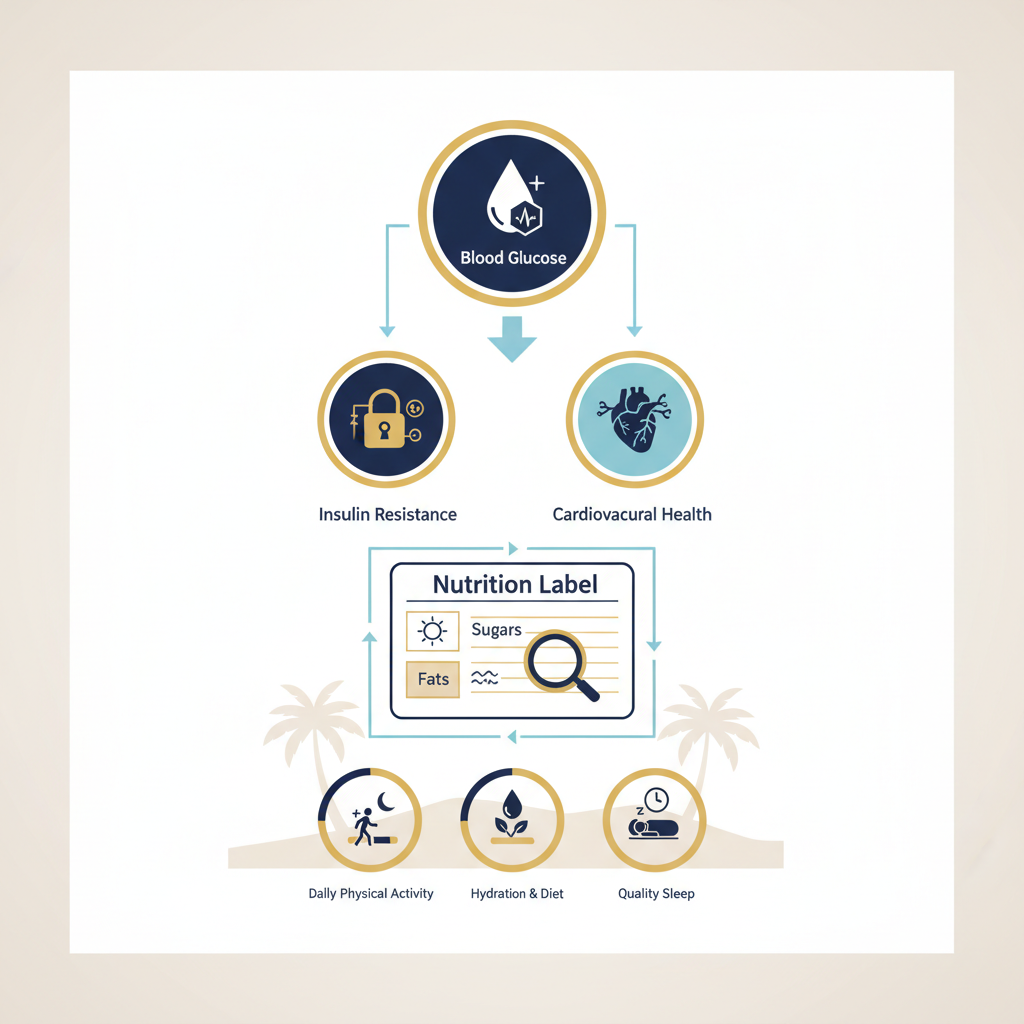
2. شرح المصطلحات الأساسية: التمثيل الغذائي وتوازن الطاقة في السياق العربي

يعد مصطلح 'التمثيل الغذائي' أو 'الأيض' (Metabolism) من أكثر المصطلحات تداولاً وأقلها فهماً بعمق. ببساطة، هو مجموع العمليات الكيميائية التي تحدث داخل خلايا الجسم لتحويل الطعام والشراب إلى طاقة. تنقسم هذه العمليات إلى مسارين رئيسيين: عملية الهدم (Catabolism)، وهي تكسير الجزيئات الكبيرة مثل الكربوهيدرات والدهون لإنتاج الطاقة، وعملية البناء (Anabolism)، وهي استخدام تلك الطاقة لبناء الأنسجة وإصلاح الخلايا. في السياق الخليجي، حيث تتسم الوجبات غالباً بالكثافة الحرارية، يصبح فهم 'توازن الطاقة' أمراً حيوياً. توازن الطاقة هو العلاقة بين الطاقة التي تدخل الجسم (السعرات الحرارية من الطعام) والطاقة التي يستهلكها الجسم للقيام بوظائفه الحيوية والنشاط البدني. مصطلح آخر مهم هو معدل الأيض الأساسي (BMR)، وهو كمية الطاقة التي يحتاجها جسمك للبقاء على قيد الحياة أثناء الراحة التامة، مثل التنفس ودوران الدم. يتأثر هذا المعدل بعدة عوامل منها العمر، والجنس، والكتلة العضلية. ومن المفاهيم التي يجب توضيحها أيضاً هي المرونة الأيضية (Metabolic Flexibility)، وهي قدرة الجسم على التحول بكفاءة بين استخدام الكربوهيدرات والدهون كمصدر للوقود بناءً على التوفر والاحتياج. إن فهم هذه المصطلحات يساعد الفرد على إدراك أن الصحة الأيضية ليست مجرد رقم على الميزان، بل هي كفاءة داخلية في إدارة موارد الطاقة. فبدلاً من التركيز فقط على تقليل الطعام، يصبح الهدف هو تحسين جودة العمليات الأيضية من خلال اختيارات ذكية تدعم البناء وتقلل من الإجهاد التأكسدي الناتج عن عمليات الهدم غير المتوازنة. إن استيعاب هذه المفاهيم العلمية يمنح الفرد القدرة على تفسير استجابات جسده المختلفة للغذاء والجهد البدني، مما يعزز من قدرته على التكيف مع متطلبات الحياة اليومية بطريقة صحية وعلمية.

3. مهارات قراءة الملصقات الغذائية: فك رموز السكريات والألياف والدهون في السوق الخليجي

تعتبر بطاقة البيانات التغذوية الموجودة على المنتجات الغذائية في الأسواق الخليجية دليلاً حيوياً للمستهلك، ولكنها تتطلب مهارة في القراءة والتحليل. أول ما يجب الانتباه إليه هو حجم الحصة (Serving Size)؛ فكثير من الناس يقرأون السعرات الحرارية معتقدين أنها للعبوة كاملة، بينما هي في الواقع لحصة صغيرة منها. عند النظر إلى الكربوهيدرات، يجب التمييز بين إجمالي الكربوهيدرات والألياف الغذائية والسكريات المضافة. الألياف هي الجزء غير القابل للهضم من الكربوهيدرات، وهي تلعب دوراً جوهرياً في إبطاء امتصاص السكر في الدم، مما يدعم الصحة الأيضية. أما السكريات المضافة، فهي التي يتم وضعها أثناء التصنيع، ويجب الحذر منها لأنها تسبب ارتفاعات حادة في مستويات الطاقة تليها انخفاضات سريعة. وفيما يخص الدهون، يجب التفريق بين الدهون المشبعة، والدهون المتحولة (Trans Fats)، والدهون غير المشبعة. الدهون المتحولة هي الأخطر على الصحة الأيضية وغالباً ما توجد في الأطعمة المصنعة والمخبوزات التجارية، بينما تعتبر الدهون غير المشبعة (مثل الموجودة في زيت الزيتون والمكسرات) صديقة للقلب والأيض. من المصطلحات الهامة أيضاً الصوديوم، الذي يرتبط بتوازن السوائل وضغط الدم. في السوق الخليجي، قد نجد مصطلحات مثل 'خالي من السكر' أو 'قليل الدسم'، وهنا يجب أن نكون واعين بأن 'خالي من السكر' لا يعني بالضرورة خالي من السعرات الحرارية، وقد يحتوي على بدائل سكر أو نشويات تؤثر على الأيض. إن تعلم كيفية قراءة قائمة المكونات، حيث تُرتب المكونات تنازلياً حسب الوزن، يساعد في كشف المكونات المخفية. فإذا كان السكر أو الزيوت المهدرجة في مقدمة القائمة، فهذا مؤشر على جودة المنتج التغذوية. إن إتقان هذه المهارة يحول عملية التسوق من مجرد شراء عشوائي إلى عملية اختيار دقيقة تدعم الأهداف الصحية طويلة الأمد.

4. أهمية تدوين العادات اليومية في سجل المتابعة الشخصي

يعد سجل المتابعة الشخصي واحداً من أقوى الأدوات لتحسين الصحة الأيضية، فهو يعمل كمرآة تعكس الواقع الفعلي للعادات اليومية بعيداً عن التقديرات العشوائية. إن تدوين ما نأكله، وكمية النشاط البدني، وساعات النوم، وحتى مستويات التوتر، يوفر بيانات قيمة يمكن تحليلها لاكتشاف الأنماط التي قد تعيق التقدم الصحي. على سبيل المثال، قد يكتشف الشخص من خلال التدوين أن شعوره بالخمول في فترة بعد الظهر مرتبط بنوع معين من الوجبات الصباحية، أو أن جودة نومه تتأثر بتناول الطعام في وقت متأخر. التدوين لا يقتصر فقط على السعرات الحرارية، بل يمتد ليشمل الوعي الغذائي (Mindful Eating)، أي تسجيل الحالة الشعورية عند الأكل. هل نأكل لأننا جائعون حقاً، أم استجابة للتوتر أو الملل؟ في البيئة الخليجية، حيث تكثر المناسبات الاجتماعية التي تتمحور حول الطعام، يساعد السجل في الحفاظ على التوازن دون الشعور بالحرمان. كما أن تسجيل مستويات النشاط البدني، سواء كان مشياً أو تمارين مقاومة، يساعد في مراقبة تطور القوة والتحمل. بالإضافة إلى ذلك، يعد النوم عنصراً حيوياً في الصحة الأيضية؛ فقلة النوم تؤثر على الهرمونات المسؤولة عن الجوع والشبع (اللبتين والجريلين). من خلال تدوين ساعات النوم وجودته، يمكن للفرد ربط ذلك برغبته في تناول السكريات في اليوم التالي. إن السجل الشخصي ليس أداة للمحاسبة الذاتية القاسية، بل هو وسيلة للتعلم الذاتي والنمو. فهو يساعد في تجهيز معلومات دقيقة لمناقشتها مع مقدم الرعاية الصحية، مما يجعل الاستشارة الطبية أكثر فعالية وبناءً على حقائق ملموسة بدلاً من الذاكرة الانتقائية. البدء بسجل بسيط، سواء كان ورقياً أو عبر تطبيقات الهاتف، يعد خطوة عملية نحو التغيير المستدام، حيث تتحول الملاحظات الصغيرة إلى رؤى شاملة تقود نحو حياة أكثر صحة وحيوية.

5. كيفية تحضير أسئلة فعالة ومحددة لمقدم الرعاية الصحية

تعتبر الزيارة الطبية فرصة ثمينة لتعزيز الفهم الصحي، ولكن ضيق الوقت أحياناً قد يحول دون الحصول على كافة المعلومات المطلوبة. لذا، فإن التحضير المسبق للأسئلة يعد مهارة ضرورية لكل شخص يسعى لتحسين صحته الأيضية. بدلاً من طرح أسئلة عامة مثل 'كيف حال صحتي؟'، يفضل استخدام أسئلة محددة تستهدف جوانب معينة. على سبيل المثال، يمكن السؤال عن مستوى السكر الصائم (Fasting Blood Sugar) وماذا يعني بالنسبة للمخاطر المستقبلية، أو السؤال عن مقاومة الأنسولين (Insulin Resistance) وكيف يمكن تحسين حساسية الجسم للأنسولين من خلال تغييرات نمط الحياة. من المهم أيضاً الاستفسار عن الملف الدهني (Lipid Profile)، وفهم الفرق بين الكوليسترول النافع (HDL) والضار (LDL) والدهون الثلاثية، وكيف تؤثر هذه الأرقام على الصحة الأيضية العامة. إذا وصف الطبيب فحصاً معيناً، يحق للمريض أن يسأل: 'ما الهدف من هذا الفحص؟ وكيف ستؤثر النتيجة على خطتي العلاجية أو الغذائية؟'. كما يمكن السؤال عن تأثير الأدوية الموصوفة على عملية التمثيل الغذائي. في السياق الخليجي، قد يكون من المفيد سؤال الطبيب عن كيفية تكييف النصائح الصحية مع العادات المحلية، مثل الصيام أو الوجبات الشعبية. إن كتابة هذه الأسئلة في ورقة أو على الهاتف قبل الموعد يضمن عدم نسيان أي نقطة مهمة. كما يجب عدم التردد في طلب شرح المصطلحات الطبية التي قد تبدو غامضة؛ فمقدم الرعاية الصحية موجود ليكون شريكاً في رحلتك الصحية. إن الحوار النشط والفعال يبني جسراً من الثقة ويضمن أن تكون التوصيات الطبية مفهومة وقابلة للتطبيق في الواقع اليومي، مما يرفع من نسبة الالتزام بالخطة الصحية وتحقيق النتائج المرجوة.

6. تقييم المعلومات الصحية عبر الإنترنت: التمييز بين المصادر الموثوقة وغير الموثوقة

في عصر الانفجار المعلوماتي الرقمي، أصبح الإنترنت المصدر الأول للبحث عن المعلومات الصحية، ولكن هذا الفضاء مليء أيضاً بالمعلومات المضللة والادعاءات غير العلمية. لتقييم أي معلومة صحية تتعلق بالأيض أو التغذية، يجب اتباع منهجية نقدية. أولاً، يجب التحقق من مصدر المعلومة؛ هل هي صادرة عن جهات حكومية صحية، أو جامعات مرموقة، أو مراكز بحثية معترف بها؟ المصادر التي تنتهي بنطاقات مثل (.gov) أو (.edu) أو (.org) غالباً ما تكون أكثر موثوقية. ثانياً، يجب الحذر من الوعود المبالغ فيها أو 'الحلول السحرية' التي تدعي علاج كل شيء في وقت قياسي؛ فالعلم الأيضي معقد ويتطلب وقتاً وتغييرات تدريجية. ثالثاً، ابحث عن الأدلة العلمية؛ هل تعتمد المعلومة على دراسات سريرية محكمة أم على تجارب شخصية وقصص فردية؟ التجارب الشخصية لا يمكن تعميمها كقواعد علمية. رابعاً، انتبه إلى تاريخ النشر؛ فالمعلومات الطبية تتطور بسرعة، وما كان يُعتقد أنه صحيح قبل عشر سنوات قد يكون قد تم تحديثه الآن. في المنطقة العربية، تنتشر الكثير من الوصفات الشعبية عبر وسائل التواصل الاجتماعي، وهنا يجب التأكد من عدم تعارضها مع الحقائق العلمية أو تأثيرها السلبي على الأدوية الموصوفة. كما يجب الحذر من المحتوى الذي يهدف للترويج لمنتجات معينة تحت غطاء النصيحة الطبية. إن استخدام أدوات مثل 'البحث العكسي' عن المعلومات أو استشارة المختصين قبل تبني أي نصيحة من الإنترنت يعد سلوكاً واعياً يحمي الفرد من الوقوع في فخ التضليل. الثقافة الصحية الرقمية تعني أن نكون مستهلكين أذكياء للمعلومات، نفلتر ما نقرأه ونعرضه على ميزان المنطق والعلم، لضمان أن ما نطبقه على أجسادنا مبني على أسس متينة وآمنة.

7. الخلاصة: بناء أساس متين للوعي الصحي طويل الأمد

إن رحلة الوعي بالصحة الأيضية ليست سباقاً قصيراً، بل هي ماراثون يتطلب الصبر والاستمرارية والتعلم المستمر. من خلال فهم المصطلحات الأساسية، وإتقان مهارة قراءة الملصقات الغذائية، والالتزام بتدوين العادات، والتواصل الفعال مع الأطباء، وتقييم المعلومات بدقة، يبني الفرد درعاً واقياً يحميه من الاضطرابات الصحية ويحسن جودة حياته. إن الهدف النهائي من هذا الدليل هو تحويل المعرفة إلى سلوك يومي تلقائي. الصحة الأيضية هي انعكاس لخياراتنا الصغيرة والمتكررة؛ نوع الطعام الذي نختاره، كمية الحركة التي نمارسها، وكيفية تعاملنا مع الضغوط. في مجتمعنا الخليجي، نملك فرصة عظيمة لدمج موروثنا الثقافي مع العلم الحديث لخلق نمط حياة متوازن. إن الاستثمار في الثقافة الصحية هو أفضل استثمار للمستقبل، فهو يقلل من الأعباء الصحية على الفرد والمجتمع، ويخلق جيلاً واعياً يقدّر قيمة العافية. تذكر دائماً أن جسدك هو أمانة، وفهمه هو أول خطوة في الحفاظ عليه. لا تتوقف عن القراءة والسؤال والبحث في المصادر الموثوقة، واجعل من 'الصحة الأيضية' أسلوب حياة وليس مجرد هدف مؤقت. إن مركز ATHAR يلتزم بتقديم الدعم المعرفي المستمر، مؤمناً بأن الوعي هو المفتاح الحقيقي للتغيير. فلنبدأ اليوم في تطبيق ما تعلمناه، ولنجعل من فهمنا لهذه المصطلحات بداية لحياة أكثر حيوية وإشراقاً لنا ولأسرنا.

جدول المصطلحات التعليمي

المصطلح بالعربيةالمصطلح بالإنجليزيةالشرح المبسط
التمثيل الغذائي (الأيض)Metabolismالعملية الكيميائية لتحويل الغذاء إلى طاقة.
معدل الأيض الأساسيBasal Metabolic Rate (BMR)الطاقة التي يحرقها الجسم أثناء الراحة التامة.
مقاومة الأنسولينInsulin Resistanceضعف استجابة الخلايا لهرمون الأنسولين لمعالجة السكر.
الألياف الغذائيةDietary Fiberأجزاء نباتية لا تُهضم، تساعد في تنظيم السكر والهضم.
المرونة الأيضيةMetabolic Flexibilityقدرة الجسم على التبديل بين حرق الدهون والكربوهيدرات.
الدهون المتحولةTrans Fatsزيوت مهدرجة صناعياً تضر بالصحة الأيضية.
مؤشر كتلة الجسمBody Mass Index (BMI)مقياس يعتمد على الطول والوزن لتقييم تناسق الجسم.

استكشف المعرفة الصحية خطوة بخطوة

اطّلع على الأدلة التعليمية والأدوات العملية لاختيار خطوتك المعرفية التالية.

Frequently Asked Questions

ما الفرق بين مصطلح التمثيل الغذائي ومعدل الأيض الأساسي؟

التمثيل الغذائي (Metabolism) هو المصطلح الشامل لجميع العمليات الكيميائية الحيوية التي تحدث داخل الجسم لتحويل الغذاء إلى طاقة. أما معدل الأيض الأساسي (Basal Metabolic Rate) فهو يشير تحديداً إلى كمية الطاقة التي يستهلكها الجسم للقيام بوظائفه الحيوية الأساسية أثناء الراحة التامة، مثل التنفس ودوران الدم.

كيف يمكنني التعرف على السكريات المضافة في ملصقات المنتجات المحلية؟

عند قراءة الملصقات الغذائية في الأسواق الخليجية، ابحث عن أسماء بديلة للسكر في قائمة المكونات مثل: شراب الذرة عالي الفركتوز، المالتوز، الدكستروز، أو العسل المركز. تذكر أن المكونات تُرتب تنازلياً حسب الوزن، فإذا ظهر السكر في بداية القائمة، فهذا يعني أنه يشكل جزءاً كبيراً من المنتج.

ما هي العناصر الأساسية التي يجب تدوينها في مفكرة العادات الصحية؟

يُنصح بتدوين أوقات الوجبات، نوعية الأطعمة المتناولة، مستويات النشاط البدني اليومي، وعدد ساعات النوم. كما يمكن تدوين الملاحظات حول مستويات الطاقة خلال اليوم. هذا السجل يساعدك على فهم أنماط حياتك الشخصية ويسهل عملية التواصل مع أخصائي التغذية أو الطبيب عند مناقشة عاداتك.

كيف أتأكد من موثوقية المعلومات الصحية المتعلقة بالأيض على وسائل التواصل الاجتماعي؟

يجب التحقق من مصدر المعلومة؛ هل هي صادرة عن جهات رسمية مثل وزارة الصحة السعودية أو منظمات صحية عالمية معتمدة؟ تجنب المعلومات التي تعد بنتائج سريعة أو تروج لمنتجات معينة. ابحث دائماً عن المراجع العلمية المذكورة وتأكد من أن كاتب المحتوى مختص معتمد في هذا المجال.