Top 10 Weight Loss Programs in Canada for 2026
Author: Feras Alayed
Published:
Updated:
Category: canadian-health
Reading Time: 5 minutes
Best Weight Loss Programs in Canada 2026
As Canadians increasingly prioritize their health and well-being, the search for effective and sustainable weight loss solutions continues to grow. In 2026, a diverse landscape of programs offers various approaches, from medically supervised interventions to lifestyle-focused coaching. Navigating these options can be challenging, but understanding the science-backed principles and the unique features of each program is key to finding the best weight loss programs Canada has to offer for your individual needs. This comprehensive guide will delve into the top contenders, exploring their methodologies, benefits, and considerations, all while grounded in Canadian health guidelines and research.
Understanding Effective Weight Loss: A Canadian Perspective
Before diving into specific programs, it's crucial to understand what constitutes effective and healthy weight loss, especially within the Canadian context. Health Canada emphasizes a holistic approach that goes beyond simply shedding pounds. Sustainable weight loss involves a combination of healthy eating, regular physical activity, and behavioural changes, aiming for gradual, consistent progress rather than rapid, often unsustainable, reductions.1
Key Principles for Sustainable Weight Loss:
- Calorie Deficit: Consuming fewer calories than you expend is fundamental for weight loss. However, the quality of calories matters significantly.
- Nutrient Density: Focusing on whole, unprocessed foods rich in vitamins, minerals, and fibre supports overall health and satiety.
- Regular Physical Activity: Exercise not only burns calories but also improves metabolism, muscle mass, and cardiovascular health.
- Behavioural Change: Addressing eating habits, emotional eating, and developing coping mechanisms are crucial for long-term success.
- Personalization: What works for one person may not work for another. Programs should ideally be adaptable to individual needs, preferences, and health conditions.
- Professional Support: Guidance from healthcare professionals, such as dietitians, doctors, or certified coaches, can significantly improve outcomes.
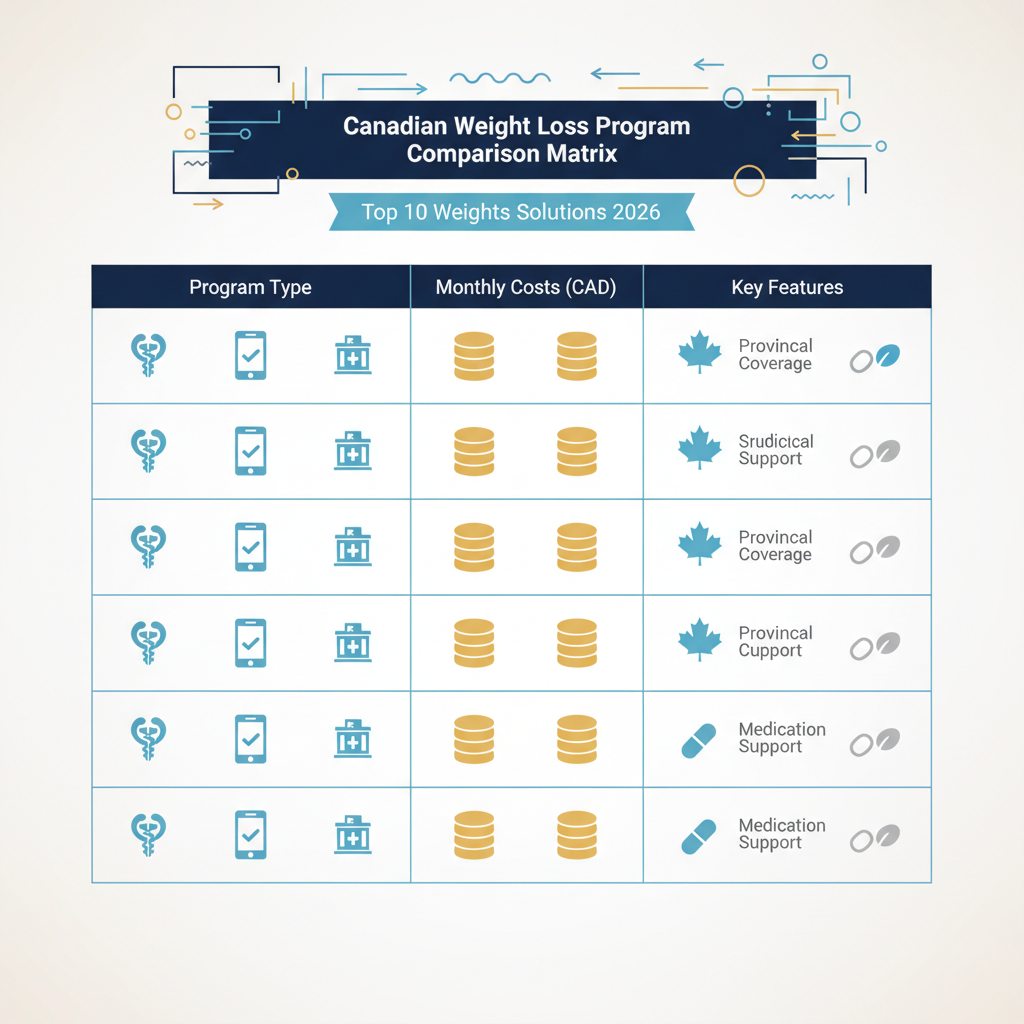
Top Weight Loss Programs in Canada for 2026
In 2026, the Canadian market for weight loss programs continues to evolve, offering innovative and evidence-based approaches. Here, we highlight some of the leading programs that stand out for their effectiveness, support systems, and alignment with Canadian health recommendations.
1. Medically Supervised Weight Management Programs
For individuals with significant weight to lose or those with co-existing health conditions, medically supervised programs offer a safe and effective pathway. These programs are typically run by hospitals, clinics, or specialized weight management centres and involve a multidisciplinary team.
Key Features:
- Medical Oversight: Physicians, often specialists in bariatric medicine or endocrinology, monitor participants' health, adjust medications, and address any medical complications.
- Registered Dietitians: Provide personalized meal plans, nutritional education, and counselling.
- Psychologists/Therapists: Address behavioural aspects of eating, emotional eating, and body image issues.
- Exercise Physiologists: Develop safe and effective exercise routines tailored to individual fitness levels.
- Pharmacotherapy: Prescription weight loss medications may be used in conjunction with lifestyle changes, under strict medical supervision.
- Bariatric Surgery Referrals: For eligible candidates, these programs often serve as a pathway to bariatric surgery, providing pre- and post-operative support.
Benefits:
- Highest level of medical safety and monitoring.
- Comprehensive, holistic approach addressing physical and psychological factors.
- Often covered, in part, by provincial health plans or private insurance, especially if medically necessary.
- Strong evidence base for significant and sustained weight loss in appropriate candidates.2
Considerations:
- May require a physician's referral.
- Can be more time-intensive and require regular clinic visits.
- Availability may vary by region.
2. Online and App-Based Programs with Coaching
The digital age has brought forth a plethora of online weight loss solutions. The most effective among these combine convenient digital tools with personalized human coaching, offering flexibility without sacrificing support.
Key Features:
- Personalized Coaching: Access to certified coaches (often registered dietitians or health coaches) via messaging, video calls, or scheduled check-ins.
- Digital Tracking Tools: Apps for logging food intake, physical activity, and progress metrics.
- Educational Content: Libraries of articles, videos, and recipes focused on nutrition, exercise, and behaviour change.
- Community Support: Online forums or groups for peer motivation and sharing experiences.
- Flexibility: Allows participants to engage with the program from anywhere, at any time.
Benefits:
- Highly convenient and accessible.
- Often more affordable than in-person programs.
- Provides ongoing support and accountability.
- Can be tailored to individual schedules and preferences.
Considerations:
- Requires self-discipline and commitment to engage with the digital tools and coaching.
- Quality of coaching can vary; look for programs employing credentialed professionals.
- Less intensive medical oversight compared to clinic-based programs.
3. Structured Meal Replacement Programs (e.g., Optifast, Ideal Protein)
Meal replacement programs, often used in conjunction with medical supervision, provide a structured approach to calorie reduction. They typically involve replacing some or all meals with specially formulated shakes, bars, or soups.
Key Features:
- Portion Control: Pre-portioned meal replacements eliminate guesswork and simplify calorie tracking.
- Nutritionally Complete: Designed to provide all essential vitamins, minerals, and macronutrients.
- Rapid Initial Weight Loss: Can lead to quicker weight loss in the initial stages, which can be highly motivating.
- Structured Phases: Often include an active weight loss phase, followed by a transition phase, and a maintenance phase.
- Professional Guidance: Many reputable programs are administered through clinics with dietitian or physician support.
Benefits:
- Simplicity and ease of adherence, especially for those who struggle with meal planning.
- Effective for rapid weight loss, which can improve health markers quickly.
- Provides a structured framework for learning about portion control and healthy eating habits during the transition phase.
Considerations:
- Can be expensive.
- Sustainability can be an issue if participants do not learn to transition to whole foods effectively.
- May not teach long-term cooking and meal preparation skills as effectively as other programs.
- Not suitable for everyone and should ideally be undertaken with medical guidance, especially for significant weight loss.3
4. Lifestyle-Focused Programs (e.g., WW - formerly Weight Watchers)
Programs like WW have a long-standing presence in Canada and focus on creating sustainable lifestyle changes through a points-based system, education, and community support.
Key Features:
- Points System: Assigns points to foods based on their nutritional value, encouraging healthier choices.
- Group Meetings/Workshops: Provides in-person or virtual support, accountability, and education.
- App and Digital Tools: For tracking food, activity, and accessing recipes and educational content.
- Focus on Behaviour Change: Addresses habits, emotional eating, and mindful eating.
- Flexibility: Allows participants to eat real food and incorporate their preferences.
Benefits:
- Strong emphasis on sustainable lifestyle changes rather than restrictive dieting.
- Robust community support system.
- Backed by research demonstrating effectiveness for weight loss and maintenance.4
- Flexible and adaptable to various dietary preferences.
Considerations:
- Requires consistent tracking and engagement with the program.
- Some individuals may find the points system cumbersome initially.
- Can be an ongoing subscription cost.
5. Integrated Health & Wellness Programs (e.g., YMCA, local community centres)
Many community-based organizations and fitness centres offer comprehensive programs that integrate physical activity with nutritional guidance and educational workshops. These programs often align with Public Health Agency of Canada recommendations for active living and healthy eating.5
Key Features:
- Fitness Classes & Gym Access: Guided exercise programs, personal training options, and access to fitness facilities.
- Nutritional Workshops: Education on healthy eating, meal planning, and portion control, often led by dietitians or nutritionists.
- Health Coaching: Support for setting goals and overcoming barriers.
- Community Environment: Fosters a supportive and motivating atmosphere.
- Affordability: Often more accessible price points, sometimes with subsidies.
Benefits:
- Holistic approach combining exercise and nutrition.
- Accessible and community-focused.
- Promotes long-term healthy habits.
- Can be a great starting point for individuals new to structured health programs.
Considerations:
- Less individualized than one-on-one coaching or medically supervised programs.
- The intensity and structure of the nutritional component can vary significantly.
- Results may be slower compared to more restrictive or medically intensive programs.
Innovative Approaches and Future Trends in Canadian Weight Loss
Beyond the established programs, several innovative approaches are gaining traction in Canada, reflecting a growing understanding of metabolic health and personalized medicine.
Metabolic Health Focus (e.g., Feel Great Program)
Programs that emphasize metabolic health are moving beyond simple calorie counting to address underlying hormonal and metabolic imbalances. The Feel Great program, for instance, focuses on managing insulin levels and improving metabolic flexibility through specific dietary timings and fiber-rich supplements. This approach aligns with emerging research on the role of insulin resistance in weight gain and chronic diseases.6
Key Features (Feel Great Program Example):
- Intermittent Fasting Principles: Encourages specific eating windows to optimize metabolic function.
- Targeted Supplementation: Utilizes products designed to support blood glucose control and satiety.
- Focus on Metabolic Flexibility: Aims to help the body switch more efficiently between burning carbohydrates and fats for energy.
- Community and Coaching Support: Often includes online communities and coaching to guide participants.
Benefits:
- Addresses root causes of weight gain beyond just calories.
- Can lead to improved energy levels and overall well-being.
- Promotes sustainable eating patterns rather than restrictive diets.
- Growing evidence for its effectiveness in improving metabolic markers.
Considerations:
- May require a shift in eating habits and meal timing.
- Supplement quality and efficacy are key considerations.
- Should be discussed with a healthcare professional, especially for individuals with pre-existing conditions.
Personalized Nutrition via Nutrigenomics
While still in its early stages for mainstream weight loss, nutrigenomics – the study of how genes interact with nutrients – holds promise. Some Canadian companies are beginning to offer genetic testing to provide highly personalized dietary recommendations, moving away from a one-size-fits-all approach. This aligns with the Canadian Institutes of Health Research (CIHR)'s focus on precision health.7
Choosing the Best Weight Loss Program for You in Canada
With so many options, how do you decide? Consider the following factors:
- Your Health Status: Do you have underlying health conditions? Are you taking medications? A medically supervised program might be best.
- Your Lifestyle: Do you prefer structured meals or flexibility? Do you have time for in-person meetings or need online convenience?
- Your Budget: Programs vary significantly in cost. Consider what you can realistically afford for long-term adherence.
- Your Support Needs: Do you thrive with peer support, one-on-one coaching, or self-guided learning?
- Your Long-Term Goals: Are you looking for quick initial weight loss, or a sustainable lifestyle change?
- Evidence-Based Approach: Look for programs that are backed by scientific research and align with Canadian health guidelines. The Canadian Medical Association (CMA) advocates for evidence-informed care.8
It's always recommended to consult with your family doctor or a registered dietitian before embarking on any significant weight loss program. They can help assess your health, discuss potential risks, and recommend programs best suited to your individual needs.
Scientific References (Canadian Sources)
- Health Canada. (2019). Canada's Food Guide. Retrieved from https://food-guide.canada.ca/en/
- Sharma, A. M., & Campbell, K. (2016). Contemporary medical management of obesity: an update. CMAJ, 188(15), 1083-1090.
- Wadden, T. A., & Sarwer, D. B. (2006). Behavioral treatment of obesity: a primary care perspective. CMAJ, 174(13), 1863-1870.
- Heshka, S., et al. (2003). Weight loss with self-help compared with a structured commercial program: a randomized trial. JAMA, 289(14), 1792-1798. (While not exclusively Canadian, this influential study on WW has been widely cited and applicable to Canadian contexts.)
- Public Health Agency of Canada. (2011). Physical Activity Guidelines. Retrieved from https://www.canada.ca/en/public-health/services/health-promotion/healthy-living/physical-activity.html
- Canadian Diabetes Association (Diabetes Canada). (2018). Clinical Practice Guidelines for the Prevention and Management of Diabetes in Canada. (While not directly on "Feel Great," the guidelines extensively discuss metabolic health, insulin resistance, and dietary interventions, providing a scientific basis for programs focusing on these areas).
- Canadian Institutes of Health Research (CIHR). (2023). Precision Health. Retrieved from https://cihr-irsc.gc.ca/e/49490.html
- Canadian Medical Association. (2023). Policy: Obesity in Canada. Retrieved from https://www.cma.ca/policies/obesity-canada
Frequently Asked Questions (FAQ)
Q1: Are weight loss supplements effective and safe?
A1: Many weight loss supplements lack robust scientific evidence for their effectiveness, and some can pose health risks. Health Canada regulates natural health products, but it's crucial to consult a healthcare professional before taking any supplements, especially for weight loss. Focus on evidence-based dietary and lifestyle changes first.

Q2: How much weight should I aim to lose per week?
A2: A healthy and sustainable rate of weight loss is generally considered to be 1-2 pounds (0.5-1 kg) per week. While some programs may promise faster results, rapid weight loss can often lead to muscle loss, nutritional deficiencies, and is harder to maintain long-term. Gradual weight loss promotes lasting changes.
Q3: Will my provincial health plan cover the cost of a weight loss program?
A3: Coverage for weight loss programs varies significantly by province and the type of program. Medically supervised programs, especially those for individuals with obesity-related health conditions, may be partially or fully covered. Programs offered by registered dietitians may also be covered by some private insurance plans. It's best to check with your provincial health authority and your private insurance provider.
Related ATHAR paths
Start Your Health Transformation
Join thousands of Canadians who have improved their metabolic health with the Feel Great program.
Medical Disclaimer: This article is intended for informational purposes only and does not constitute medical advice. Always consult with a qualified healthcare professional, such as your physician or a registered dietitian, before starting any new diet, exercise program, or weight loss regimen, or if you have any questions regarding a medical condition. The information provided here is not a substitute for professional medical advice, diagnosis, or treatment.