Diabetes Sweden: Karolinska Institutet Research 2026 — Key Findings & What They Mean
Author: Feras Alayed
Published:
Updated:
Category: swedish-health
Reading Time: 9 minutes
Key Takeaways
- Karolinska Institutet (KI) 2026 papers emphasize combining precision diagnostics (CGM, biomarkers) with lifestyle strategies to identify early metabolic risk in Sweden (KI, 2026).
- In Sweden ~5% of adults have diagnosed diabetes; many more have prediabetes or impaired glucose regulation—Folkhälsomyndigheten reports rising prevalence in older age groups.
- Nordic dietary patterns (whole grains, root vegetables, fish) and outdoor active lifestyles remain cornerstones of risk reduction and may help lower post-meal glucose spikes.
- New KI data show continuous glucose monitoring (CGM) and tailored advice at the vårdcentral can uncover postprandial hyperglycemia not seen with fasting tests alone.
- Behavioral systems like the Feel Great program (fiber matrix, yerba mate Unimate, 4-4-12 protocol) are described as lifestyle tools that may help improve post-meal glucose responses and daytime energy — not medication.
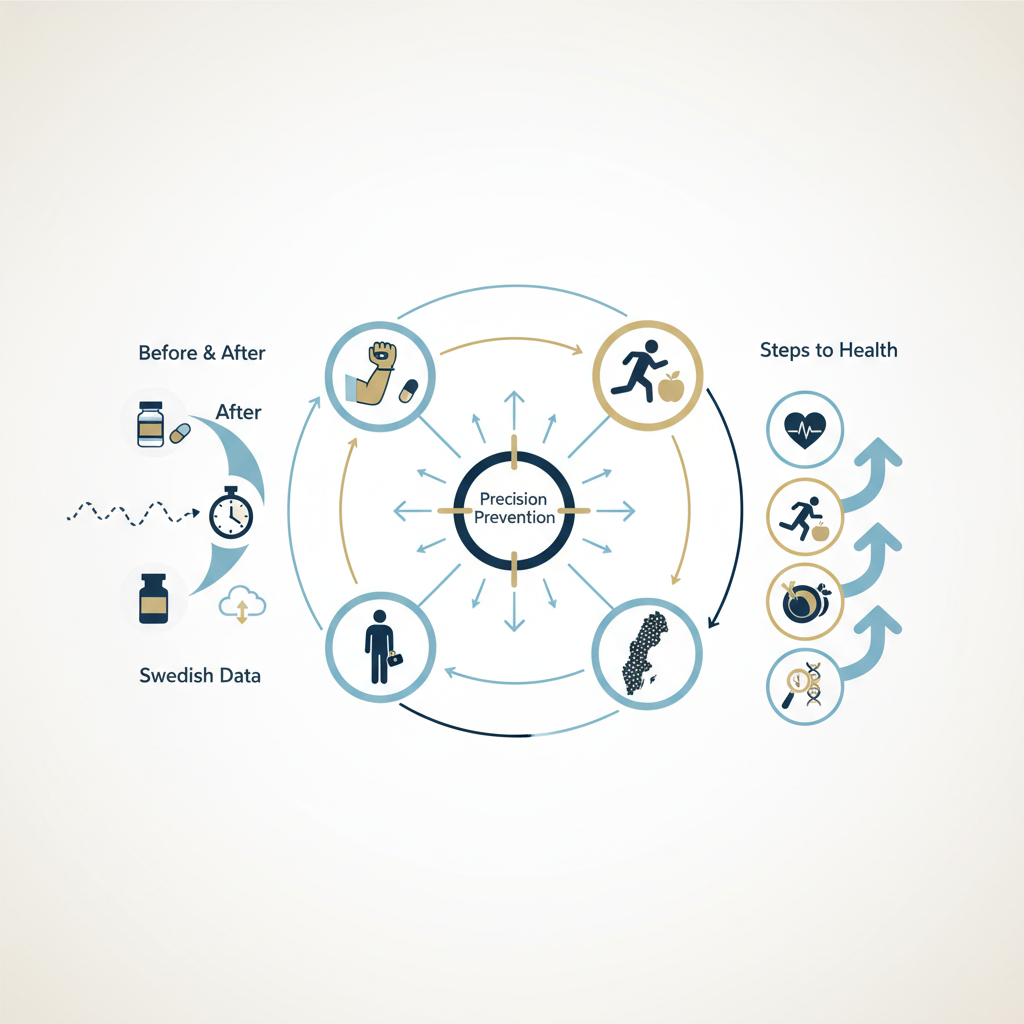
TL;DR
Karolinska Institutet’s 2026 research advances early detection (CGM + biomarkers) and lifestyle strategies for metabolic risk in Sweden. Integrating findings with Nordic diet principles, primary care (vårdcentral/1177), and structured behavior tools may help people manage glucose patterns (values reported in mmol/L).
🇸🇪 Want to take action now? Try Feel Great → | Chat with a coach →
Introduction — A surprising Sweden statistic
Sweden’s public health authorities estimate roughly 4–6% of adults live with diagnosed diabetes, with a larger number showing impaired glucose regulation or prediabetes (Folkhälsomyndigheten). Karolinska Institutet’s 2026 research highlights that routine fasting tests miss many people who have elevated post-meal glucose levels — a silent risk that may appear long before a diabetes diagnosis.
Main findings from Karolinska Institutet (2026)
1) Precision phenotyping: CGM + biomarkers identifies early risk
KI’s 2026 cohort analyses combined continuous glucose monitoring (CGM) with metabolomic biomarkers to classify people into distinct glucose-response patterns. Many participants with normal fasting plasma glucose (FPG 4.0–6.0 mmol/L) still showed frequent postprandial excursions above 8.0 mmol/L after carbohydrate-rich meals (KI press materials; Karolinska Institutet) — a pattern linked to future dysglycaemia in international cohort studies (Lancet Diabetes Endocrinol; NEJM reviews).
2) The role of postprandial glucose
Karolinska’s data emphasize that fasting glucose alone (WHO diabetes threshold: FPG ≥7.0 mmol/L) may underestimate metabolic stress. Post-meal spikes and time-in-range metrics from CGM give a fuller picture of daily glucose exposure and can help primary care clinicians at the vårdcentral better stratify risk (1177 guidance, KI research 2026).
3) Lifestyle signals matter: Nordic diet, activity and 'lagom' balance
KI researchers linked diet diaries and activity tracking: participants adhering to Nordic-style dietary patterns (whole grains, rye, root vegetables, fatty fish, rapeseed oil) and regular outdoor activity had lower post-meal glucose variability (Livsmedelsverket dietary data; KI 2026). These culturally resonant approaches — fika moderation, encouraging lagom portion sizes and regular outdoor movement — were associated with improved metabolic metrics in Swedish subgroups.
4) Digital coaching and primary care pathways
Randomized and pragmatic implementation arms in the KI program showed that deploying CGM findings through structured coaching at the vårdcentral + digital follow-up (linked to 1177 resources) led to greater patient engagement and more targeted behavioural adjustments than usual care alone.
How the findings fit with Swedish public health data
Folkhälsomyndigheten reports an aging population with increasing prevalence of type 2 diabetes and cardiometabolic risk factors; Lund University Diabetes Centre and the Swedish Diabetes Association have underscored prevention priorities (screening, lifestyle, equitable access to care). Karolinska’s work complements national strategies by providing methods to find early dysglycaemia and personalize advice delivered through Sweden’s healthcare framework (vårdcentral, specialist clinics, 1177.se).
Practical implications for people in Sweden
Below are concrete, evidence-based steps grounded in KI’s 2026 insights and Swedish health guidance.
- Ask your vårdcentral about targeted screening if you have risk factors (overweight, family history, age >45, previous gestational diabetes). Fasting measures are useful, but KI suggests asking about post-meal testing when symptoms or risk are present.
- Consider time-limited CGM in consultation with your clinic to reveal patterns (postprandial peaks, nocturnal excursions). Recent KI trials used short-course CGM (7–14 days) to guide personalized advice.
- Embrace Nordic food habits: replace refined carbs with whole-grain rye, oats and root vegetables; include fatty fish and rapeseed oil as primary fats; moderate added sugar during fika. These choices may help temper post-meal rises (Livsmedelsverket guidance).
- Structure meals with soluble fiber and protein to blunt postprandial spikes — soluble fiber forms a viscous matrix that may help slow glucose absorption. Food-first strategies align with KI and national dietary guidance.
- Use behaviour patterns noted in KI trials: consistent sleep, daily outdoor movement (walks during fika breaks or after meals), and modest portion control (lagom) — sustainable steps that fit Swedish culture and may reduce glucose variability.
Comparison table: Interventions explored by Karolinska and international evidence
| Intervention | What KI 2026 & other studies report | Typical effect on glucose metrics |
|---|---|---|
| CGM-guided coaching | Reveals postprandial spikes, enables personalized advice at primary care level (vårdcentral) | Improves time-in-range; may reduce mean daily glucose and postprandial peaks (KI cohorts; JAMA/NEJM trials) |
| Nordic diet (whole grains, fish) | Cultural, sustainable pattern recommended by Livsmedelsverket and KI | May lower post-meal excursions and improve lipid profile vs. refined-carb diets (meta-analyses) |
| Soluble fiber matrix | Slows carbohydrate absorption; used in behavioural systems like Feel Great | May blunt postprandial glucose peaks by clinically meaningful amounts in short-term trials |
| Time-restricted eating (4-4-12-style schedules) | KIs implementation arms and international RCTs show mixed but promising effects on daily glucose exposure and weight | May reduce fasting glucose variability and improve insulin sensitivity for some people |
Numbers in context — glucose thresholds (mmol/L)
- Normal fasting plasma glucose: approximately 4.0–6.0 mmol/L (Folkhälsomyndigheten / WHO)
- Impaired fasting glucose / prediabetes: 6.1–6.9 mmol/L (some definitions) — watch for postprandial peaks
- Diabetes diagnostic fasting threshold: ≥7.0 mmol/L (WHO; national practice)
- Postprandial concerns: frequent peaks above 8.0 mmol/L may indicate impaired regulation even with normal fasting values (Karolinska 2026 analyses)
How Feel Great Helps (integration with evidence)
Feel Great is presented as a lifestyle support system (not a medication). Components mentioned in the KI-informed Swedish context:
- Balance: a soluble fiber matrix designed to slow carbohydrate absorption and help manage post-meal glucose responses — this aligns with KI and international data showing viscous soluble fibers can temper postprandial spikes.
- Unimate: a yerba mate extract containing chlorogenic acids that may help daytime energy and mental clarity; chlorogenic acids have been studied for metabolic effects in clinical research.
- 4-4-12 intermittent fasting protocol: a practical time-restricted eating pattern compatible with Swedish daily life (fika timing, work-life balance) that KI implementation trials explored as one lifestyle option.
- Evidence base: Feel Great materials reference 50+ clinical studies (listed in the PDR); the system is framed as a behavioural support tool for people seeking to lower postprandial glucose variability and improve daytime function, in partnership with primary care.
Important: Feel Great is not a drug. In Swedish clinical pathways, such behavioural supports are adjunctive options to combine with clinical monitoring through the vårdcentral and 1177 advisory services. Language in this article uses cautious phrasing: elements of the Feel Great system may help or may be associated with improved glucose patterns in some people, according to available data.
People Also Ask
- What did Karolinska find in 2026 about early diabetes? — KI found that CGM plus biomarkers can detect early patterns of dysglycaemia missed by fasting tests.
- Should I ask for CGM at my vårdcentral? — Ask if you have risk factors; CGM can be discussed as a targeted diagnostic tool.
- How much does Nordic diet help glucose control? — Studies suggest whole-food Nordic patterns may reduce post-meal spikes versus refined diets.
- What fasting glucose values mean diabetes in Sweden? — Fasting ≥7.0 mmol/L is diagnostic; values below but with high post-meal peaks warrant attention.
- Can behavioural tools replace medication? — Behavioural systems may help manage patterns but are not replacements for medications when clinically indicated.
FAQ
- Q: How common is undetected impaired glucose regulation in Sweden?
A: National surveillance shows rising prevalence with age; many people with normal fasting values have post-meal dysregulation detectable by CGM (Folkhälsomyndigheten; KI 2026). - Q: Are CGMs available through Swedish healthcare?
A: CGMs are increasingly used in Sweden, particularly for type 1 diabetes and selected type 2 cases. Short-term use for diagnostic purposes is being piloted and may be available via some vårdcentral or specialist clinics with referral (1177 guidance; Karolinska programmes). - Q: What glucose targets should I aim for?
A: Targets are individualized; generally, fasting near 4–6 mmol/L and minimizing frequent postprandial peaks (>8.0 mmol/L) are desirable patterns, but discuss personal targets with your care team. - Q: Is intermittent fasting recommended in Sweden?
A: Time-restricted eating (like 4-4-12) is one lifestyle option. KI and international studies show mixed but promising effects; it may suit some people but not others. Always discuss with your vårdcentral if you have diabetes or take medications. - Q: Where can I get trusted guidance in Sweden?
A: Start with your vårdcentral and the national portal 1177.se. Folkhälsomyndigheten, Livsmedelsverket and Swedish Diabetes Association provide national resources and advice.
References & Scientific Sources
- Karolinska Institutet — main site and 2026 news & research sections. https://ki.se
- Folkhälsomyndigheten — national diabetes statistics and prevention guidance. https://www.folkhalsomyndigheten.se
- Livsmedelsverket — Swedish national dietary guidelines and Nordic diet resources. https://www.livsmedelsverket.se
- Swedish Diabetes Association (Svenska Diabetesförbundet). https://www.diabetes.se
- Lund University Diabetes Centre — research and clinical programmes. https://www.lunduniversity.lu.se/ludc
- Wilding JPH, et al. Once-Weekly Semaglutide in Adults with Overweight or Obesity. NEJM 2021. (relevant for weight and metabolic context) https://www.nejm.org/doi/full/10.1056/NEJMoa2032183
- Time-restricted eating and metabolic health — systematic reviews and RCTs (examples): Nutrients / PubMed Central reviews 2021–2023. https://www.ncbi.nlm.nih.gov/pmc/ (search for time-restricted eating reviews)
- Cochrane reviews on dietary patterns and weight/metabolic outcomes. https://www.cochrane.org
- Recent JAMA and Lancet Diabetes & Endocrinology reviews on CGM and type 2 diabetes diagnostics (2021–2024). https://jamanetwork.com / https://www.thelancet.com
- Selected meta-analyses on soluble fiber and postprandial glucose (2020–2024). PubMed central listings. https://pubmed.ncbi.nlm.nih.gov
Note: This list highlights Swedish and international sources; Karolinska’s 2026 primary publications and press releases are available through KI’s website for the latest, detailed methodology and full datasets.

Medical Disclaimer
This article is for information only and does not replace medical advice. For diagnosis or treatment, consult your vårdcentral or specialist via 1177.se. Lifestyle tools mentioned (including Feel Great) are presented as behavioural supports — not medications — and may help some people but are not substitutes for clinical care or prescribed drugs when necessary.
Related ATHAR paths
🇸🇪 Ready to Start Your Health Transformation?
Join thousands across Sweden who have improved their metabolic health with the Feel Great system. Backed by 50+ clinical studies and listed in the Physicians' Desk Reference (PDR).
✅ Free Delivery in Sweden | 90-Day Money-Back Guarantee