Dutch diet blood sugar Voedingscentrum: Netherlands guide to stable glucose
Author: Feras Alayed
Published:
Updated:
Category: dutch-health
Reading Time: 11 minutes
Key Takeaways
- More than 1.2 million people in the Netherlands had diabetes in 2024 — most are type 2; diet and lifestyle matter. ([voedingscentrum.nl](https://www.voedingscentrum.nl/encyclopedie/diabetes-type-2.aspxamp/?utm_source=openai))
- Voedingscentrum recommends the Schijf van Vijf (whole grains, veg, fruit, legumes, lean protein, dairy, healthy fats) as a practical foundation for stable blood sugar. ([voedingscentrum.nl](https://www.voedingscentrum.nl/nl/service/vraag-en-antwoord/aandoeningen/hoe-eet-ik-gezond-met-diabetes-type-2-suikerziekte-.aspx?utm_source=openai))
- Soluble (viscous) fibers such as oat β‑glucan, psyllium and some galactomannans reduce post‑meal glucose and can lower fasting glucose by clinically meaningful amounts (reported in meta‑analyses). ([pmc.ncbi.nlm.nih.gov](https://pmc.ncbi.nlm.nih.gov/articles/PMC8563417/?utm_source=openai))
- Time‑restricted eating / intermittent‑fasting patterns (similar to a 4‑4‑12 approach) show modest benefits for fasting glucose and HbA1c in recent RCT meta‑analyses — timing matters. ([mdpi.com](https://www.mdpi.com/1422-0067/26/15/7310?utm_source=openai))
- In the Netherlands your huisarts (GP) coordinates care; always inform your huisarts or diabetes team before changing diet or fasting because medications (and hypoglycaemia risk) may require adjustment. ([voedingscentrum.nl](https://www.voedingscentrum.nl/nl/service/vraag-en-antwoord/aandoeningen/hoe-eet-ik-gezond-met-diabetes-type-2-suikerziekte-.aspx?utm_source=openai))
TL;DR
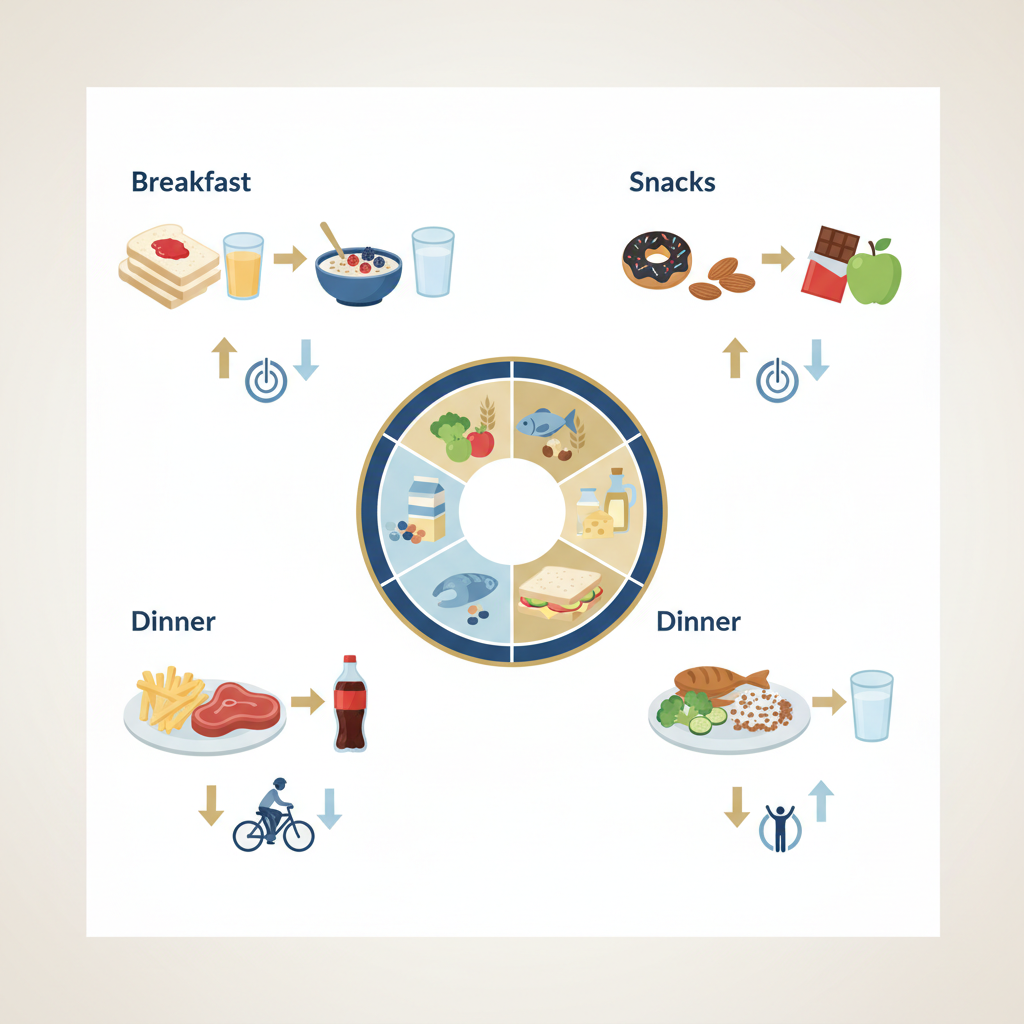
Voedingscentrum’s Schijf van Vijf plus targeted choices (high‑fibre whole grains, legumes, vegetables, nuts, dairy choices) form the Dutch evidence‑based basis to reduce glucose variability. Combining steady carb choices, viscous soluble fiber, sensible meal timing (e.g., 4‑4‑12 style time windows), and active habits like cycling may help keep fasting glucose and postprandial spikes in healthier mmol/L ranges — always coordinate with your huisarts. ([voedingscentrum.nl](https://www.voedingscentrum.nl/nl/service/vraag-en-antwoord/aandoeningen/hoe-eet-ik-gezond-met-diabetes-type-2-suikerziekte-.aspx?utm_source=openai))
🇳🇱 Want to take action now? Try Feel Great → | Chat with a coach →
Dutch Diet and Blood Sugar: Voedingscentrum Guidelines (Netherlands edition)
Introduction — a shocking Netherlands statistic
In 2024 there were over 1.2 million people living with diabetes in the Netherlands, and about 90% of those cases are type 2 — a clear national public‑health challenge. That means many Dutch households and GP practices are dealing daily with blood‑sugar questions that link directly to food, movement and primary care. ([voedingscentrum.nl](https://www.voedingscentrum.nl/encyclopedie/diabetes-type-2.aspxamp/?utm_source=openai))
Why Voedingscentrum’s guidance matters for blood sugar
Voedingscentrum translates national nutritional guidelines into practical advice for the Netherlands (Schijf van Vijf), and explicitly includes options that are commonly used in Dutch diets — wholegrain bread, dairy, legumes, fish, and locally familiar vegetables — making the advice easy to apply within Dutch food culture. The guidance acknowledges that tailored advice from a diëtist and clinical oversight from your huisarts remain central, especially for people using glucose‑lowering medication. ([voedingscentrum.nl](https://www.voedingscentrum.nl/nl/service/vraag-en-antwoord/aandoeningen/hoe-eet-ik-gezond-met-diabetes-type-2-suikerziekte-.aspx?utm_source=openai))
Blood‑glucose basics — numbers you’ll see in the Netherlands (mmol/L)
- Normal fasting capillary glucose: roughly < 5.6 mmol/L (venous plasma reference limits differ slightly); impaired fasting ranges and diagnostic cut‑offs vary by guideline — the Dutch GP guidance and specialist documents use a mix of venous and capillary thresholds (for example, diabetes diagnostic fasting plasma ≥ 6.9 mmol/L in some documents; see NHG summaries). ([rechtswijs.nl](https://www.rechtswijs.nl/bronnen/nvvg/protocol-diabetes-mellitus/?utm_source=openai))
- Common clinical targets used by Dutch diabetes care (individualised): fasting capillary values often aimed around 4–8 mmol/L and 2‑hour postprandial <9 mmol/L for many patients, with HbA1c targets individualized (typical target ≈ ≤53 mmol/mol for many adults). Discuss with your huisarts/diabetes team. ([frieslandcampinainstitute.com](https://www.frieslandcampinainstitute.com/uploads/sites/2/2022/12/FrieslandCampina-Institute-Gesprekskaart-Diabetes-augustus-2022.pdf?utm_source=openai))
Voedingscentrum’s practical food approach (Schijf van Vijf) — what to choose
Voedingscentrum recommends a food‑pattern rather than a single ‘magic food’. The Schijf van Vijf core principles for people concerned about blood sugar:
- Choose vegetables, fruit and legumes daily (more veg, moderate fruit portions).
- Prefer wholegrain products (volkorenbrood, havermout, zilvervliesrijst) — they contain fiber that slows glucose absorption. ([voedingscentrum.nl](https://www.voedingscentrum.nl/nl/service/vraag-en-antwoord/aandoeningen/hoe-eet-ik-gezond-met-diabetes-type-2-suikerziekte-.aspx?utm_source=openai))
- Reduce sugar‑sweetened drinks, sweets, and refined starches that cause fast postprandial spikes. ([voedingscentrum.nl](https://www.voedingscentrum.nl/nl/service/vraag-en-antwoord/aandoeningen/hoe-eet-ik-gezond-met-diabetes-type-2-suikerziekte-.aspx?utm_source=openai))
- Include lean protein and unsalted nuts, and use soft, liquid fats (oils) rather than hard fats.
- Work with a diëtist for personalised carbohydrate distribution if you use insulin or sulfonylureas — medication doses may change if you change intake timing or amounts. ([voedingscentrum.nl](https://www.voedingscentrum.nl/nl/service/vraag-en-antwoord/aandoeningen/hoe-eet-ik-gezond-met-diabetes-type-2-suikerziekte-.aspx?utm_source=openai))
Comparison table — common Dutch foods and blood‑sugar impact
| Swap | Choose instead | Why (blood‑sugar effect) |
|---|---|---|
| White bread | Volkorenbrood (wholegrain bread) | More fiber → lower and slower postprandial rise. ([voedingscentrum.nl](https://www.voedingscentrum.nl/nl/service/vraag-en-antwoord/aandoeningen/hoe-eet-ik-gezond-met-diabetes-type-2-suikerziekte-.aspx?utm_source=openai)) |
| Fruit juice | Whole fruit (portion control) | Whole fruit contains fiber that reduces spike and adds satiety. |
| Instant oats/flakes | Thick oats or intact oat kernels | Less processed oats yield smaller post‑meal glucose/insulin responses. ([jn.nutrition.org](https://jn.nutrition.org/article/S0022-3166%2822%2900044-X/fulltext?utm_source=openai)) |
| Sugary snack | Handful of unsalted nuts + vegetable sticks | Lower glycemic load and adds protein/fat to slow absorption. |
What the Dutch evidence and research (Wageningen, Erasmus MC, Amsterdam UMC) add
Wageningen University & Research (WUR) conducts detailed work on postprandial glucose responses, oral processing and food texture — showing that food structure, chewing and composition all influence glucose and insulin curves after a meal, and that responses vary by person. These findings support the Voedingscentrum emphasis on whole foods and minimally processed grain choices within the Dutch context. ([pmc.ncbi.nlm.nih.gov](https://pmc.ncbi.nlm.nih.gov/articles/PMC10751339/?utm_source=openai))
Erasmus MC and the Rotterdam Study contribute large‑scale epidemiology about diet, dairy intake and prediabetes/diabetes risk in Dutch cohorts; Amsterdam UMC provides practical dietetic guidance for Dutch patients, which mirrors the Schijf van Vijf with local clinical details. ([pmc.ncbi.nlm.nih.gov](https://pmc.ncbi.nlm.nih.gov/articles/PMC8840212/?utm_source=openai))
What international evidence says about key components
High‑quality international meta‑analyses reinforce several takeaways:
- Viscous soluble fibers (oat β‑glucan, psyllium, some galactomannans) reduce postprandial glucose and improve fasting glucose and HbA1c in RCT meta‑analyses. These fibers are found naturally in oats, barley and some supplements. ([pmc.ncbi.nlm.nih.gov](https://pmc.ncbi.nlm.nih.gov/articles/PMC8563417/?utm_source=openai))
- Low glycaemic index/load dietary patterns produce small but clinically meaningful reductions in HbA1c and fasting glucose in people with diabetes (BMJ systematic review/meta‑analysis). This supports choosing lower‑GI Dutch staples (wholegrain bread, legumes). ([pmc.ncbi.nlm.nih.gov](https://pmc.ncbi.nlm.nih.gov/articles/PMC8336013/?utm_source=openai))
- Time‑restricted eating (TRE) and intermittent fasting RCTs and meta‑analyses show modest improvements in fasting glucose, HbA1c and time‑in‑range for some people; timing (early vs late eating window) and total energy intake influence results — so personalised approaches are advised. The 4‑4‑12 style (a structured time‑windowing approach) falls under the family of TRE strategies. ([mdpi.com](https://www.mdpi.com/1422-0067/26/15/7310?utm_source=openai))
- Herbal extracts rich in chlorogenic acids (example: yerba mate / Ilex paraguariensis) have emerging RCT evidence and recent systematic reviews suggesting small benefits on postprandial glucose and some cardiometabolic markers — promising but not definitive. If using concentrated extracts, discuss with your huisarts, especially when on medication. ([frontiersin.org](https://www.frontiersin.org/journals/endocrinology/articles/10.3389/fendo.2025.1641592/pdf?utm_source=openai))
Practical day‑to‑day plan for Dutch kitchens
Below is a simple, Netherlands‑friendly day built around Schijf van Vijf principles and the evidence above. This is illustrative — not prescriptive.
- Breakfast (07:00–08:00): Thick oats with milk or plant‑based milk, a spoon of natural yoghurt, a tablespoon of oat bran or ground flax, and berries. (Adds viscous fiber and slows glucose rise.) ([pmc.ncbi.nlm.nih.gov](https://pmc.ncbi.nlm.nih.gov/articles/PMC8563417/?utm_source=openai))
- Mid‑morning: Small apple + 10–15 g unsalted nuts.
- Lunch: Two slices volkorenbrood, hummus or lean protein, a large side salad or cooked veg, and water. (Prefer higher‑fibre spreads and legumes.) ([voedingscentrum.nl](https://www.voedingscentrum.nl/nl/service/vraag-en-antwoord/aandoeningen/hoe-eet-ik-gezond-met-diabetes-type-2-suikerziekte-.aspx?utm_source=openai))
- Afternoon: Cottage cheese or grekse yoghurt plus cucumber sticks.
- Dinner: Piece of oily fish or plant protein, 2 opscheplepels zilvervliesrijst or volkoren pasta (moderate), lots of vegetables, and a drizzle of oil. Finish with a short walk or bike ride — in the Netherlands cycling after meals is a practical activity. ([voedingscentrum.nl](https://www.voedingscentrum.nl/nl/service/vraag-en-antwoord/aandoeningen/hoe-eet-ik-gezond-met-diabetes-type-2-suikerziekte-.aspx?utm_source=openai))
Meal timing & 4‑4‑12 style example
A 4‑4‑12 concept (example: four hours eating window in morning, four hours eating window midday, then 12 hours overnight fasting) is a structured TRE variant. TRE meta‑analyses show that shorter eating windows (<8 hours) often produce larger benefits for fasting glucose and weight, but individual response varies — always coordinate with your diabetes team. ([bmjmedicine.bmj.com](https://bmjmedicine.bmj.com/content/bmjmed/5/1/e001071.full.pdf?utm_source=openai))
How cycling, Dutch lifestyle and the healthcare system fit in
The Netherlands is a cycling nation — short active trips are routine and contribute to daily moderate activity, which helps glucose regulation (national mobility and public‑health data reflect high bicycle usage). The Dutch healthcare pathway also makes it straightforward: your huisarts (GP) is the first contact, and many diabetics receive integrated care with diëtists and diabetes nurses within ketenzorg (chain care); changes in diet or fasting should be discussed because of medication interactions and hypoglycaemia risk. ([cbs.nl](https://www.cbs.nl/nl-nl/longread/rapportages/2024/onderweg-in-nederland--odin---2023-plausibiliteitsrapportage?onepage=true&utm_source=openai))
Safety: medication, hypoglycaemia and when to call the huisarts
If you use insulin or sulfonylureas, changing meal timing or reducing carbohydrate load can increase hypoglycaemia risk. Voedingscentrum and Dutch clinical guidance emphasise talking to your huisarts or diabetes team before starting long fasts or making sharp dietary shifts. Your zorgverzekering may cover diëtist consultations — check your policy or ask the huisarts for referrals. ([voedingscentrum.nl](https://www.voedingscentrum.nl/nl/service/vraag-en-antwoord/aandoeningen/hoe-eet-ik-gezond-met-diabetes-type-2-suikerziekte-.aspx?utm_source=openai))
How Feel Great helps (evidence‑aware integration)
Feel Great is a lifestyle support system (not a medication). When used as part of a structured lifestyle plan it may support several evidence‑based elements described above (use language that avoids therapeutic claims):
- Balance: a soluble fiber matrix that may help blunt post‑meal glucose peaks by increasing viscosity in the gut — similar in principle to the benefits seen with viscous fibers (oats, psyllium) in meta‑analyses. “May help” is the appropriate phrasing; any person on glucose‑lowering medication should coordinate changes with their huisarts. ([pmc.ncbi.nlm.nih.gov](https://pmc.ncbi.nlm.nih.gov/articles/PMC10500602/?utm_source=openai))
- Unimate: yerba mate extract containing chlorogenic acids. Clinical trials and recent systematic reviews show modest, emerging effects of yerba mate / chlorogenic acids on postprandial glycaemia and some cardiometabolic markers; Unimate may therefore be considered as a supportive beverage option for energy and mental clarity rather than a treatment. Discuss with your huisarts if you take medication. ([frontiersin.org](https://www.frontiersin.org/journals/endocrinology/articles/10.3389/fendo.2025.1641592/pdf?utm_source=openai))
- The 4‑4‑12 intermittent fasting protocol: this is a structured, time‑restricted eating approach that aligns with TRE evidence showing possible modest improvements in fasting glucose and HbA1c for some people; it should be personalised and supervised for those on glucose‑lowering drugs. ([mdpi.com](https://www.mdpi.com/1422-0067/26/15/7310?utm_source=openai))
- Clinical evidence and PDR listing: Feel Great cites a body of clinical research (50+ entries in its PDR) supporting ingredient‑level safety and metabolic effects; these data should be examined alongside the international RCT and meta‑analytic evidence above.
People Also Ask
- Does the Schijf van Vijf help with blood sugar? — Yes, it offers a balanced pattern (whole grains, veg, legumes, lean protein) that aligns with Dutch and international evidence. ([voedingscentrum.nl](https://www.voedingscentrum.nl/nl/service/vraag-en-antwoord/aandoeningen/hoe-eet-ik-gezond-met-diabetes-type-2-suikerziekte-.aspx?utm_source=openai))
- Can I fast while on diabetes medication? — Not without consulting your huisarts; medication doses or timing may need adjusting. ([voedingscentrum.nl](https://www.voedingscentrum.nl/nl/service/vraag-en-antwoord/aandoeningen/hoe-eet-ik-gezond-met-diabetes-type-2-suikerziekte-.aspx?utm_source=openai))
- Which Dutch foods have the lowest glycemic impact? — Legumes, whole rye/wholegrain bread, thick oats and non‑starchy vegetables commonly score lower. ([jn.nutrition.org](https://jn.nutrition.org/article/S0022-3166%2822%2900044-X/fulltext?utm_source=openai))
- Does cycling after meals help lower blood sugar? — Light‑moderate activity like cycling helps with glucose disposal; the Netherlands’ cycling culture supports this daily activity. ([gezondeleefomgeving.nl](https://www.gezondeleefomgeving.nl/thema/fietsen?utm_source=openai))
- Should I see a diëtist? — If you have diabetes, take glucose‑lowering medication, or have complex needs — yes; many zorgverzekeringen cover diëtist care via GP referral. ([amsterdamumc.nl](https://www.amsterdamumc.nl/nl/patienteninformatie/voedingsadviezen-bij-diabetes-mellitus.htm?utm_source=openai))
FAQ
1. What fasting glucose values should I aim for in mmol/L?
Typical fasting capillary targets often fall around 4–8 mmol/L and many clinicians use individualized HbA1c targets (commonly ≤53 mmol/mol for many adults). Always follow your huisarts’s personalised target. ([frieslandcampinainstitute.com](https://www.frieslandcampinainstitute.com/uploads/sites/2/2022/12/FrieslandCampina-Institute-Gesprekskaart-Diabetes-augustus-2022.pdf?utm_source=openai))
2. Are low‑carb diets recommended in the Netherlands?
Voedingscentrum recognises several patterns (Schijf van Vijf, Mediterranean, DASH, and reduced‑carbohydrate options) and recommends individualised plans with a diëtist where needed. Evidence supports multiple approaches; the best choice depends on personal preferences, medication, and long‑term sustainability. ([voedingscentrum.nl](https://www.voedingscentrum.nl/nl/service/vraag-en-antwoord/aandoeningen/hoe-eet-ik-gezond-met-diabetes-type-2-suikerziekte-.aspx?utm_source=openai))

3. How much fiber should I aim for?
National guidelines and meta‑analyses support higher fiber intakes (aim to meet Schijf van Vijf targets — typically 25–40 g/day depending on age and sex). Viscous fibers delivered via oats/psyllium show specific glycaemic benefits in trials. ([voedingscentrum.nl](https://www.voedingscentrum.nl/nl/service/vraag-en-antwoord/aandoeningen/hoe-eet-ik-gezond-met-diabetes-type-2-suikerziekte-.aspx?utm_source=openai))
4. Can yerba mate be used daily?
Moderate yerba mate consumption is common and some RCTs suggest modest metabolic effects. Concentrated extracts should be discussed with your huisarts if you take medication; products vary in dose and composition. ([frontiersin.org](https://www.frontiersin.org/journals/endocrinology/articles/10.3389/fendo.2025.1641592/pdf?utm_source=openai))
5. Who should I tell in my Dutch care team before changing my diet or fasting?
Always inform your huisarts and diabetes nurse/diëtist. In Dutch primary care the huisarts coordinates medication adjustments and referrals to diëtists and diabetes education. ([amsterdamumc.nl](https://www.amsterdamumc.nl/nl/patienteninformatie/voedingsadviezen-bij-diabetes-mellitus.htm?utm_source=openai))
References & Scientific Sources
- Voedingscentrum — Diabetes type 2: praktische voedingsadviezen (Schijf van Vijf). ([voedingscentrum.nl](https://www.voedingscentrum.nl/nl/service/vraag-en-antwoord/aandoeningen/hoe-eet-ik-gezond-met-diabetes-type-2-suikerziekte-.aspx?utm_source=openai))
- Voedingscentrum — Glucose (encyclopedie). ([voedingscentrum.nl](https://www.voedingscentrum.nl/encyclopedie/glucose.aspxamp/?utm_source=openai))
- RIVM — Gezondheidsmonitor & RIVM rapporten (Gezondheidsmonitor Volwassenen en Ouderen; RIVM bibliotheek). ([rivm.nl](https://www.rivm.nl/bibliotheek/rapporten/2022-0068.pdf?utm_source=openai))
- Diabetes Fonds — Meerjarenplan en publieke informatie over diabeteszorg in Nederland. ([diabetesfonds.nl](https://www.diabetesfonds.nl/uploads/2025-02/meerjaren_impactplan_diabetes_fonds_2025-2028.pdf?utm_source=openai))
- Wageningen University & Research — RepEAT and postprandial glucose research (personalised responses and MetaboTwin projects). ([pmc.ncbi.nlm.nih.gov](https://pmc.ncbi.nlm.nih.gov/articles/PMC10751339/?utm_source=openai))
- Amsterdam UMC — Voedingsadviezen bij diabetes mellitus (patiënteninformatie). ([amsterdamumc.nl](https://www.amsterdamumc.nl/nl/patienteninformatie/voedingsadviezen-bij-diabetes-mellitus.htm?utm_source=openai))
- Viscous soluble fiber meta‑analysis (systematic review): Effect of viscous soluble dietary fiber on glucose and lipid metabolism (PMC). ([pmc.ncbi.nlm.nih.gov](https://pmc.ncbi.nlm.nih.gov/articles/PMC10500602/?utm_source=openai))
- Oat β‑glucan meta‑analysis — effects on postprandial glucose and insulin (European Journal of Clinical Nutrition). ([pmc.ncbi.nlm.nih.gov](https://pmc.ncbi.nlm.nih.gov/articles/PMC8563417/?utm_source=openai))
- BMJ systematic review and meta‑analysis — low GI/GL dietary patterns and glycaemic control. ([pmc.ncbi.nlm.nih.gov](https://pmc.ncbi.nlm.nih.gov/articles/PMC8336013/?utm_source=openai))
- Time‑restricted eating meta‑analyses and TRE RCT evidence (Journal of Clinical Endocrinology & Metabolism; MDPI and BMJ analyses). ([academic.oup.com](https://academic.oup.com/jcem/article/107/12/3428/6747530?login=false&utm_source=openai))
- Yerba mate systematic review & recent Frontiers meta‑analysis on Ilex paraguariensis and glycemic outcomes. ([frontiersin.org](https://www.frontiersin.org/journals/endocrinology/articles/10.3389/fendo.2025.1641592/pdf?utm_source=openai))
- Rotterdam Study / Erasmus MC — cohort data on diet, dairy and incident prediabetes/diabetes. ([pmc.ncbi.nlm.nih.gov](https://pmc.ncbi.nlm.nih.gov/articles/PMC8840212/?utm_source=openai))
Medical disclaimer
This article is informational and written for the Netherlands audience. It does not replace medical advice. If you have or suspect diabetes, speak with your huisarts, diabetes team or diëtist before making major changes to medication, diet, or fasting. Always check how changes affect your own mmol/L glucose readings and follow personalised clinical targets. The Feel Great system is a lifestyle support approach — not a medication. Consult your zorgverzekeraar about diëtist coverage and GP referral pathways. ([voedingscentrum.nl](https://www.voedingscentrum.nl/nl/service/vraag-en-antwoord/aandoeningen/hoe-eet-ik-gezond-met-diabetes-type-2-suikerziekte-.aspx?utm_source=openai))
Related ATHAR paths
🇳🇱 Ready to Start Your Health Transformation?
Join thousands across Netherlands who have improved their metabolic health with the Feel Great system. Backed by 50+ clinical studies and listed in the Physicians' Desk Reference (PDR).
✅ Free Delivery in Netherlands | 90-Day Money-Back Guarantee
Check Your Health Numbers
Calculate your BMI and waist-to-height ratio free in 30 seconds — get personalized recommendations for your metabolic health.
🧮 Calculate My BMI — Free