Essential Questions Before Considering Fasting: A Comprehensive Guide for Beginners
Author: Feras Alayed
Published:
Updated:
Category: intermittent-fasting
Reading Time: 9 minutes
- Mastering terminology is the first step toward a successful fasting experience.
- A meal timing journal helps identify the best patterns for your unique body.
- Differentiating between scientific facts and marketing hype is essential.
- Fasting is a tool for metabolic flexibility, not just calorie restriction.
Understanding Basic Fasting Terminology
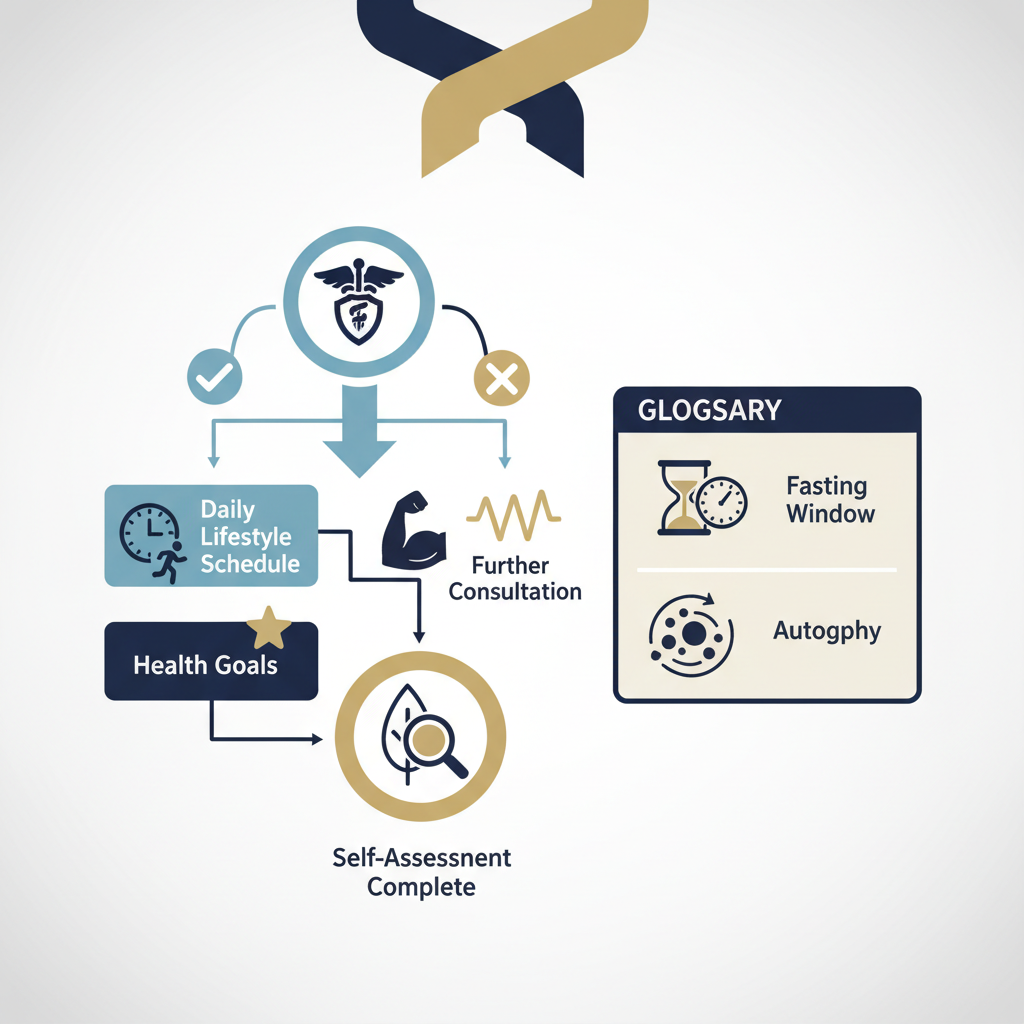
When you first dive into the world of intermittent fasting, the sheer volume of fasting terminology can be overwhelming. Understanding these terms is the cornerstone of building a sustainable practice. The most basic term is the 'Eating Window,' the period during which you consume your daily calories. Conversely, the 'Fasting Window' is when you abstain from caloric intake. One of the first questions before considering fasting should be: Do I understand the difference between time-restricted feeding and periodic fasting? Terms like 'Autophagy'—the body's cellular cleanup process—are often cited, but it's important to understand what triggers it. In the context of intermittent fasting education, you'll encounter protocols like 16:8 (16 hours fast, 8 hours eat) or OMAD (One Meal A Day). Ask yourself: Which of these sounds realistic for my current schedule? Another vital concept is 'Clean Fasting,' which usually means consuming only water, black coffee, or plain tea during the fast to avoid insulin spikes. Mastering this language allows you to navigate resources more effectively and communicate clearly with health professionals about your goals and methods.
The Importance of a Meal Timing Journal
Before jumping into a strict fasting schedule, consider keeping a meal timing journal for at least one week. This practice answers a critical question: What are my actual eating habits? Many of us eat out of boredom, stress, or social cues rather than physical hunger. By documenting every time you eat or drink something with calories, you gain an objective view of your baseline. Do you have a habit of late-night snacking? Is your morning latte the only thing keeping you going? A journal helps you see where a fasting window could naturally fit. For instance, if you realize you naturally stop eating at 8 PM, starting your fast then feels less forced. It also helps you track energy fluctuations. If you feel a 'crash' at 3 PM, you can look back at your meal timing to see if it's related to what or when you ate. This self-awareness is a powerful tool for evaluating fasting claims against your own reality. It transforms fasting from a generic 'diet' into a personalized health strategy that respects your body's unique rhythms.
Evaluating Fasting Claims Critically
The internet is full of bold promises regarding fasting, from 'instant weight loss' to 'reversing aging.' This is where evaluating fasting claims becomes crucial. You must ask: Is this claim backed by human clinical trials, or is it based on animal studies or anecdotal evidence? While fasting has many benefits, it is not a panacea. When you encounter a claim that seems too good to be true, look for nuance. Reliable sources will discuss both benefits and potential side effects. Ask yourself: Does this plan promote long-term health, or is it a 'crash' approach? Be wary of products marketed as 'essential' for fasting, such as expensive electrolyte mixes or 'fast-mimicking' supplements. Most of the benefits of fasting come from the absence of food, which costs nothing. By asking the right questions before considering fasting, you protect yourself from the psychological toll of unmet, unrealistic expectations. Focus on evidence-based benefits like improved insulin sensitivity and digestive rest, and maintain a healthy skepticism toward anything promising miraculous results overnight.
Lifestyle Compatibility and Social Challenges
A major factor in long-term success is how well fasting integrates into your daily life. A key question to ask is: How will this affect my social and professional commitments? If your job requires high physical output in the morning, a morning fast might be challenging initially. If family dinners are a non-negotiable part of your culture, choosing a window that ends at 5 PM might cause unnecessary friction. You need to consider: Am I prepared to navigate social situations where food is central? In many cultures, refusing food can be seen as impolite, so having a strategy for these moments is vital. Fasting should be a tool that enhances your life, not a source of social isolation. Think about your exercise routine as well; do you prefer training fasted or fueled? Planning these logistics beforehand prevents the 'decision fatigue' that often leads to breaking a fast prematurely. Flexibility is the key—knowing how to adjust your window for special occasions without feeling like you've 'failed' is what makes the practice sustainable.
Fasting and Blood Sugar Regulation
Understanding the link between intermittent fasting and blood sugar control is essential for safety and efficacy. A primary question to consider is: How does my body currently handle blood sugar fluctuations? For many, fasting helps stabilize glucose levels and reduces the 'rollercoaster' effect of frequent high-carb snacking. However, if you have a history of hypoglycemia or are taking certain medications, fasting requires much closer monitoring. Ask yourself: Do I experience extreme irritability, shakiness, or dizziness when a meal is delayed? These are signals that your body might need a more gradual transition. The goal of fasting is to improve metabolic flexibility—the ability to switch between burning sugar and burning fat. By understanding how your body regulates glucose during the fasting state, you can choose a protocol that supports your health without causing undue stress. Starting with shorter windows and focusing on nutrient-dense meals during the eating period is a safe way to explore these benefits.
Psychological Readiness and Relationship with Food
Your mental approach to fasting is just as important as the physical protocol. Ask yourself: What is my motivation for fasting? If it's coming from a place of self-punishment for 'overeating,' it may lead to a disordered relationship with food. Fasting should be viewed as an act of self-care and a way to give your body a break, not as a restrictive punishment. Are you prepared for 'mental hunger'? This is the desire to eat triggered by emotions, stress, or habits rather than physical need. Learning to sit with these feelings without immediately reacting is a significant part of the journey. Another important question: Do I have a tendency to binge during the eating window? Some individuals find that long periods of restriction lead to overconsumption later, which can negate the benefits and cause digestive distress. Developing a mindful approach to eating and ensuring you have a plan for breaking your fast with balanced nutrients will help maintain a positive psychological state throughout the process.
Common Mistakes and Concept Verification
- Starting too fast: Jumping into a 24-hour fast without prior experience often leads to burnout.
- Inadequate Hydration: Forgetting that the body needs more water and electrolytes during fasting periods.
- Poor Food Quality: Thinking that the fasting window allows for unlimited junk food during the eating period.
- Ignoring Bio-feedback: Pushing through severe pain or dizziness instead of listening to the body's warning signs.
- Over-reliance on Caffeine: Using excessive black coffee to blunt hunger, which can lead to jitters and sleep issues.
- Neglecting Sleep: Failing to realize that poor sleep can increase hunger hormones, making fasting much harder.
Fact-Checking Common Myths
Myth: Fasting puts you in 'starvation mode' immediately. Fact: True starvation mode takes days of zero calories; short-term fasting can actually slightly increase metabolism.
Myth: You can't build muscle while doing intermittent fasting. Fact: As long as protein intake and resistance training are maintained, muscle preservation is entirely possible.
Questions for Healthcare Professionals
Before starting,

Explore health education
Review the educational guides and practical tools related to this topic.
Explore the education hub