Fatty liver disease Canada statistics — 7 million affected (2026 update)
Author: Feras Alayed
Published:
Updated:
Category: canadian-health
Reading Time: 9 minutes
Key Takeaways
- About 20–25% of Canadian adults — roughly 7–8 million people — have fatty liver disease (MASLD/NAFLD), making it the most common liver condition in Canada. ([guidelines.diabetes.ca](https://guidelines.diabetes.ca/GuideLines/media/Docs/cpg/Ch42-Diabetes-and-Metabolic-Dysfunction-associated-Steatotic-Liver-Disease-in-Adults.pdf?utm_source=openai))
- MASLD is tightly linked to obesity, insulin resistance and type 2 diabetes; blood glucose measurements are reported in mmol/L in Canada (e.g., fasting plasma glucose ≥7.0 mmol/L indicates diabetes). ([guidelines.diabetes.ca](https://guidelines.diabetes.ca/GuideLines/media/Docs/cpg/Ch42-Diabetes-and-Metabolic-Dysfunction-associated-Steatotic-Liver-Disease-in-Adults.pdf?utm_source=openai))
- Diagnosis uses clinical risk assessment, blood tests, and non‑invasive imaging (ultrasound, FibroScan); access and wait times vary across provinces (Ontario, BC, Alberta, Quebec). ([sciencedirect.com](https://www.sciencedirect.com/science/article/pii/S1665268124005404?utm_source=openai))
- Lifestyle measures — weight loss, Canada's Food Guide–based eating patterns, reduced added sugars, increased soluble fibre — are the foundation of management. ([canada.ca](https://www.canada.ca/en/health-canada/services/canada-food-guide/about/history-food-guide.html?utm_source=openai))
- The Feel Great system (Balance soluble fibre matrix, Unimate yerba mate extract, and the 4‑4‑12 intermittent fasting protocol) may be a helpful lifestyle support when used with medical care, not a treatment. }
TL;DR
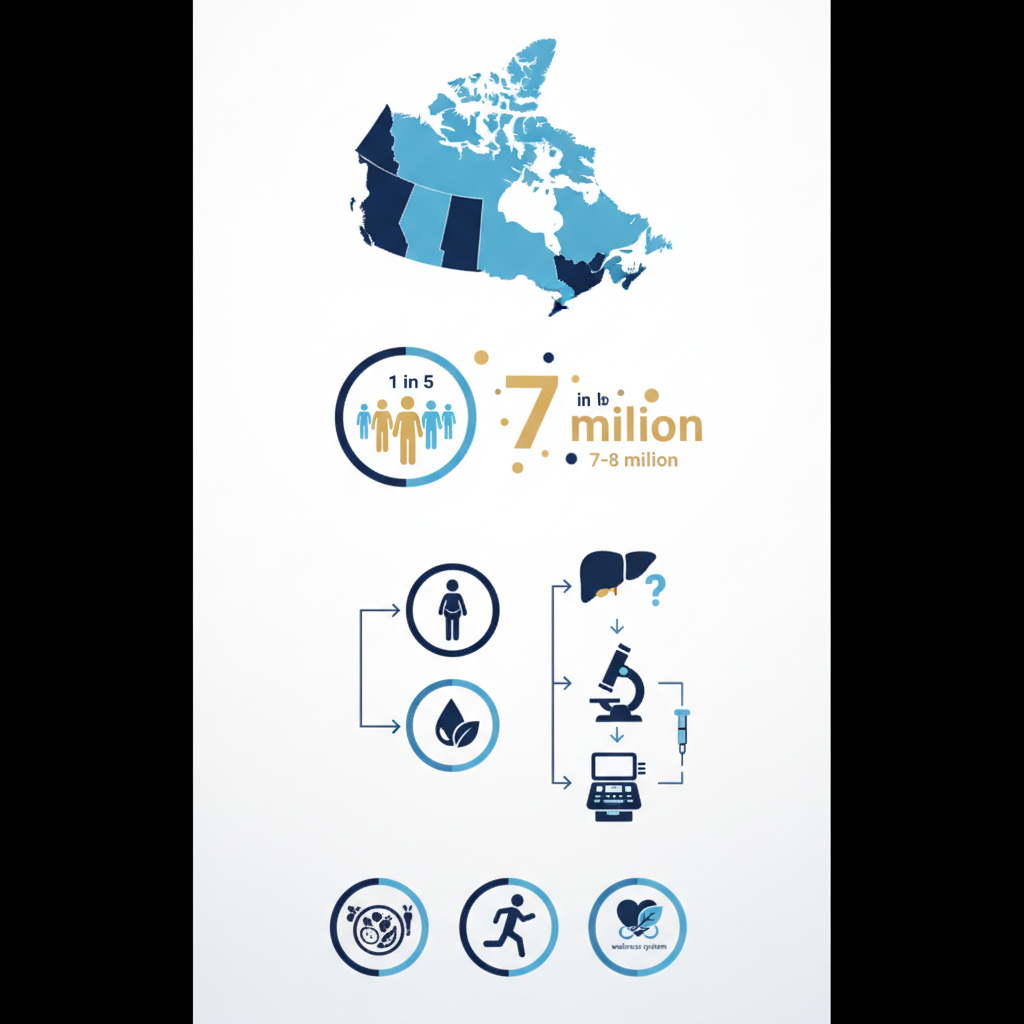
Recent Canadian estimates suggest around 20.8% of the population — approximately 7–8 million Canadians — have MASLD/NAFLD. It is associated with obesity and diabetes, raises cardiovascular risk, and is best addressed by lifestyle interventions; targeted screening in high‑risk groups is recommended. ([guidelines.diabetes.ca](https://guidelines.diabetes.ca/GuideLines/media/Docs/cpg/Ch42-Diabetes-and-Metabolic-Dysfunction-associated-Steatotic-Liver-Disease-in-Adults.pdf?utm_source=openai))
🇨🇦 Thousands of Canadians are using Feel Great to support their metabolic health naturally. Learn more & order here →
Fatty Liver Disease in Canada: 7 Million Affected — Fatty Liver Disease Canada Statistics Explained
Introduction — a striking Canadian number
Fatty liver disease — now more accurately called Metabolic Dysfunction‑Associated Steatotic Liver Disease (MASLD; formerly NAFLD) — is a major, growing public health issue in Canada. Clinical guidance and modelling published for Canada estimate prevalence at roughly one in five adults (≈20.8%), which translates into about 7–8 million Canadians living with hepatic steatosis today. This rising burden has implications for liver‑related complications, cardiovascular disease and transplant demand. ([guidelines.diabetes.ca](https://guidelines.diabetes.ca/GuideLines/media/Docs/cpg/Ch42-Diabetes-and-Metabolic-Dysfunction-associated-Steatotic-Liver-Disease-in-Adults.pdf?utm_source=openai))
What is MASLD / fatty liver disease?
MASLD describes accumulation of fat in liver cells (≥5% by histology or recognised by imaging) in the setting of metabolic dysfunction. The spectrum ranges from simple steatosis to inflammatory disease with hepatocyte injury (MASH, formerly NASH), fibrosis, cirrhosis and hepatocellular carcinoma. The terminology shift (NAFLD→MASLD, NASH→MASH) reflects emphasis on metabolic drivers such as obesity and insulin resistance. ([pmc.ncbi.nlm.nih.gov](https://pmc.ncbi.nlm.nih.gov/articles/PMC10588738/?utm_source=openai))
How common is fatty liver disease in Canada?
Multiple Canadian sources agree MASLD is highly prevalent. Diabetes Canada reports MASLD affects ~20.8% of the Canadian population and models project further increases driven by obesity and type 2 diabetes trends. A national modelling study estimated population and progression scenarios for 2019–2030 and highlighted a growing burden of advanced liver disease attributable to NAFLD/MASLD. Using Statistics Canada population figures (Canada passed 40 million in 2023), that prevalence equates to roughly 7–8 million Canadians. Prevalence estimates vary by method (imaging vs surrogate indices) and between subgroups. ([guidelines.diabetes.ca](https://guidelines.diabetes.ca/GuideLines/media/Docs/cpg/Ch42-Diabetes-and-Metabolic-Dysfunction-associated-Steatotic-Liver-Disease-in-Adults.pdf?utm_source=openai))
Who is at highest risk?
- People with overweight/obesity — moving to severe obesity raises MASLD prevalence dramatically. ([pmc.ncbi.nlm.nih.gov](https://pmc.ncbi.nlm.nih.gov/articles/PMC7286622/?utm_source=openai))
- People with type 2 diabetes: prevalence of MASLD among those with T2D is substantially higher; guidelines recommend active evaluation. ([guidelines.diabetes.ca](https://guidelines.diabetes.ca/GuideLines/media/Docs/cpg/Ch42-Diabetes-and-Metabolic-Dysfunction-associated-Steatotic-Liver-Disease-in-Adults.pdf?utm_source=openai))
- Individuals with features of metabolic syndrome (high triglycerides, low HDL, hypertension, insulin resistance). ([pmc.ncbi.nlm.nih.gov](https://pmc.ncbi.nlm.nih.gov/articles/PMC7897860/?utm_source=openai))
- Certain sociodemographic and regional groups — prevalence and access to services differ by province and community, including Indigenous and rural populations. ([pubmed.ncbi.nlm.nih.gov](https://pubmed.ncbi.nlm.nih.gov/40323353/?utm_source=openai))
Diagnosis — how Canadian clinicians evaluate MASLD
There is no population‑wide screening programme in Canada for MASLD. Practical assessment includes:
- Clinical risk assessment and labs (liver enzymes ALT/AST, full metabolic panel).
- Glycaemic evaluation in mmol/L: fasting plasma glucose; Diabetes Canada thresholds apply (e.g., fasting ≥7.0 mmol/L for diabetes; random ≥11.1 mmol/L). HbA1c is also used for glucose control monitoring. ([guidelines.diabetes.ca](https://guidelines.diabetes.ca/GuideLines/media/Docs/cpg/Ch42-Diabetes-and-Metabolic-Dysfunction-associated-Steatotic-Liver-Disease-in-Adults.pdf?utm_source=openai))
- Non‑invasive tests (NITs) such as FIB‑4, transient elastography (FibroScan) and ultrasound to detect steatosis and fibrosis; diagnostic pathways and imaging guidance are being refined in Canadian practice. ([sciencedirect.com](https://www.sciencedirect.com/science/article/pii/S1665268124005404?utm_source=openai))
- Liver biopsy reserved for diagnostic uncertainty or clinical trials.
Why MASLD threatens cardiovascular health
MASLD is a systemic metabolic condition, not just a liver disease. Meta‑analyses and society statements show MASLD is associated with higher risk of cardiovascular disease and stroke; cardiovascular disease is a leading cause of death among people with fatty liver. This dual risk makes CV risk reduction (lipid control, blood pressure, glycaemic management) essential in MASLD care. ([pmc.ncbi.nlm.nih.gov](https://pmc.ncbi.nlm.nih.gov/articles/PMC7897860/?utm_source=openai))
Provincial realities: Ontario, BC, Alberta, Quebec
Access to hepatology clinics, FibroScan devices and multidisciplinary weight‑management programmes varies across provinces. Urban centres (Toronto, Vancouver, Calgary, Montreal) generally have more specialist capacity and research programmes; rural and remote communities, and some Indigenous communities, face barriers. Canadian health system structure (provincial delivery under a public payer) means local programmes and referral pathways differ — clinicians are increasingly using primary‑care NIT algorithms to triage referrals. ([sciencedirect.com](https://www.sciencedirect.com/science/article/pii/S1665268124005404?utm_source=openai))
What works to lower liver fat — evidence‑based actions
1. Weight loss (5–10% and beyond)
Weight loss through calorie reduction and activity is the most consistent intervention to reduce hepatic steatosis and inflammation; higher weight loss yields larger histologic benefits. Canadian and international guidelines emphasise structured weight‑management programmes. ([pmc.ncbi.nlm.nih.gov](https://pmc.ncbi.nlm.nih.gov/articles/PMC10588738/?utm_source=openai))
2. Dietary pattern
Follow Canada’s Food Guide principles: more vegetables, whole foods, fibre, healthy fats and less added sugar/refined carbs and saturated fat. Trials and meta‑analyses show Mediterranean‑style patterns, reduced fructose intake, and higher soluble fibre associate with lower liver fat. ([canada.ca](https://www.canada.ca/en/health-canada/services/canada-food-guide/about/history-food-guide.html?utm_source=openai))
3. Physical activity
Regular moderate aerobic activity (e.g., 150 minutes/week) and resistance training lower liver fat and improve insulin sensitivity even in the absence of major weight loss. ([guidelines.diabetes.ca](https://guidelines.diabetes.ca/GuideLines/media/Docs/cpg/Ch42-Diabetes-and-Metabolic-Dysfunction-associated-Steatotic-Liver-Disease-in-Adults.pdf?utm_source=openai))
4. Medical management of risk factors
Control of diabetes (watch glucose in mmol/L), lipids, and blood pressure is central to reducing cardiovascular risk in MASLD. Some glucose‑lowering drugs (studied internationally) show hepatic benefits in people with diabetes, but clinical decisions must follow specialist guidance. ([guidelines.diabetes.ca](https://guidelines.diabetes.ca/GuideLines/media/Docs/cpg/Ch42-Diabetes-and-Metabolic-Dysfunction-associated-Steatotic-Liver-Disease-in-Adults.pdf?utm_source=openai))
Screening approach — who to test
Targeted screening in primary care is the current Canadian approach: test people with obesity, type 2 diabetes or multiple metabolic risk factors using labs + non‑invasive fibrosis scores. Universal community screening is not recommended at present. Tools like FIB‑4 and FibroScan help determine who needs hepatology referral. ([guidelines.diabetes.ca](https://guidelines.diabetes.ca/GuideLines/media/Docs/cpg/Ch42-Diabetes-and-Metabolic-Dysfunction-associated-Steatotic-Liver-Disease-in-Adults.pdf?utm_source=openai))
How Feel Great May Fit Into a Canadian MASLD Strategy
Feel Great is a lifestyle support system that combines a soluble fibre matrix (Balance), Unimate (yerba mate extract), and an organised 4‑4‑12 intermittent fasting protocol. When used alongside medical care, nutritional counselling and exercise, these components may help lower post‑meal glucose excursions, support satiety and adherence to reduced‑calorie diets, and improve daytime energy and mental clarity. Important: this is a supportive lifestyle programme — not a medication or sole therapy for MASLD — and Canadians should consult their healthcare provider before starting, especially if on glucose‑lowering drugs. Also check any Health Canada NPN registration numbers for product verification.
People Also Ask
- How do I know if I have fatty liver? — See your doctor for labs (ALT/AST), glycaemic testing in mmol/L and non‑invasive imaging (ultrasound/FibroScan). ([sciencedirect.com](https://www.sciencedirect.com/science/article/pii/S1665268124005404?utm_source=openai))
- Can fatty liver be reversed? — Lifestyle changes often reduce liver fat; reversal depends on disease stage. ([pmc.ncbi.nlm.nih.gov](https://pmc.ncbi.nlm.nih.gov/articles/PMC10588738/?utm_source=openai))
- Is fatty liver linked to diabetes? — Yes: diabetes increases prevalence and progression risk; monitor fasting glucose in mmol/L and HbA1c. ([guidelines.diabetes.ca](https://guidelines.diabetes.ca/GuideLines/media/Docs/cpg/Ch42-Diabetes-and-Metabolic-Dysfunction-associated-Steatotic-Liver-Disease-in-Adults.pdf?utm_source=openai))
- Should children be screened? — Rising pediatric MASLD rates are a concern; clinicians assess at‑risk youth (obesity, metabolic issues). ([globalnews.ca](https://globalnews.ca/news/9616328/non-alcoholic-fatty-liver-disease-canada-children/?utm_source=openai))
- Does alcohol make MASLD worse? — Coexisting alcohol use can accelerate liver injury; reduction is advised. ([cdhf.ca](https://cdhf.ca/en/what-is-metabolic-dysfunction-associated-steatotic-liver-disease-masld-causes-and-symptoms/?utm_source=openai))
FAQ
- What fasting glucose values (mmol/L) matter? — Normal fasting glucose is usually <6.1 mmol/L; impaired fasting glucose often 6.1–6.9 mmol/L; diabetes diagnosed at fasting ≥7.0 mmol/L or random ≥11.1 mmol/L (Diabetes Canada). ([guidelines.diabetes.ca](https://guidelines.diabetes.ca/GuideLines/media/Docs/cpg/Ch42-Diabetes-and-Metabolic-Dysfunction-associated-Steatotic-Liver-Disease-in-Adults.pdf?utm_source=openai))
- Does Canada have a national fatty liver screening programme? — Not yet; focus is on targeted screening of high‑risk groups using NITs and primary‑care triage. ([guidelines.diabetes.ca](https://guidelines.diabetes.ca/GuideLines/media/Docs/cpg/Ch42-Diabetes-and-Metabolic-Dysfunction-associated-Steatotic-Liver-Disease-in-Adults.pdf?utm_source=openai))
- Are there approved drugs for MASLD? — No single approved cure; some drugs show promise in trials, especially in people with advanced disease, but guidelines prioritise lifestyle and comorbidity control. ([pmc.ncbi.nlm.nih.gov](https://pmc.ncbi.nlm.nih.gov/articles/PMC10588738/?utm_source=openai))
- What lifestyle changes give the biggest benefit? — Sustained weight loss (5–10% or more), Mediterranean‑style eating consistent with Canada’s Food Guide, less added sugar, increased soluble fibre and >150 min/week of activity. ([canada.ca](https://www.canada.ca/en/health-canada/services/canada-food-guide/about/history-food-guide.html?utm_source=openai))
- How can I get help in my province? — Start with your family doctor or local walk‑in clinic; ask about non‑invasive screening (FIB‑4, FibroScan) and referral to hepatology or multidisciplinary weight management. Provincial pathways differ (Ontario, BC, Alberta, Quebec). ([sciencedirect.com](https://www.sciencedirect.com/science/article/pii/S1665268124005404?utm_source=openai))
References & Scientific Sources
- Diabetes Canada Clinical Practice Guidelines — Chapter on MASLD/NAFLD (2025). ([guidelines.diabetes.ca](https://guidelines.diabetes.ca/GuideLines/media/Docs/cpg/Ch42-Diabetes-and-Metabolic-Dysfunction-associated-Steatotic-Liver-Disease-in-Adults.pdf?utm_source=openai))
- Burden of nonalcoholic fatty liver disease in Canada, 2019–2030: a modelling study (PMC). ([pmc.ncbi.nlm.nih.gov](https://pmc.ncbi.nlm.nih.gov/articles/PMC7286622/?utm_source=openai))
- Call to action: integrating steatotic liver disease into public health strategies in Canada (2025 commentary). ([pmc.ncbi.nlm.nih.gov](https://pmc.ncbi.nlm.nih.gov/articles/PMC12589910/?utm_source=openai))
- Canadian Liver Foundation — patient facts and prevalence. ([doczz.net](https://doczz.net/doc/8008279/fatty-liver-fast-facts---canadian-liver-foundation?utm_source=openai))
- Statistics Canada — population and metabolic health analyses. ([www150.statcan.gc.ca](https://www150.statcan.gc.ca/n1/pub/91-215-x/91-215-x2023001-eng.htm?utm_source=openai))
- American Heart Association and JACC statements/reviews on NAFLD and cardiovascular risk. ([professional.heart.org](https://professional.heart.org/en/guidelines-statements/nonalcoholic-fatty-liver-disease-and-cardiovascular-risk-a-scientific-statementatv0000000000000153?utm_source=openai))
- TASL / Canadian imaging guidance for detection and grading of MASLD (2025). ([car.ca](https://car.ca/wp-content/uploads/2025/09/CAR-MASLD-Guidelines-Part-1.pdf?utm_source=openai))
- International systematic reviews and meta‑analyses on NAFLD, diet, and metabolic interventions (PubMed/PMC). ([pmc.ncbi.nlm.nih.gov](https://pmc.ncbi.nlm.nih.gov/articles/PMC7897860/?utm_source=openai))
- Health Canada — Canada’s Food Guide and nutrition guidance. ([canada.ca](https://www.canada.ca/en/health-canada/services/canada-food-guide/about/history-food-guide.html?utm_source=openai))
Medical Disclaimer
This article is for educational purposes only and does not replace medical advice. If you suspect liver disease or have chronic conditions (diabetes, cardiovascular disease), consult your healthcare provider in your province. Confirm any supplement NPNs with Health Canada and discuss interactions with prescription medicines before starting new products.

Related ATHAR paths
🇨🇦 Ready to Start Your Health Transformation?
Join thousands of Canadians who have improved their metabolic health with the Feel Great system. Backed by 50+ clinical studies and listed in the Physicians' Desk Reference (PDR).
✅ Ships to all provinces: BC, Alberta, Saskatchewan, Manitoba, Ontario, Quebec, New Brunswick, Nova Scotia, PEI, Newfoundland & Labrador | 90-Day Money-Back Guarantee
Check Your Health Numbers
Calculate your BMI and waist-to-height ratio free in 30 seconds — get personalized recommendations for your metabolic health.
🧮 Calculate My BMI — Free