Guide to Reading Food Labels in Saudi Arabia: Understanding Nutrition Facts
Author: Feras Alayed
Published:
Category: food-labels-saudi
Reading Time: 9 minutes
Reading Food Labels in Saudi Arabia: Understanding Nutrition Facts
The ability to read and understand food labels is an essential skill in the modern era, especially with the significant development of the food sector in the Kingdom of Saudi Arabia. This guide, provided by the ATHAR Center, aims to empower the Gulf consumer to make informed nutritional decisions based on scientific foundations, away from attractive marketing that may hide details relevant to public health. Understanding what food packages contain is not just a luxury; it is the first line of defense in preventing health challenges associated with contemporary lifestyles.
1. Introduction to SFDA Standards for Food Labels
The Saudi Food and Drug Authority (SFDA) plays a pivotal role in regulating the food market in the Kingdom of Saudi Arabia, setting strict standards that ensure transparency of information provided to the consumer. These regulations aim to unify the way nutritional data is presented, making it easier for citizens and residents to compare products and choose the most appropriate ones. The Authority mandates that manufacturers and importers place a food label in Arabic, including precise details about ingredients, nutritional values, and allergens.
Saudi standards are based on international best practices, taking into account the nutritional specificities of the region. For instance, there is a significant focus on clarifying added sugar and trans fat content, given their close link to public health. The presence of the Authority's logo or compliance with its regulations means the product has undergone oversight ensuring the accuracy of the written data. Consumers should realize that the food label is not just a legal requirement but an educational tool aimed at raising nutritional awareness in Saudi society, in line with the Kingdom's Vision 2030, which prioritizes quality of life and public health.
Basic requirements for food labels according to SFDA regulations include: product name, list of ingredients in descending order of weight, net weight, manufacturer's name and address, country of origin, production and expiration dates, and storage instructions. Additionally, the Nutrition Facts table is a mandatory element providing details on energy (calories) and macro and micronutrients. Understanding these standards helps consumers distinguish between products that claim to be healthy and those that actually adhere to sound nutritional standards.
2. Understanding the Nutrition Facts Table: Key Elements and How to Read Them
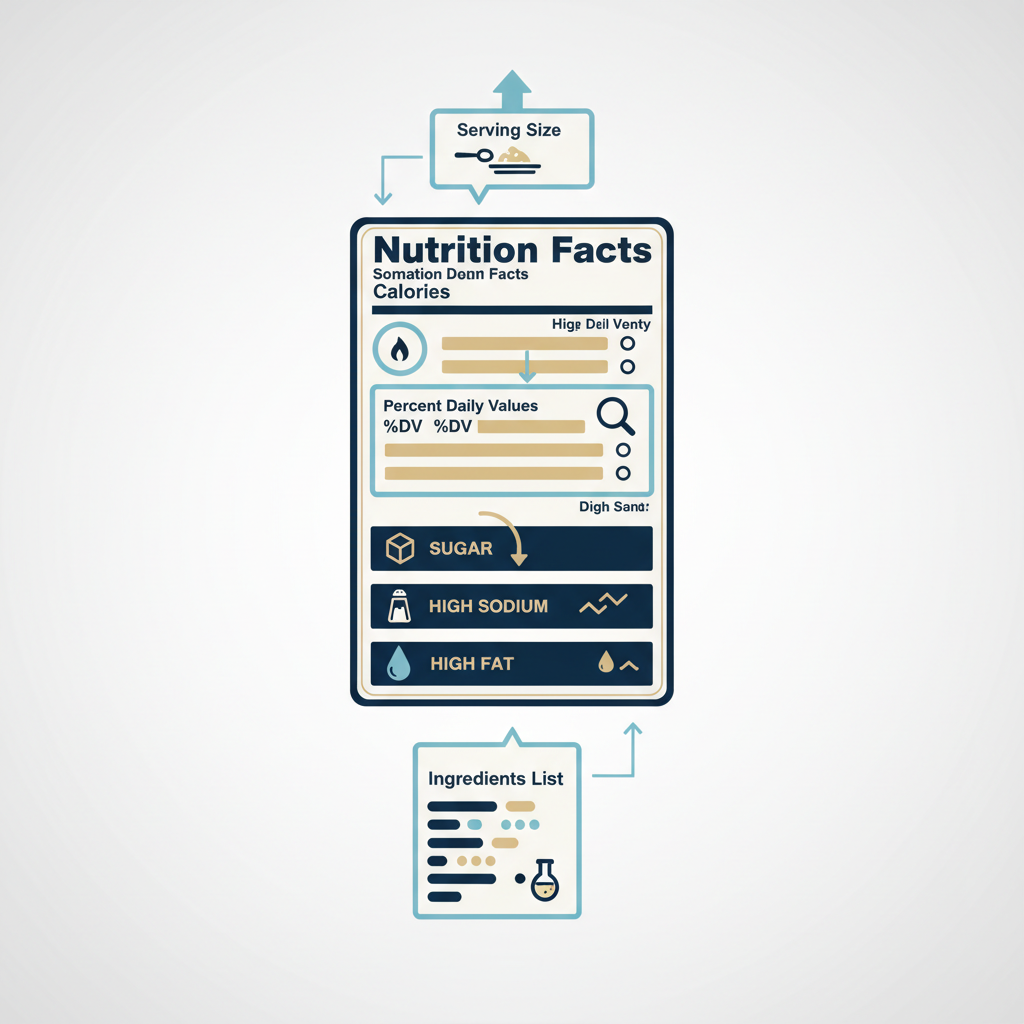
The Nutrition Facts table is the heart of the food label. The table usually begins with information about serving size, followed by calories, and then a breakdown of nutrients. It is essential to start by reading calories, which is the unit of measurement for the energy the body gets from the product. However, calories should not be the only criterion for evaluation; one must look at the source of these calories.
Nutrients in the table are divided into several categories: fats (including saturated and trans fats), cholesterol, sodium, carbohydrates (including dietary fiber and sugars), and protein. Modern regulations require clarifying added sugar separately from total sugars, which is vital for understanding the quality of carbohydrates in the product. Trans fats should be at the lowest possible levels, preferably zero, given their known effects on health.
One important concept in the table is the "Percent Daily Value" (%DV). This percentage tells you how much a nutrient in a serving of food contributes to a total daily diet, based on a general diet of 2,000 calories. As an educational rule of thumb: 5% DV or less is considered low, while 20% DV or more is considered high. This metric helps consumers determine whether a product is rich in nutrients they want to increase (like fiber and vitamins) or those they want to limit (like sodium and saturated fats).
3. Analyzing Serving Size vs. Total Package Content
One of the most common mistakes consumers make is confusing the suggested serving size with the total content of the package. The serving size is the amount on which all the nutritional data mentioned in the table is based, and it is not necessarily the amount a person consumes in one sitting. For example, a bag of potato chips may contain 3 servings, while many people tend to eat the entire bag.
If the serving size is half a cup, and you eat a full cup, you have effectively consumed double the calories and double the amount of sodium and sugars mentioned in the table. This discrepancy requires a simple but necessary calculation to monitor nutritional intake accurately. The SFDA aims to make serving sizes more realistic to reflect what people actually consume, but individual awareness remains the foundation.
When analyzing serving size, one must also pay attention to the "Servings Per Container." In soft drinks or juices, a small bottle might be one serving, while family-sized bottles contain multiple servings. Ignoring this detail can lead to consuming large amounts of sugar or salt without realizing it. It is always recommended to compare the serving size you actually eat with the data on the label to ensure you stay within your daily health goals.
4. Decoding the Ingredient List: Order of Importance and Common Terms
The ingredient list is where the full truth of the product is revealed, away from the numbers. The golden rule here is that ingredients are listed in descending order by weight; meaning the ingredient at the beginning of the list represents the largest proportion of the product. If sugar or hydrogenated vegetable oil is the first or second ingredient, this is a strong indicator of the product's nutritional quality.
In addition to the order, one should pay attention to the length of the list. Long lists containing complex chemical names often indicate that the product is highly processed (Ultra-processed). These ingredients include preservatives, artificial colors, and emulsifiers. Although these substances are approved by regulatory authorities, reducing them aligns with modern health trends that favor whole and less processed foods.
One should also look for allergens, which the SFDA mandates be clearly identified (such as writing them in bold or placing them at the end of the list under the heading "Contains"). These substances include milk, eggs, nuts, wheat, and soy. Understanding common terms for food additives, such as "natural flavors" or "antioxidants," helps in forming a comprehensive picture of what enters your body. Remember: if you cannot pronounce the name of an ingredient or do not know what it is, it is best to research it or consult a specialist.
5. Identifying Different Names for Added Sugars and Fats in Products
Food companies sometimes use multiple names for ingredients that consumers might want to avoid, especially sugar and fat. Sugar does not always appear as "sugar"; it can hide under more than 50 different names. Common examples include high fructose corn syrup, maltodextrin, dextrose, sucrose, barley malt, molasses, and fruit juice concentrates. All these names eventually mean adding empty calories that may affect blood sugar levels.
As for fats, the most dangerous term is "partially hydrogenated oils," which is the primary source of trans fats. Even if the front of the product says "cholesterol-free," it may contain high saturated fats like palm oil or processed coconut oil. Understanding these names prevents being deceived by flashy marketing claims that focus on one positive aspect and ignore harmful added ingredients.
From an educational perspective, it is recommended to look for products that use healthy fat sources like olive oil or unprocessed seed oils, and products that do not contain added sugars in the first three ingredients. Awareness of these names transforms the shopping process from a random act into a deliberate health decision, helping to avoid the hidden accumulation of sugars and fats in the daily diet, which contributes to maintaining a healthy weight and stable energy levels.
6. How to Use a Food Journal to Record Label Data and Monitor Habits
Food journaling is a powerful tool for turning information on labels into sustainable healthy behaviors. Journaling is not just about recording what you ate, but also about noting the nutritional data you read on the label. By recording calories, fiber, and added sugars for each meal, you can form a clear vision of your weekly consumption pattern.
To start this habit, you can use a paper notebook or mobile apps. When reading the label of a new product, note the main ingredients and the serving size you consumed. Over time, you will notice certain patterns; such as high sodium consumption on certain days, or a sudden spike in sugars due to alleged "healthy" drinks. This awareness makes it easier to make simple but impactful adjustments to your diet.
Additionally, a journal helps link what you eat to how you feel. For example, you might notice that products high in added sugars (as read on their labels) lead to lethargy two hours after consumption. This link between label data and physical response enhances your ability to choose foods that support your activity and vitality. The journal is not a tool for deprivation, but a means for cognitive empowerment and control over dietary choices.
7. Essential Questions to Discuss with a Dietitian About Food Labels
After learning the basics of reading labels, comes the role of customization through expert consultation. A dietitian can help you translate these numbers into an action plan that fits your individual needs. Here are some essential questions you can ask at your next appointment:
- What percentage of Daily Value (%DV) should I focus on based on my current health condition?
- How can I distinguish between natural sugars in fruits and dairy and added sugars when reading the label?
- Are there specific ingredients in the ingredient list I should avoid entirely based on my health history?
- How do I accurately calculate net carbs if the product contains fiber and sugar alcohols?
- What is the maximum sodium limit I should look for in a single meal?
These questions turn the consultation session from general advice into personalized education. A dietitian has the ability to explain the interactions between different ingredients and how they affect your goals, whether it's weight management, improving digestion, or raising energy levels. Remember that the food label provides the data, but the specialist provides the context and wisdom to apply this data in your daily life.
Educational Note: The food label is a legal document intended to protect you; make reading it an integral part of your shopping journey to ensure better health for you and your family.
Educational Glossary of Food Label Terms
| Term | Educational Meaning |
|---|---|
| Calories | The amount of energy that food provides to the body. |
| Saturated Fat | Fats that are preferred to be reduced to maintain heart health. |
| Sodium | The main component of salt; its excess may affect blood pressure. |
| Dietary Fiber | A part of carbohydrates that helps in digestion and feeling full. |
| Added Sugar | Sugars added during manufacturing and not naturally present. |
| Hydrogenated Oils | Chemically processed oils to increase shelf life; preferred to be avoided. |

Explore health education step by step
Use the educational guides and practical tools to choose your next learning step.