Health Literacy Guide for Al-Ahsa: Cognitive and Information Empowerment
Author: Feras Alayed
Published:
Updated:
Category: al-ahsa-health-literacy
Reading Time: 11 minutes
Health Literacy Guide for Al-Ahsa Readers: Skills for Cognitive and Informational Empowerment
1. Introduction to the Importance of Health Literacy in the Al-Ahsa Community
Health literacy is the cornerstone of building strong communities capable of facing contemporary health challenges. In Al-Ahsa, characterized by its unique historical and social depth, there is a pressing need to empower individuals with the cognitive tools to make informed decisions about their health and their families' well-being. Health literacy is not just the ability to read and write; it is the capacity to access, understand, evaluate, and apply health information in daily life. Transitioning from a passive recipient of information to an active participant in healthcare requires a deep awareness of how health systems function and how to interpret medical data.
In our Al-Ahsa community, family and social ties play a significant role in circulating health information. This highlights the importance of ensuring that such information is based on solid scientific foundations. Enhancing health literacy helps bridge the gap between the patient and the healthcare provider, leading to improved treatment outcomes and increased efficiency in disease prevention. When an individual possesses the skills to understand medical instructions, they become more capable of adhering to treatment plans and avoiding medication errors or misinterpretations of symptoms.
Health literacy extends beyond the clinic to include daily lifestyle choices, from selecting the right food to understanding environmental impacts on public health. At the ATHAR Center, we believe that knowledge is the first step toward positive change. Therefore, this guide aims to provide readers in Al-Ahsa with the essential skills to become health-literate, capable of distinguishing between scientific facts and fallacies, and ready to interact with the health system with high efficiency and confidence. Investing in health awareness is an investment in the quality of life for future generations in our beloved region.
2. Decoding Common Medical Terminology in Local Clinics
Patients in clinics often feel a sense of confusion when hearing medical terms that may seem complex or unfamiliar. Understanding these terms is the first key to effective communication with a doctor. For example, the term "Chronic" does not necessarily mean the condition is dangerous; rather, it indicates that the health state persists over a long period and requires ongoing management. In contrast, "Acute" refers to a condition that starts suddenly and requires rapid intervention but is usually short-term.
A term frequently encountered in laboratory tests is "Metabolism," which refers to the chemical processes within the body that convert food into energy. Understanding this term helps in grasping how dietary habits affect vital body functions. Also, there is a fundamental difference between a "Screening," which is conducted for healthy individuals to detect diseases early, and a "Diagnostic Test," which is requested when specific symptoms are present to confirm a medical condition.
| Medical Term | Simplified Meaning | Educational Context |
|---|---|---|
| Insulin Resistance | Decreased cell response to insulin hormone | Related to how the body handles sugars |
| Systemic Inflammation | Inflammation affecting the whole body | Used to describe broad immune reactions |
| Vital Signs | Measurements like blood pressure and pulse | Used to assess basic body functions |
| Preventive Intervention | Actions taken to prevent disease occurrence | Such as vaccinations or lifestyle changes |
Recognizing the difference between "Symptoms" that the patient feels and "Signs" that the doctor observes helps in providing an accurate description of the health status. When a doctor discusses "Family History," they are looking for genetic patterns that might increase the likelihood of certain conditions, requiring the patient to be familiar with the health records of their first-degree relatives. Arming oneself with these terms removes the barrier of fear and makes the medical dialogue more transparent and productive.
3. Guide to Reading Nutrition Labels for National and Imported Products
Reading nutrition labels is a vital skill for controlling what enters our bodies, especially with the variety of products in Al-Ahsa markets ranging from local production to imports. The first thing to notice is the "Serving Size"; many people read the calories assuming they apply to the entire package, while they actually apply to a small portion. If the package contains two servings and you consume the whole thing, you must double all the numbers listed on the label.
Focus should be placed on the "Daily Value" (DV%), a percentage that tells you how much a serving of food contributes to your daily requirement of a specific nutrient. As a general rule, 5% or less is considered low, while 20% or more is considered high. It is always preferable to look for products with low percentages of saturated fats, sodium, and added sugars, and high percentages of dietary fiber, vitamins, and essential minerals.
When looking at the ingredients list, remember they are listed in descending order by weight; the first ingredient is present in the largest amount. Be wary of multiple names for sugar, such as (high fructose corn syrup, maltose, sucrose, or fruit juice concentrates). For imported products, measurement units or naming conventions may differ, so it is important to check for the translated identification label mandated by local regulatory authorities, which provides essential information clearly and uniformly. Understanding these details transforms shopping from a random act into a calculated health decision, avoiding many hidden ingredients that could affect our health goals.
4. Methodology for Tracking Daily Habits: How to Start an Accurate Health Journal
Health journaling is a powerful tool for turning fleeting observations into tangible data that can be analyzed. To start an accurate health journal, complexity is not required; rather, consistency and methodology are key. Begin by recording four essential elements daily: Sleep, Physical Activity, Dietary Patterns, and Mood or Energy Levels. Recording sleep and wake times helps in understanding the quality of rest the body receives, while logging physical activity helps track progress in fitness.
Regarding dietary patterns, journaling is not just about the type of food, but also includes timing and feelings of hunger or fullness. This helps discover patterns related to emotional eating or periods when energy levels drop. Additionally, recording sudden physical symptoms, such as headaches or digestive upsets, and linking them to what was eaten or done that day, provides the doctor with a clear map that aids in accurate diagnosis. "What gets measured, gets managed and improved"; this rule applies perfectly to personal health.
Use a journaling method you are comfortable with, whether a traditional paper notebook or an electronic app. The important thing is objectivity; record facts as they are without judging yourself. At the end of each week, conduct a quick review of your entries to look for recurring patterns. Do you always feel tired on certain days? Does a specific type of food cause lethargy? These observations are the essence of self-awareness that can radically change your health trajectory. A health journal is not just a record of the past, but a compass for the future, helping you make preventive decisions based on a deep understanding of your body's unique responses.
5. Preparing for the Medical Appointment: Formulating Effective Questions for the Provider
The time allocated for a medical appointment is often limited, so advance preparation ensures you get the most benefit. Start by writing a list of all medications and supplements you are currently taking, including dosages. It is also helpful to note any concerns or symptoms ranked by their importance to you. When meeting the doctor, do not hesitate to use the "Ask Me 3" methodology, which consists of three core questions you should know the answers to before leaving the clinic: What is my main problem? What do I need to do? And why is it important for me to do this?
Formulating questions clearly helps the doctor understand your needs. Instead of saying "I feel tired," say "I feel extreme exhaustion that prevents me from doing my daily tasks after 4 PM." Ask about available alternatives for proposed treatments, potential side effects, and how to act if a medication dose is missed. If the doctor prescribes a lifestyle change, ask for practical, small steps you can start immediately. Remember that you are a partner in the therapeutic process, and you have the right to understand every detail of your health plan.
"An informed patient is a doctor's best ally; precise questions lead to more accurate diagnoses and more successful treatment plans."
During the appointment, do not be shy about asking for clarification of complex terms or requesting that important instructions be written down. If a laboratory test is required, ask how to prepare for it (such as fasting) and when and how you will receive the results. After the appointment ends, summarize what you understood to the doctor to ensure there are no misunderstandings. This type of active interaction fosters mutual trust and ensures you are on the right path toward achieving your health goals, transforming the medical visit from a routine procedure into a productive educational experience.
6. Criteria for Evaluating Health Information Online and on Social Media Platforms
In the age of information explosion, it has become easy to access health advice at the click of a button, but the greatest challenge lies in distinguishing wheat from chaff. To evaluate any health information online, strict criteria must be applied. First, the Source: Is the information issued by a certified government agency, an international health organization, or a reputable research university? Avoid relying on personal blogs or accounts that promote specific products under the guise of medical advice. Reliable information is always based on peer-reviewed scientific studies rather than individual experiences or anecdotal stories.
Second, Currency: Medical science evolves at a staggering pace, so check the publication date of the information. Information considered correct ten years ago might be inaccurate today or may have been updated. Third, Objectivity and Neutrality: Look for information that presents both benefits and risks in a balanced way. If the information seems "too good to be true" or promises magical and immediate results, it is often misleading. Caution is necessary regarding content that uses emotional or fear-based language to push you toward a certain decision or product purchase.
Fourth, Alignment with Official Recommendations: Compare what you read with recommendations issued by the Ministry of Health or local health authorities in the Kingdom. Social media platforms are full of "influencers" who may provide medical advice without a scientific background; always remember that the number of followers is not evidence of the accuracy of information. Before applying any advice you find online, consult a health professional who knows your medical history. Developing a critical sense toward digital content is an integral part of modern health literacy that protects you from falling into the trap of misinformation that could harm your health.
7. Conclusion: Building a Knowledge-Aware Community in the Eastern Province
Building a health-aware community in Al-Ahsa and the Eastern Province is an ongoing journey that begins with the individual and extends to the family and then the community at large. Health literacy is not just a collection of information, but a shift in mindset toward adopting personal responsibility for health. By decoding medical terms, reading nutrition labels intelligently, tracking daily habits, preparing well for medical appointments, and critically evaluating digital information, we lay the solid foundations for a life of higher quality and contribution. These skills enable us to deal with health challenges with awareness and calm, away from the anxiety resulting from ignorance or misinformation.
We at the ATHAR Center believe that every individual in Al-Ahsa has the potential to be a health ambassador in their surroundings. Spreading science-based awareness contributes to reducing the burden on the health system and creates a supportive environment for healthy lifestyles. Our commitment to health literacy is a commitment to a bright future where health is the primary driver of development and prosperity. Let us start today by applying what we have learned, and let us make health knowledge an integral part of our daily culture and social values.
- Empowerment: The ability to make independent health decisions based on facts.
- Prevention: Understanding that awareness is the first line of defense against diseases.
- Communication: Building bridges of trust and clarity with medical staff.
- Sustainability: Transforming conscious health practices into permanent habits.
In conclusion, health literacy is a never-ending learning journey. Every accurate piece of information you acquire and every smart question you ask brings you one step closer to a better life. Let us make Al-Ahsa a role model in health awareness and cognitive empowerment, utilizing available resources and reliable educational platforms to build a future where everyone enjoys health and wellness.

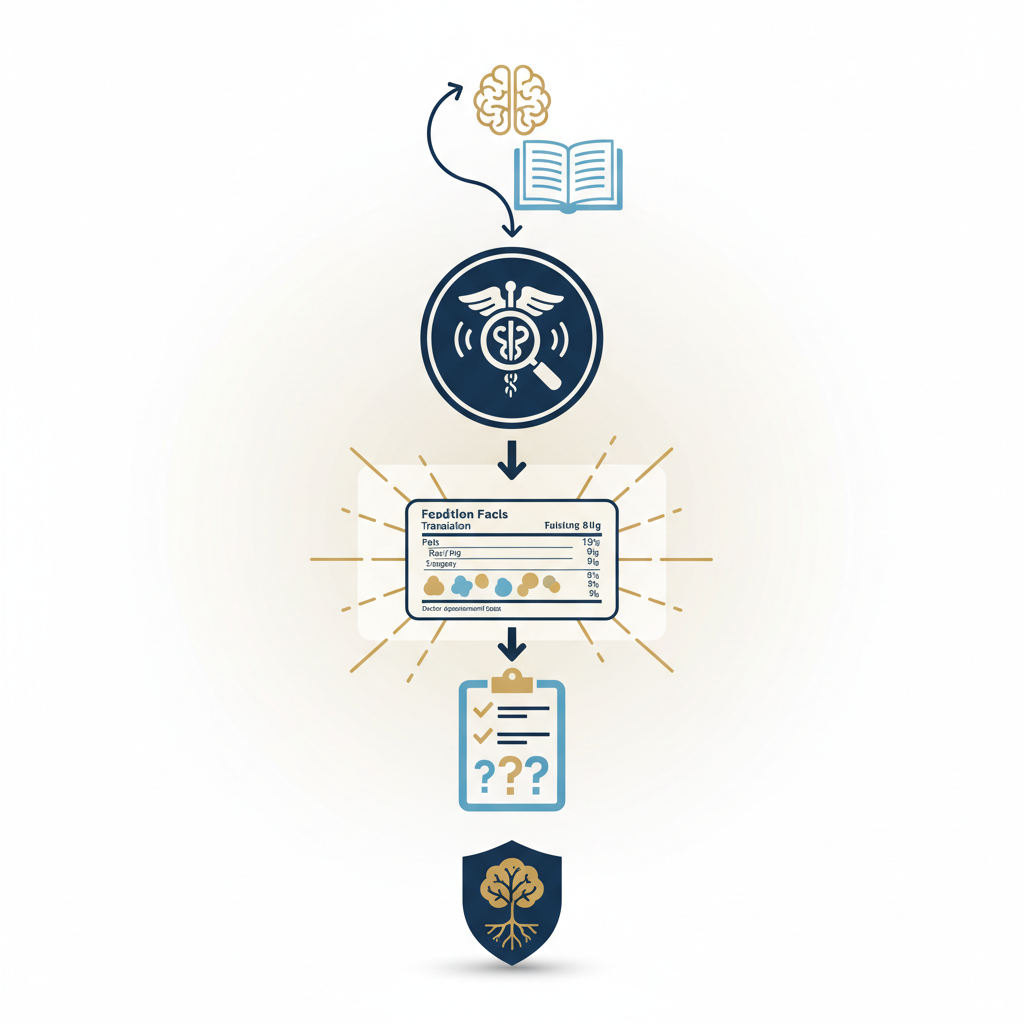
Explore health education step by step
Use the educational guides and practical tools to choose your next learning step.
Continue your next step with ATHAR
Explore the official Feel Great member path, or learn about the creator partnership route if you are interested in sharing wellness education with your audience.
Explore Feel Great · Explore the Creator Affiliate gateway · Ask a question on WhatsApp