Health Literacy Guide for Al-Ahsa: Enhancing Awareness and Communication Skills
Author: Feras Alayed
Published:
Updated:
Category: al-ahsa-health-literacy
Reading Time: 9 minutes
Health Literacy Guide for Al-Ahsa Readers: Enhancing Awareness and Communication Skills
Health literacy is the cornerstone of building a conscious community capable of facing contemporary health challenges. In the Al-Ahsa region, characterized by its interconnected social fabric and ancient history, health literacy takes on a special significance that goes beyond mere knowledge of basic medical information. It means the ability to access, understand, evaluate, and then apply health information to make informed decisions regarding public health and disease prevention. Health literacy is not limited to reading and writing; it extends to effective communication skills with health practitioners, the ability to navigate complex health systems, and understanding the risks and benefits associated with different treatment options. In our local community, where the family plays a pivotal role, a health-literate individual becomes a reliable source for their family and surroundings, contributing to reducing the gap between medical recommendations and daily practices. Enhancing these skills helps transform the individual from a passive recipient of health services into an active partner in managing their wellness, which aligns with modern trends focusing on person-centered care. Through this guide, ATHAR Center seeks to provide the reader with the necessary cognitive tools to raise the level of health awareness, focusing on practical skills that can be applied in daily life, from understanding the language of doctors to evaluating what is circulated on social media.
Understanding Common Medical Terms: How to Translate Specialist Language?
Consultants often feel confused when hearing medical terms that seem complex or ambiguous, and this confusion can lead to a misunderstanding of the diagnosis or treatment plan. The first step in building health literacy is breaking the language barrier between the specialist and the consultant. For example, when a doctor talks about a chronic condition, they mean a condition that lasts for a long time and requires ongoing management, while an acute condition means a sudden and severe onset of symptoms for a short period. Understanding the difference between signs that the doctor sees (such as high blood pressure) and symptoms that the consultant feels (such as a headache) helps in providing a more accurate description of the health condition. Also, terms like metabolism refer to the chemical processes by which the body converts food into energy, and understanding this term makes it easier to absorb advice related to nutrition and physical activity. It is very important that the consultant does not hesitate to ask for clarification of terms; you can always say:
Can you explain this term in simpler language?or
What does this diagnosis mean for my daily life?Translating technical terms into understandable concepts is a right for the consultant and a duty for the health practitioner, and this interaction builds a bridge of trust and ensures greater commitment to the proposed treatment plan. The following glossary table illustrates some basic concepts you may encounter:
| Term | Simplified Meaning |
|---|---|
| Primary Prevention | Actions taken to prevent a disease from occurring in the first place. |
| Differential Diagnosis | The process of distinguishing between two or more diseases that share the same symptoms. |
| Side Effects | Unintended responses to a medication that occur alongside the therapeutic effect. |
| Vital Signs | Measurements such as pulse, respiration, and pressure that reflect the body's basic state. |
Skills for Reading Food and Medication Labels: What to Look For?
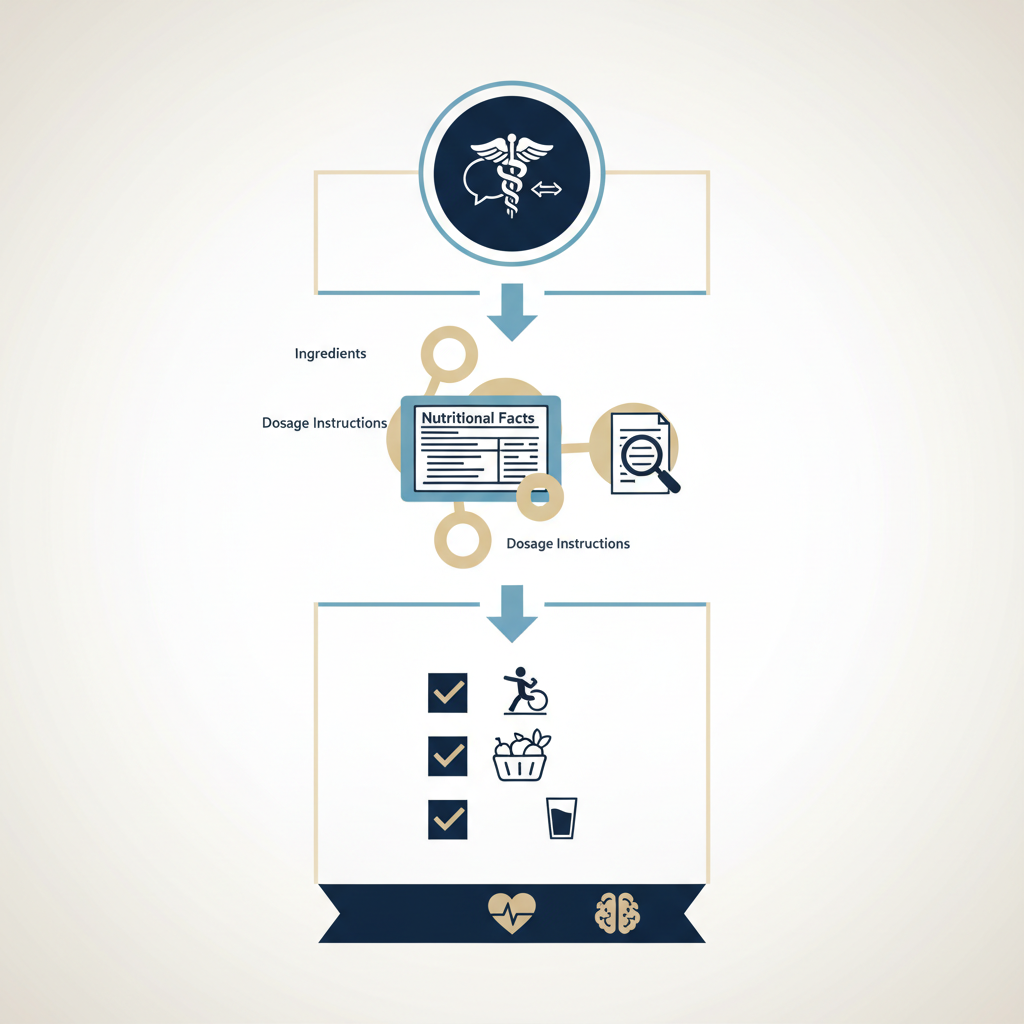
Labels on food products and medication boxes serve as the "instruction manual" for your health, but many ignore them or find them difficult to read. On the nutritional side, the focus should first be on serving size; many people read the calories believing they are for the entire package, while they are for only a small portion of it. Look for dietary fiber and protein as positive elements, and be wary of added sugars and trans fats. Understanding the Percent Daily Value (%DV) helps you know if a product is high or low in a particular nutrient; 5% or less is considered low, while 20% or more is considered high. As for medication labels, it requires greater precision. It is essential to verify the generic name of the drug and not just the brand name to avoid double-dosing when taking different medications containing the same active ingredient. Carefully read the warnings and drug interactions section; some medications may interact negatively with certain foods or common herbal supplements. Always check the expiration date and the correct storage method, as heat and humidity in our region may affect the effectiveness of some medications if not stored properly. Dedicating a few minutes to reading these labels before purchase or use is a real investment in preventing common health errors.
The Importance of Logging Daily Habits: How to Create an Accurate Health Log
Modern medicine relies heavily on data, and the best source of data about your health is you. Logging daily habits is not just a luxury; it is a powerful diagnostic tool that helps the health practitioner see the full picture that does not appear in a fleeting 15-minute examination. An accurate health log includes recording sleep patterns (number of hours and quality), physical activity (type and duration), and nutritional intake. In addition, it is very important to record mood and energy levels throughout the day, as there is a close link between physical and mental health. If you suffer from recurring symptoms such as headaches or abdominal pain, record when they occur, what you were doing or eating before them, and their severity on a scale of 1 to 10. This type of self-observation helps identify "triggers" that the doctor might miss. You can use a simple paper notebook or dedicated mobile apps. The goal is not obsession with details, but discovering patterns. For example, you might notice that your energy levels always drop after eating a certain meal, or that your sleep quality improves on days you practice walking. This information enables you to make simple and impactful adjustments to your lifestyle and makes your discussion with the doctor based on concrete facts rather than general impressions.
Preparing for a Medical Appointment: Preparing an Effective List of Questions
Often, a medical appointment ends, and the consultant leaves feeling they forgot to ask the most important questions or that they did not fully understand what the doctor said. Prior preparation is the key to maximizing the benefit of every medical visit. Start by writing a list of symptoms you are feeling, when they started, and what makes them better or worse. Bring a list of all medications and supplements you are currently taking, including traditional remedies or vitamins. When sitting with the doctor, use the "Ask Three" technique:
- What is my main health problem?
- What do I need to do now?
- Why is it important for me to do this?
Evaluating Online Health Information: Distinguishing Between Reliable Sources and Rumors
In the age of information explosion, the internet has become the primary source for searching for health information, but this is a double-edged sword. Rumors and misinformation spread at an enormous speed, especially in family social media groups. To evaluate any health information you read, use strict criteria: First, the source; is the information issued by an official government entity (such as the Ministry of Health) or a recognized international organization, or is it from a personal blog or an unverified account? Second, recency; science evolves rapidly, and information that was acceptable five years ago may have changed now. Third, bias; is the site trying to sell a specific product or promote a non-scientific idea? Be very wary of catchy headlines (Clickbait) that promise "miracle cures" or "instant results." Always look for scientific evidence; reliable information is based on controlled clinical studies and not on individual experiences or passing stories. If you find information that concerns or interests you, do not act on it immediately, but keep it to discuss with your doctor at the next visit. Developing a "critical sense" toward what we read is an integral part of modern health literacy, protecting us and our families from falling into the trap of misinformation that could lead to dire health consequences.
Conclusion: The Role of Knowledge in Enhancing the Quality of Dialogue Between Consultant and Practitioner
In conclusion, health literacy is not a final goal we reach, but a continuous journey of learning and adaptation. When the residents of Al-Ahsa arm themselves with the knowledge and skills necessary for health communication, we not only improve individual health outcomes but also raise the efficiency of the health system as a whole. A good dialogue between the consultant and the health practitioner is one built on mutual respect and transparency; where the doctor provides their scientific expertise, and the consultant provides their knowledge of their body and life circumstances. This partnership is the true guarantee for reaching successful and sustainable treatment plans. Awareness of how to read labels, log health observations, prepare for appointments, and evaluate information are all tools that enable us to live a better quality of life. We at ATHAR Center believe that knowledge is the most powerful tool for prevention and that a health-literate community is a stronger and more resilient one. We invite every reader to start applying these simple steps and share these concepts with their family members, so that health literacy becomes part of our daily traditions. Always remember that the right question is half the cure, and your understanding of your body is the first step toward sustainable wellness.
Health Literacy Checklist (Ensure you apply these):
- Do I have an updated list of all the medications I am taking?
- Do I know how to read calories and sugars on food products?
- Do I have a simple record to track my physical activity and sleep?
- Do I verify the source of health information before believing or sharing it?
- Do I prepare at least 3 questions before going to a medical appointment?

Explore health education step by step
Use the educational guides and practical tools to choose your next learning step.