Heart disease prevention Canada: How to prevent heart disease (comprehensive)
Author: Feras Alayed
Published:
Updated:
Category: canadian-health
Reading Time: 8 minutes
Key Takeaways
- Heart disease and stroke remain among Canada’s leading causes of death and hospitalization; early prevention saves lives and money.
- Major modifiable risks are high blood pressure, high LDL cholesterol, smoking, physical inactivity, poor diet and diabetes — many of which can be detected and managed in primary care. ([www150.statcan.gc.ca](https://www150.statcan.gc.ca/n1/daily-quotidien/230828/dq230828b-eng.htm?utm_source=openai))
- Diabetes Canada diagnostic thresholds use mmol/L: fasting plasma glucose ≥7.0 mmol/L equals diabetes; 6.1–6.9 mmol/L is impaired fasting glucose (IFG). ([diabetes.ca](https://www.diabetes.ca/DiabetesCanadaWebsite/media/FilesUploaded/Quick_Reference_Guide_PRINT_10_24-2.pdf?utm_source=openai))
- Strong evidence supports blood pressure control (SPRINT), lipid-lowering (statins in appropriate people), dietary patterns (Mediterranean/DASH), smoking cessation and regular exercise to reduce cardiac events. ([nejm.org](https://www.nejm.org/doi/full/10.1056/NEJMoa1511939?utm_source=openai))
- Feel Great can be a supportive lifestyle system (Balance soluble-fibre matrix, Unimate yerba mate, 4-4-12 intermittent fasting framework) that may help with metabolic control and energy — not a substitute for medical care. Check product labeling and consult your clinician.
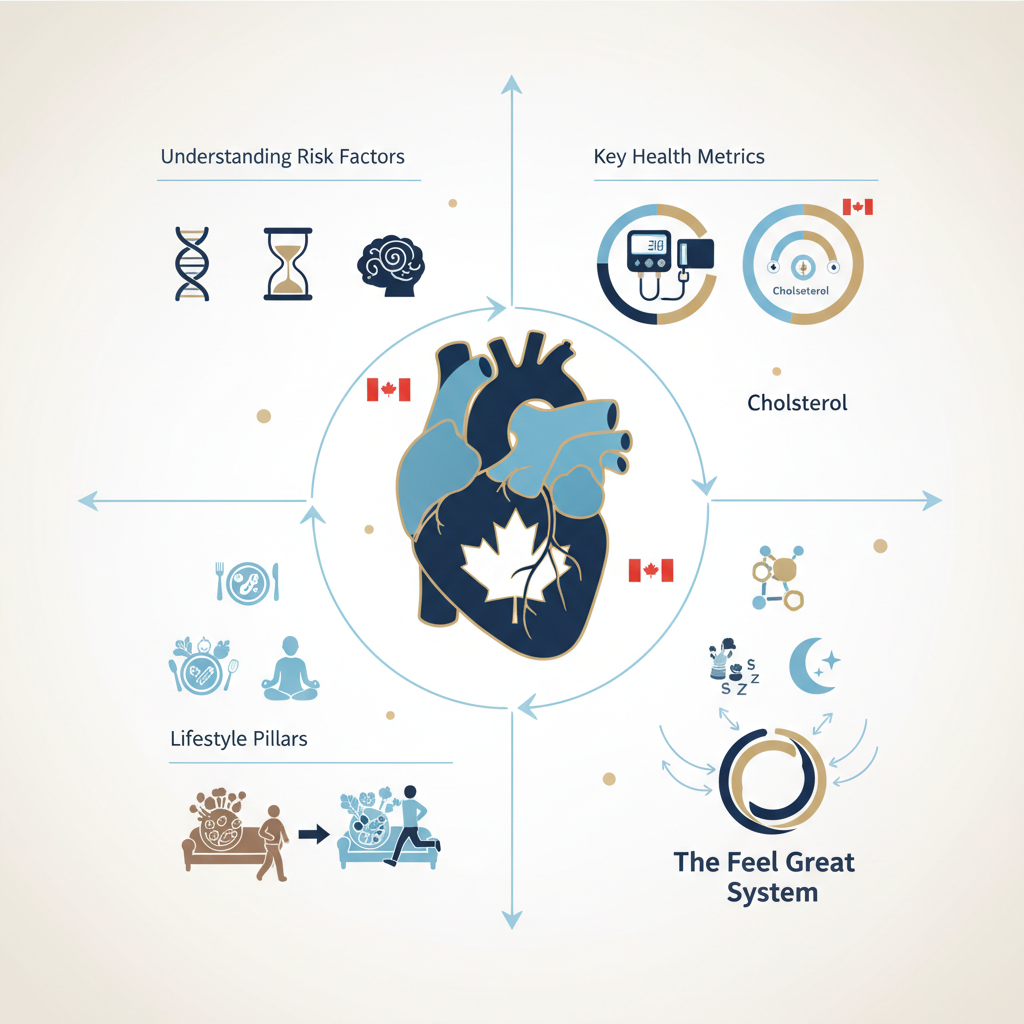
TL;DR
Heart disease is a top cause of death in Canada but much of the burden is preventable. Manage blood pressure and cholesterol, quit smoking, move more, eat a whole-foods pattern (Canada’s Food Guide), and discuss targeted medications with your provider when risk is high. Lifestyle systems like Feel Great can support those changes.
🇨🇦 Thousands of Canadians are using Feel Great to support their metabolic health naturally. Learn more & order here →
Introduction — A shocking Canadian statistic
In 2021 heart disease accounted for about 17.7% of deaths in Canada — over 55,000 lives lost that year — and heart disease combined with stroke remains a huge national burden. That means prevention at scale should be a priority from family practice clinics to public policy. ([www150.statcan.gc.ca](https://www150.statcan.gc.ca/n1/daily-quotidien/230828/dq230828b-eng.htm?utm_source=openai))
Why heart disease prevention matters in Canada
Beyond mortality, cardiovascular disease drives hospital admissions and health-care spending; estimates place the direct and indirect costs in the tens of billions of dollars annually. Many hospital stays and surgeries are due to ischemic heart disease, heart failure and related complications. Preventive measures lower both human and economic costs. ([heartandstroke.ca](https://www.heartandstroke.ca/articles/connected-by-the-numbers?utm_source=openai))
Key modifiable risk factors
- High blood pressure — Heart & Stroke estimate millions of Canadian adults live with hypertension, the top modifiable risk factor. ([heartandstroke.ca](https://www.heartandstroke.ca/articles/heart-disease-in-canada-new-stats-and-how-to-lower-your-risk?utm_source=openai))
- Diabetes and impaired glucose — Diabetes Canada defines diabetes and IFG using mmol/L thresholds (see below). ([diabetes.ca](https://www.diabetes.ca/DiabetesCanadaWebsite/media/FilesUploaded/Quick_Reference_Guide_PRINT_10_24-2.pdf?utm_source=openai))
- High LDL cholesterol and dyslipidaemia.
- Smoking and vaping, excess weight, physical inactivity, and diets high in ultra-processed foods. ([heartandstroke.ca](https://www.heartandstroke.ca/what-we-do/media-centre/news-releases/ultra-processed-foods-cause-third-of-heart-and-stroke-deaths?utm_source=openai))
Evidence-based prevention strategies
1. Blood pressure control
Large RCTs (eg, SPRINT) and meta-analyses demonstrate that more intensive systolic BP lowering in selected high‑risk adults reduces major cardiovascular events and mortality. Hypertension Canada recommends individualised targets and favours a systolic goal <130 mmHg for many treated adults when tolerated. Regular home and clinic monitoring improve control. ([nejm.org](https://www.nejm.org/doi/full/10.1056/NEJMoa1511939?utm_source=openai))
2. Lipid lowering (statins)
Meta-analyses and guideline reviews (including USPSTF evidence reviews and Cochrane summaries) show statins reduce myocardial infarction, stroke and some mortality endpoints in appropriate populations. The decision to start a statin for primary prevention should use an individualized risk assessment and discussion of potential benefits and harms. ([jamanetwork.com](https://jamanetwork.com/journals/jama/fullarticle/2795522?utm_source=openai))
3. Diet
Dietary patterns modelled on the Mediterranean diet or DASH are associated with lower cardiovascular risk, better metabolic markers and reduced event rates in clinical and observational studies. Health Canada’s Canada’s Food Guide emphasises plant-forward meals, whole grains, legumes, and healthy fats — recommendations aligned with cardiometabolic risk reduction. Heart & Stroke research also flags ultra‑processed foods as a major contributor to heart disease burden in Canada. ([va.gov](https://www.va.gov/WHOLEHEALTHLIBRARY/overviews/food-drink.asp?utm_source=openai))
4. Smoking cessation
If you smoke, quitting is one of the single most effective actions to reduce cardiac risk. Benefits begin quickly — relative risk of coronary events drops substantially within 1–2 years after cessation and continues to decline with time. Provincial cessation programmes, quitlines and pharmacotherapies are widely available. ([ncbi.nlm.nih.gov](https://www.ncbi.nlm.nih.gov/sites/books/NBK555590/?report=reader&utm_source=openai))
5. Physical activity and weight management
Regular moderate-to-vigorous activity (≥150 minutes/week) and resistance work reduce blood pressure, improve lipid profiles and insulin sensitivity. Even modest weight loss (5–10%) yields clinically meaningful improvements in BP, lipids and glycaemic control. Structured lifestyle programmes are effective in real-world settings. ([nature.com](https://www.nature.com/articles/s41591-024-02951-6?utm_source=openai))
Practical testing and targets (what your clinician will check)
- Blood pressure readings (clinic and home).
- Blood lipid panel (total cholesterol, LDL, HDL, triglycerides) — targets vary by absolute risk and are discussed with clinicians. ([pubmed.ncbi.nlm.nih.gov](https://pubmed.ncbi.nlm.nih.gov/35613766/?utm_source=openai))
- Glycaemia: fasting plasma glucose and A1C — Diabetes Canada uses mmol/L thresholds: fasting ≥7.0 mmol/L = diabetes; 6.1–6.9 mmol/L = IFG. ([diabetes.ca](https://www.diabetes.ca/DiabetesCanadaWebsite/media/FilesUploaded/Quick_Reference_Guide_PRINT_10_24-2.pdf?utm_source=openai))
- Smoking status, BMI, waist circumference, physical activity assessment.
Provincial differences & how the Canadian health system responds
Rates of ischemic heart disease and hospital utilization vary across provinces; surveillance by the Canadian Chronic Disease Surveillance System (CCDSS), CIHI and provincial health agencies guides tailored local interventions. Access pathways also differ — family physicians, walk-in clinics and some pharmacy services play major roles in screening and early management across Ontario, British Columbia, Alberta, and Quebec. ([link.springer.com](https://link.springer.com/article/10.1186/1471-2261-13-88?utm_source=openai))
Step-by-step plan to reduce your risk
- Book a check with your family doctor or provincial clinic for BP, lipids and glycaemia (A1C/FPG). Pharmacies in many provinces offer screening services.
- Apply dietary changes: follow Canada’s Food Guide — more veg, legumes, whole grains, fish; cut ultra-processed foods. ([canada.ca](https://www.canada.ca/en/health-canada/services/food-guide/explore/dietary-guidelines/section-1-foundation-healthy-eating.html?utm_source=openai))
- Move more: aim for 150+ minutes/week plus strength training twice weekly.
- Ask for smoking cessation support if needed (pharmacotherapy + counselling yields best outcomes). ([pmc.ncbi.nlm.nih.gov](https://pmc.ncbi.nlm.nih.gov/articles/PMC10370896/?utm_source=openai))
- When indicated, discuss pharmacologic prevention (antihypertensives, statins) using a shared decision-making approach with your clinician. ([jamanetwork.com](https://jamanetwork.com/journals/jama/fullarticle/2795522?utm_source=openai))
How Feel Great fits into a prevention plan
Feel Great is a lifestyle support system (not a drug). Its main components include:
- Balance — a soluble‑fibre matrix designed to moderate post‑meal glucose excursions and help with satiety. It may help people reduce glycaemic spikes when added to meals (use under medical guidance if you have diabetes or take glucose‑lowering medications).
- Unimate — yerba mate extract with chlorogenic acids for gentle energy and cognitive clarity; use within recommended limits and check interactions with stimulants or medications.
- 4‑4‑12 protocol — a flexible intermittent‑fasting framework (4‑hour eating window, 4‑hour second meal window, 12‑hour overnight fast) that some people find easier to sustain than strict time‑restricted protocols; may support weight and metabolic health when combined with healthy food choices. ([nature.com](https://www.nature.com/articles/s41591-024-02951-6?utm_source=openai))
- Feel Great materials cite clinical studies and claim >50 supporting publications in product literature/PDR; this system may support behaviour change and metabolic markers but is not a replacement for prescribed therapies. Check product labelling for Health Canada NPNs (if present) and provincial shipping availability (from BC to NL).
People Also Ask
- Is heart disease preventable in most people?
Yes—estimates indicate a large proportion of premature heart disease and stroke are preventable with lifestyle changes and management of risk factors. ([heartandstroke.ca](https://www.heartandstroke.ca/articles/heart-disease-in-canada-new-stats-and-how-to-lower-your-risk?utm_source=openai))
- What fasting glucose (mmol/L) should worry me?
Fasting plasma glucose ≥7.0 mmol/L indicates diabetes; 6.1–6.9 mmol/L indicates impaired fasting glucose per Diabetes Canada. ([diabetes.ca](https://www.diabetes.ca/DiabetesCanadaWebsite/media/FilesUploaded/Quick_Reference_Guide_PRINT_10_24-2.pdf?utm_source=openai))
- When should I start statins?
When your estimated 10‑year cardiovascular risk is above guideline thresholds or if you have diabetes/established CVD; this is a personalised decision discussed with your clinician. ([jamanetwork.com](https://jamanetwork.com/journals/jama/fullarticle/2795522?utm_source=openai))
- Can diet alone prevent a heart attack?
Diet is powerful but often works best combined with activity, smoking cessation, weight control, and medical therapy when needed.
- Are supplements effective for heart prevention?
Supplements have limited roles; focus first on whole foods and evidence‑based therapies. Discuss any supplement with your provider. ([nature.com](https://www.nature.com/articles/s41591-024-02951-6?utm_source=openai))
FAQ
- How often should I measure my blood pressure?
Adults should check at least annually if low risk; more often (eg, home monitoring weekly) if diagnosed with hypertension or on medication — follow Hypertension Canada guidance. ([hypertension.ca](https://hypertension.ca/guidelines/recommendations?utm_source=openai))
- What is the best diet to lower heart risk?
Patterns like Mediterranean or DASH are best supported by evidence. Canada’s Food Guide gives practical, local guidance compatible with these patterns. ([va.gov](https://www.va.gov/WHOLEHEALTHLIBRARY/overviews/food-drink.asp?utm_source=openai))
- Is vaping safer than smoking for heart risk?
No. Vaping may still raise cardiovascular risk and is not a harmless alternative — complete cessation is preferred. Provincial cessation supports can help. ([heartandstroke.ca](https://www.heartandstroke.ca/articles/heart-disease-in-canada-new-stats-and-how-to-lower-your-risk?utm_source=openai))

- Can intermittent fasting reduce heart risk?
Some studies show intermittent fasting can improve weight and metabolic markers; safety and effects on long‑term cardiovascular outcomes are still under study and it should be supervised in patients with diabetes. ([nature.com](https://www.nature.com/articles/s41591-024-02951-6?utm_source=openai))
- Where can I get reliable Canadian heart-health information?
Trusted sources include Health Canada, the Public Health Agency of Canada, Heart & Stroke Foundation, CIHI, Diabetes Canada and provincial health ministries. ([canada.ca](https://www.canada.ca/en/health-canada/services/food-guide/explore/healthy-eating-recommendations/eat-variety/choosing-healthy-fats.html?utm_source=openai))
References & Scientific Sources (selected)
- Statistics Canada — Deaths, 2021 & 2022. ([www150.statcan.gc.ca](https://www150.statcan.gc.ca/n1/daily-quotidien/230828/dq230828b-eng.htm?utm_source=openai))
- Public Health Agency of Canada — Report: Heart Disease in Canada (CCDSS) 2018. ([canada.ca](https://www.canada.ca/en/public-health/services/publications/diseases-conditions/report-heart-disease-Canada-2018.html?utm_source=openai))
- Heart & Stroke Foundation — Heart disease in Canada: new stats (Feb 2026). ([heartandstroke.ca](https://www.heartandstroke.ca/articles/heart-disease-in-canada-new-stats-and-how-to-lower-your-risk?utm_source=openai))
- CIHI — Hospital stays in Canada, 2022–2023. ([cihi.ca](https://www.cihi.ca/en/hospital-stays-in-canada-2022-2023?utm_source=openai))
- Health Canada — Canada’s Food Guide and dietary recommendations. ([canada.ca](https://www.canada.ca/en/health-canada/services/food-guide/explore/dietary-guidelines/section-1-foundation-healthy-eating.html?utm_source=openai))
- Diabetes Canada — Clinical Practice Guidelines and diagnostic thresholds (mmol/L). ([diabetes.ca](https://www.diabetes.ca/DiabetesCanadaWebsite/media/FilesUploaded/Quick_Reference_Guide_PRINT_10_24-2.pdf?utm_source=openai))
- Hypertension Canada — BP targets and recommendations. ([hypertension.ca](https://hypertension.ca/guidelines/recommendations?utm_source=openai))
- NEJM — The SPRINT trial (intensive vs standard BP control). ([nejm.org](https://www.nejm.org/doi/full/10.1056/NEJMoa1511939?utm_source=openai))
- JAMA/USPSTF — Statin evidence review for primary prevention. ([jamanetwork.com](https://jamanetwork.com/journals/jama/fullarticle/2795522?utm_source=openai))
- Nutrients/Literature reviews — Mediterranean diet and cardiometabolic benefits. ([va.gov](https://www.va.gov/WHOLEHEALTHLIBRARY/overviews/food-drink.asp?utm_source=openai))
- Surgeon General / CDC / NCBI summaries — benefits of smoking cessation. ([ncbi.nlm.nih.gov](https://www.ncbi.nlm.nih.gov/sites/books/NBK555590/?report=reader&utm_source=openai))
Medical disclaimer
This article provides general information about heart disease prevention in Canada and does not replace personalised medical advice. Always consult your primary care provider before starting, stopping or changing medications, supplements or major lifestyle protocols. If you experience chest pain, sudden shortness of breath, fainting, or stroke symptoms, call 911 or go to the nearest emergency department immediately.
Related ATHAR paths
🇨🇦 Ready to Start Your Health Transformation?
Join thousands of Canadians who have improved their metabolic health with the Feel Great system. Backed by 50+ clinical studies and listed in the Physicians' Desk Reference (PDR).
✅ Ships to all provinces: BC, Alberta, Saskatchewan, Manitoba, Ontario, Quebec, New Brunswick, Nova Scotia, PEI, Newfoundland & Labrador | 90-Day Money-Back Guarantee