Inflammation and Autoimmune Disease Connection: A Scientific, Practical Guide
Author: Feras Alayed
Published:
Updated:
Category: chronic-inflammation
Reading Time: 12 minutes
- Chronic inflammation fosters loss of self‑tolerance and can precipitate or exacerbate autoimmune disease through cytokine networks, NETs, and persistent innate immune activation. ([pubmed.ncbi.nlm.nih.gov](https://pubmed.ncbi.nlm.nih.gov/34341562/?utm_source=openai))
- Inflammatory markers (IL‑6, TNF‑α, CRP) are clinically useful but disease‑specific nuances exist (e.g., CRP may be low in active SLE). ([pubmed.ncbi.nlm.nih.gov](https://pubmed.ncbi.nlm.nih.gov/33337480/?utm_source=openai))
- Anti‑inflammatory dietary patterns—especially Mediterranean‑style diets—reduce inflammatory biomarkers and can complement medical therapy. ([pubmed.ncbi.nlm.nih.gov](https://pubmed.ncbi.nlm.nih.gov/34607347/?utm_source=openai))
- Combining lifestyle changes with targeted immunomodulatory therapies yields the best outcomes in many autoimmune diseases. ([pubmed.ncbi.nlm.nih.gov](https://pubmed.ncbi.nlm.nih.gov/33868292/?utm_source=openai))
- Microbiome and environmental exposures (infections, toxins) modulate inflammation and autoimmunity risk; addressing these is part of preventive care. ([bmj.com](https://www.bmj.com/content/360/bmj.j5145?utm_source=openai))
Chronic low‑grade inflammation alters immune regulation and can trigger autoimmune reactions. Measuring inflammatory markers, adopting an anti‑inflammatory diet, managing stress and sleep, preventing infections, and using targeted medications when needed are practical, evidence‑based steps to reduce risk or control active autoimmune disease. (See references 2020+). ([pubmed.ncbi.nlm.nih.gov](https://pubmed.ncbi.nlm.nih.gov/34341562/?utm_source=openai))
Introduction: inflammation and autoimmune disease connection (300–500 words)
Inflammation is a physiologic defense against infection or tissue injury. When it resolves, healing follows. However, when inflammation becomes chronic—sustained by persistent triggers or dysregulated immune responses—it can break immune tolerance and facilitate autoimmunity. The "inflammation and autoimmune disease connection" is not a single pathway but a network of cellular and molecular events: persistent innate immune activation, cytokine amplification loops (e.g., IL‑6, TNF‑α), formation of neutrophil extracellular traps (NETs), and altered antigen presentation that together promote autoreactive B and T cell responses. Recent reviews show that many rheumatic and systemic autoimmune diseases lie along a continuum between autoinflammation and classical autoimmunity. ([pubmed.ncbi.nlm.nih.gov](https://pubmed.ncbi.nlm.nih.gov/34341562/?utm_source=openai))
From a practical perspective, this matters because controlling chronic inflammation can slow tissue damage and reduce comorbid risks (cardiovascular disease, metabolic dysfunction). It also reframes management: rather than treating pain alone, clinicians now aim to modulate inflammatory pathways (for example, with IL‑6 or TNF inhibitors) and to modify lifestyle factors that sustain low‑grade inflammation. This combined approach often provides the best outcomes for patients with autoimmune disease. ([pubmed.ncbi.nlm.nih.gov](https://pubmed.ncbi.nlm.nih.gov/33868292/?utm_source=openai))
Throughout this article you will find evidence summaries and practical recommendations that bridge molecular mechanisms and everyday choices. For a deep dive into the broader theme, see our pillar page on Chronic Inflammation, and related practical guidance on the anti‑inflammatory diet.
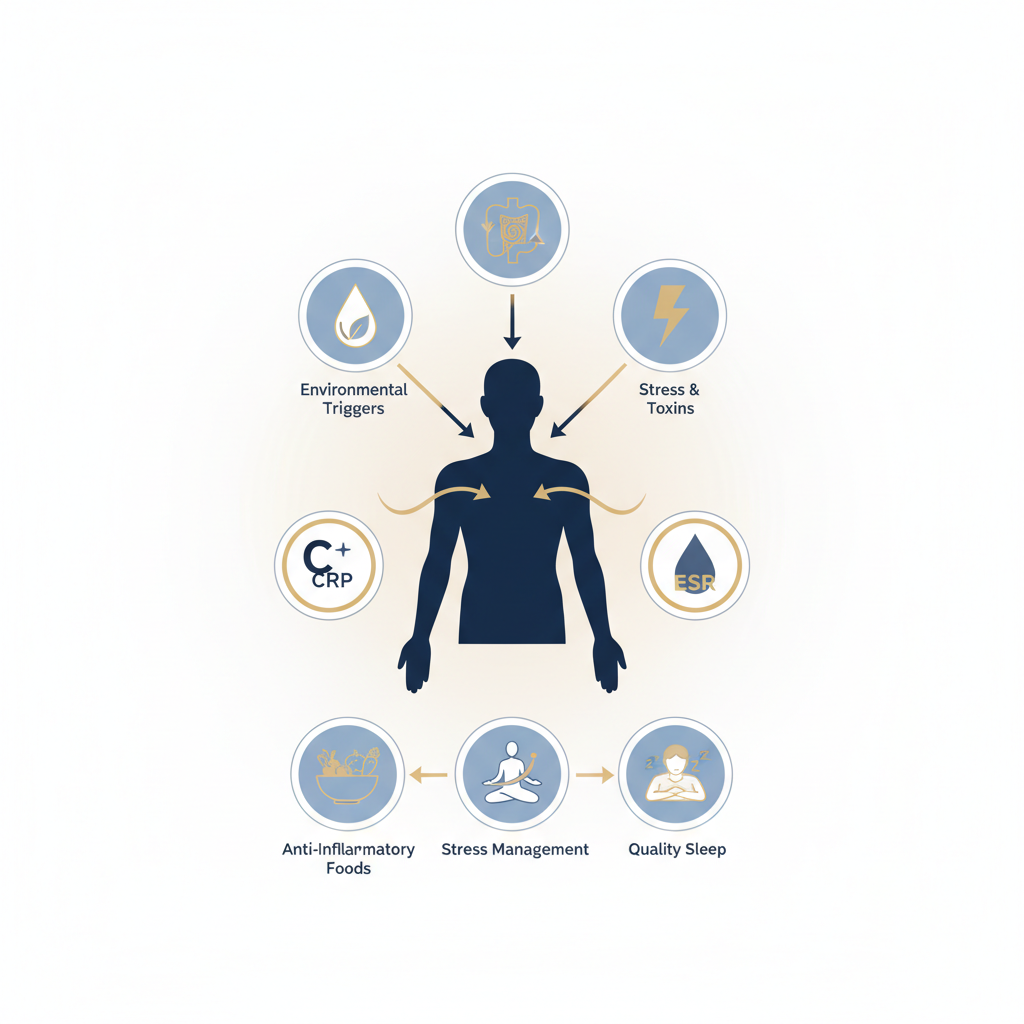
Biologic mechanisms: how chronic inflammation leads to autoimmunity (300–500 words)
The path from inflammation to autoimmunity includes multiple interacting mechanisms. Key players and steps include:
- Persistent innate immune activation: Chronic activation of macrophages, dendritic cells, and other innate sensors maintains a proinflammatory milieu and continuous antigen presentation, increasing the chance of breaking tolerance. Pattern recognition receptors and inflammasomes play central roles. ([pubmed.ncbi.nlm.nih.gov](https://pubmed.ncbi.nlm.nih.gov/35391579/?utm_source=openai))
- Cytokine amplification: Cytokines such as IL‑6 and TNF‑α drive differentiation of pro‑inflammatory T cell subsets (Th1, Th17) and impair regulatory T cell (Treg) function. IL‑6 in particular is a nexus between inflammation, autoimmunity, and metabolic changes. ([pubmed.ncbi.nlm.nih.gov](https://pubmed.ncbi.nlm.nih.gov/33337480/?utm_source=openai))
- NETs and exposed autoantigens: Neutrophil extracellular traps trap pathogens but also expose nuclear material and modified self‑proteins to the adaptive immune system, fostering autoantibody formation—an important mechanism in SLE and other systemic diseases. ([nature.com](https://www.nature.com/articles/s41577-022-00787-0?utm_source=openai))
- Epitope spreading and defective clearance: Ongoing tissue damage releases intracellular components; if clearance is impaired, the immune system can target these molecules, expanding the autoimmune response. ([annualreviews.org](https://www.annualreviews.org/content/journals/10.1146/annurev-pharmtox-031320-111453?utm_source=openai))
- Microbiome and barrier dysfunction: Alterations in gut microbiota and intestinal permeability allow microbial products to chronically stimulate the immune system, connecting diet, antibiotics, and environmental factors to autoimmunity. ([bmj.com](https://www.bmj.com/content/360/bmj.j5145?utm_source=openai))
Understanding these mechanisms has therapeutic implications: blocking specific cytokines (e.g., anti‑IL‑6 or anti‑TNF agents), restoring regulatory cell function, and targeting NET formation are active areas of research and clinical translation. These targeted approaches complement lifestyle interventions that reduce the baseline inflammatory setpoint.
Inflammatory markers: what doctors measure and why it matters (300–500 words)
Clinicians rely on several laboratory markers to quantify inflammation and guide treatment decisions. The most commonly used include:
- CRP (C‑reactive protein): An acute phase reactant produced by the liver in response to IL‑6. CRP rises rapidly with inflammation but may be blunted in diseases with strong type I interferon signatures like SLE. ([pmc.ncbi.nlm.nih.gov](https://pmc.ncbi.nlm.nih.gov/articles/PMC8708507/?utm_source=openai))
- ESR (erythrocyte sedimentation rate): Reflects longer‑standing inflammation but is influenced by anemia, age, and other factors.
- Cytokine panels (IL‑6, TNF‑α, IL‑1β): More specific for pathway activity; IL‑6 is both a biomarker and therapeutic target. ([pubmed.ncbi.nlm.nih.gov](https://pubmed.ncbi.nlm.nih.gov/33337480/?utm_source=openai))
- Autoantibodies: Disease‑specific markers (e.g., RF, anti‑CCP, ANA) indicate autoimmune processes and inform diagnosis and prognosis.
- Emerging biomarkers: NETs, metabolomic signatures, and immune cell phenotyping are being integrated into research and, increasingly, clinical practice to refine prognosis and therapeutic choices. ([nature.com](https://www.nature.com/articles/s41577-022-00787-0?utm_source=openai))
Why this matters: monitoring these markers helps evaluate disease activity and treatment response. Patients should discuss with their clinicians which markers are most relevant to their condition and how changes will influence management decisions.
Autoimmune diseases linked to chronic inflammation (examples) (300–500 words)
Chronic inflammation is a feature—or driver—of many autoimmune conditions. Representative examples include:
- Rheumatoid arthritis (RA): A prototypical inflammatory autoimmune disease where TNF‑α and IL‑6 are major mediators; targeted cytokine blockade changed the disease course for many patients. ([pubmed.ncbi.nlm.nih.gov](https://pubmed.ncbi.nlm.nih.gov/33868292/?utm_source=openai))
- Systemic lupus erythematosus (SLE): Characterized by autoantibodies, immune complexes, and NET‑driven inflammation; biomarker patterns can be atypical, requiring nuanced interpretation. ([nature.com](https://www.nature.com/articles/s41577-022-00787-0?utm_source=openai))
- Inflammatory bowel disease (IBD): A clear example of how microbiome, barrier dysfunction, and chronic mucosal inflammation lead to autoimmune‑like pathology. Diet and microbiome modulation are active therapeutic areas. ([bmj.com](https://www.bmj.com/content/360/bmj.j5145?utm_source=openai))
- Multiple sclerosis (MS): CNS‑directed chronic inflammation with both innate and adaptive immune contributions; research targets include immune metabolism and tissue‑resident immune cells. ([elifesciences.org](https://elifesciences.org/articles/86014.pdf?utm_source=openai))
These examples highlight that while mechanisms overlap, each disease has specific pathways and clinical implications. Clinicians combine biomarkers, imaging, and clinical assessment to tailor interventions that reduce inflammation and prevent irreversible damage.
Environment & diet: role of the anti‑inflammatory diet (300–500 words)
Environmental exposures and diet shape baseline inflammation. High‑quality evidence (systematic reviews and meta‑analyses) shows Mediterranean and plant‑forward diets lower inflammatory biomarkers such as IL‑6 and CRP. ([pubmed.ncbi.nlm.nih.gov](https://pubmed.ncbi.nlm.nih.gov/34607347/?utm_source=openai))
Practical anti‑inflammatory dietary principles:
- Favor whole, minimally processed foods: vegetables, fruits, legumes, nuts, whole grains.
- Use olive oil as a primary fat and include fatty fish for omega‑3s.
- Limit processed meats, refined carbohydrates, and added sugars.
- Consider individualized approaches for food sensitivities and gut health; work with a clinician if you have IBD or food‑triggered symptoms. ([bmj.com](https://www.bmj.com/content/360/bmj.j5145?utm_source=openai))
Diet alone is not curative for most autoimmune diseases, but it shifts the inflammatory milieu in a way that can reduce disease activity and improve response to medical therapies. Combining dietary changes with exercise, sleep hygiene, and stress reduction is the most effective strategy.
How to reduce inflammation naturally and clinically: a practical plan (300–500 words)
A practical, stepwise plan that blends lifestyle and medical care:
- Baseline assessment: Measure CRP/ESR, autoimmune serology, metabolic panel, and cardiovascular risk. Establish individual targets with your clinician. ([pubmed.ncbi.nlm.nih.gov](https://pubmed.ncbi.nlm.nih.gov/33868292/?utm_source=openai))
- Nutrition: Adopt a Mediterranean or similar anti‑inflammatory pattern; focus on fiber, polyphenols, and omega‑3s. ([pubmed.ncbi.nlm.nih.gov](https://pubmed.ncbi.nlm.nih.gov/34607347/?utm_source=openai))
- Physical activity: Aim for 150 minutes/week of moderate activity; adapt to tolerance and disease status.
- Sleep & stress: Improve sleep quality and use cognitive‑behavioral or mindfulness tools to control chronic stress that perpetuates inflammation. ([pmc.ncbi.nlm.nih.gov](https://pmc.ncbi.nlm.nih.gov/articles/PMC7887136/?utm_source=openai))
- Targeted therapy when needed: Use DMARDs, biologics (anti‑TNF, anti‑IL‑6), or small molecules guided by biomarkers and clinical activity. These therapies reduce the inflammatory drivers of tissue damage. ([annualreviews.org](https://www.annualreviews.org/content/journals/10.1146/annurev-immunol-101220-023458?utm_source=openai))
- Prevent infections: Vaccinations and infection control reduce inflammatory flares. Discuss timing with your specialists, especially when on immunosuppression. ([jamanetwork.com](https://jamanetwork.com/journals/jama/fullarticle/2789015?utm_source=openai))
Regular monitoring and a partnership between patient and healthcare team are essential to titrate treatments and make lifestyle changes sustainable.
Patient stories and practical tips (300–500 words)
Real cases illustrate principles.
- Case A: A patient with RA combined methotrexate with a Mediterranean diet and exercise. Over 9 months, joint counts and CRP improved significantly, allowing dose reduction of corticosteroids and better quality of life. ([pubmed.ncbi.nlm.nih.gov](https://pubmed.ncbi.nlm.nih.gov/33868292/?utm_source=openai))
- Case B: A young adult with evolving SLE had atypical labs (low CRP despite symptoms). Detailed immune profiling (including NET markers) guided the clinicians to an earlier initiation of targeted therapy. ([nature.com](https://www.nature.com/articles/s41577-022-00787-0?utm_source=openai))
Practical patient tips: track symptoms and labs, introduce one lifestyle change at a time, and maintain open communication with your care team. Use our related guide on inflammatory markers explained to understand your test results.
Myths vs facts (5+)
- Myth: "Inflammation always means infection." Fact: Inflammation can be sterile and driven by autoimmunity, metabolism, or environmental exposures. ([pubmed.ncbi.nlm.nih.gov](https://pubmed.ncbi.nlm.nih.gov/33337480/?utm_source=openai))
- Myth: "CRP alone diagnoses autoimmune disease." Fact: CRP is a nonspecific marker; diagnosis requires clinical context and disease‑specific tests. ([pmc.ncbi.nlm.nih.gov](https://pmc.ncbi.nlm.nih.gov/articles/PMC8708507/?utm_source=openai))
- Myth: "Supplements cure autoimmune disease." Fact: Supplements may help adjunctively but are rarely curative; they must be safely integrated with prescription drugs. ([mdpi.com](https://www.mdpi.com/2072-6643/12/3/818?utm_source=openai))
- Myth: "Antibiotics are harmless for the microbiome." Fact: Repeated antibiotics can dysregulate the microbiome and influence immune homeostasis. ([bmj.com](https://www.bmj.com/content/360/bmj.j5145?utm_source=openai))
- Myth: "Diet has no role in autoimmune disease." Fact: Diet alters inflammation and the microbiome, impacting disease activity and comorbid risk. ([pubmed.ncbi.nlm.nih.gov](https://pubmed.ncbi.nlm.nih.gov/34607347/?utm_source=openai))
Expert tips (5+)
- Request a clear monitoring plan with defined biomarker targets (CRP, disease‑specific antibodies) and timeline. ([pubmed.ncbi.nlm.nih.gov](https://pubmed.ncbi.nlm.nih.gov/33868292/?utm_source=openai))
- Adopt dietary changes you can maintain: start with replacing processed snacks with fruits and nuts. ([ajcn.nutrition.org](https://ajcn.nutrition.org/article/S0002-9165%2822%2902913-6/fulltext?utm_source=openai))
- Use physical activity as anti‑inflammatory medicine—consistency matters more than intensity.
- Manage stress with evidence‑based tools (CBT, mindfulness); they lower inflammatory markers in trials. ([pmc.ncbi.nlm.nih.gov](https://pmc.ncbi.nlm.nih.gov/articles/PMC7887136/?utm_source=openai))
- Coordinate vaccine timing with immune suppressive therapy to optimize protection and minimize flares. ([jamanetwork.com](https://jamanetwork.com/journals/jama/fullarticle/2789015?utm_source=openai))
Common mistakes (5+)
- Relying only on subjective symptom relief without objective monitoring.
- Stopping immune therapy abruptly because of perceived side effects—discuss tapering strategies with your physician.
- Adopting extreme diets that cause nutritional deficiencies and harm the microbiome.
- Ignoring mental health—depression and chronic stress amplify inflammation. ([pmc.ncbi.nlm.nih.gov](https://pmc.ncbi.nlm.nih.gov/articles/PMC7887136/?utm_source=openai))
- Assuming all inflammatory markers behave the same across diseases—interpretation is disease‑specific. ([pmc.ncbi.nlm.nih.gov](https://pmc.ncbi.nlm.nih.gov/articles/PMC8708507/?utm_source=openai))
FAQ (8–12 questions)
- Can inflammation cause an autoimmune disease?
Yes—chronic inflammation increases the risk of immune dysregulation and autoantibody formation. ([pubmed.ncbi.nlm.nih.gov](https://pubmed.ncbi.nlm.nih.gov/34341562/?utm_source=openai))
- Which blood tests should I track?
Commonly CRP, ESR, disease‑specific autoantibodies, and occasionally cytokine panels depending on disease and clinical questions.
- Will cutting sugar cure my autoimmune disease?
No—but reducing added sugars and processed foods lowers systemic inflammation and improves response to therapy. ([pubmed.ncbi.nlm.nih.gov](https://pubmed.ncbi.nlm.nih.gov/34607347/?utm_source=openai))
- Do probiotics cure IBD or other autoimmune disorders?
Probiotics can help some patients, especially with mild disease or specific subtypes, but effects are variable and individualized. ([bmj.com](https://www.bmj.com/content/360/bmj.j5145?utm_source=openai))
- Are biologic drugs safe long term?
Biologics are generally safe under specialist supervision and have transformed outcomes, but they require monitoring for infections and other rare adverse effects. ([pubmed.ncbi.nlm.nih.gov](https://pubmed.ncbi.nlm.nih.gov/33868292/?utm_source=openai))
- Can lifestyle changes reduce the need for medication?
Sometimes lifestyle changes allow dose reduction or slow progression, but many patients still need medication to prevent irreversible damage.
- How soon will I see changes after diet/exercise?
Some inflammatory markers can improve within weeks to months; clinical benefits may take longer and are patient‑dependent. ([ajcn.nutrition.org](https://ajcn.nutrition.org/article/S0002-9165%2822%2902913-6/fulltext?utm_source=openai))
- Is it possible to prevent autoimmune disease?
Complete prevention is not currently possible, but risk reduction through minimizing environmental triggers and managing inflammation is feasible. ([annualreviews.org](https://www.annualreviews.org/content/journals/10.1146/annurev-pharmtox-031320-111453?utm_source=openai))
Selected scientific references (PubMed/JAMA/NEJM/BMJ - 2020+)
- Autoinflammation and autoimmunity across rheumatic and musculoskeletal diseases. Nature Reviews Rheumatology. 2021. ([pubmed.ncbi.nlm.nih.gov](https://pubmed.ncbi.nlm.nih.gov/34341562/?utm_source=openai))
- IL‑6 in inflammation, autoimmunity and cancer. 2020. Review. ([pubmed.ncbi.nlm.nih.gov](https://pubmed.ncbi.nlm.nih.gov/33337480/?utm_source=openai))
- The Complex Role of C‑Reactive Protein in Systemic Lupus Erythematosus. PMC review (2021/2022). ([pmc.ncbi.nlm.nih.gov](https://pmc.ncbi.nlm.nih.gov/articles/PMC8708507/?utm_source=openai))
- Effects of Dietary Patterns on Biomarkers of Inflammation and Immune Responses: systematic review & meta‑analysis. PubMed (2021). ([pubmed.ncbi.nlm.nih.gov](https://pubmed.ncbi.nlm.nih.gov/34607347/?utm_source=openai))
- Effects of fruit and vegetable consumption on inflammatory biomarkers: AJCN (2022). ([ajcn.nutrition.org](https://ajcn.nutrition.org/article/S0002-9165%2822%2902913-6/fulltext?utm_source=openai))
- Neutrophil extracellular traps in systemic autoimmune and autoinflammatory diseases. Nat Rev Immunol (2023). ([nature.com](https://www.nature.com/articles/s41577-022-00787-0?utm_source=openai))
- Infectious diseases, autoantibodies, and autoimmunity. PMC (2022). ([pmc.ncbi.nlm.nih.gov](https://pmc.ncbi.nlm.nih.gov/articles/PMC10235211/?utm_source=openai))
- Mechanisms of Environment‑Induced Autoimmunity. Annual Reviews (2020). ([annualreviews.org](https://www.annualreviews.org/content/journals/10.1146/annurev-pharmtox-031320-111453?utm_source=openai))
- Metabolic Control of Autoimmunity and Tissue Inflammation in Rheumatoid Arthritis. PubMed (2021). ([pubmed.ncbi.nlm.nih.gov](https://pubmed.ncbi.nlm.nih.gov/33868292/?utm_source=openai))
- Advances in the management of systemic lupus erythematosus. BMJ (2022). ([bmj.com](https://www.bmj.com/content/bmj/383/bmj-2022-073980.full.pdf?utm_source=openai))
- IL‑6 Revisited: From Rheumatoid Arthritis to CAR T Cell Therapy and COVID‑19. Annual Reviews Immunology (2022). ([annualreviews.org](https://www.annualreviews.org/content/journals/10.1146/annurev-immunol-101220-023458?utm_source=openai))
Medical disclaimer: This content is for educational purposes and is not medical advice. Always consult your healthcare provider before changing medications or starting new treatments.
Related ATHAR paths
Want a Personalized Plan?
Book a free consultation with Feras Alayed to get a health plan tailored to your condition.
Book Your Free Consultation