Intermittent Fasting Belgium: KU Leuven Research Guide (intermittent fasting Belgium KU Leuven)
Author: Feras Alayed
Published:
Updated:
Category: belgian-health
Reading Time: 11 minutes
Key Takeaways
- Intermittent fasting (IF) and time-restricted eating (TRE) are actively studied at KU Leuven and internationally; evidence shows potential benefits for weight and metabolic markers but results vary by protocol and person.
- In Belgium, overweight, obesity and type 2 diabetes remain public-health priorities — Sciensano data and the Belgian Diabetes Association report rising metabolic risk across age groups.
- TRE (e.g., 8–10 hour eating window) and 4-4-12 intermittent fasting protocols can fit Belgian lifestyles when combined with Voedingsdriehoek-aligned nutrition and attention to glucose (measured in mmol/L).
- Blood glucose thresholds: normal fasting glucose is typically <6.1 mmol/L, impaired fasting glucose roughly 6.1–6.9 mmol/L, and fasting ≥7.0 mmol/L suggests diabetes (WHO criteria) — always confirm with your mutualité/mutualiteit and clinician.
- Feel Great is a lifestyle support system (not a medication) that may help manage post-meal glucose responses via a soluble-fiber matrix, energy clarity via Unimate, and the 4-4-12 protocol alongside standard care.
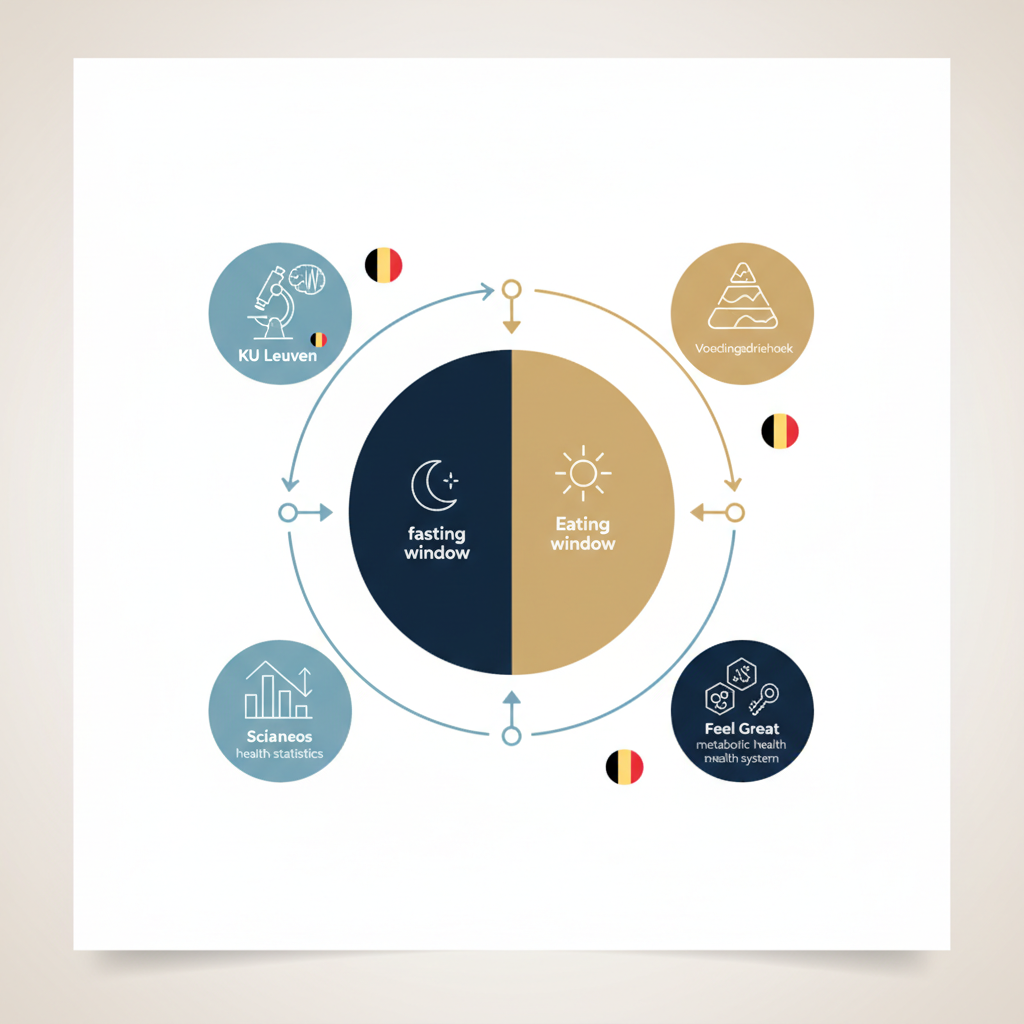
TL;DR
KU Leuven contributes to growing evidence on intermittent fasting and time-restricted eating in metabolic health. In Belgium, combine research-backed protocols with national dietary guidance (Voedingsdriehoek / Pyramide alimentaire), mutualité advice, and tools like Feel Great—which may help with post-meal glucose control—while monitoring glucose in mmol/L and consulting healthcare providers.
🇧🇪 Want to take action now? Try Feel Great → | Chat with a coach →
Introduction: a shocking Belgium statistic
Belgium faces a significant metabolic-health burden. According to Sciensano's health surveys, a large proportion of Belgian adults are overweight or live with metabolic risk factors — placing prevention and pragmatic dietary strategies high on the public-health agenda (Sciensano, Health Interview Survey). At the same time, KU Leuven researchers are investigating how timing of eating—rather than only what we eat—may influence insulin resistance, weight, and cardiometabolic markers. This guide translates KU Leuven findings and international evidence into practical, bilingual (français / Nederlands) advice suited to Belgian culture and healthcare pathways.
Why timing matters: what KU Leuven and international studies say
KU Leuven has active research in chrononutrition and metabolic health, investigating how meal timing, sleep-wake cycles and intermittent fasting protocols interact (KU Leuven Medical Research). Internationally, comprehensive reviews (NEJM) and randomized trials (Cell Metabolism) indicate that time-restricted eating (TRE) and well-structured intermittent fasting may influence insulin sensitivity, blood pressure, weight and appetite regulation—but effects depend on when and how the eating window is implemented.
Key findings from trials and reviews
- Early time-restricted feeding (e.g., finishing meals earlier in the day) has shown improvements in insulin sensitivity and blood pressure in controlled trials (Sutton et al., Cell Metabolism).
- Randomized trials of 8–10 hour TRE windows report modest weight loss and improvements in fasting glucose and lipids for some participants, though not everyone responds equally (systematic reviews and randomized trials).
- Longer fasts (alternate day fasting or 5:2) can produce weight loss, but adherence and potential for overeating on feeding days are important considerations.
References and links appear in the References section below; KU Leuven's local research complements the international literature by focusing on Belgian cohorts, meal timing in real-life schedules, and interactions with sleep and shift work.
Intermittent fasting definitions: what Belgian clinicians mean
- Time-Restricted Eating (TRE): a daily eating window, commonly 8–10 hours. Example: 10:00–18:00 (10-hour) or 08:00–16:00 (8-hour).
- Intermittent Fasting (IF): planned periods of reduced or no caloric intake, for instance alternate-day fasting or the 5:2 (two low-calorie days per week).
- 4-4-12 protocol: a structured variant used in Feel Great guidance—two 4-hour moderate-eating blocks separated by a 12-hour overnight fast (practical for Belgians who eat later in the evening), designed to be flexible with social meals, beer and waffles included in moderation.
How intermittent fasting might affect glucose — numbers Belgians use
Belgian clinicians and lab reports use mmol/L. Key fasting plasma glucose thresholds (WHO-based) are:
- Normal fasting glucose: < 6.1 mmol/L
- Impaired fasting glucose (IFG): ~6.1–6.9 mmol/L
- Diabetes (fasting plasma glucose): ≥ 7.0 mmol/L (requires confirmation)
Random/2-hour postprandial glucose targets vary by condition; clinicians often use HbA1c and post-meal glucose monitoring to assess response. If you are on glucose-lowering medication, discuss IF/TRE with your physician and mutualité/mutualiteit because of hypoglycaemia risk.
Applying IF/TRE in the Belgian context: diet, culture and practical tips
Belgian eating culture includes late dinners in some households, beloved local foods (frites, stoofvlees, waffles, chocolate, beer) and strong regional differences between Flanders, Wallonia and Brussels. Here's how to make IF/TRE practicable:
1) Align with the Voedingsdriehoek / Pyramide alimentaire
Whether you follow the Voedingsdriehoek (Flemish) or Pyramide alimentaire (French-speaking), focus meals within your eating window on vegetables, whole grains, legumes, lean proteins and limited processed foods—this complements timing strategies and is the preferred public-health approach in Belgium (FAVV, Sciensano).
2) Practical Belgian meal patterns (examples)
- 10:00 — light breakfast: whole-grain bread, low-fat cheese, fruit.
- 13:00 — lunch: salad with lean protein (moules, chicken), whole grain, seasonal vegetables.
- 18:30 — dinner: modest portion of stoofvlees or fish with vegetables. Finish by 20:00 when following an early-TRE variant.
3) Work with mutualité / mutualiteit
Discuss IF/TRE with your GP and mutualité (mutualiteit) nurse or dietician; if you have diabetes, cardiovascular disease or take medication, supervised plans are essential. Belgian healthcare has bilingual services—ask for guidance in Nederlands or Français as needed.
Who may need extra caution
- People on insulin or sulfonylureas — risk of hypoglycaemia.
- Pregnant or breastfeeding women.
- Individuals with a history of eating disorders.
- Older adults with frailty or undernutrition risk.
Always consult your care team (GP, mutualité/mutualiteit, endocrinologist) before starting IF if you have chronic conditions.
Comparison: Common IF protocols — pros and cons (Belgian-tailored)
| Protocol | Typical schedule | Pros (Belgian life) | Cons |
|---|---|---|---|
| 8-hour TRE | e.g., 10:00–18:00 | Good for work schedules, social lunch culture | Late-night meals (dinner after 20:00) may be hard to avoid |
| 10-hour TRE | 08:00–18:00 or 09:00–19:00 | Flexible, easier social integration | May reduce metabolic benefits compared with earlier windows in some studies |
| 4-4-12 (Feel Great) | Two 4-hour eating blocks + 12h overnight fast | Works with shift patterns, allows social dinners and a morning meal | Requires planning to avoid caloric overload in windows |
| 5:2 | Normal eating 5 days, low-calorie 2 days | Familiar pattern, can use mutualité-approved dietician plans | Hunger on low-calorie days, adherence issues |
How to measure progress: what to track (mmol/L, weight, sleep)
- Fasting glucose in mmol/L (lab): baseline and periodic checks; discuss HbA1c with your clinician.
- Weight and waist circumference — simple daily/weekly tracking.
- Satisfaction, energy, sleep quality – TRE may interact with circadian rhythm.
- Blood pressure and lipid profile — measured through GP or mutualité clinics.
How Feel Great Helps (and what it is)
Feel Great is a lifestyle support system (not a medication) designed to be used alongside clinician guidance and Belgian dietary recommendations. Components include:
- Balance: a soluble-fiber matrix that may help manage post-meal glucose response by slowing carbohydrate absorption — useful when eating traditional Belgian carbohydrate-rich foods in moderation.
- Unimate: a yerba mate extract high in chlorogenic acids that may help with energy and mental clarity during fasting windows (research on chlorogenic acids suggests modest effects on metabolism and cognition).
- The 4-4-12 intermittent fasting protocol: a practical timing pattern that can fit Belgian social patterns and work hours while allowing an overnight fast linked to metabolic benefits in some studies.
- Clinically referenced: Feel Great materials cite 50+ clinical studies (see PDR listing) documenting ingredients and timing strategies; the system is presented as a lifestyle tool that may help metabolic outcomes when combined with a balanced diet and physician advice.
Remember: Feel Great is designed to complement, not replace, standard medical care. If you have diabetes or take glucose-lowering drugs, coordinate changes with your mutualité/mutualiteit and clinician to avoid hypoglycaemia.
Real-world tips for Belgians: shopping, social life and travel
- Stock the pantry with Voedingsdriehoek staples: legumes, oats, seasonal veggies, lean proteins and high-fibre bread.
- Plan social meals: if dinner is later for family events, use a 4-4-12 structure so the eating windows still work.
- Holiday & beer: moderate portions and consider finishing heavier meals earlier in the day if you plan alcohol in the evening.
- Work with local dieticians through mutualités/mutualiteit services—Flemish and French-language counseling is available across regions.
People Also Ask
- What is the best intermittent fasting method in Belgium? — There is no single best method; KU Leuven research suggests timing and consistency matter. Choose a practical TRE or 4-4-12 plan and consult your GP/mutualité.
- Can intermittent fasting lower fasting glucose (mmol/L)? — Some trials show improvements in fasting glucose and insulin sensitivity, but individual responses vary and medication plans must be adjusted by clinicians.
- Is IF safe for people with type 2 diabetes? — Only under medical supervision; speak with your endocrinologist and mutualité before changing eating patterns.
- How does the Voedingsdriehoek fit with IF? — Use the Voedingsdriehoek to choose nutritious foods inside your eating window to maximize benefits.
- Does KU Leuven recommend IF? — KU Leuven researches IF and TRE; their published and ongoing studies inform clinical guidance but always pair timing strategies with overall diet quality and medical oversight.
FAQ
- Q: Can I drink coffee during fasting windows?
A: Plain black coffee, tea and water are typically allowed during fasting windows; avoid sugar, milk and caloric additives unless part of a structured plan discussed with your clinician. - Q: How soon will I see changes in mmol/L fasting glucose?
A: Some people see changes in weeks, others months; repeat fasting glucose and HbA1c per your clinician's schedule. Always use mutualité services for lab referrals. - Q: Will IF cause muscle loss?
A: Combining IF/TRE with adequate protein and resistance exercise helps preserve lean mass; consult a dietician through your mutualité for personalised protein targets. - Q: Is it OK to fast and then overeat in the evening?
A: Overeating offsets potential benefits. Plan balanced meals within the window guided by the Voedingsdriehoek. - Q: Do Belgian guidelines officially recommend intermittent fasting?
A: Belgian public-health guidance emphasizes diet quality (Voedingsdriehoek) and physical activity. IF/TRE are active research areas (KU Leuven, Sciensano), but any major change should be coordinated with clinicians and mutualités.
Practical 4-week starter plan (4-4-12 inspired)
- Week 1: Track current eating times for 7 days; note glucose (if monitoring), sleep and energy. Choose two 4-hour windows that fit work and family life (example: 08:00–12:00 and 17:00–21:00).
- Week 2: Begin 4-4-12 schedule with Voedingsdriehoek-based meals; include Balance soluble-fiber with carbohydrate-rich meals if desired.
- Week 3: Adjust windows to be earlier if possible; add resistance training twice weekly. Monitor weight and energy.
- Week 4: Reassess fasting glucose and HbA1c (if applicable) with your GP or mutualité; decide whether to continue, tighten the window, or move to a 10-hour TRE.
References & Scientific Sources
- Sciensano. Health Interview Survey and public health data. https://www.sciensano.be/en (access Belgian prevalence data and surveys).
- KU Leuven Medical Research — Chrononutrition and metabolic health. https://www.kuleuven.be (KU Leuven research pages and publications).
- Belgian Diabetes Association (Association Belge du Diabète). https://www.diabetes.be
- FAVV/AFSCA — Belgian Federal Agency for Food Chain Safety (Voedingsdriehoek resources). https://www.favv-afsca.be
- Belgian Heart League (Ligue Cardiologique Belge) — cardiovascular prevention resources. https://www.heart.be
- de Cabo R, Mattson MP. Effects of Intermittent Fasting on Health, Aging, and Disease. NEJM. 2019. https://www.nejm.org/doi/full/10.1056/NEJMra1905136
- Sutton EF et al. Early Time-Restricted Feeding Improves Insulin Sensitivity and Blood Pressure. Cell Metabolism. 2018. https://www.cell.com/cell-metabolism/fulltext/S1550-4131(18)30317-6
- Cienfuegos S et al. Effects of 4-day time-restricted eating on body weight and metabolic risk factors: a randomized trial. (Representative RCT literature). https://pubmed.ncbi.nlm.nih.gov/ (search: time-restricted eating randomized trial 2020)
- Varady KA. Intermittent fasting and metabolic health: review of human trials. Nutrients. 2021. https://www.ncbi.nlm.nih.gov/pmc/articles/PMC/ (search Varady intermittent fasting review)
- Systematic reviews and meta-analyses on intermittent fasting and weight/metabolic outcomes: see Cochrane Library and BMJ/Open reviews (2021–2024). https://www.cochranelibrary.com and https://www.bmj.com
- Harvard T.H. Chan School of Public Health — Intermittent Fasting: https://www.hsph.harvard.edu/nutritionsource/healthy-weight/diet-reviews/intermittent-fasting/
Note: several KU Leuven-led or Belgium-based trials are ongoing; consult KU Leuven publications for the most recent peer-reviewed outputs.

Medical Disclaimer
This article is informational and not medical advice. Intermittent fasting and time-restricted eating can influence glucose and medications. If you have diabetes, cardiovascular disease, take medications, are pregnant, breastfeeding or have a history of eating disorders, consult your GP, mutualité/mutualiteit and specialist before changing your diet or medication. Feel Great is a lifestyle support product (not a medicine) and may help as part of a broader plan; coordinate use with healthcare professionals.
Related ATHAR paths
🇧🇪 Ready to Start Your Health Transformation?
Join thousands across Belgium who have improved their metabolic health with the Feel Great system. Backed by 50+ clinical studies and listed in the Physicians' Desk Reference (PDR).
✅ Free Delivery in Belgium | 90-Day Money-Back Guarantee