Muscle Maintenance Basics and Sarcopenia Terminology
Author: Feras Alayed
Published:
Updated:
Category: healthy-aging
Reading Time: 17 minutes
Key Takeaways
- Sarcopenia is defined as the age-related progressive decline in skeletal muscle mass and strength.
- Understanding medical terminology helps you have clearer, more effective conversations with your licensed doctor.
- Observing changes in your ability to perform daily tasks is the first step in organizing your health information.
- Muscle maintenance basics involve multiple strategies, including nutrition and movement, which must be medically personalized.
- The structured reflection approach offers a structure for organizing daily habits as part of a comprehensive approach, not a substitute for medical care.
TL;DR
This educational guide provides a simplified explanation of muscle maintenance basics and sarcopenia terminology for seniors. The article aims to equip you with the knowledge needed to organize your observations about your physical health, making it easier to discuss any changes with your specialist. By understanding the terminology and avoiding common mistakes, you can take informed steps toward healthy, active aging.
Daily Challenges and the Decline in Physical Strength
At some point in life, you might notice that daily tasks which once seemed simple and intuitive now require extra effort. Perhaps carrying grocery bags from the car to the kitchen leaves you feeling exhausted, or climbing the stairs in your family home requires you to pause and catch your breath, or even playing with your grandchildren on the floor and getting back up is no longer as effortless as it used to be. These changes in physical strength and endurance are real experiences lived by many as they age, and they often raise questions about whether this decline is an inevitable part of aging or if something can be done about it.
Many people try to adopt new habits to stay active, such as intermittent walking or attempting some home exercises, but they often find it difficult to sustain these efforts. This may be due to a lack of clarity about what exactly is happening in their bodies, or because of frustration when expectations do not align with reality. Trying to maintain strength without understanding the fundamentals and the terminology that describes muscle conditions can make the journey feel like walking in the dark. Therefore, the first step toward managing these changes effectively is not necessarily jumping into rigorous exercise programs, but rather starting with knowledge and a deep understanding of what the term 'sarcopenia' means and what the basics of muscle maintenance entail.
Through this guide, we aim to unpack these complex terms and present them in simple, applicable language. We are not offering a diagnosis or a cure here; rather, we are providing you with cognitive tools that help you organize your daily observations, enabling you to have a productive and constructive dialogue with your licensed doctor or healthcare provider. Your understanding of what is happening in your body is the foundational pillar upon which any successful healthy aging strategy is built.
What is Sarcopenia? Definitions and Core Concepts
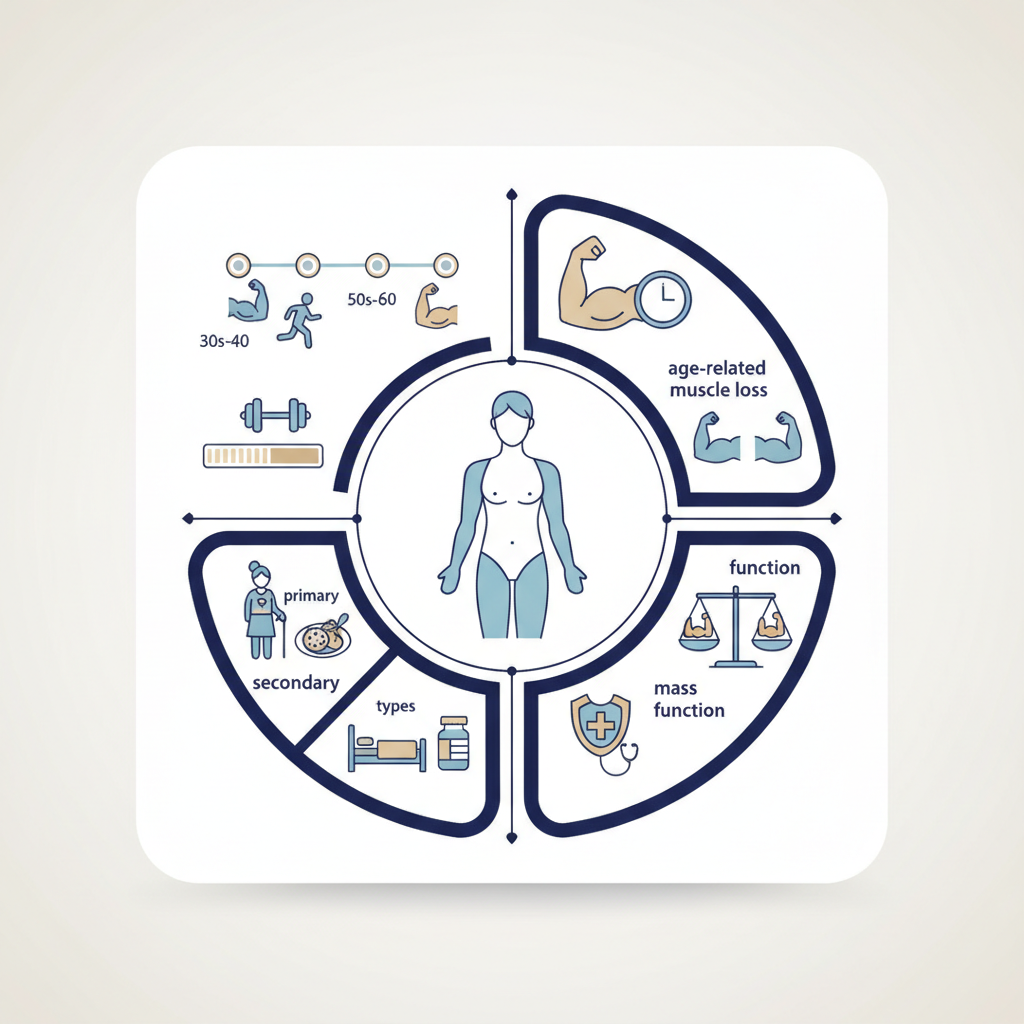
To begin your health awareness journey, it is essential to define the terms accurately. Sarcopenia is defined as the progressive and generalized loss of skeletal muscle mass, strength, and physical function that is typically associated with aging. The word is derived from Greek roots, where 'Sarx' means flesh or muscle, and 'Penia' means loss or poverty. It is crucial to recognize that sarcopenia is not just about losing muscle size; more importantly, it is about losing muscle quality and its ability to perform its function efficiently.
To understand this concept more deeply, we must look at muscle maintenance basics. Muscles in the human body are not static tissues; they are in a continuous state of breakdown and synthesis. In youth, the balance of this process tends toward building or maintaining mass, but with advancing age, the body's response to signals that stimulate muscle building may change, leading to the breakdown process outpacing synthesis if supportive measures are not taken. This physiological shift is what makes understanding Healthy Aging and Longevity so critical.
Muscle maintenance basics and sarcopenia terminology for seniors also involve distinguishing between strength and mass. A person may lose muscle strength before noticing a significant decrease in muscle size. This nuanced concept helps explain why someone might look healthy on the outside but struggle to open a glass jar or rise from a low chair. Recognizing these subtle differences is what guides modern research toward more comprehensive strategies to support the health of older adults, a topic we discuss extensively in our article on Healthy Aging: How to Prevent Cognitive Decline as You Age, where physical health is closely linked to cognitive well-being.
Why Understanding Muscle Health Terminology Matters
Some might wonder: Why do I need to know complex medical terms like sarcopenia? Isn't that the doctor's job? The answer lies in the quality of healthcare you can receive when you are an active participant in evaluating your health. When you visit your doctor and simply say, 'I feel weak,' this statement is very broad and could mean many things, from general fatigue to vitamin deficiencies, heart issues, or a decline in muscle mass.
However, when you are equipped with a clear understanding of muscle maintenance basics and sarcopenia terminology for seniors, you can provide a much more precise description. You can say: 'I have noticed a decline in my grip strength recently, and I find it difficult to get up from a chair without using my hands, and I would like to discuss whether this is related to age-related muscle loss.' This level of clarity helps the doctor direct their examinations and questions much faster and more accurately, saving time and increasing the effectiveness of the consultation.
Furthermore, understanding these terms protects you from the misleading information that floods the internet. When you read an article or see an advertisement talking about 'restoring youth' or 'building muscle in days,' your knowledge that sarcopenia is a complex physiological process requiring a comprehensive and continuous approach will make you more capable of critically evaluating these claims. Knowledge is your protective shield, and it is the tool that empowers you to make informed decisions about your lifestyle and determine when you actually need specialized medical intervention.
Core Terminology of Muscle Health for Seniors
To make reading health information and understanding medical guidance easier, we have compiled this simplified glossary of the most important terms you might encounter when reading about muscle health and aging. This table is designed to be an educational reference, not a diagnostic tool.
- Sarcopenia: A syndrome characterized by progressive and generalized loss of skeletal muscle mass and strength, with a risk of adverse outcomes such as physical disability and poor quality of life.
- Dynapenia: A term that specifically focuses on the age-related loss of muscle strength, regardless of muscle size or mass. It explains why you might lose strength before you notice smaller muscles.
- Lean Body Mass: Total body weight minus fat weight. This includes muscles, bones, organs, and water. Maintaining this mass is a primary goal in healthy aging strategies.
- Muscle Protein Synthesis (MPS): The biological process by which the body builds new muscle proteins to repair and maintain muscles. With age, the body may become less efficient at this process.
- Anabolic Resistance: A condition where the body (especially muscles) becomes less responsive to signals that stimulate muscle building, such as protein intake or exercise. This explains why older adults might need different nutritional strategies, which we cover in Nutrition and Healthy Aging: Protein Intake for Aging Adults.
- Resistance Training: Any form of exercise that forces muscles to contract against an external resistance (such as weights, resistance bands, or body weight itself), aiming to increase strength, mass, and endurance.
- Osteosarcopenia: A term describing the simultaneous presence of osteoporosis (loss of bone density) and sarcopenia (loss of muscle mass). Since bones and muscles work together, the decline of one often affects the other. For more on this connection, you can review Bone Density Nutrition for Seniors: A Healthy Aging Guide.
How to Observe and Organize Your Muscle Health Information
Now that we are familiar with the terminology, how can you apply this knowledge in your daily life? The first step is not making drastic changes, but rather careful observation and organization. Systematically tracking your physical capabilities provides you and your doctor with a clear picture of your muscle health trajectory over time.
Start by creating a 'daily observation log.' You do not need complex tools; a simple notebook or a phone app will suffice. Focus on recording notes about functional tasks rather than just focusing on weight or appearance. For example, note how easy or difficult it is to perform the following activities: getting up from a low chair without using your arms to push, opening tightly sealed glass jars (an indicator for assessing grip strength), climbing up and down stairs, and your usual walking speed when going out for a stroll or shopping.
It is important to record these observations regularly, perhaps once a week, to identify patterns. If you notice that a specific task is gradually requiring more effort over several months, this is valuable information to share with your doctor. Additionally, organize your basic nutritional information. Are you consuming protein sources at every meal? Do you feel full quickly, preventing you from eating adequate amounts of food? These observations help build a comprehensive picture of your lifestyle and its impact on muscle maintenance basics and sarcopenia terminology for seniors.
Common Concepts Needing Medical Verification
In a world full of health information, misconceptions can easily spread, especially regarding aging. In this section, we review some common ideas and explain why they need verification and discussion with a licensed professional.
- Common Concept: Loss of strength is a normal and inevitable part of aging, and nothing can be done about it.
Needs Verification: While some physiological changes are expected with age, severe decline that hinders daily life (sarcopenia) is not inevitable. Your doctor can assess whether the decline is within expected ranges or requires intervention to support muscle maintenance. - Common Concept: Daily walking is enough to maintain all the body's muscles.
Needs Verification: Walking is excellent for cardiovascular health, but it may not provide enough resistance to maintain muscle mass in the upper body or fully stimulate muscle protein synthesis. Consult a professional on how to incorporate other forms of safe movement. - Common Concept: Older adults need less food and protein because they are less active.
Needs Verification: Due to the phenomenon of 'anabolic resistance,' older adults may actually need a higher amount of protein per meal to stimulate muscle building compared to younger people. Individual nutritional needs should be discussed with a licensed dietitian. - Common Concept: Supplements alone can rebuild lost muscle.
Needs Verification: There is no magic supplement that builds muscle without movement or mechanical stimulation. Supplements may support nutrition, but they work within a comprehensive system that includes appropriate physical activity.
Common Informational Mistakes in Understanding Muscle Aging
When trying to understand muscle maintenance basics and sarcopenia terminology for seniors, many fall into the trap of informational mistakes that can hinder their progress or lead to unwarranted anxiety. One of the most prominent mistakes is confusing transient fatigue with chronic muscle weakness. Fatigue can result from lack of sleep, stress, or even mild dehydration, and is a temporary condition that improves with rest. Muscle weakness associated with sarcopenia, however, is a persistent decline in the ability to generate force and does not disappear simply by resting.
Another common mistake is relying exclusively on the scale to evaluate health. Total body weight does not tell you the whole story. Your weight might remain stable, but your body composition could be changing, where you lose muscle mass and gain fat mass, a condition sometimes known as sarcopenic obesity. Therefore, the focus should be on function (what you can do) rather than the number displayed on the scale.
Some also misinterpret the role of autophagy in muscle health. Autophagy is a natural cellular cleanup process, and while important, overstimulating it without balancing it with building processes (through proper nutrition) may not be ideal for maintaining muscle mass in older adults. Balance is key, and functional nutrition concepts related to this can be explored in our article Foods High in Spermidine: A Functional Nutrition Guide to Autophagy, always emphasizing that this information is educational and requires medical guidance to apply.
The Role of Lifestyle in Muscle Maintenance Basics
Understanding the terminology is the first step, but how does this knowledge translate into a daily lifestyle? From an educational perspective, scientific research shows that maintaining muscle requires a multidimensional approach combining structured nutrition, purposeful movement, and stress management. It is not about following a harsh regimen, but adopting sustainable habits that can be seamlessly integrated into your daily routine.
Regarding nutrition, experts point to the importance of distributing protein intake throughout the day rather than consuming it in one large meal. This approach helps overcome anabolic resistance and provides the body with a continuous stream of amino acids needed for muscle maintenance. High-quality protein foods, such as fish, poultry, eggs, and legumes, play a central role in this context.
As for movement, resistance training is considered the most effective tool to counter sarcopenia. However, the word 'resistance' does not necessarily mean lifting heavy weights in a gym. Resistance can include using elastic bands at home, performing bodyweight exercises like repeatedly standing up and sitting down from a chair, or even gardening activities that require physical effort. The key is consistency and gradual progression under the supervision of a specialist to ensure safety.
Important Questions to Discuss with a Licensed Professional
To activate your role in managing your health, we have prepared a list of practical questions you can ask your doctor or physical therapist during your next visit. These questions are designed to turn theoretical knowledge into a personalized action plan:
- Based on my medical history, are there any specific tests you recommend to evaluate my muscle mass and strength (such as a DEXA scan or grip strength test)?
- I have noticed difficulty in (mention a specific daily task like climbing stairs); do you think this is related to age-related muscle decline, or are there other causes we should investigate?
- What is the daily protein intake you recommend for my specific health condition, and how is it best distributed across meals?
- Are there any medical contraindications that prevent me from starting a simplified home resistance training program?
- Do the medications I currently take have any side effects that might affect muscle strength or increase the risk of falls?
- Do you recommend referring me to a physical therapist or a licensed dietitian for a customized plan?
The structured reflection approach: A Supportive Organizational Framework
When discussing organizing a lifestyle to support healthy aging, the need for structures and systems that help maintain consistency becomes apparent. This is where the 'structured reflection approach' comes in as one possible organizational framework. It is important to emphasize that the structured reflection approach is not a cure for sarcopenia, does not provide a medical diagnosis, and does not guarantee specific results related to increasing muscle mass or restoring strength. Instead, it serves as a supportive tool within a broader lifestyle approach.
The structured reflection approach focuses on helping individuals organize their daily habits, such as meal times, monitoring physical responses, and facilitating the adoption of more mindful dietary choices. By providing a clear and simplified structure, this method can help reduce the cognitive load associated with making daily health decisions, making it easier for seniors to focus on the medical guidance they receive from their doctors and apply it more consistently. It acts as an organizational compass to help you stay on track while implementing the muscle maintenance strategies recommended by your medical team.
Frequently Asked Questions About Muscle Health and Sarcopenia
Below are educational answers to some of the most frequently asked questions on this topic, with a reminder that these answers do not replace specialized medical advice.
- What is the difference between sarcopenia and normal aging? Normal aging involves a slight, gradual decline in strength, whereas sarcopenia is a clinical condition characterized by an accelerated and noticeable loss of muscle mass, strength, and function, significantly impacting independence.
- At what age do muscles typically start to decline? Studies suggest that the gradual decline in muscle mass can begin in the late 30s or 40s, but it accelerates significantly after age 60 or 70 if preventive measures are not taken.
- Can the effects of sarcopenia be reversed? From a scientific standpoint, muscle strength and mass in older adults can be improved through appropriate interventions like resistance training and proper nutrition, but the extent of improvement depends on the individual's condition and adherence to the medical plan.
- Is walking enough to prevent muscle loss? Walking is an excellent aerobic activity, but it does not provide sufficient stimulus (resistance) to optimally build or maintain muscle, especially in the upper body. Incorporating resistance exercises is necessary.
- How do I know if I have sarcopenia? Diagnosis is only made by a licensed doctor using specific assessment tools like grip strength measurement, walking speed, and body composition scans. Your observation of difficulty performing daily tasks is a signal to seek evaluation.
- What is the role of protein in maintaining muscle for seniors? Protein provides the essential amino acids that act as building blocks for muscles. Seniors often need higher amounts to overcome physiological changes that reduce the efficiency of muscle building.
- Are home exercises safe for seniors? Home exercises can be very safe and effective if designed according to the individual's capabilities and health status. It is always preferable to start under the supervision of a physical therapist to avoid injuries.
- Does muscle loss affect bone health? Yes, muscles and bones work as an integrated system. Muscle weakness reduces the mechanical stimulation on bones, which can contribute to loss of bone density (osteosarcopenia).
Conclusion and Next Steps
Understanding muscle maintenance basics and sarcopenia terminology for seniors is not just an academic exercise; it is a practical step toward empowering yourself on the journey of healthy aging. By familiarizing yourself with the precise terms, observing changes in your physical capabilities, and avoiding common informational mistakes, you become better equipped to have constructive conversations with your medical team. Remember, the goal is not to achieve perfection or return to youthful strength, but to maintain your independence and quality of life for as long as possible.
Medical Disclaimer: The information provided in this article is for educational and informational purposes only and does not constitute a substitute for professional medical advice, diagnosis, or treatment. Always consult your doctor or qualified healthcare provider with any questions you may have regarding a medical condition or before starting any new diet or exercise program.
If you are ready to organize your health information and start understanding your body's needs better, we invite you to take the next step. Start your health assessment today to discover how organizing your daily habits can support your healthy aging goals.
Further Education
- Explore the metabolic health education hub
- Learn how to read research summaries
- Use the educational health assessment

Ready to choose a clearer health starting point?
Start with a short educational assessment to explore tools and resources that may fit your goal. It is not a medical diagnosis.
Continue learning at Healthy Aging & Longevity.