Organic Marketing for Health Projects: Service-First Content
Author: Feras Alayed
Published:
Category: business-opportunity
Reading Time: 7 minutes
- Organic marketing focuses on building long-term trust through educational and empathetic content rather than paid advertisements.
- A service-first approach prioritizes the audience's needs, helping them understand complex health concepts before suggesting solutions.
- Ethical communication requires role clarity, avoiding medical claims, and focusing on health literacy and professional service.
- Success in organic marketing is measured by community engagement, trust indicators, and the quality of professional relationships.
- The partnership path is a skills-based journey requiring consistent effort, learning, and a commitment to ethical standards.
Organic marketing for health projects is a strategic approach that emphasizes providing value through education and community support. By focusing on 'serving before selling,' professionals can establish authority and build lasting relationships based on trust and ethical communication, rather than transactional interactions.
Understanding Organic Marketing for Health Projects
Organic marketing refers to the natural way of reaching and engaging an audience without relying on paid advertising. In the context of health projects, this approach is particularly vital because health is a deeply personal and sensitive topic. People do not want to be 'sold' to when it comes to their well-being; they want to be understood, educated, and supported. The core of organic marketing for health projects lies in creating content that resonates with the human experience, providing clarity on complex topics like heart health terminology or metabolic markers.
Unlike paid ads that provide temporary visibility, organic marketing builds a sustainable foundation. It involves search engine optimization (SEO), social media engagement, and community building. For beginners, the primary goal is not immediate conversion but the establishment of 'Authority, Empathy, and Trust.' This requires a shift from a promotional mindset to a service-oriented one, where the value you provide is the primary driver of your digital presence.
The 'Service-First' Philosophy
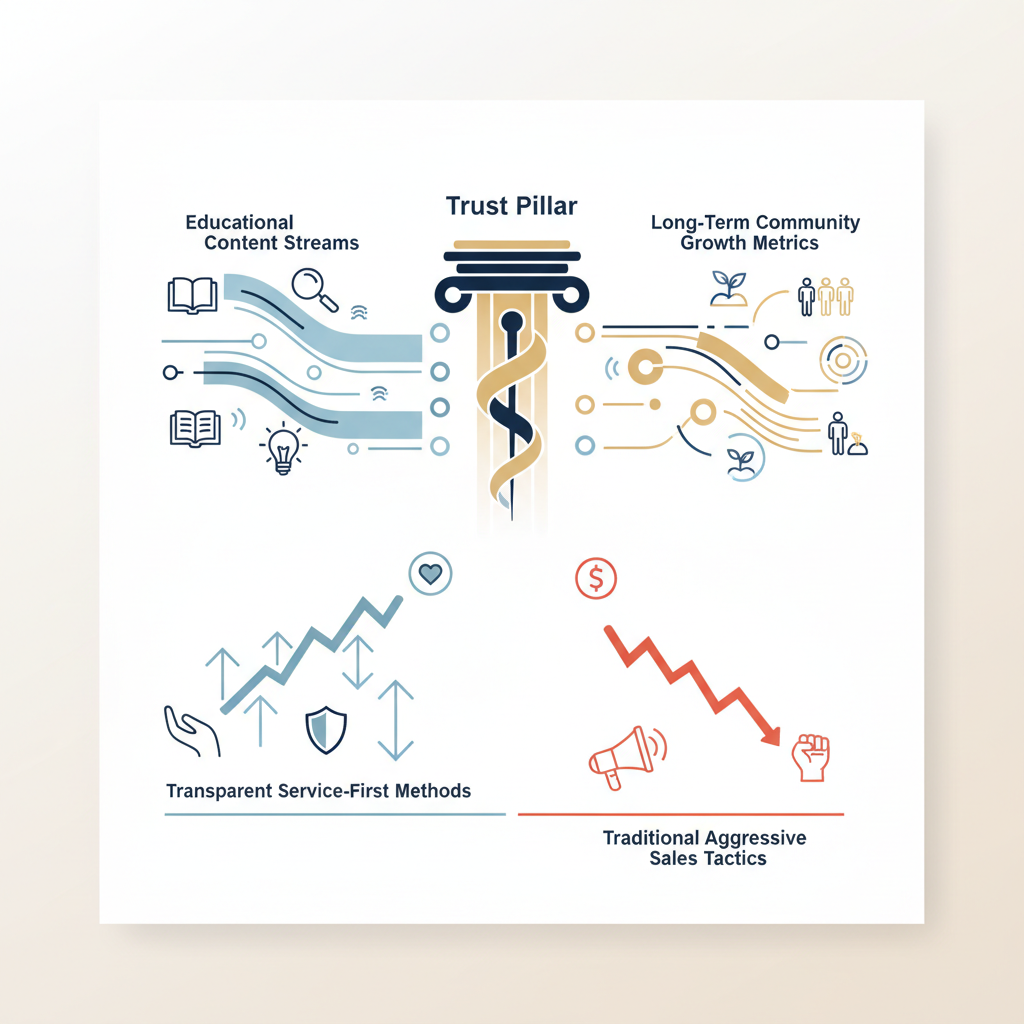
The 'Service-First' philosophy means that every piece of content you create should solve a problem, answer a question, or provide comfort to your audience. In health-related fields, this often means improving health literacy. When you help someone understand their cholesterol test results or the meaning of A1C levels, you are providing a service. This builds a professional bond that is much stronger than any sales pitch.
| Feature | Service-First Content | Promotional Content |
|---|---|---|
| Primary Goal | Education and Empowerment | Immediate Sale/Conversion |
| Tone | Empathetic and Informative | Urgent and Persuasive |
| Trust Building | High (Long-term) | Low (Short-term) |
| Sustainability | Compounding Value | Requires Continuous Spend |
Content Pillars for Ethical Health Marketing
To succeed in organic marketing for health projects, you must structure your content around specific pillars that ensure consistency and ethical integrity. These pillars help you avoid the common pitfall of sounding like a salesperson and instead position you as a knowledgeable guide.
1. Educational Content
Education is the cornerstone of trust. By breaking down complex health information into digestible pieces, you empower your audience. For example, creating a guide on organizing personal health logs helps individuals take control of their data. Educational content should be evidence-based and clearly state that it is for informational purposes, not medical advice.
2. Empathy and Connection
Health challenges are often accompanied by emotional stress. Content that acknowledges these feelings—without making diagnostic claims—creates a safe space for your community. Sharing stories of resilience (without inventing testimonials) or discussing the daily realities of maintaining wellness can foster deep connections.
3. Role Clarity and Professionalism
It is essential to maintain role clarity. If you are a wellness partner or a community leader, you must not present yourself as a medical doctor unless you hold those credentials. Ethical marketing involves being transparent about your role and the scope of your services. This includes having a robust system for customer service and inquiry follow-up to ensure every interaction is handled professionally.
Building a Sustainable Digital Presence
For beginners, the digital landscape can be overwhelming. The key is to start small and focus on quality over quantity. An organic marketing guide for beginners often suggests choosing one or two platforms where your target audience is most active. Whether it is LinkedIn for professional networking or Instagram for visual education, the strategy remains the same: provide value consistently.
The Role of Community Management
Organic marketing is not a monologue; it is a dialogue. Engaging with your audience through comments, direct messages, and community groups is where the real work happens. This is not about 'closing a deal' but about nurturing a relationship. A well-managed community becomes a source of peer support and shared learning, which is invaluable in the health and wellness space.
How This Connects to the Partnership Path
The principles of organic marketing are central to the partnership path at ATHAR. This path is designed for individuals who want to develop their leadership and communication skills while serving others. It is not a path to quick results, but a journey of professional growth.
Learning and Qualification
Entering the partnership path begins with a process of qualification and skills discovery. It is about determining if your values align with a service-first approach. New partners are encouraged to verify their suitability through a structured path verification process. This ensures that everyone involved understands the commitment to ethical standards and professional service.
The 30/60/90-Day Learning Expectations
- Day 30: Focus on learning the core values, understanding the product philosophy in general terms, and mastering the basics of ethical communication.
- Day 60: Start implementing organic marketing strategies, focusing on educational content and building initial community connections.
- Day 90: Refine service skills, manage inquiries with professional follow-up systems, and begin mentoring others in the service-first mindset.
It is important to state clearly that financial outcomes in this path depend entirely on individual effort, skill acquisition, consistency, and market conditions. There are no guarantees of income or flexibility; success is a result of dedicated service and professional development.
If you are interested in a career path that prioritizes education, ethical service, and professional leadership, we invite you to explore further. Explore whether the partnership path suits you by visiting our internal suitability page.
People Also Ask
- What is the difference between organic and paid marketing? Organic marketing relies on naturally building an audience through value, while paid marketing uses advertising spend to gain immediate visibility.
- Can I start organic marketing without a large following? Yes, organic marketing is about the quality of engagement and trust, not just the number of followers. Starting small allows for deeper connections.
- How do I avoid making medical claims in my content? Focus on health literacy, general wellness tips, and explaining terminology rather than promising specific health outcomes or treatments.
- How long does it take to see results from organic marketing? Organic marketing is a long-term strategy. It requires consistency over months to build the trust necessary for a sustainable community.
- What skills are most important for a health project partner? Communication, empathy, ethical judgment, and a commitment to continuous learning are the most critical skills.
FAQ
Is organic marketing suitable for everyone?
Organic marketing suits those who enjoy teaching, communicating, and building long-term relationships. It may not suit those looking for quick, transactional results without community engagement.

Do I need technical skills to start?
Basic digital literacy is helpful, but the most important skills are related to communication and service. Technical skills can be developed over time through training.
How do I handle negative comments ethically?
Address concerns with empathy and professionalism. If a comment requires medical advice, direct the individual to a qualified professional, maintaining your role clarity.
What is the '30/60/90-day' plan?
It is a learning roadmap designed to help new partners gradually acquire the skills needed for ethical marketing and leadership, moving from observation to active service.
Are there costs involved in organic marketing?
While organic marketing doesn't require an ad budget, it requires a significant investment of time, effort, and continuous education to be effective.
Disclaimer: The information provided in this article is for educational and professional development purposes only. It does not constitute medical advice, financial guarantees, or promises of specific business outcomes. All partnership policies, eligibility requirements, and potential outcomes must be independently verified through official programme documentation. ATHAR does not endorse specific health results or income claims. Success in any partnership path is dependent on individual effort and market variables.
Further Education
- Explore the metabolic health education hub
- Learn how to read research summaries
- Use the educational health assessment
Evaluate the path with clarity
Use the decision guide to review eligibility, responsibilities, policies, and questions that require confirmation from official programme sources. No financial outcome is promised.