Triglycerides Lowering Natural Strategies: A Practical, Evidence‑Based Guide (Heart Health)
Author: Feras Alayed
Published:
Updated:
Category: heart-health
Reading Time: 12 minutes
- Elevated triglycerides (TG) and triglyceride‑rich remnants increase atherosclerotic risk independent of LDL. ([pubmed.ncbi.nlm.nih.gov](https://pubmed.ncbi.nlm.nih.gov/34472586/?utm_source=openai))
- Reducing added sugars and refined carbs, increasing fiber, and modest weight loss (3–5%) lower TG measurably. ([bmjmedicine.bmj.com](https://bmjmedicine.bmj.com/content/bmjmed/2/1/e000664.full.pdf?utm_source=openai))
- Daily aerobic activity and resistance training reduce fasting and postprandial TG. ([pubmed.ncbi.nlm.nih.gov](https://pubmed.ncbi.nlm.nih.gov/34193471/?utm_source=openai))
- Marine omega‑3s at pharmacologic doses lower TG; cardiovascular outcome effects depend on formulation and dose. ([pmc.ncbi.nlm.nih.gov](https://pmc.ncbi.nlm.nih.gov/articles/PMC7667577/?utm_source=openai))
- Simple lifestyle changes (swap sugary drinks, add soluble fiber, walk after meals) are high‑value first steps. ([pubmed.ncbi.nlm.nih.gov](https://pubmed.ncbi.nlm.nih.gov/34265055/?utm_source=openai))
TL;DR: "triglycerides lowering natural strategies" focus on food quality (less sugar, more fiber), regular activity, modest weight loss, and targeted use of omega‑3s when appropriate. These approaches are evidence‑based and can be combined with clinical monitoring for best results. ([bmjmedicine.bmj.com](https://bmjmedicine.bmj.com/content/bmjmed/2/1/e000664.full.pdf?utm_source=openai))
Introduction
This supporting article is part of the Heart Health topic cluster. It offers a practical, science‑based guide on triglycerides lowering natural strategies — aimed at readers who want actionable, culturally relevant steps. We'll synthesize randomized trials, meta‑analyses, and consensus statements (2020+) and translate findings into daily routines, with patient vignettes and internal links to related cluster pages like Heart‑healthy diet and the Heart Health pillar page.
Why triglycerides matter for your heart (300-500 words)
Triglycerides are the main storage form of fat and circulate in blood inside very‑low‑density lipoproteins (VLDL) and chylomicron remnants. Modern evidence has advanced from seeing TG as a benign biomarker to recognizing that triglyceride‑rich lipoprotein remnants promote atherosclerosis and residual cardiovascular risk — especially in patients with metabolic syndrome or type 2 diabetes. The European Atherosclerosis Society consensus (2021) emphasizes remnant cholesterol as a clinically relevant metric. ([pubmed.ncbi.nlm.nih.gov](https://pubmed.ncbi.nlm.nih.gov/34472586/?utm_source=openai))
Key measurable points:
- Definition: Triglycerides (TG) are esterified fatty acids carried in VLDL and chylomicrons.
- Risk thresholds (typical clinical categories): <150 mg/dL normal; 150–199 mg/dL borderline; 200–499 mg/dL high; ≥500 mg/dL severe (risk of pancreatitis and need for urgent management).
- Clinical significance: Elevated TG often cluster with low HDL, small dense LDL, insulin resistance, and fatty liver — a pro‑atherogenic metabolic environment. ([pubmed.ncbi.nlm.nih.gov](https://pubmed.ncbi.nlm.nih.gov/32494924/?utm_source=openai))
Patient vignette: Omar, 52, an Abu Dhabi office worker, had fasting TG 320 mg/dL. His diet was heavy in sweetened tea and white rice; activity was minimal. After targeted dietary swaps and walking after meals, his TG fell to 180 mg/dL in 4 months. This demonstrates that lifestyle steps can yield clinically meaningful TG reductions, consistent with trial data showing benefits from modest weight loss and dietary change. ([bmjmedicine.bmj.com](https://bmjmedicine.bmj.com/content/bmjmed/2/1/e000664.full.pdf?utm_source=openai))
Dietary natural strategies to lower triglycerides (300-500 words)
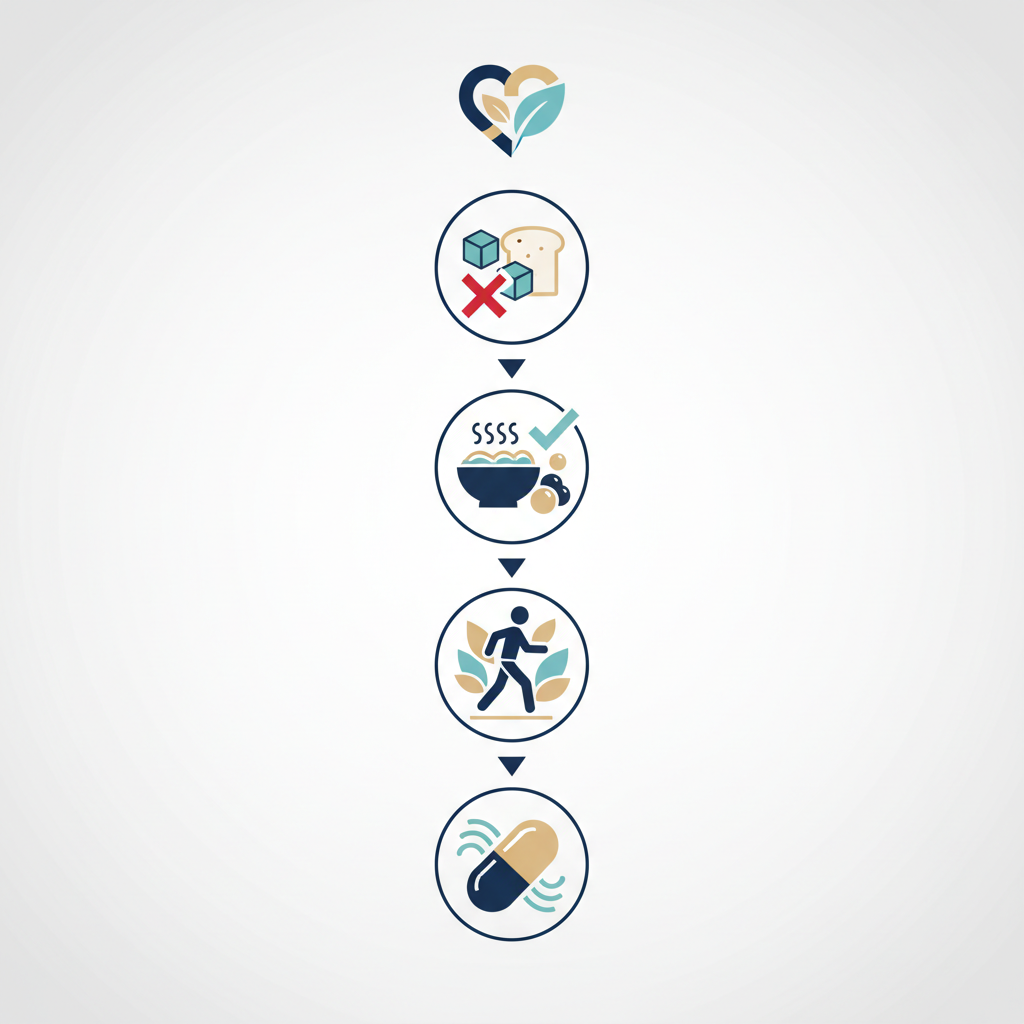
Dietary change is the primary, practical lever to reduce TG. Two main principles: cut rapidly absorbed simple sugars / refined carbs; increase soluble fiber and healthy unsaturated fats.
1) Cut added sugars and sugar‑sweetened beverages: Controlled feeding trials indicate sucrose/HFCS beverages increase hepatic lipid accumulation and plasma TG rapidly. Replace sugary drinks with water, unsweetened tea, or sparkling water. ([pubmed.ncbi.nlm.nih.gov](https://pubmed.ncbi.nlm.nih.gov/34265055/?utm_source=openai))
2) Mediterranean dietary pattern: EVOO, nuts, legumes, vegetables, fish, and whole grains. RCT substudies (PREDIMED and others) and recent systematic reviews support TG lowering and broader cardiometabolic benefits when Mediterranean patterns are adopted. This pattern is adaptable to Arab cuisines by using olive oil, legumes (lentils, fava), grilled fish, and nuts. ([pubmed.ncbi.nlm.nih.gov](https://pubmed.ncbi.nlm.nih.gov/34582548/?utm_source=openai))
3) Increase soluble fiber: Psyllium, chia, oats, and legumes reduce TG and LDL. Dose‑response meta‑analyses show meaningful improvements with 5 g increments of soluble fiber daily. Consider adding psyllium (start low to avoid GI side effects) or foods high in soluble fiber. ([pmc.ncbi.nlm.nih.gov](https://pmc.ncbi.nlm.nih.gov/articles/PMC10201678/?utm_source=openai))
4) Lower refined carbs / reduce glycemic load: Umbrella reviews find low‑carb and low‑glycemic diets reduce TG — often more than low‑fat diets — and improve glycemic metrics in those with insulin resistance. BMJ Medicine (2023) ranks low‑carb and Mediterranean patterns as moderate‑to‑high certainty for TG lowering. ([bmjmedicine.bmj.com](https://bmjmedicine.bmj.com/content/bmjmed/2/1/e000664.full.pdf?utm_source=openai))
5) Nuts & fish: Regular nut intake and 2 seafood meals/week provide healthy fats that lower TG. For people with high TG, marine omega‑3s provide an additional targeted strategy (see supplement section). For culturally tailored meal ideas see our internal guide on Mediterranean diet adaptations.
Weight loss and physical activity (300-500 words)
Weight reduction and exercise independently reduce TG. Modest weight loss (3–5%) improves hepatic TG handling and VLDL production; larger losses further benefit. Umbrella analyses and RCTs show consistent, clinically meaningful reductions in TG with energy restriction and weight loss interventions. ([bmjmedicine.bmj.com](https://bmjmedicine.bmj.com/content/bmjmed/2/1/e000664.full.pdf?utm_source=openai))
Exercise: Aerobic training (≥12 weeks) reduces fasting TG with typical mean differences reported in meta‑analyses. Resistance training complements aerobic work — combined programs often yield the best metabolic profile improvements. Walking after a meal reduces postprandial TG surge, a targetable behaviour in daily life. ([pubmed.ncbi.nlm.nih.gov](https://pubmed.ncbi.nlm.nih.gov/34193471/?utm_source=openai))
Practical exercise prescription:
- Aim for ≥150 min/week moderate aerobic activity (e.g., brisk walking) or 75 min/week vigorous activity.
- Add 2 sessions/week of resistance training (major muscle groups).
- Incorporate post‑meal walks (10–20 minutes) especially after the largest carbohydrate meal.
- Start small and progress: even 10 minutes extra per day shows benefit.
Intermittent fasting: Several RCTs and meta‑analyses show intermittent fasting can reduce TG modestly vs continuous energy restriction; effect sizes vary and adherence is the key determinant. If you choose IF, pick a schedule you can maintain. ([pubmed.ncbi.nlm.nih.gov](https://pubmed.ncbi.nlm.nih.gov/34733872/?utm_source=openai))
Omega‑3 and supplements: evidence summary (300-500 words)
Marine omega‑3 fatty acids (EPA and DHA) are the most studied nutraceuticals for TG lowering. Pharmacologic doses (2–4 g/day) reliably reduce TG. However, cardiovascular outcome trials have produced mixed results depending on formulation. For instance, the STRENGTH trial (omega‑3 CA EPA+DHA) did not reduce major adverse CV events versus corn oil placebo (trial stopped for futility in 2020), while other formulations (prescription icosapent ethyl, EPA‑only) had positive outcomes in prior trials. Hence, choice of product matters and clinical context is essential. ([pmc.ncbi.nlm.nih.gov](https://pmc.ncbi.nlm.nih.gov/articles/PMC7667577/?utm_source=openai))
Key practical points:
- Food first: aim for 2 servings/week of fatty fish.
- Supplements: Over‑the‑counter fish oil often varies in EPA/DHA content and purity; regulated prescription products differ in formulation and evidence.
- Discuss with provider if you have very high TG or ASCVD risk; they can advise on prescription vs OTC options. See our in‑depth review Omega‑3 Supplements.
Alcohol, sleep, and stress — lifestyle factors (300-500 words)
Alcohol: Acute alcohol intake raises plasma TG; chronic intake can worsen fatty liver and metabolic dysregulation in susceptible individuals. Reducing or avoiding alcohol can be particularly effective in patients with hypertriglyceridemia. Systematic reviews show variable effects by beverage type and pattern, but abstinence or reduction is a reasonable first step for elevated TG. ([pmc.ncbi.nlm.nih.gov](https://pmc.ncbi.nlm.nih.gov/articles/PMC8353970/?utm_source=openai))
Sleep & stress: Poor sleep and chronic stress increase insulin resistance and systemic inflammation — promoting higher TG. Interventions to improve sleep hygiene, stress reduction (mindfulness, CBT techniques), and social support can contribute to metabolic improvement. These often get less emphasis than diet/exercise but are part of a holistic plan.
Practical daily plan & Arab life examples (300-500 words)
Follow this stepwise 4‑week starter plan (easy to adapt to Arab cuisine):
- Week 1: Audit intake — track all drinks for 3 days; remove sugary drinks and replace with water/unsweetened tea.
- Week 2: Add soluble fiber — 1 tbsp chia or 1 tsp psyllium in yogurt or laban once daily; choose whole‑grain flatbread instead of white.
- Week 3: Add 2 post‑meal walks/week (10–20 mins) after lunch and gradually increase to daily.
- Week 4: Add one fish meal (sardine/salmon) and 2–3 portions of legumes weekly; reassess weight and TG after 8–12 weeks.
Example menu (adapted): Foul medames with olive oil + whole‑grain pita (moderate portion), mixed salad; afternoon snack: laban + nuts; dinner: grilled fish with bulgur and steamed veggies. Small consistent changes beat short intense diets that aren’t sustainable. For more recipes and grocery lists see Heart‑healthy diet guide.
Monitoring and when to consider medication (300-500 words)
Clinical thresholds guide action: TG ≥500 mg/dL prompt urgent management to avoid pancreatitis. For TG 200–499 mg/dL, an intensive lifestyle trial for 3 months is recommended; if insufficient response, consider adding medication (fibrates, high‑dose omega‑3 prescription) based on overall ASCVD risk and presence of pancreatitis risk. Consensus guidance emphasizes measuring remnant cholesterol or ApoB when assessing residual risk. ([pubmed.ncbi.nlm.nih.gov](https://pubmed.ncbi.nlm.nih.gov/34472586/?utm_source=openai))
Suggested monitoring schedule:
- Baseline fasting lipid panel (or non‑fasting if recommended locally).
- After implementing lifestyle changes: repeat at 8–12 weeks.
- If TG remain high or rise, refer to specialist and evaluate secondary causes (hypothyroidism, alcohol, medications, nephrotic syndrome, uncontrolled diabetes).
Myths vs Facts (5+)
Myth: "If LDL is OK, TG don’t matter." Fact: Remnant cholesterol contributes to atherosclerosis independently. ([pmc.ncbi.nlm.nih.gov](https://pmc.ncbi.nlm.nih.gov/articles/PMC11176465/?utm_source=openai))
Myth: "Exercise doesn’t lower TG." Fact: Regular aerobic and resistance exercise reduce TG. ([pubmed.ncbi.nlm.nih.gov](https://pubmed.ncbi.nlm.nih.gov/34193471/?utm_source=openai))
Myth: "All omega‑3s are the same." Fact: Formulation (EPA vs EPA+DHA) and dose influence outcomes. ([pmc.ncbi.nlm.nih.gov](https://pmc.ncbi.nlm.nih.gov/articles/PMC7667577/?utm_source=openai))
Myth: "You need major weight loss to see benefit." Fact: 3–5% weight loss already helps. ([bmjmedicine.bmj.com](https://bmjmedicine.bmj.com/content/bmjmed/2/1/e000664.full.pdf?utm_source=openai))
Expert tips (5+)
- Track liquid calories first — they’re often the easiest to cut and have big TG impact.
- Use post‑meal walking as a repeatable low‑burden strategy to blunt postprandial TG spikes.
- Introduce soluble fiber gradually to avoid gastrointestinal discomfort and to improve adherence.
- When choosing omega‑3s, consult with your clinician about prescription products versus OTC supplements.
- Measure progress with labs and a weight/waist tape; small objective wins motivate long‑term change.
Common mistakes (5+)
- Focusing only on saturated fat while ignoring added sugars and refined carbs.
- Assuming single supplements will fully correct metabolic issues without diet/exercise.
- Skipping post‑meal activity opportunities (e.g., after lunch at work).
- Not checking for secondary causes of hypertriglyceridemia when levels are very high.
- Changing medication or supplement doses without clinician oversight.
Frequently asked questions (8-12)
- Q: What TG level is considered high?
A: <150 mg/dL normal; 150–199 borderline; 200–499 high; ≥500 severe (pancreatitis risk). - Q: How fast do TG fall after dietary change?
A: Some change appears in weeks; stable assessment after 8–12 weeks is reasonable. ([pmc.ncbi.nlm.nih.gov](https://pmc.ncbi.nlm.nih.gov/articles/PMC10201678/?utm_source=openai)) - Q: Is intermittent fasting effective?
A: IF can lower TG modestly versus continuous restriction; adherence matters. ([pubmed.ncbi.nlm.nih.gov](https://pubmed.ncbi.nlm.nih.gov/34733872/?utm_source=openai)) - Q: Are fish oil supplements safe?
A: Generally safe, but discuss bleeding risk, formulation, and interactions with your clinician. - Q: Do nuts raise TG?
A: No—moderate nut intake tends to improve lipid profile and can lower TG. ([pubmed.ncbi.nlm.nih.gov](https://pubmed.ncbi.nlm.nih.gov/26561616/?utm_source=openai)) - Q: When should I see a specialist?
A: TG ≥500 mg/dL, poor response after 3 months of lifestyle change, or complex comorbidities. - Q: Should I measure remnant cholesterol?
A: It can provide extra risk information in patients with persistent TG elevation; discuss with your clinician. ([pubmed.ncbi.nlm.nih.gov](https://pubmed.ncbi.nlm.nih.gov/34472586/?utm_source=openai)) - Q: Do carbohydrates always raise TG?
A: Refined and high‑glycemic carbs raise TG more than whole grains and low‑GI carbs — quality matters. ([bmjmedicine.bmj.com](https://bmjmedicine.bmj.com/content/bmjmed/2/1/e000664.full.pdf?utm_source=openai))
Scientific references (10+ PubMed/JAMA/NEJM/BMJ — 2020+)
- European Atherosclerosis Society consensus statement on TRL remnants (2021). ([pubmed.ncbi.nlm.nih.gov](https://pubmed.ncbi.nlm.nih.gov/34472586/?utm_source=openai))
- STRENGTH trial: Effect of high‑dose omega‑3 CA vs corn oil on CV events (JAMA, 2020). ([pmc.ncbi.nlm.nih.gov](https://pmc.ncbi.nlm.nih.gov/articles/PMC7667577/?utm_source=openai))
- TRILOGY (ω‑3–PL/FFA) randomized clinical trials in severe hypertriglyceridemia (JAMA Network Open, 2022). ([pmc.ncbi.nlm.nih.gov](https://pmc.ncbi.nlm.nih.gov/articles/PMC8739762/?utm_source=openai))
- BMJ Medicine umbrella review: Diet in type 2 diabetes — effects on TG (2023). ([bmjmedicine.bmj.com](https://bmjmedicine.bmj.com/content/bmjmed/2/1/e000664.full.pdf?utm_source=openai))
- Soluble fiber supplementation meta‑analysis (2022; PMC). ([pmc.ncbi.nlm.nih.gov](https://pmc.ncbi.nlm.nih.gov/articles/PMC10201678/?utm_source=openai))
- Intermittent fasting RCTs & meta‑analyses demonstrating modest TG reductions (2020–2021). ([pubmed.ncbi.nlm.nih.gov](https://pubmed.ncbi.nlm.nih.gov/34733872/?utm_source=openai))
- Controlled trial: Sucrose/HFCS beverages increase hepatic lipid and plasma lipids (2021). ([pubmed.ncbi.nlm.nih.gov](https://pubmed.ncbi.nlm.nih.gov/34265055/?utm_source=openai))
- Meta‑analyses of exercise effects on TG (aerobic/resistance; 2021–2022). ([pubmed.ncbi.nlm.nih.gov](https://pubmed.ncbi.nlm.nih.gov/34193471/?utm_source=openai))
- Mediterranean diet RCTs and systematic reviews including PREDIMED substudies (2021–2023). ([pubmed.ncbi.nlm.nih.gov](https://pubmed.ncbi.nlm.nih.gov/34582548/?utm_source=openai))
- Reviews on TRL remnants and ASCVD risk (2021–2023). ([pmc.ncbi.nlm.nih.gov](https://pmc.ncbi.nlm.nih.gov/articles/PMC11176465/?utm_source=openai))
Medical disclaimer
This article provides educational information only and is not medical advice. Consult your healthcare provider before starting supplements or making major lifestyle or medication changes. The evidence cited reflects publications up to the dates of the cited sources; new data may change recommendations.
Related articles
- Heart‑Healthy Diet: practical steps for daily meals
- Lower Cholesterol Naturally: LDL and TG — integrated approach
- Physical Activity for Heart Health: how to start
- Heart Health pillar page
Related ATHAR paths
Want a Personalized Plan?
Book a free consultation with Feras Alayed to get a health plan tailored to your condition.
Book Your Free Consultation