The Ultimate Canadian Nutrition Label Guide: Navigating Grocery Aisles for Better Metabolic Health
Author: Feras Alayed
Published:
Updated:
Category: nutrition
Reading Time: 9 minutes
Key Takeaways
- Canadian labels use metric units (grams, milligrams) and a standardized % Daily Value system.
- The '5% or less is a little, 15% or more is a lot' rule is the quickest way to evaluate a product.
- New Canadian regulations require clearer labelling of total sugars and updated serving sizes to reflect realistic consumption.
- Focusing on fibre content is a cornerstone of metabolic health and weight management support.
Introduction: The Grocery Aisle Dilemma
For many Canadians, the weekly trip to the grocery store has become a source of hidden stress. Whether you are navigating the aisles of a local market in the Maritimes or a large supermarket in British Columbia, the challenge remains the same: how do you choose foods that actually support your long-term health goals? You might be looking for more energy, better weight management, or simply a way to feel less sluggish after meals. Yet, despite your best intentions, the sheer volume of marketing claims—'natural,' 'low-fat,' or 'high-protein'—can make it nearly impossible to discern what is truly inside the package.
The frustration often stems from a lack of clear, actionable information. You may have tried various diets or followed generic advice only to find it unsustainable in the context of a busy Canadian lifestyle, where seasonal changes and the availability of fresh produce fluctuate. This is where a comprehensive Canadian nutrition label guide becomes an essential tool. By mastering the ability to read and interpret the Nutrition Facts table, you transition from a passive consumer to an informed advocate for your own health. Understanding these labels is a foundational step in improving health literacy, regardless of where you live.
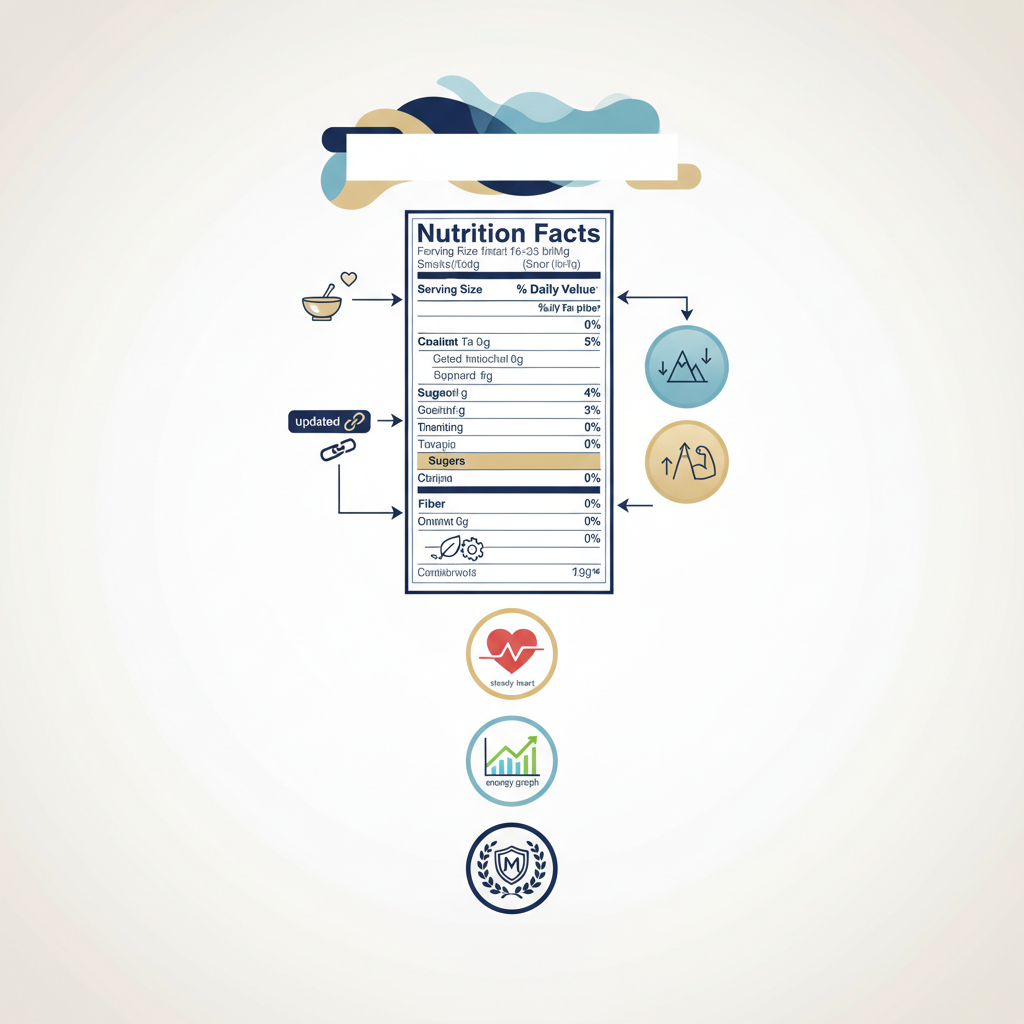
Anatomy of the Canadian Nutrition Facts Table
Health Canada regulates the appearance and content of nutrition labels to ensure consistency across the country. Every prepackaged food item must display a Nutrition Facts table, which is broken down into several key sections. Understanding these sections in the context of metric health measurements in Canada is vital for accurate interpretation.
1. Serving Size
The serving size is the most critical piece of information because every other number on the label is based on this specific amount. In Canada, serving sizes are being updated to be more consistent across similar products, making it easier to compare two different brands of crackers or yogurt. It is important to note that the serving size is not necessarily the amount you should eat; it is simply a reference point. If you eat double the serving size, you must double all the calories and nutrient values listed.
2. Calories
Calories provide a measure of how much energy you get from a serving of food. While calorie counting is not the only factor in health, understanding energy density helps in managing weight. For a Canadian adult, the daily reference intake is often based on a 2,000-calorie diet, though individual needs vary significantly based on age, sex, and activity level.
Understanding the % Daily Value (% DV)
The % Daily Value is perhaps the most misunderstood part of the Canadian label. It is a benchmark to help you see if a food has a little or a lot of a specific nutrient. It is based on a standardized daily diet. The 'Goldilocks' rule for % DV in Canada is simple:
- 5% DV or less is a little: Aim for this when looking at saturated fats, trans fats, and sodium.
- 15% DV or more is a lot: Aim for this when looking at beneficial nutrients like fibre, calcium, and iron.
Using this rule allows you to quickly scan a product without needing to do complex math in the middle of the aisle. This is a key component of supermarket literacy for liver and metabolic health.
Key Nutrients: What to Look For
When reviewing the list of nutrients, Canadian labels prioritize those most linked to public health concerns. Here is how to evaluate them:
Fats: The Good and The Bad
The label breaks down total fat into saturated and trans fats. Health Canada recommends limiting these to reduce the risk of heart disease. While 'total fat' includes healthy unsaturated fats, the sub-headings tell the real story. Always look for 0g of trans fat, as this is a manufactured fat that has no known health benefit.
Sodium: The Silent Pressure
High sodium intake is a common issue in the Canadian diet, largely due to processed and packaged foods. Since sodium is measured in milligrams (mg), the % DV is your best friend here. Many 'healthy' soups or breads can contain upwards of 20% DV of sodium in a single serving, which can contribute to water retention and blood pressure concerns.
Carbohydrates: Beyond the Basics
Carbohydrates are broken down into fibre and sugars. For those interested in metabolic health, the ratio between these two is vital. A high-fibre food helps slow the absorption of sugar, preventing the rapid spikes in glucose that lead to energy crashes. Understanding these terms is as important as understanding inflammation terminology when trying to manage long-term wellness.
The Sugar and Fibre Balance
In the context of metabolic health, fibre is the 'unsung hero.' Most Canadians consume less than half of the recommended daily fibre intake (which is roughly 25g for women and 38g for men). When reading a label, look for products where the fibre content is high relative to the total carbohydrates. Fibre not only supports gut health but also plays a role in satiety, helping you feel full longer.
Sugars, on the other hand, are now more clearly labelled in Canada. New regulations require the grouping of all sugar-based ingredients (like honey, molasses, and glucose-fructose) together in the ingredients list. This prevents manufacturers from 'hiding' the total amount of sugar by using multiple different names. If you see 'Sugars' near the top of the ingredient list, the product is high in added sweeteners. When you evaluate gut health claims, always check if the 'probiotic' or 'healthy' product is actually loaded with sugar, which may negate some of the benefits.
New Canadian Labelling Regulations (2022-2026)
Health Canada has introduced significant changes to food labels to help citizens make healthier choices. While some manufacturers have already adopted these, the full transition will be complete by 2026. Key changes include:
- Front-of-Package (FOP) Nutrition Symbols: A new magnifying glass symbol will appear on the front of foods high in saturated fat, sugars, or sodium. This is designed to be a quick warning for consumers.
- Updated % DV for Sugars: A daily value of 100g has been set for total sugars. This is not a recommended intake, but rather a limit to help you identify high-sugar foods.
- Ingredient Grouping: As mentioned, all sugars are now grouped together in parentheses after the name 'Sugars' to show their true proportion in the food.
- Enhanced Potassium Visibility: Potassium is now a mandatory nutrient on the label because many Canadians do not get enough of it, and it is crucial for maintaining healthy blood pressure.
Integrating Literacy into Your Routine
Learning to read labels is a skill that improves with practice. However, the goal is not to spend hours in the store, but to build a sustainable routine. This is where habit stacking comes into play. You might start by only checking the fibre content of your morning cereal. Once that becomes second nature, you can 'stack' the habit of checking the sodium in your lunch meats.

By gradually increasing your literacy, you reduce the cognitive load of shopping. You will eventually develop a 'safe list' of products that you know meet your nutritional criteria, allowing you to shop efficiently while still supporting your metabolic health. If you find yourself confused about what to ask during your check-ups regarding these dietary changes, consider reviewing essential health questions for your next medical appointment.
Structured Support: The structured reflection approach
Source Verification Checklist
When researching nutrition information online, it is vital to ensure the data is relevant to the Canadian context. Use this checklist to evaluate your sources:
- Does it reference Health Canada? Canadian regulations differ significantly from those in the US or Europe.
- Are units in metric? Ensure the guide discusses grams and milligrams, not just 'ounces' or 'cups.'
- Is the date current? Ensure the source reflects the 2022-2026 labelling updates.
- Is it a .gc.ca or .ca domain? Government and official Canadian health organizations provide the most reliable regulatory data.
- Does it avoid 'miracle' claims? Be wary of any guide that claims a specific food or nutrient can 'cure' a disease.
Medical Disclaimer
Ready to take the next step in your health journey?
ابدأ تقييمك الصحي لمعرفة الخطوة المناسبة لهدفك
Frequently Asked Questions
What is the scope of this guide?
This guide is educational and helps readers organize questions and observations for further learning.
How should I use the information?
Use it to review terminology, note personal questions, and identify sources that require verification.
When should I seek professional guidance?
Discuss personal symptoms, medicines, diagnoses, or treatment decisions with a licensed professional.
Further Education
- Explore the metabolic health education hub
- Learn how to read research summaries
- Use the educational health assessment
Explore the topic with reliable health education
Use ATHAR’s educational guides and practical tools to consider your next learning step.
Continue your next step with ATHAR
Explore the official Feel Great member path, or learn about the creator partnership route if you are interested in sharing wellness education with your audience.
Explore Feel Great · Explore the Creator Affiliate gateway · Ask a question on WhatsApp