Understanding Dietary Fiber in Arab Foods: A Health Literacy Guide
Author: Feras Alayed
Published:
Updated:
Category: fiber-arab-foods
Reading Time: 10 minutes
Understanding Dietary Fiber in Arab Foods: A Health Literacy Guide
Dietary fiber is a fundamental pillar in building a healthy and sustainable lifestyle, especially in the Gulf region, which has witnessed major nutritional shifts over the past decades. At ATHAR Center, we believe that health education begins with understanding basic terminology and how to apply it to our daily tables. Fiber is not just a substance added to food; it is an integral part of the structure of the plants we consume, playing a vital role in physiological processes within the body. This guide aims to empower the Gulf reader to identify fiber sources in their local environment and how to interpret information related to them with awareness and knowledge.
1. Introduction to Fiber Terminology in the Gulf Context
When discussing fiber in our societies, "bran" or "tough" foods often come to mind, but the scientific concept is much broader. Dietary fiber is divided into two main types: soluble fiber and insoluble fiber. Soluble fiber dissolves in water to form a gel-like substance during digestion and is found abundantly in oats, legumes, and fruit pulp. Insoluble fiber, on the other hand, does not dissolve and acts as a "broom" for the digestive system, found in grain husks and vegetables.
In the Gulf context, fiber was an inherent part of the traditional diet that relied on dates, whole wheat (Jareesh), and legumes. However, rapid urbanization led to the introduction of refined foods that lack these elements. It is important to understand that fiber is not a "nutrient" in the traditional sense (meaning it does not provide significant calories), but rather complex carbohydrates that the human body cannot fully digest, allowing it to pass through the digestive system to perform vital functions including supporting beneficial gut bacteria and improving colon motility.
Consumers in the Gulf region must realize that the "Carbohydrates" term on nutrition labels includes sugars, starches, and fiber. Distinguishing between these types is the first step toward choosing foods that support long-term health. Understanding the difference between whole grains and refined grains is the core of modern nutritional literacy, as grains lose most of their fiber and vitamins during the refining process, making a return to whole sources a health necessity rather than just a secondary option.
2. Decoding Nutrition Labels on Local Products in Saudi Markets
Reading nutrition labels is an essential skill for every shopper in Saudi and Gulf markets. The Saudi Food and Drug Authority (SFDA) sets strict standards for what must appear on packaging, but the challenge lies in how to interpret this data. When looking at the Nutrition Facts table, you will find an item called "Dietary Fiber" listed under "Total Carbohydrates."
To understand product quality, one must compare the amount of fiber to total carbohydrates. Products with a high fiber-to-starch ratio are considered more balanced choices. It is also important to look at the ingredients list, where ingredients are listed in descending order by weight. If "bran," "whole wheat flour," or "legumes" are at the top of the list, it is a good indicator of fiber content. Conversely, if "white flour" or "enriched wheat flour" (which is often refined) is the first ingredient, the amount of added fiber may be negligible.
Furthermore, attention should be paid to marketing terms that can sometimes be misleading. Phrases like "made with natural grains" do not necessarily mean the product is high in fiber. Always refer back to the Nutrition Facts table to check the actual grams per serving. Also, pay attention to the "Serving Size"; sometimes fiber content is written for a very small portion that does not represent what a person actually consumes, giving a false impression of nutritional benefit. Educating oneself on these details protects consumers from falling into the trap of inaccurate health claims and ensures purchasing decisions are based on scientific facts.
3. Identifying Fiber-Related Terms in Traditional Ingredients like Dates and Grains
The Arab and Gulf table is rich in natural sources of fiber, but we often overlook their structural value. Dates, for example, are not just a source of energy and natural sugars; they are a reservoir of fiber. When eating a date, we consume fiber that helps regulate the absorption of the sugars it contains, which distinguishes whole fruit from juices or added sugars. Terms associated with dates like "Rutab" and "Maknooz" differ in water content, but the essence of fiber remains in the skin and pulp.
Traditional grains such as "Jareesh" (crushed wheat), "Harees" (cooked whole wheat), and "Millet" (Dukhn) are among the best sources of fiber in Gulf heritage. These grains retain the "bran" and "germ," the parts that contain most of the fiber and minerals. In contrast, refined white bread loses these parts. Using terms like "Whole Grains" in our traditional recipes enhances their health value.
Legumes are also a cornerstone; fava beans, lentils, and chickpeas (Nakhee) contain high levels of both soluble and insoluble fiber. In local culture, these foods are sometimes viewed as "heavy" foods, and this feeling of fullness is partly due to their high fiber content, which takes longer to digest. Identifying these ingredients and integrating them into the modern diet in innovative ways ensures obtaining the body's fiber needs from natural and culturally familiar sources, without needing to rely entirely on processed products or supplements.
4. Creating a Daily Fiber Habit Journal for Personal Awareness
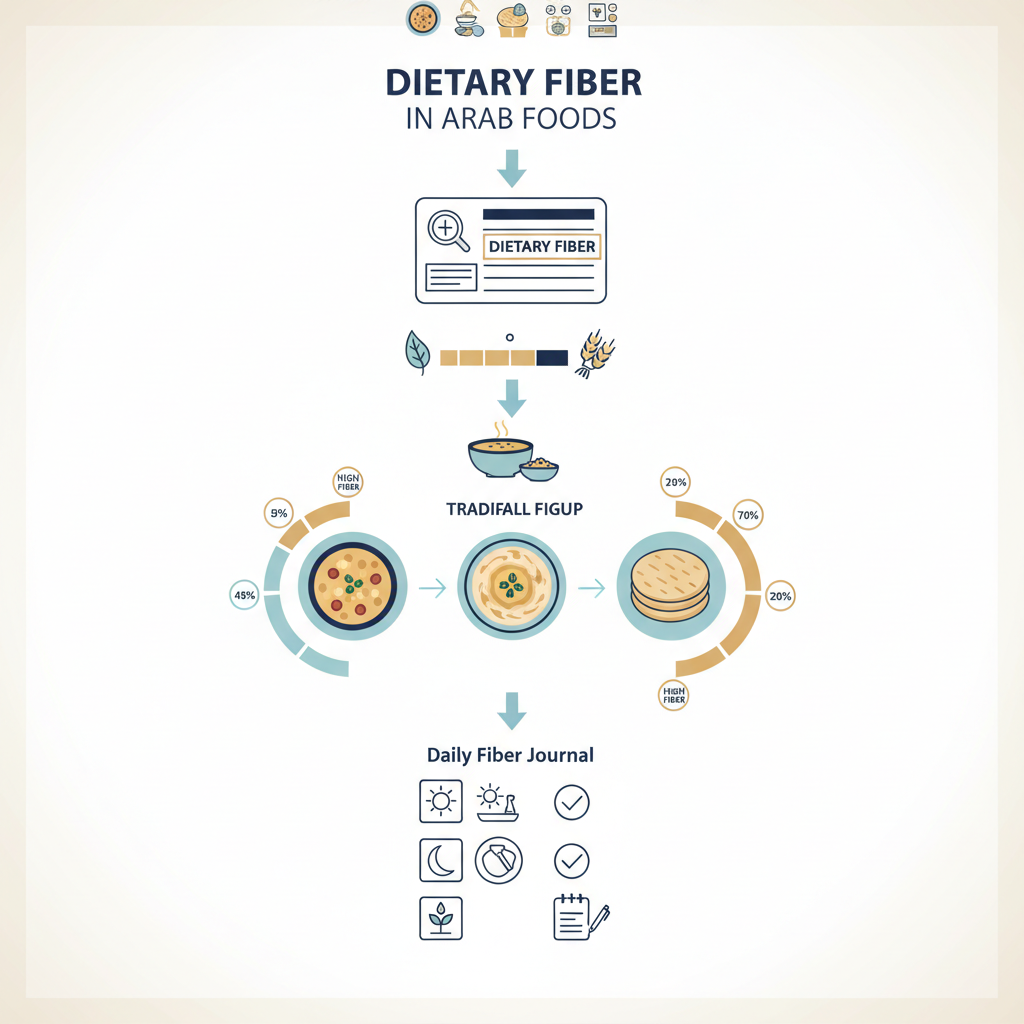
Self-awareness is the first step toward behavioral change. Creating a "Fiber Journal" is not aimed at calculating grams with extreme precision, but rather at understanding how the body responds to different types of foods. One can start by recording main meals and snacks, focusing on identifying ingredients that contain fiber. For example, instead of writing "lunch," one could write "Kabsa with brown rice and a green salad."
The journal should also include notes on energy levels, feelings of satiety, and digestive comfort after each meal. Fiber directly affects the speed of digestion and the feeling of fullness for longer periods. Through daily logging, a person may notice they feel less hungry when starting their breakfast with a fiber-containing meal like oats or dates with Arabic coffee, compared to a breakfast based on white pastries.
An important tip when starting to increase fiber intake is gradualism. Introducing large amounts of fiber suddenly may lead to digestive discomfort such as bloating. Therefore, the journal helps monitor this progression and ensures drinking enough water, as fiber needs water to function effectively within the intestines. This practice transforms nutrition from a random process into a conscious and personalized one tailored to the individual's needs, making it easier to maintain healthy habits in the long run.
5. How to Evaluate Online Health Information and Claims About Fiber
In the age of open information, the internet and social media platforms are filled with health claims about "superfoods" rich in fiber or supplements promising magical results. To evaluate this information, a critical approach must be followed. First, look for the source: Is the information issued by accredited health authorities like the Ministry of Health or specialized nutrition associations? Or is it just personal experiences or disguised advertisements?
Second, beware of exaggerated promises. Fiber is part of an integrated diet and not a sole solution for diseases. Any claim linking a specific product to an immediate cure for a complex health condition should be treated with caution. Science relies on documented clinical studies, not individual stories. Third, check the ingredients list for any promoted product; often "fiber biscuits" or "energy bars" contain high amounts of added sugar that may negate the intended benefit of the fiber.
It is also important to understand that "natural fiber" found in vegetables, fruits, and whole grains comes with a package of other nutrients such as vitamins, minerals, and antioxidants, which is not always available in isolated or industrially added fiber. Health education means the ability to distinguish between scientific fact and marketing noise, focusing on nutritional diversity rather than searching for a single "miracle" product.
6. Preparing Questions for Clinical Dietitians Regarding Local Diets
When visiting a dietitian, the goal is to obtain a plan that fits your lifestyle and nutritional culture. Instead of receiving information passively, the visitor should be prepared with specific questions that help them integrate fiber into their traditional meals. Examples of these questions include: "How can I increase the fiber content in a Kabsa or Jareesh dish without drastically changing the flavor?" or "What are the local alternatives to whole grains that are easily available in our markets?"
One can also ask about the ideal timing for consuming fiber, especially for people with specific digestive issues. Asking the specialist about the difference between types of fiber (soluble and insoluble) and the effect of each on general health helps in a deeper understanding of the nutritional process. Furthermore, one can inquire about how to read the nutrition labels of local products that the individual consumes regularly.
Preparing these questions turns the medical consultation into an interactive educational session. The specialist is the most reliable source for determining individual needs based on health status, age, and physical activity level. By focusing on local foods, the nutritional plan becomes more realistic and applicable, increasing the chances of success in adopting a healthy and sustainable lifestyle that aligns with the Gulf cultural identity.
7. Understanding the Difference Between 'High Fiber' and 'Source of Fiber' Claims
Food companies use specific legal terms to describe fiber content, and understanding these terms is essential for evaluating product quality. According to international and local standards, there is a fundamental difference between saying a product is a "Source of Fiber" and describing it as "High Fiber." The first claim means the product contains a certain minimum amount of fiber per 100 grams or per serving, which is a good amount but not necessarily high.
The term "High Fiber," however, requires approximately double the amount found in a "Source of Fiber." This means that a product carrying this label is considered a strong contributor to securing daily requirements. However, consumers must read beyond these phrases; some products may be high in fiber but also high in saturated fats or salts. The goal is to look for products that provide fiber as part of a balanced nutritional profile.
Additionally, you may find terms like "Fiber Enriched," which means fiber was added to the product during manufacturing and was not naturally present (like adding bran to white bread). While this fiber remains beneficial, foods that naturally contain fiber remain the best choice. Awareness of these subtle differences transforms the shopping process from a response to flashy slogans into a conscious analysis of actual nutritional content, contributing to a radical improvement in daily food quality.
Educational Note: Dietary fiber is not just an additive; it is part of the fabric of a healthy life. Returning to Gulf nutritional roots while understanding modern science is the ideal path for prevention and awareness.
| Arabic Term | English Term | Educational Description |
|---|---|---|
| ألياف ذائبة | Soluble Fiber | Dissolves in water and forms a gel that helps in digestion. |
| ألياف غير ذائبة | Insoluble Fiber | Does not dissolve in water and helps in bowel movement. |
| حبوب كاملة | Whole Grains | Grains that retain all their natural parts (bran and germ). |
| ملصق الحقائق التغذوية | Nutrition Facts Label | The table on the package showing nutritional contents. |
| نخالة | Bran | The outer shell of grains, which is very rich in fiber. |
Related ATHAR paths

Explore health education step by step
Use the educational guides and practical tools to choose your next learning step.