Unimate vs Coffee: Which is Better for Brain Health and Focus? A Comprehensive Scientific Comparison
Author: Feras Alayed
Published:
Updated:
Category: sustainable-health
Reading Time: 9 minutes
Introduction: Does Unimate Give You Better Focus Than Coffee?
In a world filled with piled-up tasks, long meetings, and constant notifications, maintaining mental clarity has become a daily challenge. You may start your morning with a cup of coffee in search of energy, but a few hours later you feel distracted, mentally foggy, or experience a sudden drop in energy.
This problem is not only about sleepiness; it may affect your ability to make decisions, get work done, study effectively, or even maintain a stable mood. That is why many people look for alternatives or supportive options for focus, including Unimate, which is often presented as a different option from traditional coffee.
But the most important question is: Is Unimate truly better for brain health and focus, or is coffee still the more effective choice? The answer is not simple, because the effect depends on several factors such as the amount of caffeine, absorption method, the body’s individual response, the presence of antioxidants, and the likelihood of an “energy crash” after a period of stimulation.
In this article, we will compare Unimate and coffee from the perspective of brain health, focus, alertness, sustained energy, and potential side effects. We will also explain when coffee may be more suitable, and when Unimate may be a better option for those seeking a more balanced energy pattern within a sustainable health approach.
The goal is not to declare an absolute winner, but to help you choose the drink that best suits the nature of your day, your caffeine sensitivity, and your mental goals without relying only on quick stimulation.
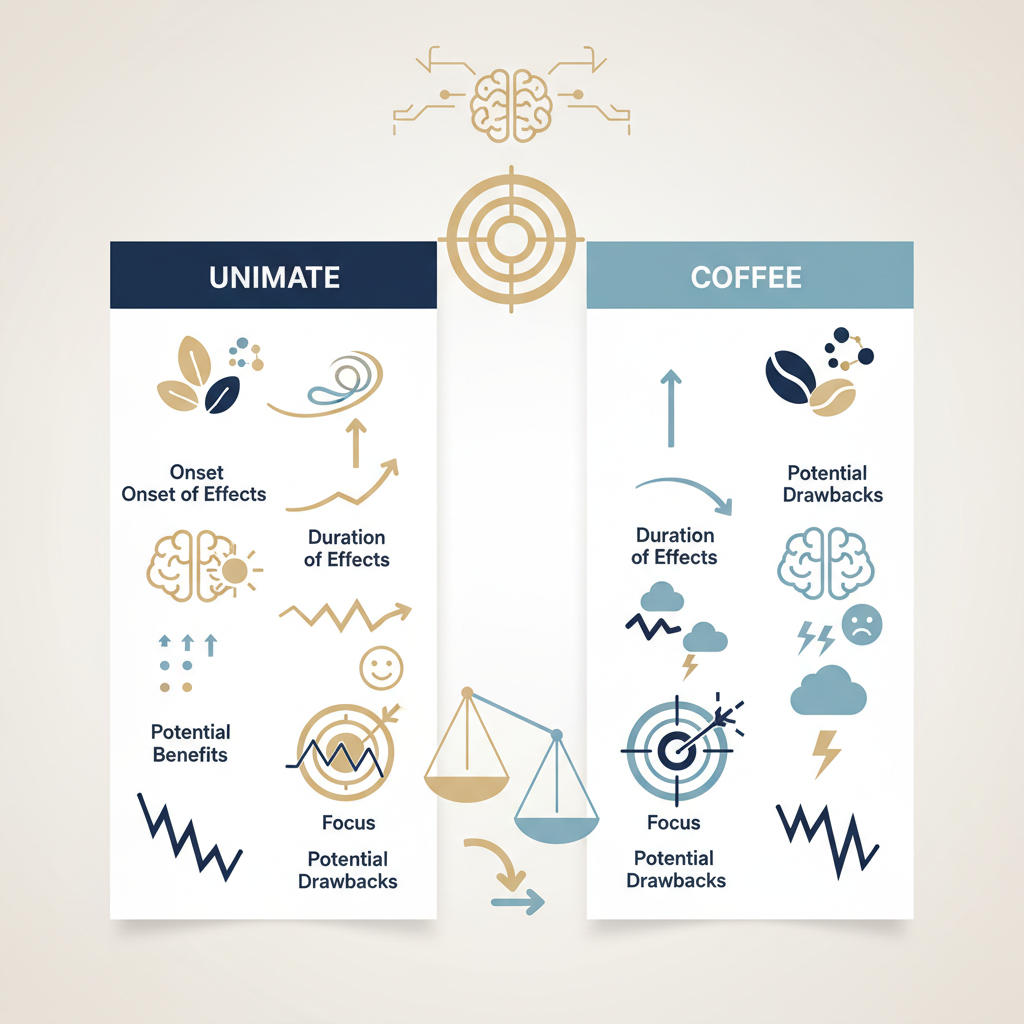
What Are Unimate and Coffee? Definition, Origin, and Active Compounds
To understand the difference between Unimate and coffee in terms of focus and brain health, you first need to know the source of each drink and the active compounds it contains. Both may provide a feeling of alertness, but their way of working is not identical.
What Is Unimate?
Unimate is a drink based on an extract of the yerba mate plant, a traditional plant native to South America, especially in countries such as Argentina, Brazil, Paraguay, and Uruguay. Mate has historically been used as a social drink and natural stimulant.
Unimate is usually marketed as a drink intended to support mental energy and focus, with a gentler experience than some strong caffeinated drinks. This is due to the combination of plant compounds found in mate, not caffeine alone.
- Caffeine: Helps increase alertness and reduce feelings of fatigue by affecting adenosine receptors in the brain.
- Theobromine: A compound also found in cacao, and it may provide a milder sense of stimulation compared with caffeine.
- Mate saponins: Distinctive plant compounds in mate, which may be linked to some antioxidant effects and support for overall health.
- Multiple antioxidants: May help counter oxidative stress, an important factor for cell health, including brain cells.
What Is Coffee?
Coffee is a drink prepared from roasted coffee beans. Its origins are often traced back to Ethiopia, after which it spread globally through Yemen and the Arabian Peninsula. Today, coffee is one of the most consumed beverages in the world, especially for increasing mental energy in the morning.
Coffee is known for its clear concentration of caffeine, so its effect may be faster and more noticeable for many people. However, this effect may sometimes be accompanied by tension, palpitations, or a later drop in energy, especially with excessive intake.
- Caffeine: The main compound responsible for alertness and short-term improvement in attention.
- Chlorogenic acids: Natural antioxidants in coffee, which may contribute to supporting vascular health and metabolism.
- Aromatic compounds: Produced during roasting and give coffee its distinctive flavor and aroma.
The Main Difference in Composition
- Unimate: Relies on a combination of caffeine, theobromine, and mate saponins.
- Coffee: Relies mainly on caffeine and chlorogenic acids.
- Effect: Coffee may work faster, while some people may feel that mate provides more gradual energy.
How Does Coffee Affect Brain Health and Focus?
Coffee affects the brain primarily through caffeine, a stimulant compound that works to reduce feelings of sleepiness and increase mental alertness. When you drink coffee, the body absorbs caffeine relatively quickly, then it reaches the brain where it inhibits the effect of adenosine, a neurotransmitter that increases throughout the day and contributes to feelings of fatigue and the desire to sleep.
When the effect of adenosine is reduced, many people feel an improvement in attention, response speed, and the ability to perform short mental tasks. Therefore, coffee may be useful before meetings, studying, or tasks that require quick focus. Some studies also suggest that moderate coffee consumption may be associated with supporting long-term brain health, partly due to antioxidants such as chlorogenic acids, not caffeine alone.
Mechanisms of Coffee’s Effect on Focus
- Reducing sleepiness: By inhibiting adenosine receptors, which provides a temporary feeling of alertness.
- Increasing neural stimulation: Caffeine may moderately increase the activity of some neurotransmitters such as dopamine and norepinephrine.
- Improving short-term performance: It may help improve attention, processing speed, and working memory in some people.
- Antioxidant support: Coffee contains plant compounds that may help counter oxidative stress linked to declining cell health.
Potential Benefits of Coffee for the Brain
When consumed in moderation, coffee may help improve mental productivity, especially during times of low energy. It can also be part of a healthy routine if paired with good habits such as adequate sleep, hydration, and balanced meals. Understanding your personal relationship with caffeine is part of behavioral nutrition, because timing, quantity, and individual response may be more important than the type of drink itself.
Drawbacks: Tension, Shakiness, and Energy Crashes
Despite its benefits, coffee may cause unwanted effects, especially when consumed excessively or on an empty stomach. The most common symptoms include shakiness, anxiety, rapid heartbeat, stomach upset, and difficulty sleeping. Some people may also experience what is known as an “energy crash” after several hours, when the effect of caffeine begins to decline while the underlying fatigue remains.
The problem often appears when coffee is used to compensate for lack of sleep instead of addressing the real cause of fatigue. In this case, it may provide temporary alertness, but it does not replace the brain’s need for deep rest.
Common Mistakes When Using Coffee for Focus
- Drinking coffee immediately after waking up: For some people, it may be better to wait a little until the natural cortisol rhythm stabilizes.
- Overdoing the amount: More coffee does not always mean better focus; sometimes it means more tension.
- Drinking it late: Caffeine may remain in the body for hours and affect sleep quality.
- Adding too much sugar: This may lead to a quick rise in energy followed by a later drop.
How Does Unimate Affect Brain Health and Focus?
Unimate is one of the products based on yerba mate extract, a traditional plant used in some South American countries as a daily drink to support alertness and mental energy. What distinguishes it from some other caffeine sources is that it does not rely on caffeine alone, but also contains plant compounds such as polyphenols, theobromine, and compounds that may help support attention and mood within a healthy lifestyle.
Mechanism of Action: More Balanced Mental Energy
Unimate works mainly through a combination of natural stimulating compounds. Caffeine may help reduce feelings of sleepiness by affecting adenosine receptors in the brain, which supports alertness and response speed. Theobromine, a compound also found in cacao, may be associated with a smoother feeling of energy compared with strong stimulants, which may help some people focus without an exaggerated feeling of tension.
Yerba mate extract also contains plant antioxidants that may contribute to protecting cells from oxidative stress. Although this does not mean direct treatment or prevention of brain diseases, it may support a healthy cellular environment when it is part of a balanced diet.
Scientific reviews indicate that yerba mate naturally contains caffeine, polyphenols, and xanthine compounds, elements that may explain its association with alertness and mental energy when consumed in moderation.
Benefits of Yerba Mate Extract for Focus
Unimate may help some people improve focus during periods of work or study, especially when fatigue is mild or moderate. The potential benefit lies in providing a relatively stable state of alertness, instead of a quick boost followed by a clear crash. For this reason, some users prefer it as an alternative to coffee when they want extended mental energy without relying on large amounts of caffeine.
Other potential benefits may also include supporting clear thinking, reducing distraction, and improving the ability to complete consecutive tasks. However, the response varies from person to person depending on caffeine sensitivity, sleep quality, nutrition, and stress level.
Sustained Focus Without an Energy “Crash”
One of the most promoted aspects of Unimate is the idea of sustained focus without a crash. This means avoiding the sudden drop in energy that may occur after consuming high-sugar drinks or large doses of caffeine. The absence of excess sugar, combined with a natural blend of yerba mate compounds, helps provide a more balanced experience for some people.
Improving Mood and Mental Drive
Some users may notice an improvement in mood or motivation to get things done after consuming Unimate. This is often linked to the effect of moderate alertness, in addition to the behavioral ritual itself: starting the day with a light drink, hydrating, and setting a clear intention for work. However, it should not be considered a treatment for anxiety or depression, but rather a supportive energy option within a healthy routine.
Myth or Fact?
Myth: Unimate provides superhuman focus and replaces sleep.
Fact: Unimate may help support alertness and focus, but it does not replace adequate sleep, good nutrition, or stress management. Its best results appear when it is used in moderation as part of a healthy lifestyle.
Comprehensive Comparison: Unimate or Coffee?
When talking about Unimate vs Coffee, the comparison does not mean that one is “better” for everyone. Rather, the choice depends on your daily goal, your body’s sensitivity to caffeine, your sleep pattern, and even how you consume the drink. Coffee is one of the most common sources of caffeine and is known for its fast, noticeable effect on alertness. Unimate, which is based on yerba mate extract, is usually presented as an option that may provide more gradual and sustained mental energy for some people.
Energy and the Caffeine Crash
Coffee may provide a strong and rapid boost, especially when consumed in the morning or on an empty stomach. However, some people notice a drop in energy afterward or a desire to have another dose of caffeine. This “crash” does not happen to everyone, but it is often linked to the caffeine dose, lack of sleep, or adding large amounts of sugar and creamer.
In contrast, Unimate may offer a gentler experience in terms of energy rise and drop, especially because it is often consumed without sugar and contains plant compounds such as polyphenols and xanthine compounds. Therefore, it may be suitable for those looking for steady focus without a strong feeling of tension or a sudden crash.
| Criterion | Unimate | Coffee |
|---|---|---|
| Speed of effect | Relatively gradual for many users | Often fast and noticeable |
| Continuity of focus | May support more stable focus | May be strong but short-lived for some |
| Likelihood of an energy crash | Less likely if used moderately and without sugar | May occur, especially with high doses or sugar |
| Antioxidants | Rich in plant compounds from yerba mate | A known source of antioxidants such as polyphenols |
| Potential side effects | Palpitations or insomnia in people sensitive to caffeine | Acidity, tension, insomnia, or palpitations when consumed excessively |
| Suitability for fasting or blood sugar control | May be suitable if it contains no sugar or high calories | Suitable if the coffee is black and without sweetened additions |
Antioxidants: Which Is Stronger?
Coffee and yerba mate both contain antioxidants, but their plant composition differs. Coffee is rich in compounds such as chlorogenic acids, while yerba mate contains polyphenols, saponins, and other natural compounds. Therefore, the issue should not be viewed as a direct competition, but rather as a way to diversify sources of plant compounds within a balanced diet.
Side Effects and Individual Sensitivity
If you suffer from anxiety, insomnia, heart palpitations, acid reflux, or clear sensitivity to caffeine, you may need to reduce the dose or avoid consuming it late in the day. People interested in appetite regulation or blood sugar can also read more about insulin resistance to understand the role of unsweetened beverages within a healthy eating pattern.
Expert Tip
If you drink a lot of coffee and feel tense or experience an energy crash, try replacing just one cup per day with Unimate for a week, while monitoring sleep, focus, appetite, and heart rate. Do not combine large amounts of coffee and Unimate on the same day to avoid excessive caffeine intake.
Scientific Evidence and Studies on Coffee and Yerba Mate/Unimate
When evaluating the benefits of Unimate compared with coffee, it is important to distinguish between studies conducted on yerba mate as a plant ingredient and direct studies on a specific commercial product. To date, most available scientific evidence addresses the plant Ilex paraguariensis, which is the main source of yerba mate tea, while there are not necessarily large published clinical studies on every commercial product carrying the Unimate name. Therefore, the potential effects can be understood based on yerba mate’s content of caffeine, polyphenols, and active plant compounds.
What Do Studies Say About Coffee?
Coffee is one of the most studied beverages in nutrition. A comprehensive review published in BMJ showed that moderate coffee consumption was associated with a lower risk of some negative health outcomes, including liver diseases and some cardiovascular and metabolic indicators, while emphasizing that the relationship is often observational and not direct evidence of causality[1]. A large study from three U.S. cohorts also found that drinking coffee, whether caffeinated or decaffeinated, was associated with lower total mortality and some causes of death, especially with moderate consumption[2].
What Do Studies Say About Yerba Mate?
As for yerba mate, scientific reviews indicate that it contains active compounds such as polyphenols, saponins, methylxanthines such as caffeine, minerals, and plant compounds that may support antioxidant activity and metabolism[3]. In a human study involving healthy people and others with lipid disorders, yerba mate intake was associated with improvements in some lipid markers, such as reduced LDL in some participants, especially with regular consumption[4].
A review published in Nutrients also discussed the potential effects of yerba mate on obesity, inflammation, and lipid and glucose metabolism, but clarified that part of the evidence is still based on laboratory or animal studies, and that larger and longer human studies are needed to confirm practical benefits[5].
Scientific Summary
The strongest current evidence supports that moderate coffee consumption is safe and beneficial for many healthy adults. Yerba mate/Unimate may be a promising option for energy, focus, and antioxidants, but it should be viewed as a supportive beverage within a healthy lifestyle, not as a treatment or medical alternative. Dose, timing of use, caffeine sensitivity, the presence of sugar or sweeteners, and overall health status are also factors that determine benefit or harm.
References
- Poole R, Kennedy OJ, Roderick P, et al. Coffee consumption and health: umbrella review of meta-analyses of multiple health outcomes. BMJ. 2017;359:j5024.
- Ding M, Bhupathiraju SN, Satija A, van Dam RM, Hu FB. Association of Coffee Consumption With Total and Cause-Specific Mortality in Three Large Prospective Cohorts. Circulation. 2015;132(24):2305-2315.
- Heck CI, de Mejia EG. Yerba Mate Tea: chemistry, health implications, and technological considerations. Journal of Food Science. 2007;72(9):R138-R151.
- de Morais EC, Stefanuto A, Klein GA, et al. Consumption of yerba mate improves serum lipid parameters in healthy dyslipidemic subjects. Journal of Agricultural and Food Chemistry. 2009;57(18):8316-8324.
- Gambero A, Ribeiro ML. The positive effects of yerba maté in obesity. Nutrients. 2015;7(2):730-750.
Practical Examples, Actionable Tips, and Frequently Asked Questions
Choosing the right timing and dose is more important than choosing the drink itself. Whether you prefer coffee or Unimate/yerba mate, the goal is to support focus and energy without increasing anxiety, heart palpitations, or sleep disturbance. For long-term brain health, make caffeine part of a balanced lifestyle that includes good sleep, movement, adequate protein, and reduced sugar.

How and When Should You Drink It to Support Brain Health?
- 60–90 minutes after waking: Avoid drinking caffeine immediately after waking if you experience an energy drop later. Waiting a little may help stabilize natural alertness.
- 30–45 minutes before mental tasks: If you have studying, a meeting, or work that requires focus, consume coffee or Unimate about half an hour beforehand.
- Do not go beyond the afternoon: For most people, it is best to avoid caffeine after 2–4 p.m., especially if you are a light sleeper.
- Start with a small dose: Try half a cup of coffee or a light serving of Unimate, then monitor focus, mood, heartbeat, and sleep.
- Avoid high sugar: Adding sugar or sweetened syrups may raise energy quickly and then cause a drop in focus. Choose cinnamon, unsweetened milk, or drink it plain.
- Drink water: Caffeine may increase urination in some people; keep a glass of water beside you, especially while studying or fasting.
- Do not use it to compensate for lack of sleep: Caffeine temporarily improves alertness, but it does not make up for poor sleep. Brain health starts with deep sleep.
Simple Daily Examples
For studying: A small cup of coffee or Unimate before a 90-minute study session, then a break without taking a second dose immediately.
For intermittent fasting: An unsweetened drink can be consumed in the morning during the fasting window, but monitor your stomach and energy response. For more, see the intermittent fasting guide.
For office work: One dose in the morning, and another light dose before noon if needed, while avoiding late caffeine.
Frequently Asked Questions
1. Can I drink coffee and Unimate on the same day?
Yes, but calculate your total caffeine intake. Combining them may increase tension or insomnia in sensitive people.
2. Which is better for studying and focus?
Coffee may provide faster stimulation, while Unimate may be gentler for some people. The best option is the one that gives you focus without anxiety or palpitations.
3. Does Unimate break a fast?
If it contains no sugar, milk, or noticeable calories, it usually does not break a fast from a calorie perspective. As for products with added sweeteners or flavors, the label should be read.
4. Is coffee good for the brain?
Moderate consumption may support alertness and attention, and coffee is associated in some studies with positive health outcomes, but excessive intake may harm sleep and anxiety.
5. How many cups per day is appropriate?
Many adults tolerate up to around 400 mg of caffeine per day, but pregnant women, heart patients, and those with anxiety need lower doses and should consult a specialist.
6. Is Unimate better than coffee for the stomach?
It may be gentler for some people, but this is not a general rule. If any drink causes acidity or nausea, reduce the dose or take it after food.
7. Does drinking caffeine daily cause dependence?
Tolerance may develop, and withdrawal symptoms such as headache may appear when stopping suddenly. It is better to reduce the dose gradually when needed.
8. Who should avoid these drinks?
Children, pregnant women at high doses, patients with heart rhythm disorders, and those with insomnia or severe anxiety should be more cautious and consult a doctor.
Conclusion: Choose What Serves Your Energy and Health
In the end, there is no one-size-fits-all answer when comparing coffee and Unimate. Coffee is a well-known, fast-acting option for increasing alertness and focus, but it may cause tension, palpitations, or sleep disturbance when consumed excessively. Unimate may be a practical alternative for those seeking more balanced energy and a gentler experience, especially when used within a healthy lifestyle that includes good nutrition, drinking water, movement, and sufficient sleep.
The most important thing is to monitor your body: How does your focus change? Does your mood improve? Is your sleep affected? Do you feel stable energy or a short rush followed by a crash? Choosing the right drink should depend on your personal response, your health status, and your total caffeine intake throughout the day.
If you want to turn the topic of energy and focus from a random experiment into a clearer daily plan, you can learn about the Feel Great Program and how it helps you build a routine that supports health, weight, and energy. For recommendations closer to your needs, start now through the health assessments.
Start with one simple step today: Evaluate your habits, choose consciously, and make your daily drink part of a better lifestyle—not just a dose of caffeine.