Why Do 90% of Diets Fail? Scientific Reasons and Sustainable Solutions
Author: Feras Alayed
Published:
Updated:
Category: weight-management
Reading Time: 8 minutes
Why Do 90% of Diets Fail? Scientific Reasons and Sustainable Solutions
Have you ever wondered why the majority of diets seem to fail, despite your best efforts? If you've embarked on a weight loss journey only to regain the weight or struggle with persistent hunger and cravings, you are not alone. Research shows that nearly 90% of diets do not produce lasting results, leaving many frustrated and confused.
This article explores the scientific reasons behind diet failure and offers sustainable solutions grounded in expert insights and evidence-based practices. We will delve into the metabolic and hormonal adaptations that challenge weight loss, common pitfalls to avoid, and practical strategies to support long-term health.
Understanding Why Diets Fail: The Science Behind It
Metabolic Adaptation: The Body’s Defense Mechanism
One of the primary reasons diets fail is due to metabolic adaptation, sometimes called "adaptive thermogenesis." When you reduce calorie intake, your body senses an energy deficit and responds by lowering your resting metabolic rate (RMR). This means your body burns fewer calories at rest, making further weight loss more difficult.
This biological response is a survival mechanism honed through evolution to protect against starvation. Unfortunately, it can work against modern dieting efforts. Studies show that after weight loss, metabolism can slow by as much as 15-25%, depending on the individual and the degree of calorie restriction[1].
How Metabolic Adaptation Affects Dieting
- Reduced energy expenditure despite continued dieting.
- Increased fatigue and reduced physical activity.
- Heightened risk of weight regain once normal eating resumes.
Hormonal Changes: Leptin, Ghrelin, and the Hunger Hormones
Hormones play a crucial role in regulating hunger, satiety, and energy balance. Two key hormones are leptin and ghrelin.
- Leptin is produced by fat cells and signals the brain to reduce appetite when energy stores are sufficient.
- Ghrelin is secreted by the stomach and stimulates hunger.
During calorie restriction and weight loss, leptin levels decrease, leading to increased hunger and reduced satiety. Conversely, ghrelin levels rise, further stimulating appetite. This hormonal imbalance can make it challenging to adhere to a diet and contributes to overeating and weight regain[2].
Fact: Hormonal changes during dieting increase hunger, making strict calorie restriction difficult to sustain.
Other Hormones Involved
- Insulin: Regulates blood sugar and fat storage; insulin resistance can complicate weight loss (learn more).
- Cortisol: Stress hormone that can promote fat accumulation, especially in the abdomen.
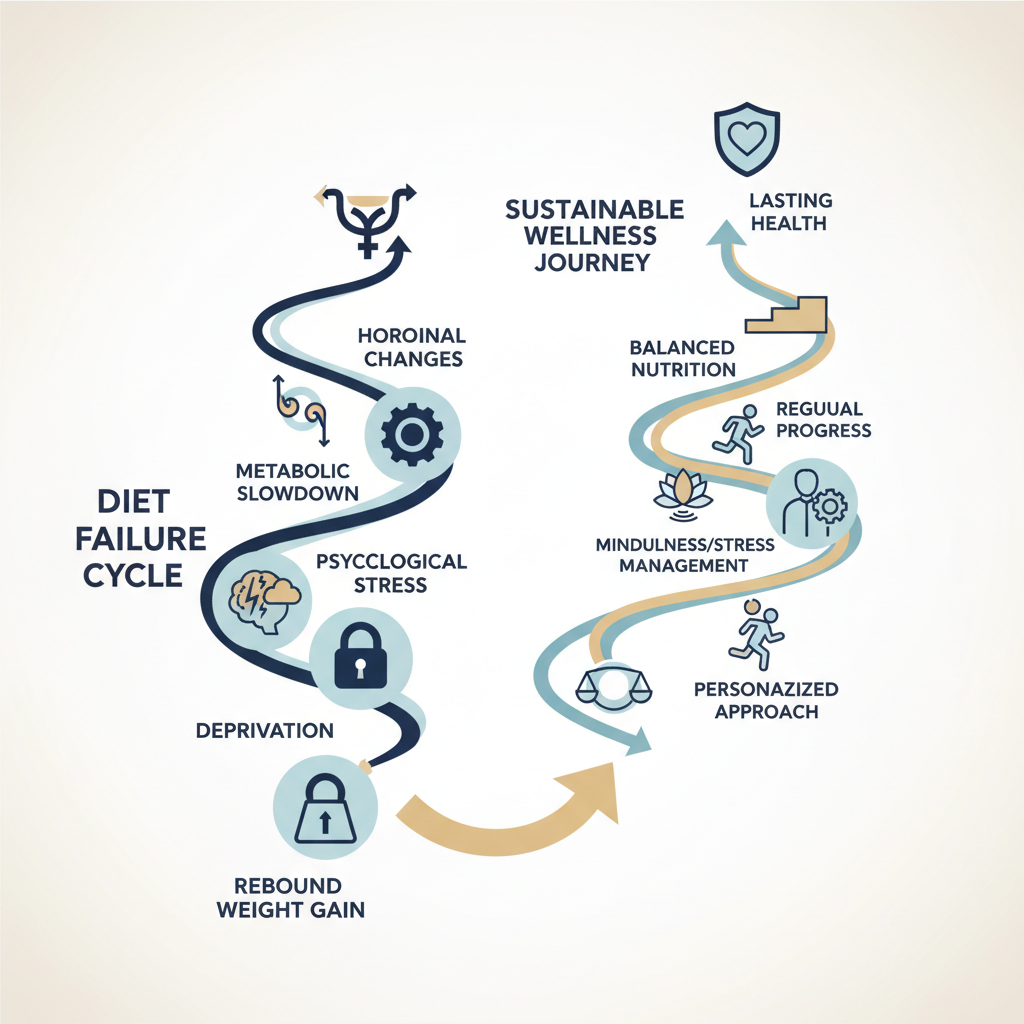
Common Mistakes That Lead to Diet Failure
Knowing what not to do is as important as adopting effective strategies. Here are frequent errors that sabotage diets:
- Overly Restrictive Diets: Extremely low-calorie or elimination diets often trigger metabolic slowdown and nutrient deficiencies.
- Ignoring Hunger Signals: Suppressing natural hunger can lead to binge eating and loss of control.
- Lack of Behavioral Support: Failing to address emotional and psychological factors reduces chances of success.
- Neglecting Physical Activity: Exercise supports metabolism and mental well-being but is often overlooked.
- Unrealistic Expectations: Expecting rapid weight loss can cause disappointment and abandonment.
Fact: Skipping meals can increase hunger hormones and lead to overeating later in the day.
Practical and Sustainable Solutions for Lasting Weight Management
1. Adopt a Balanced, Flexible Eating Approach
Rather than strict diets, aim for a flexible eating plan that emphasizes whole foods, adequate protein, healthy fats, and fiber-rich carbohydrates. This approach supports satiety, nutrient adequacy, and metabolic health.
- Include lean proteins (chicken, fish, legumes).
- Choose complex carbohydrates (whole grains, vegetables).
- Incorporate healthy fats (avocado, nuts, olive oil).
This method also allows for occasional indulgences, reducing feelings of deprivation.
2. Prioritize Physical Activity and Strength Training
Exercise helps counteract metabolic adaptation by preserving muscle mass and boosting energy expenditure. Both aerobic and resistance training are beneficial.
- Aim for at least 150 minutes of moderate aerobic activity weekly.
- Incorporate strength training exercises 2-3 times per week.
Physical activity also improves mood and reduces stress, which can decrease emotional eating.
3. Mindful Eating and Behavioral Strategies
Developing awareness of hunger and fullness cues through mindful eating can prevent overeating and improve relationship with food.
- Eat slowly without distractions.
- Recognize emotional triggers for eating.
- Set realistic goals and celebrate small victories.
4. Manage Stress and Sleep Quality
Chronic stress and poor sleep disrupt hormones like cortisol and ghrelin, promoting weight gain. Prioritize stress management techniques such as meditation, yoga, or deep breathing, and maintain consistent sleep routines.
Summary Table: Diet Failure Factors vs. Sustainable Solutions
| Challenge | Scientific Explanation | Sustainable Solution |
|---|---|---|
| Metabolic slowdown | Adaptive thermogenesis reduces calorie burn[1] | Strength training to preserve muscle mass |
| Increased hunger | Hormonal changes: low leptin, high ghrelin[2] | Balanced meals with protein and fiber; mindful eating |
| Emotional eating | Stress elevates cortisol and cravings | Stress management and behavioral therapy |
| Unrealistic diet plans | Overly restrictive diets cause nutrient deficits | Flexible, nutrient-rich eating with occasional treats |
Scientific Evidence Supporting These Insights
Several key studies highlight the biological and behavioral factors influencing diet success:
- Rosenbaum et al. (2008) demonstrated persistent metabolic adaptation after weight loss, confirming reduced resting energy expenditure[1].
- Sumithran et al. (2011) identified hormonal changes including decreased leptin and increased ghrelin that promote hunger post-weight loss[2].
- Hall et al. (2016) showed that moderate exercise combined with dietary interventions helps maintain weight loss by supporting metabolism[3].
- Berkowitz et al. (2019) emphasized the role of behavioral therapy in improving long-term adherence to healthy lifestyle changes[4].
- World Health Organization (2020) guidelines advocate for sustainable, balanced eating patterns over fad diets for effective weight management[5].
Frequently Asked Questions (FAQ)
Why do diets fail even when I stick to them?
Even with adherence, biological adaptations like slowed metabolism and increased hunger hormones can make further weight loss difficult and promote regain.
Is it possible to lose weight without feeling hungry?
Yes, by focusing on nutrient-dense, high-protein, and high-fiber foods that promote satiety and by practicing mindful eating.
How can I prevent regaining weight after a diet?
Maintain muscle mass through strength training, eat balanced meals, manage stress, and adopt sustainable lifestyle changes rather than short-term diets.

Are all calories equal when it comes to weight loss?
While calorie balance is important, nutrient quality affects hunger, metabolism, and health, so focus on whole, minimally processed foods.
Can exercise alone help me lose weight?
Exercise supports weight loss and maintenance but is most effective when combined with healthy eating habits.
How do hormones affect my ability to lose weight?
Hormones like leptin and ghrelin regulate hunger and energy expenditure; dieting can disrupt these hormones, increasing hunger and slowing metabolism.
What role does stress play in diet failure?
Stress increases cortisol levels, which can promote fat storage and cravings, making weight loss harder.
Are fad diets effective long term?
No, fad diets typically lack balance and are unsustainable, often leading to nutrient deficiencies and weight regain.
Take the Next Step: Sustainable Health Starts Here
Understanding why diets fail is the first step towards lasting success. The key lies in embracing scientifically supported, sustainable lifestyle changes that honor your body’s complex biology.
If you’re ready to move beyond short-term fixes, consider joining the Feel Great program, designed to provide personalized guidance for sustainable weight management, metabolic health, and improved well-being.
Learn more about managing insulin resistance naturally in our article How to Manage Insulin Resistance Naturally, and discover strategies to curb cravings in Why Do I Crave Sugar Every Day?.
Empower yourself with knowledge and expert support to achieve your health goals for good.
References
- Rosenbaum M, Leibel RL. Adaptive thermogenesis in humans. Int J Obes (Lond). 2010;34 Suppl 1(Suppl 1):S47-55. doi:10.1038/ijo.2010.184 PubMed
- Sumithran P, Prendergast LA, Delbridge E, et al. Long-term persistence of hormonal adaptations to weight loss. N Engl J Med. 2011;365(17):1597-1604. doi:10.1056/NEJMoa1105816 PubMed
- Hall KD, Guo J. Obesity Energetics: Body Weight Regulation and the Effects of Diet Composition. Gastroenterology. 2017;152(7):1718-1727.e3. doi:10.1053/j.gastro.2017.01.052 PMC
- Berkowitz RI, Wadden TA, Tershakovec AM, Cronquist JL. Behavior therapy and sibutramine for the treatment of adolescent obesity: a randomized controlled trial. JAMA. 2003;289(14):1805-1812. doi:10.1001/jama.289.14.1805 PubMed
- World Health Organization. Healthy Diet. 2020. Available at: https://www.who.int/news-room/fact-sheets/detail/healthy-diet