Customer Service in Health Projects: Inquiry to Follow-up
Author: Feras Alayed
Published:
Category: business-opportunity
Reading Time: 7 minutes
- Trust is the foundation of every interaction in health-oriented service.
- Active listening helps identify the specific needs and suitability of a client.
- Professional boundaries distinguish wellness support from medical consultation.
- Consistent follow-up systems enhance the quality of service and client retention.
- Ethical communication requires transparency about products and expected effort.
Introduction: The Responsibility of Service in Wellness
When an individual reaches out with an inquiry regarding their health or wellness, they are not just asking about a product; they are seeking a solution to a personal challenge. This initial contact carries a significant weight of responsibility. In the context of health projects, customer service is not merely a transactional exchange but a professional commitment to guidance and support. The question for every service provider is: How do we move from a simple inquiry to a meaningful, long-term follow-up that respects the client's autonomy and health goals?
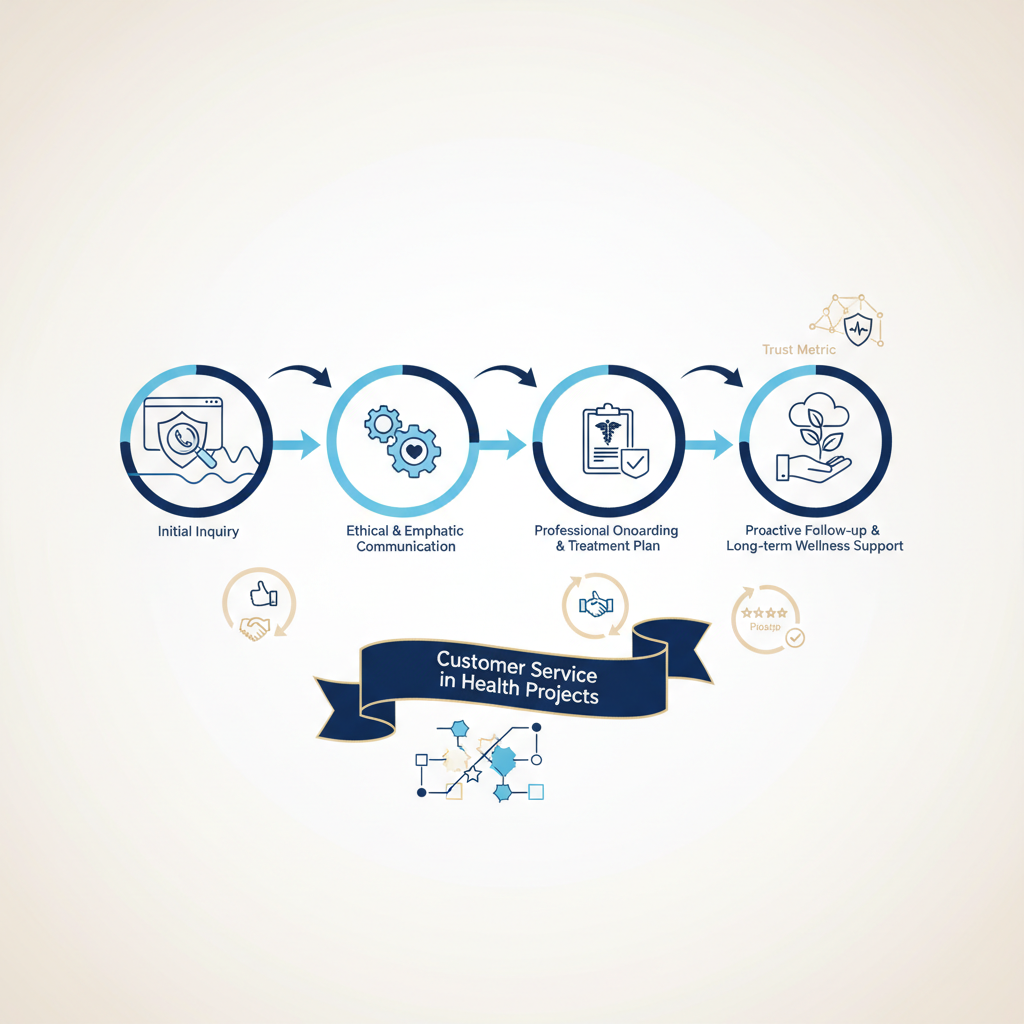
The Lifecycle of Service: From Inquiry to Advocacy
The journey of a client in a health project typically follows a structured path. Understanding this lifecycle is essential for anyone looking to excel in a service-based role. It begins with the initial inquiry, moves through education and suitability assessment, and culminates in ongoing support and follow-up.
1. The Inquiry Phase: First Impressions and Active Listening
The first interaction sets the tone for the entire relationship. In health projects, inquiries often come from a place of vulnerability or curiosity. The primary skill required here is active listening. Instead of rushing to provide a solution, a professional service provider asks clarifying questions to understand the individual's current situation and goals. This approach is detailed in our guide on building a service-based sales system, which emphasizes listening over pitching.
2. The Education Phase: Providing Clarity
Once the needs are identified, the next step is education. This involves explaining how a particular wellness program or product works without making exaggerated claims. For example, if a client is interested in a specific routine, such as the fiber and gut health routine, the provider must explain the science behind it and the consistency required. Education also involves enhancing health literacy, empowering the client to make informed decisions.
3. The Suitability Assessment
Not every program is right for every person. An ethical service provider assesses whether their offering aligns with the client's lifestyle and health objectives. This may involve discussing intermittent fasting protocols or how a plan might address metabolic health goals. If a program is not a fit, the professional should be honest about it, prioritizing the client's well-being over a sale.
Comparison: Transactional vs. Relationship-Based Service
| Feature | Transactional Service | Relationship-Based Service |
|---|---|---|
| Primary Goal | Closing a sale | Solving a client problem |
| Communication | One-way (pitching) | Two-way (listening) |
| Follow-up | Rare or automated | Consistent and personalized |
| Client View | A number/lead | A partner in wellness |
| Long-term Focus | Low | High |
The Art of Professional Follow-up
Follow-up is where the most significant impact is made in health projects. It is the process of checking in on a client's progress, addressing challenges, and providing encouragement. A structured follow-up system ensures that no client feels abandoned after their initial purchase. This is particularly important when dealing with complex needs, such as hormonal shifts in women over 40 or comparing different wellness programmes.
Steps for Effective Follow-up:
- Schedule the first check-in within 48-72 hours of starting a new routine.
- Ask open-ended questions about their experience and any hurdles they face.
- Provide resources, such as educational questions for health visits, to help them communicate with their doctors.
- Adjust the support level based on the client's feedback and comfort.
Ethical Boundaries and Professionalism
In health projects, it is vital to maintain clear boundaries. Service providers are not medical professionals (unless specifically qualified and acting in that capacity). The role is to support, educate, and facilitate the use of wellness tools. Ethics in service means never promising a cure, never advising someone to stop medication, and always encouraging consultation with a healthcare provider.
How This Connects to the Partnership Path
The ATHAR partnership path is designed for individuals who value ethical service and professional growth. This path is not a shortcut to financial success but a journey of skill acquisition and leadership development. Partners are trained in the very systems of inquiry and follow-up discussed here.
What to Expect in the Partnership Path:
- 30-Day Learning: Focus on product knowledge, ethical communication, and the basics of active listening.
- 60-Day Learning: Implementation of follow-up systems and learning how to handle complex client inquiries.
- 90-Day Learning: Developing leadership skills to support other partners in maintaining high service standards.
This path suits those who are disciplined, empathetic, and committed to long-term client care. It does not suit those looking for quick results or passive roles. Success in this path depends entirely on individual effort, mastery of service skills, and market conditions. If you are interested in exploring whether your skills align with this professional journey, we invite you to اكتشف هل الشراكة تناسبك.
People Also Ask
- What is the most important skill in health project customer service? Active listening is paramount, as it allows the provider to understand the client's unique needs before offering guidance.
- How often should I follow up with a client? A good standard is a check-in after the first few days, then weekly or bi-weekly depending on the client's needs and the program's complexity.
- How do I handle a client asking for medical advice? Always redirect the client to their licensed healthcare provider, explaining that your role is to provide wellness support and education, not medical diagnosis.
- What makes a health project ethical? Transparency, lack of exaggerated claims, and a focus on the client's long-term well-being rather than just short-term sales.
- Can I start a health project without prior experience? While experience helps, the partnership path provides the necessary training and systems to build these skills from the ground up.
FAQ
How do I manage difficult inquiries?
Stay calm, listen fully without interrupting, and acknowledge the client's concerns. If you don't have an answer, promise to find out and get back to them promptly.

What is the role of technology in follow-up?
Technology should support, not replace, the human connection. Use CRMs or reminders to ensure you don't miss a check-in, but keep the communication personal.
How do I build trust with a new inquiry?
By being honest about what a program can and cannot do, and by showing genuine interest in their wellness journey rather than just the transaction.
Is the partnership path a full-time commitment?
The time commitment varies based on your goals, but consistency is key. It requires dedicated effort to master the service skills necessary for success.
What are the common mistakes in health service?
Over-promising results, failing to follow up, and crossing the line into medical advice are the most common pitfalls to avoid.
Disclaimer: The information provided in this article is for educational and business-development purposes only. It does not constitute medical advice, diagnosis, or treatment. All partnership outcomes depend on individual effort, skills, and market conditions. Official policies and eligibility for any program must be verified through official channels before participation. We do not guarantee income, flexibility, or specific health results.
Further Education
- Explore the metabolic health education hub
- Learn how to read research summaries
- Use the educational health assessment
Evaluate the path with clarity
Use the decision guide to review eligibility, responsibilities, policies, and questions that require confirmation from official programme sources. No financial outcome is promised.