Metabolic Health Terms in Arabic: A Guide to Essential Concepts
Author: Feras Alayed
Published:
Category: metabolic-terms-arabic
Reading Time: 11 minutes
1. Introduction to the Importance of Metabolic Health Literacy
Metabolic health literacy is the cornerstone of understanding how our bodies function amidst the contemporary changes in Gulf society. In recent decades, the GCC countries have undergone a radical transformation in lifestyles, moving from a life dependent on natural physical activity and traditional diets to one characterized by luxury, sedentary office work, and the widespread availability of processed foods. This shift has made it essential for every individual to possess a "health alphabet" that enables them to understand what is happening inside their bodies at a cellular level.
Metabolic health is not merely the absence of disease; it is the state in which the body efficiently processes energy from food. When we talk about health literacy in this context, we mean an individual's ability to read, understand, and use health information to make informed decisions. In our social gatherings (Majlis) and events, health information is often circulated that may be misleading or fragmented. Here, the importance of having a solid scientific reference for basic terms emerges. Understanding terms like "insulin sensitivity" or "metabolic flexibility" is not a scientific luxury but a practical tool that helps an individual understand why they feel lethargic after a certain meal or how stress affects their blood sugar levels.
Furthermore, enhancing metabolic literacy contributes to bridging the gap between the patient and the medical team. When a person visits a clinic understanding the meaning of "triglycerides" or "Body Mass Index (BMI)," they transition from a passive recipient to an active partner in managing their health. This partnership is what we strive to foster at the ATHAR Center, as we believe that awareness is the first step toward sustainable change. The goal of this guide is to simplify complex concepts and place them in a daily context that is easy to apply, moving away from dry academic complexities while maintaining the scientific accuracy that ensures safe understanding and application.
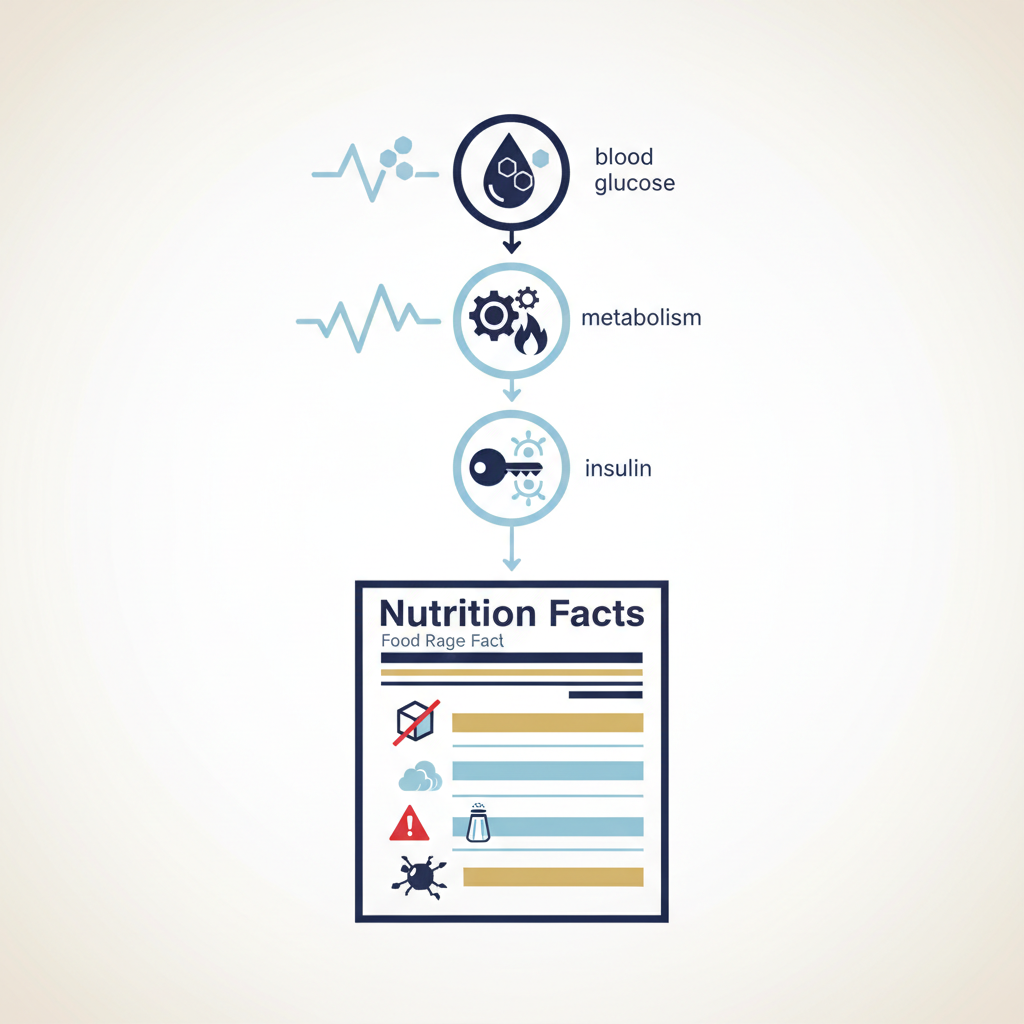
2. Glossary of Basic Terms: Scientific Concepts in Simple Language
To understand metabolic health, one must first deconstruct terms that may seem complex at first. The first and most important term is Metabolism: the sum of biochemical processes that occur within the body to convert food and oxygen into energy. Metabolism is divided into two processes: Anabolism, which is the use of energy to build cells and tissues, and Catabolism, which is the breakdown of molecules to obtain energy. When we say someone has "good metabolic health," we mean these processes are occurring harmoniously and without hindrance.
The second term is Insulin Resistance: Imagine insulin as a key that opens the doors of cells to let sugar (glucose) in to be converted into energy. In the case of resistance, these doors become "rusty" and do not respond easily to the key, forcing the pancreas to secrete larger amounts of insulin to achieve the same result. This term is pivotal because understanding it explains many health challenges related to energy levels and fat storage. Its counterpart is Insulin Sensitivity, the ideal state where cells respond quickly and with the minimum possible amount of insulin.
Thirdly, Metabolic Flexibility: the body's ability to switch smoothly between using carbohydrates (sugar) as a source of energy and using fats. A metabolically flexible body is like a hybrid car that uses electricity and gasoline efficiently; it burns sugar after meals and switches to burning stored fat during fasting or intense physical activity. Glucose is the simple sugar that is the primary source of energy for the brain and muscles, while Triglycerides are the form in which the body stores excess energy in fatty tissues. Understanding these terms helps us realize that our bodies are not just calorie warehouses but complex chemical laboratories affected by everything we introduce to them.
3. Guide to Reading Food Labels in Saudi and Gulf Markets
Reading food labels is a vital skill in a shopping environment full of diverse options. In Gulf markets, companies adhere to standards set by food and drug authorities (such as the SFDA in Saudi Arabia), which mandate detailed data on packaging. The first step is to look at the Serving Size; many people read the calories believing they apply to the entire package, while they are actually for a small portion of it. If the package contains 3 servings, you must multiply all the mentioned values by 3 if you consume it all.
The second focus should be on Added Sugars. The difference between total and added sugars is fundamental; added sugars are those put in during manufacturing and are not naturally present in the ingredients (like natural fruit sugar). High consumption of added sugars is directly linked to metabolic challenges. One should also pay attention to Dietary Fiber; fiber-rich foods help slow the absorption of sugar into the blood, promoting metabolic stability. A general rule is to look for products with a high fiber-to-sugar ratio.
Additionally, the ingredients list must be examined carefully. Ingredients are listed in descending order by weight; meaning the first ingredient is the most present in the product. Beware of aliases for sugar such as (maltodextrin, high fructose corn syrup, sucrose, dextrose). Regarding fats, look for Trans Fats and try to avoid them completely, while saturated fats are a subject of medical discussion where moderation is preferred. Turning shopping into an educational activity by reading these labels ensures you control what enters your kitchen and, consequently, your body.
4. Methodology of Tracking Daily Habits and Its Importance in Personal Follow-up
Habit tracking is a powerful tool for achieving metabolic self-awareness. It is not just about what we eat, but when we eat, how we sleep, and how we move. An effective methodology starts with recording a Food and Time Diary. Instead of focusing only on calories, record the time you had your first and last meal. This helps in understanding the "eating window" and its impact on your energy levels. Do you feel lethargic at 3 PM? Perhaps it's related to the type of lunch you recorded two hours earlier.
The second aspect is monitoring Non-Exercise Activity Thermogenesis (NEAT). This term refers to the energy we burn in everything we do besides eating, sleeping, and organized sports, such as walking while talking on the phone or taking the stairs. Recording these simple activities gives a fuller picture of the daily metabolic rate. Sleep Quality cannot be overlooked either; staying up late, often linked to social patterns in the Gulf, directly affects hunger hormones (ghrelin) and satiety hormones (leptin). Recording sleep hours and the level of refreshment upon waking connects the dots between sleep quality and food choices the next day.
Finally, tracking helps in identifying Emotional and Environmental Triggers. Are you eating because you are truly hungry, or because you are at a social gathering? Do you crave sweets when stressed? Using simple apps or even a paper notebook to create this "data link" between habit and health outcome gives you your own data that no lab can provide with similar accuracy. This data is what will enable you to make simple but fundamental adjustments to your lifestyle based on your body's unique response.
5. How to Prepare an Effective List of Questions for Your Next Medical Appointment
Patients often feel confused or rushed during a medical appointment, leading them to leave without a full understanding of their metabolic state. Preparation is key. Start by writing down Symptoms Accurately: instead of saying "I feel tired," say "I feel a sharp drop in energy two hours after eating carbohydrates." This precise description helps the doctor link the symptom to a potential metabolic process. Prepare a list of medications and supplements you are currently taking, as some may affect metabolic test results.
When discussing lab results, don't just ask "Are my results normal?". Ask deeper questions like: "Where do my results fall within the optimal range, not just the normal range?" or "How do these results compare to my results last year?". Ask about Correlations: "How does my stress level affect my sugar readings?" or "Are there specific lifestyle changes that can improve these numbers before resorting to medication?". These questions show the doctor that you are informed and interested in participating in your treatment plan.
Also, inquire about Short-term and Long-term Goals. Ask the doctor to clarify terms they used that you didn't understand; there is no shame in saying "What exactly do you mean by insulin resistance in my specific case?". If the doctor suggests a change in diet, ask for alternatives that fit your local food culture (such as how to handle dates or rice in traditional meals). Turning the medical appointment into a mutual educational session ensures you get the maximum possible benefit and reduces the likelihood of misunderstanding medical instructions.
6. Criteria for Evaluating Online Health Information and Social Media Platforms
In the age of "information explosion," it has become very easy to fall into the trap of misinformation, especially in the field of metabolic health, which is full of glowing promises and quick fixes. To evaluate any health information online, the Source and Qualification Criteria must be applied. Is the content creator a certified specialist in this field? Is their talk based on peer-reviewed scientific studies or just personal experiences? Personal experiences (anecdotal evidence) may be inspiring but are not a scientific rule that can be generalized to everyone.
Secondly, look for Neutrality and Objectivity. If the content promotes a specific product as the only and comprehensive solution to all metabolic problems, this is a red flag. Real science is characterized by humility and recognition of complexity; there is no one-size-fits-all solution. Also, beware of "clickbait" headlines that claim to have discovered a "hidden secret" or a "medical conspiracy." Reliable health institutions (such as government websites, prestigious universities, and specialized research centers) publish information that has undergone peer review and aligns with general scientific consensus.
Thirdly, check the Currency of Information. Metabolic science is evolving rapidly, and what was believed to be true ten years ago may have been updated now. Look at the date of publication or update. Finally, consult your medical team before applying any "trending" advice you see on social media platforms. Remember that algorithms are designed to grab your attention, not necessarily to maintain your health. Having a critical sense toward what we read and watch is an integral part of modern health literacy, protecting you from fluctuating between conflicting diets and inaccurate information.
7. Tools for Effective Communication with the Medical Team to Enhance Mutual Understanding
Effective communication is a bridge that connects medical knowledge to practical application in a patient's life. One of the most important tools is the Teach-back Method; when a doctor explains a concept or a treatment plan, rephrase it in your own words and ask: "Is my understanding correct?". This ensures there are no gaps in communication. Visual Aids can also be used; ask the doctor for a diagram or use models to explain how daily habits affect vital organs.
Another tool is Prioritization. In each visit, focus on the top three issues that concern you. This prevents distraction and ensures the most impactful matters for your metabolic health are addressed. Do not hesitate to discuss Social Barriers; in our Gulf society, social obligations play a big role. Talk frankly with your medical team about the difficulty of sticking to a certain system during events, and ask them for flexible strategies to deal with these situations. A doctor who understands your social context can provide more realistic and applicable advice.
Finally, benefit from the Integrated Medical Team. Metabolic health is not limited to the doctor alone but includes nutritionists, health educators, and sometimes psychologists. Each member of this team has a different perspective that can enrich your understanding. Take notes after each meeting and share them with the rest of the team to ensure harmony of care. Communication is not just the transfer of information; it is building a relationship of trust based on mutual understanding and a single goal: reaching the best possible state of health. By possessing these tools, you become the leader of your health journey, supported by the expertise of your medical team.
Metabolic Literacy Checklist:
- Do I know the difference between glucose and insulin?
- Can I identify added sugars on a food label?
- Do I have a record of my daily habits (sleep, activity, eating)?
- Have I prepared a list of questions for my next medical appointment?
- Have I verified the credibility of the health information I recently read?

Explore health education step by step
Use the educational guides and practical tools to choose your next learning step.