Navigating the Grocery Store for Microbiome Diversity
Author: Feras Alayed
Published:
Updated:
Category: gut-health
Reading Time: 14 minutes
Key Takeaways
- Microbiome diversity starts with the variety of plant-based foods in your shopping cart, requiring observation and organization before you even begin cooking.
- You don't need expensive fresh produce; frozen and canned options play a role in gut health and offer practical, long-lasting alternatives for your pantry.
- Reading labels for dietary fiber content, recognizing whole grain terminology, and identifying live cultures are essential skills for navigating the modern grocery store.
- The goal is not perfection or an immediate dietary overhaul, but rather adding one new plant element per shopping trip to gradually change your purchasing routine.
TL;DR
Shopping for gut health doesn't require a massive budget, buying exotic products, or spending hours analyzing every label. Through this realistic grocery store walkthrough, you'll learn how to navigate the produce, grains, freezer, and dairy aisles to choose foods associated with beneficial bacteria diversity. Focus on observing colors, identifying dietary fiber, and locating fermented foods, and remember that small, sustainable organizational changes are the key to building a realistic daily routine.
The Problem: Grocery Aisle Overwhelm
You stand at the entrance of the grocery store, gripping your cart, looking down the long aisles filled with thousands of products. The modern supermarket is an architectural marvel of logistics, typically designed with fresh items like produce and dairy around the perimeter, and packaged, canned, and frozen goods in the center aisles. You've read a lot about the microbiome and want to make different choices, but the task feels daunting when faced with this sheer volume of inventory. Packages are plastered with marketing terminology and claims like 'gut-friendly,' 'natural,' and 'probiotic-rich,' many of which lack strict regulatory definitions.
The strict dietary protocols you've observed in the past were often expensive and required complex meal preparation, frequently leading you right back to your usual purchasing habits. The real issue isn't a lack of willpower; it's the absence of a practical, organizational strategy for the retail environment. Trying to completely overhaul your pantry in a single shopping trip usually results in buying unfamiliar vegetables that wilt in the fridge and expensive specialty products you don't know how to prepare.
This guide is designed to take you on a realistic walkthrough of the store, step-by-step. By focusing on observation, terminology, and categorization, this approach helps you make clearer decisions that address microbiome diversity without the stress, complexity, or confusion of navigating food marketing.
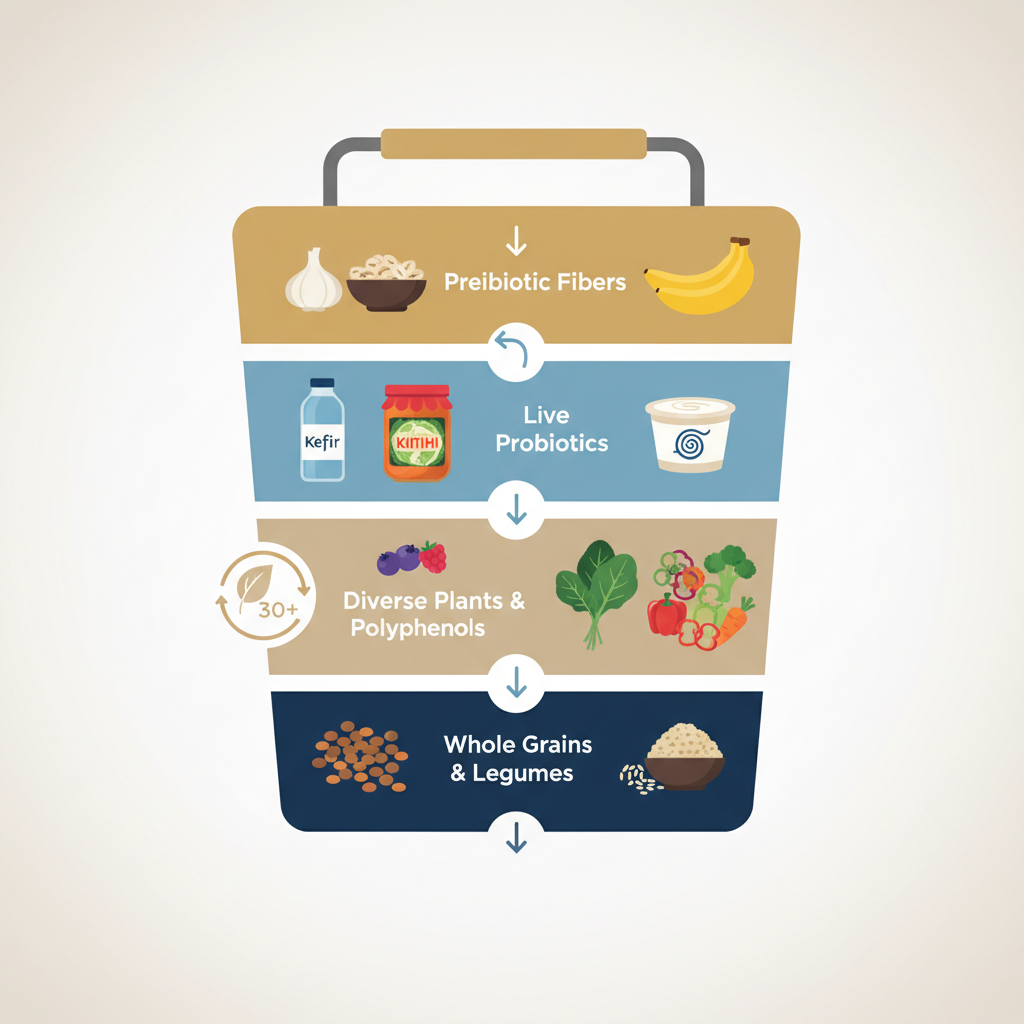
What is Microbiome Diversity?
The human gastrointestinal tract is a complex biological environment. The term 'microbiome' refers to the collective genomes of the microorganisms—including various bacteria, fungi, and viruses—that live inside and on the human body. The term 'microbiota' refers to the actual organisms themselves. Microbiome diversity is characterized by the presence of a wide and varied range of these bacterial strains and microorganisms living in your digestive tract.
Diversity is generally understood through two concepts: richness (the total number of different bacterial species present) and evenness (the relative abundance of each species). You can think of it much like a botanical garden: a garden with only one type of plant interacts with its environment differently than a garden containing a wide variety of trees, shrubs, and ground cover, each requiring different nutrients and interacting with different soil components. The most direct way to address this diversity is by varying the sources of plant foods you consume, which literally begins with the organizational choices in your shopping cart. For a deeper understanding of these foundational concepts, you can read Foundations of Gut Health for Overall Wellness.
The Walkthrough: 10 Steps to a Diverse Cart
Let's begin our virtual tour of the store. We will move through the main sections, and in each, we'll use a simple educational tool and ask a clear check question to guide your observations.
Step 1: Pre-Shop Prep (Flexible Planning)
Before you cross the automatic doors, you need to be prepared. This begins in your own kitchen with a pantry and refrigerator audit. Observing what you already have prevents food waste and unnecessary purchases. Furthermore, rigid shopping lists often lead to frustration if a specific item is out of stock or out of season.
- Educational Tool: The Flexible Category List. Instead of writing 'Granny Smith apples and baby spinach,' write '2 types of leafy greens, 3 types of seasonal fruit.' This modular approach allows you to adapt to store availability.
- Check Question: Does my list allow me to choose seasonal, available produce rather than locking me into specific items?
Step 2: Fresh Produce Aisle (The Power of Color)
This section is a primary source of plant variety. Different colors in plants indicate the presence of different types of phytochemicals, which are naturally occurring botanical compounds. For example, polyphenols are a category of phytochemicals that interact with bacteria in the digestive tract.
- Educational Tool: The Rainbow Strategy. Aim to observe and select different colors for your cart. Red items (like tomatoes or red bell peppers) contain compounds like lycopene; orange and yellow items (like carrots and sweet potatoes) contain carotenoids; green items (like kale and spinach) contain chlorophyll; and blue or purple items (like eggplant and blackberries) contain anthocyanins.
- Check Question: Do I currently have at least three different distinct colors of fresh produce in my cart?
Step 3: The Flavor Foundation (Prebiotics)
Still in the produce section, look for specific foods classified as prebiotics. In nutritional terminology, a prebiotic is a non-digestible food ingredient that undergoes fermentation by bacteria in the gastrointestinal tract. Because human digestive enzymes cannot break them down in the stomach or small intestine, they reach the colon intact.
- Educational Tool: The Prebiotic Radar. Allium vegetables—such as garlic, onions, leeks, and chives—contain specific types of dietary fibers like fructooligosaccharides (FOS) and inulin. These foods are generally inexpensive, form the flavor base for countless recipes, and interact directly with the gut environment. Read more about Prebiotic Foods for Gut Health.
- Check Question: Did I grab onions, garlic, or leeks to form the flavor base for this week's cooking?
Step 4: Grains and Legumes Aisle (Complex Carbs)
The anatomy of a whole grain consists of three parts: the bran (the fibrous outer layer), the germ (the nutrient-dense core), and the endosperm (the starchy middle). Refining processes typically remove the bran and the germ, leaving only the endosperm. Whole grains retain all three parts, providing complex carbohydrates and dietary fibers that travel to the large intestine for fermentation.
- Educational Tool: The Whole Grain Check. When buying bread, pasta, or oats, read the ingredients list carefully. The term 'multigrain' simply means multiple types of grains are present, but they may all be refined.
- Check Question: Is the very first word in the ingredients list 'whole grain' or 'whole wheat flour'?
Step 5: Nuts and Seeds Section (Healthy Fats & Fiber)
Nuts and seeds are complex structural matrices of dietary fibers, proteins, and lipids. They are versatile ingredients that can be added to meals without requiring extensive preparation.
- Educational Tool: The Diverse Crunch Factor. Different seeds offer different structural properties. For instance, chia seeds form a gel-like mucilage when exposed to liquid, representing a type of soluble fiber. Consider a rotation of chia seeds, flaxseeds, pumpkin seeds, walnuts, and almonds.
- Check Question: Did I choose a mix of seeds and nuts rather than just sticking to one single type?
Step 6: Dairy and Refrigerated Section (Probiotics)
In this section, the focus shifts to live microorganisms. The fermentation of dairy involves inoculating milk with specific strains of lactic acid bacteria. These bacteria consume lactose (milk sugar) and produce lactic acid, which alters the protein structure of the milk to create yogurt or kefir.
- Educational Tool: The Live Cultures Scanner. When choosing yogurt or kefir, recognize that the word 'natural' on the front label does not guarantee the presence of live bacteria. Some commercial yogurts are heat-treated after fermentation, a process that destroys the live cultures. For more detailed terminology, check out Best Foods for Gut Health.
- Check Question: Does the packaging explicitly state 'contains live and active cultures' in the ingredients or on the label?
Step 7: Alternative Fermented Foods (Healthy Pickles)
Foods like sauerkraut and kimchi undergo lacto-fermentation, a process where naturally occurring bacteria on the vegetables convert sugars into lactic acid in an anaerobic (oxygen-free) brine environment. However, where you locate these items in the store is crucial.
- Educational Tool: The Fridge Check. Fermented foods containing live bacteria must be kept cold to slow the fermentation process. Products sitting on warm, center-aisle shelves alongside regular canned goods have typically been pasteurized (heat-treated) or pickled using acetic acid (vinegar), which means they do not contain live bacterial cultures.
- Check Question: Did I grab this fermented product from the refrigerated section?
Step 8: The Freezer Aisle (Convenience and Nutrient Lock)
Frozen vegetables and fruits are typically harvested at peak ripeness, briefly blanched (boiled to halt enzymatic activity that causes decay), and then flash-frozen at extremely low temperatures. This mechanical process locks the cellular structure in place.
- Educational Tool: The Frozen Nutrient Lock. Frozen produce is a practical way to maintain plant variety in your diet at a lower cost and with a significantly longer shelf life. Frozen berries or spinach are quick additions to smoothies, stews, or soups.
- Check Question: Do I have at least one bag of frozen fruits or vegetables for unexpected schedule changes or emergencies?
Step 9: Canned Goods Aisle (Ready-to-Use Legumes)
The canning process involves sealing foods in airtight containers and subjecting them to high heat to destroy microorganisms that cause spoilage. While this alters the texture of the food, the dietary fiber in items like beans, lentils, and chickpeas remains intact, offering a convenient option that saves hours of soaking and boiling.
- Educational Tool: The Rinse Rule. Canned legumes are often preserved in a liquid that contains high amounts of added sodium. The mechanical action of emptying the can into a colander and running water over the legumes removes much of this viscous liquid and excess sodium.
- Check Question: Did I choose legumes with no added sugar, and am I prepared to rinse them thoroughly with water before use?
Step 10: Checkout Review (The Final Audit)
You are now heading to the cashier. This is the moment to take a quick visual inventory of what you have gathered before placing items on the conveyor belt.
- Educational Tool: The Plant Diversity Estimator. Group items in your cart by category (fresh, frozen, pantry) to visually assess the variety. Remember, the overarching concept is to gradually increase the number of different plant types you interact with weekly.
- Check Question: How many different plant types (vegetables, fruits, seeds, nuts, grains, legumes) are in my cart right now? Can I add one new type I haven't tried before?
Common Shopping Mistakes
Navigating food retail involves trial and error. Making mistakes in observation or categorization is a normal part of the learning process. Here is how you can calmly identify and adjust them:
- Falling for Health Halos: A 'health halo' is a phenomenon where a single marketing claim—such as 'gluten-free,' 'vegan,' or 'contains fiber'—makes a highly processed product appear as a whole food. Always turn the package over and read the actual ingredients list rather than relying on front-of-package marketing.
- Serving Size Oversight: Misinterpreting the nutritional label by not looking at the reference amount. A product might list a high amount of dietary fiber, but if the serving size is unrealistically large, the practical application changes.
- Overbuying Fresh Produce: Initial enthusiasm might lead you to buy too many fresh vegetables that ultimately spoil in the crisper drawer before you have the time to prepare them. Balance your cart with a mix of fresh, frozen, and canned items to manage inventory effectively.
- Ignoring Spices and Herbs: Spices like turmeric, cinnamon, cumin, and dried herbs are derived from plants and count towards your overall plant variety. Do not overlook the spice aisle during your store tour.
Building a Flexible Routine
The goal is not to strictly apply all ten of these steps every single time you enter a grocery store. Building a flexible routine means focusing on one specific organizational task at a time. For example, you might spend one week focusing purely on observing and diversifying the colors of your vegetables, and the next week focusing on reading labels to identify whole grains.
Additionally, implementing a First-In, First-Out (FIFO) organizational method in your home pantry and refrigerator—where older items are placed at the front to be used first—helps manage the inventory you bring home. This modular approach helps organize your routine, encourages consistency, and makes choices clearer over time without feeling pressured by rigid dietary rules.
Quick-Start Checklist
Use this quick checklist on your next shopping trip to guide your observations:
- [ ] Write a category-based, flexible shopping list (e.g., 3 colors of vegetables, 2 types of seeds) rather than a rigid item list.
- [ ] Choose one new plant item (a fruit, vegetable, grain, or legume) that I did not purchase last month.
- [ ] Ensure I have garlic, onions, or leeks to serve as prebiotic flavor bases for meals.
- [ ] Check the ingredients list for the specific phrase 'live and active cultures' on dairy products.
- [ ] Add at least one bag of frozen vegetables or fruit to the cart for backup inventory.
Decision Scenarios
How do you apply these observational skills in daily life? Here are some practical scenarios:
- Scenario 1: A very busy week with no time to cook.
Clearer Decision: Skip the fresh produce section that requires extensive washing, peeling, and chopping. Head directly to the freezer aisle (for frozen broccoli, spinach, or berries) and the canned goods aisle (for chickpeas, black beans, or lentils). You can assemble a fiber-rich meal in 10 minutes by combining these pre-prepped items, resulting in zero food waste. - Scenario 2: Shopping on a tight financial budget this week.
Clearer Decision: Avoid expensive imported fresh fruits or premium pre-made fermented foods. Focus your attention on the bulk section for dry legumes (lentils, split peas, beans), whole oats, and seasonal root vegetables (carrots, sweet potatoes, beets). These options are highly cost-effective and provide substantial dietary fiber. - Scenario 3: Cooking for a household with varying dietary preferences.
Clearer Decision: Utilize a modular meal approach. Prepare a neutral base, such as a large pot of whole grain pasta or brown rice, and set up diverse plant elements—like a mixed seed blend, roasted vegetables, or a side of fermented vegetables—in separate bowls. This allows each person to customize their plate while still interacting with a variety of plant foods.
When to Seek Professional Help
While diversifying the types of foods you purchase is a common approach to nutrition, a sudden change in dietary fiber intake might cause temporary digestive adjustments. It is generally recommended to increase fiber intake gradually and ensure adequate water consumption.
However, if you experience persistent pain, severe bloating that does not subside, or sudden concerning changes in your digestion, it is time to consult a medical professional, such as a gastroenterologist or a registered dietitian. Keeping a food and symptom journal can provide valuable observational data for your doctor. Food plays a role in health, but dietary changes are not a substitute for professional medical diagnosis or personalized clinical care. To learn about specific signs that require professional attention, read Gut Health Symptoms: How to Know if Your Gut is Unhealthy.
Your Next Step
Changing how you navigate the grocery store is a practical skill acquired through repetition, observation, and terminology recognition. The next time you enter the supermarket, do not attempt to change your entire purchasing history at once. Pick one or two steps from this guide—such as checking for whole grains or utilizing the frozen aisle—and apply them to your trip.
Over time, through consistent application of these organizational strategies, you will find your shopping cart naturally reflecting a wider variety of plant types and categories. This gradual shift in habits encourages follow-through and aligns with your overall wellness goals.
To find out where you currently stand in your nutritional organization and what the most logical next step is for your daily routine, start your health assessment to clearly define your path forward.
Medical Disclaimer: The information provided in this article is for educational and organizational purposes only and does not substitute for professional medical advice, diagnosis, or treatment. Always consult your doctor or a registered dietitian before making drastic changes to your diet, especially if you have pre-existing health conditions or are navigating specific gastrointestinal symptoms.
Frequently Asked Questions
What is the scope of this guide?
This guide is educational and helps readers organize questions and observations for further learning.
How should I use the information?
Use it to review terminology, note personal questions, and identify sources that require verification.
When should I seek professional guidance?
Discuss personal symptoms, medicines, diagnoses, or treatment decisions with a licensed professional.

Ready to choose a clearer health starting point?
Start with a short educational assessment to explore tools and resources that may fit your goal. It is not a medical diagnosis.
Continue learning at Gut Health.
Continue your next step with ATHAR
Explore the official Feel Great member path, or learn about the creator partnership route if you are interested in sharing wellness education with your audience.
Explore Feel Great · Explore the Creator Affiliate gateway · Ask a question on WhatsApp