Blood Sugar Management Singapore: Asian Genetics & Practical Steps
Author: Feras Alayed
Published:
Updated:
Category: singaporean-health
Reading Time: 10 minutes
Key Takeaways
- Singapore faces a high lifetime risk of type 2 diabetes — roughly 1 in 3 Singaporeans are estimated to develop diabetes in their lifetime (HPB/MOH).
- Asian genetics (including South and East Asian ancestry) increase susceptibility to insulin resistance and visceral fat at lower BMI, influencing blood sugar management strategies.
- Local systems—polyclinics, CHAS, MediSave—make screening and care accessible; early screening uses fasting glucose (mmol/L) and HbA1c.
- Dietary steps (higher soluble fibre, lower refined carbs), structured meal timing (e.g., 4-4-12 intermittent fasting), and physical activity may help improve post-meal glucose responses.
- Feel Great (Balance soluble-fibre matrix, Unimate yerba mate, and 4-4-12 protocol) is a lifestyle support system that may help manage postprandial glucose responses and energy — not a medicine.
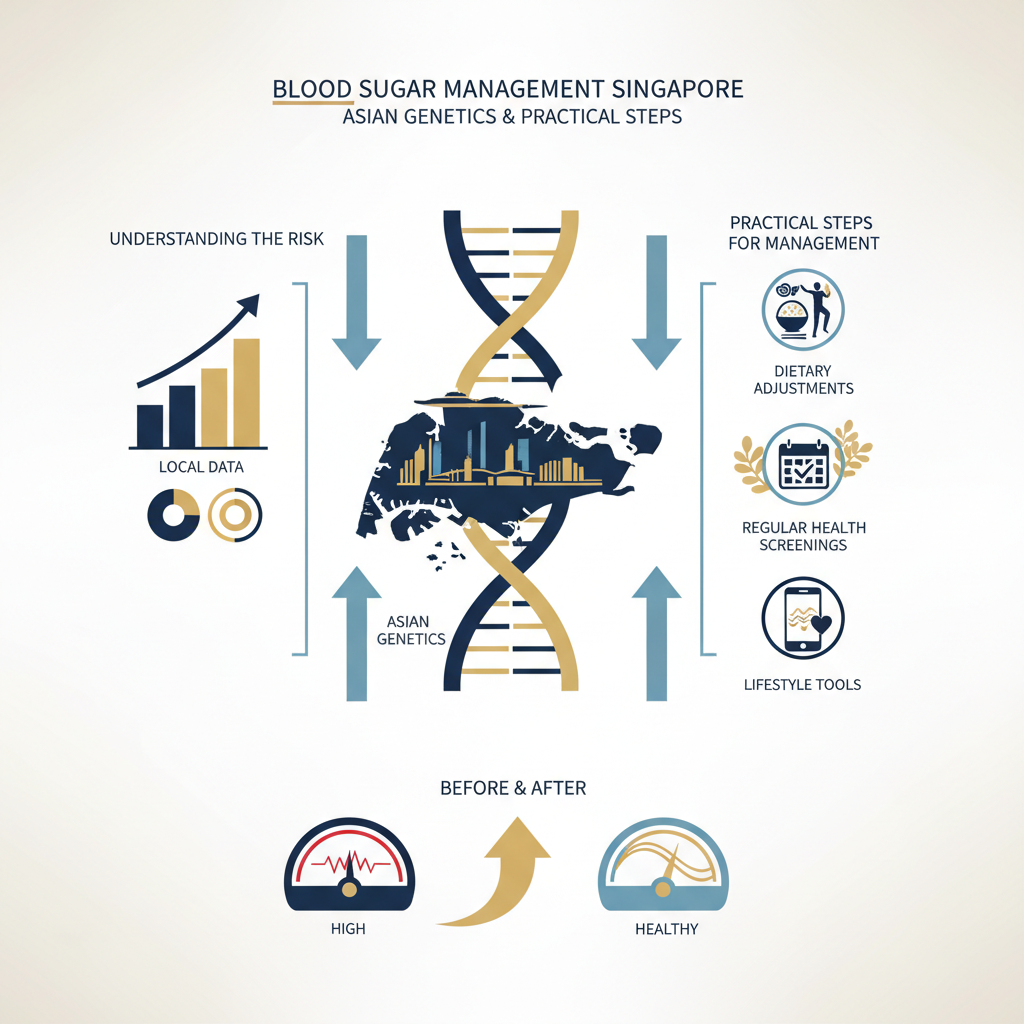
TL;DR
Asian genetic factors raise diabetes risk in Singapore, so personalised blood sugar management matters. Use local screening (polyclinics, CHAS/MediSave), focus on soluble fibre, lower refined carbs, consistent activity, and consider lifestyle support tools like Feel Great to help manage post-meal glucose excursions.
🇸🇬 Want to take action now? Try Feel Great → | Chat with a coach →
Introduction — A shocking Singapore statistic
Health Promotion Board (HPB) and Ministry of Health (MOH) messaging and recent surveys warn that about 1 in 3 Singaporeans are at lifetime risk of developing type 2 diabetes — a sobering fact that underlines why targeted blood sugar management is essential on our island. The War on Diabetes initiative and local screening programmes reflect the urgency: early detection and culturally relevant strategies can change trajectories for many families here.
Why genetics matter in blood sugar management — Asian differences explained
Genetics don’t determine destiny, but they shape risk. Research shows people of Asian ancestry often develop insulin resistance and diabetes at lower body mass index (BMI) levels than people of European ancestry. Key genetic and physiological patterns observed in Asian populations include:
- Beta-cell vulnerability: Some genetic variants common in East and South Asian populations are linked to weaker pancreatic beta-cell compensation — meaning reduced insulin secretory reserve under metabolic stress (family history, weight gain).
- Visceral adiposity at lower BMI: Asians tend to store more visceral fat even at lower BMI, raising insulin resistance risk. Singapore clinical guidance reflects this by recommending lower BMI thresholds for action.
- Gene-environment interplay: Rapid urbanisation, diets rich in refined carbohydrates (common at hawker centres), and sedentary patterns interact with genetic susceptibility to increase lifetime risk.
These patterns are backed by multi-ancestry genetic studies and regional cohorts (see references). For Singapore, this means screening and prevention strategies often start earlier and use culturally adapted advice — from healthier hawker choices to community programmes at polyclinics.
How Singapore screens and tracks blood sugar
Singapore’s healthcare system offers structured screening and care pathways:
- Polyclinics provide accessible screening and chronic disease management — many Singaporeans first access diabetes care here.
- CHAS (Community Health Assist Scheme) provides subsidies for lower- to middle-income residents for chronic disease care.
- MediSave may be used for approved chronic disease outpatient treatments and regular monitoring where allowed.
- Screening values: MOH/HPB define diagnostic thresholds commonly used in Singapore: fasting plasma glucose ≥7.0 mmol/L or random plasma glucose ≥11.1 mmol/L suggests diabetes; impaired fasting glucose often considered in the 6.1–6.9 mmol/L range depending on guidelines; HbA1c is also used for risk and diagnosis.
Regular monitoring — fasting glucose, HbA1c, and in some cases post-meal (postprandial) checks — helps clinicians at NUH/SGH and polyclinics personalise care. Early detection allows lifestyle changes and treatment plans adapted to Asian physiology.
Practical, evidence-based steps for blood sugar management in Singapore
Below are practical steps tailored to local context (hawker centres, kopi & teh culture, compact homes) that may help manage blood sugar and reduce the risk of progression. These are lifestyle-focused and intended as prevention/supportive measures — they are not medical prescriptions.
1. Prioritise soluble fibre and whole foods
Soluble fibre slows gastric emptying and reduces post-meal glucose spikes. Foods to prioritise:
- Oats, barley, beans, lentils
- Fruits with fibre (guava, papaya) rather than sugary drinks
- Vegetables at every hawker meal — ask for extra greens
Clinical meta-analyses show added soluble fibre can reduce postprandial glucose responses and HbA1c modestly — a practical strategy for Singaporeans who often eat rice-based meals.
2. Reduce refined carbs and watch portion size (rice, noodles)
A bowl of white rice or a large portion of noodles can raise a post-meal glucose peak. Swap part of the rice for higher-fibre options, or mix in vegetables and protein. In hawker settings, ask for less rice or choose mixed vegetable rice options bearing HPB Healthier Choice Symbol (HCS) where available.
3. Embrace consistent meal timing — 4-4-12 intermittent fasting approach
Timing matters: structured eating windows like the 4-4-12 (four hours eating window in daytime split into two meals, followed by 12 hours overnight fast) is one practical variant that some Singaporeans find fits working hours and social life. Intermittent fasting protocols have been studied for glycaemic metrics; some trials show improvements in insulin sensitivity and weight regulation — outcomes that may help lower average glucose levels over time when combined with good food choices.
4. Move every day — local-friendly activity tips
Even short bouts of brisk walking after meals can blunt postprandial spikes. Use stairs in HDB blocks, take walking breaks between meetings in CBD, or do 10–15 minute walks after hawker meals.
5. Monitor strategically — use CHAS/polyclinic resources
If you are at risk (family history, central obesity), use CHAS subsidies for blood tests and regular follow-up at polyclinics. Track fasting glucose and HbA1c with your care team at SingHealth/NUH/SGH; consider periodic post-meal checks if recommended.
Why postprandial glucose matters — and mmols you should know
High post-meal (postprandial) glucose excursions contribute to overall glycaemic burden. Typical targets commonly seen in practice (always confirm with your clinician):
- Fasting plasma glucose: normal often <5.6 mmol/L; values ≥7.0 mmol/L suggest diabetes (MOH/HPB).
- 2-hour postprandial glucose: many clinicians aim for <7.8–8.0 mmol/L in people without diabetes; values above this suggest impaired control.
- HbA1c: general target often <7.0% for many adults with diabetes but individualised — see your clinician.
These values guide decisions in polyclinics and specialist clinics at SGH/NUH and inform lifestyle and medication pathways.
Comparison table — common local meal swaps to lower post-meal glucose
| Typical hawker choice | Higher-risk for glucose spike | Lower-impact swap |
|---|---|---|
| White rice (large bowl) | High glycaemic load | Mixed vegetables + smaller rice portion or brown rice where available; add beans/protein |
| Fried noodles with sauce | Refined carbs + fat — big spike | Steamed fish + veg with smaller noodle portion; choose soup-based noodle |
| Sugary kopi/teh tarik | Liquid sugar — quick rise | Kaoliang kopi less sugar, choose kopi O or lower-sugar options |
How Feel Great fits into a Singapore blood sugar plan
Feel Great is a lifestyle support system (not a medicine). Here’s how its elements align with blood sugar management principles — framed as possible, evidence-based supports:
- Balance (soluble-fibre matrix): A soluble-fibre matrix taken with meals may help blunt post-meal glucose rises by slowing carbohydrate absorption and promoting early satiety. This aligns with evidence that soluble fibre can help moderate postprandial glucose patterns.
- Unimate (yerba mate extract): Rich in chlorogenic acids and natural compounds, yerba mate can influence energy and mental clarity. Some trials on chlorogenic acids suggest modest effects on glucose metabolism and energy regulation; Unimate is positioned as an energising component — helpful for morning routines or focused activity windows.
- 4-4-12 intermittent fasting protocol: Structured meal timing can improve insulin sensitivity and reduce overall glycaemic exposure in some people. The 4-4-12 pattern is one practical, socially adaptable option for busy Singapore lifestyles (work, family, hawker meals).
Important: Feel Great is not a medication. Its components may help manage meal responses as part of a lifestyle plan alongside diet, activity, regular screening, and medical care where needed. The product literature references 50+ clinical studies listed in the PDR; discuss with your polyclinic or specialist before starting new supplements, especially if you are on glucose-lowering medications.
Local considerations: culture, access, and policy
Singapore’s food culture — hawker centres, kopi/teh habits, and social dining — shapes real-life choices. Policy supports (HPB Healthier Choice Symbol, War on Diabetes campaigns) and healthcare access (polyclinics, CHAS, MediSave) make prevention actionable:
- Look for HCS labels when grocery shopping.
- Use CHAS subsidies and polyclinic screening if you have risk factors.
- Community education and workplace health screenings often include practical advice for local dishes.
People Also Ask
- Why are Asians at higher risk for diabetes? — Genetic variants, visceral fat distribution, and gene-environment factors increase risk at lower BMI.
- What fasting glucose level indicates diabetes in Singapore? — Fasting plasma glucose ≥7.0 mmol/L or random ≥11.1 mmol/L; confirm with clinician (MOH/HPB).
- Can intermittent fasting help with blood sugar? — Some trials show intermittent fasting may improve insulin sensitivity and weight; effects vary individually.
- Is yerba mate safe for blood sugar? — Yerba mate contains chlorogenic acids that may influence metabolism; it may help energy and alertness but check with your clinician if on medications.
- How can I choose healthier hawker options? — Ask for smaller rice portions, add vegetables, choose soup-based dishes, and watch sugary drinks.
FAQ
- Q: Should everyone of Asian descent get screened earlier?
A: Many Singapore guidelines encourage earlier screening for people with family history or central obesity. Check with your polyclinic for personalised screening schedules.

- Q: Are blood sugar targets different for Asians?
A: Targets are individualised. Clinicians may act at lower BMI thresholds in Asian patients due to higher metabolic risk at lower weights.
- Q: Can a soluble-fibre supplement replace dietary changes?
A: Supplements may help reduce post-meal spikes but are best combined with whole-food changes (more vegetables, legumes, less refined carbs) for sustained benefit.
- Q: Is the Healthier Choice Symbol useful?
A: Yes — HPB’s Healthier Choice Symbol (HCS) helps identify products with lower sugar, saturated fat, or salt and can guide better grocery decisions.
- Q: How to discuss Feel Great with my doctor?
A: Tell your polyclinic or specialist about the Balance/Unimate/4-4-12 approach, show ingredient labels, and ask whether it fits your medication plan and goals.
References & Scientific Sources
- Health Promotion Board (HPB), Singapore — War on Diabetes & population risk: https://www.hpb.gov.sg
- Ministry of Health (MOH), Singapore — Diabetes screening and thresholds: https://www.moh.gov.sg
- SingHealth — Diabetes programmes and research summaries: https://www.singhealth.com.sg
- Singapore General Hospital (SGH) — Diabetes Centre information: https://www.sgh.com.sg
- National University Hospital (NUH) Research — Endocrinology & metabolic studies: https://www.nuh.com.sg
- International Diabetes Federation — IDF Diabetes Atlas (2021): https://diabetesatlas.org
- Barrett, P., et al., Systematic review and meta-analysis: soluble fibre and glycaemic control (selected meta-analyses 2021–2023 summaries), PubMed: https://pubmed.ncbi.nlm.nih.gov (search: soluble fibre glycaemic control 2021)
- Fasting and metabolic health — systematic reviews (2020–2023 summaries), BMJ/PNAS review material: https://pubmed.ncbi.nlm.nih.gov (search: intermittent fasting glycaemic outcomes 2022)
- Trans-ancestry genetic studies of T2D risk (2021–2023) illustrating Asian-specific loci — Nature Genetics / Lancet Diabetes & Endocrinology summaries: https://pubmed.ncbi.nlm.nih.gov (search: type 2 diabetes GWAS trans-ancestry 2021)
- Chlorogenic acids, coffee/yerba mate and glucose metabolism — recent reviews (2021–2023): https://pubmed.ncbi.nlm.nih.gov (search: chlorogenic acid blood glucose 2021)
- World Health Organization — Global diabetes policy and prevention: https://www.who.int
Note: For peer-reviewed trial details and meta-analyses referenced above, search the PubMed IDs or article titles using the links provided at PubMed to access full study pages. Local hospital pages (SGH, NUH, SingHealth) include Singapore-specific research and patient pathways.
Medical disclaimer
This article is educational and not medical advice. It does not replace consultation with a healthcare professional. For diagnosis or treatment of diabetes or related conditions, contact your polyclinic, GP, or specialist. Discuss any supplements (including Feel Great products) with your doctor, especially if you are taking glucose-lowering medicines.
Related ATHAR paths
🇸🇬 Ready to Start Your Health Transformation?
Join thousands across Singapore who have improved their metabolic health with the Feel Great system. Backed by 50+ clinical studies and listed in the Physicians' Desk Reference (PDR).
✅ Free Delivery in Singapore | 90-Day Money-Back Guarantee