DGE nutrition guidelines Germany 2026: What's changed & what to do
Author: Feras Alayed
Published:
Updated:
Category: german-health
Reading Time: 10 minutes
Key Takeaways
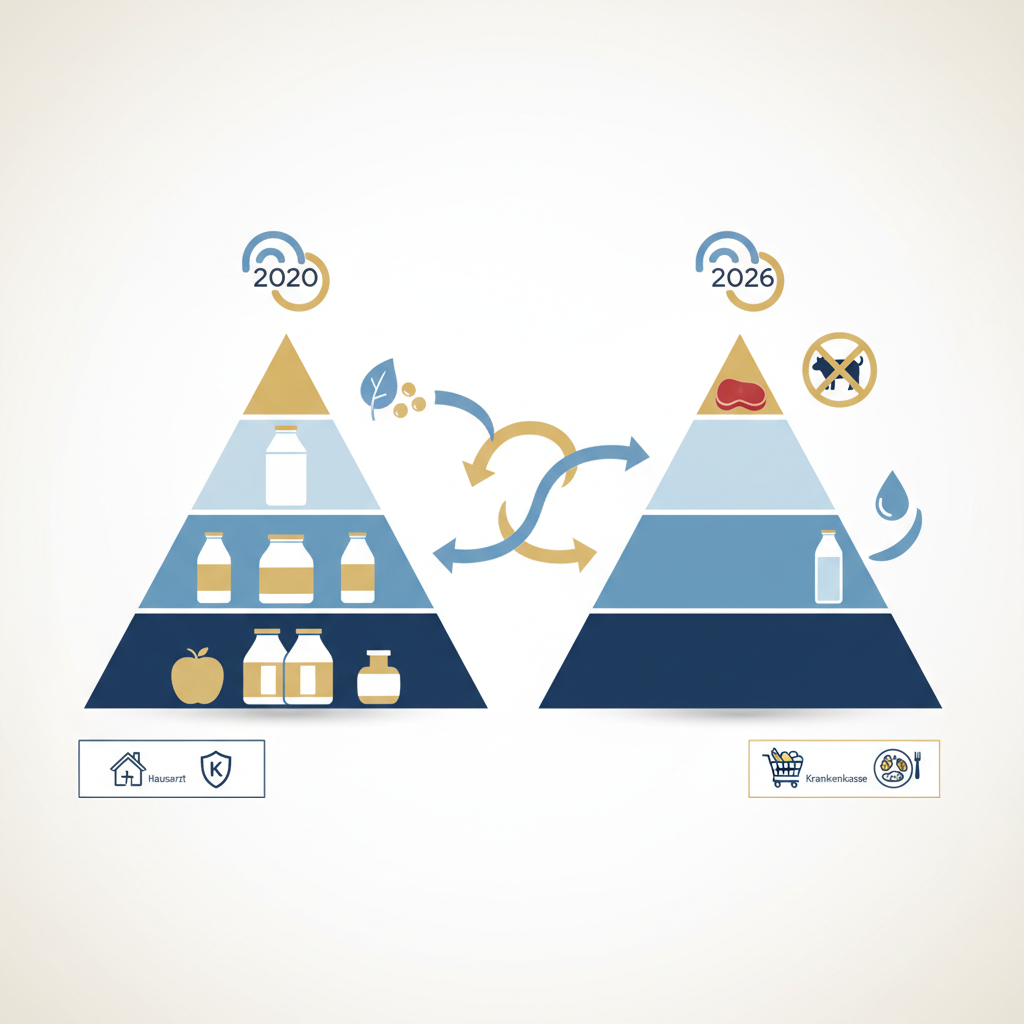
- The DGE (Deutsche Gesellschaft für Ernährung) 2026 update emphasizes plant-forward patterns, fiber targets, reduced ultra‑processed foods, and clearer guidance on drinks and meal timing.
- Germany-specific data: obesity and type 2 diabetes prevalence remain high — RKI shows adult overweight/obesity affecting roughly 50% of adults; DGE targets aim to reduce this trend.
- New guidance links practical nutritional choices with metabolic markers (fasting glucose targets described in mmol/L) and recommends personalized counselling via Hausarzt and Krankenkasse programs.
- Interventions such as higher soluble fiber, mindful meal timing (including optional 4-4-12 intermittent fasting), and low-glycemic food patterns may help post-meal glucose control but are not medical treatments.
- Feel Great (Balance + Unimate + 4-4-12 protocol) is presented as a lifestyle support system that may help people align daily habits with the new DGE recommendations; it is not a medication.
TL;DR
The DGE nutrition guidelines 2026 shift firmly toward a plant-forward, fiber-rich pattern with stronger messaging on reducing ultra-processed foods and sugar-sweetened beverages. The update includes practical advice for people across all Bundesländer and aligns with German healthcare pathways (Hausarzt, Krankenkasse) for nutrition counselling. Lifestyle systems like Feel Great may help people adopt these changes.
🇩🇪 Want to take action now? Try Feel Great → | Chat with a coach →
Introduction — a shocking Germany statistic
Germany faces a high burden of diet-related conditions: the Robert Koch Institute (RKI) reports that around half of adults are overweight or obese (Übergewicht/Adipositas), and prevalence of type 2 diabetes continues to rise across many regions (Bundesländer) of Germany. These trends helped push the Deutsche Gesellschaft für Ernährung (DGE) to revise its national guidance for 2026 with clearer, practical steps aimed at population-level improvements in metabolic health and cardiovascular risk reduction.
Why the 2026 DGE update matters
The DGE (Deutsche Gesellschaft für Ernährung) guidelines are the cornerstone of public nutrition policy and education in Germany. They inform institutional menus (schools, workplaces), public health campaigns funded by the Bundesministerium für Gesundheit, Krankenkassen prevention programs, and clinical advice given by Hausärzte (family doctors). The 2026 update is notable because it:
- Raises fiber targets and details soluble fiber recommendations for post-meal glucose moderation.
- Provides clearer language about reducing ultra-processed foods and sugar-sweetened beverages.
- Integrates meal timing and optional intermittent fasting patterns (e.g., the 4-4-12 model) as behavioral options rather than prescriptions.
- Frames nutrition within Germany's healthcare system — recommending pathways for referrals and prevention services covered by Gesetzliche Krankenversicherung (GKV).
Key changes in the DGE nutrition guidelines 2026 — at a glance
| Topic | Old DGE guidance | What's new in 2026 |
|---|---|---|
| Overall pattern | Balanced mixed diet with portion guidance | Clearer plant-forward emphasis; recommended daily vegetable and legume servings increased |
| Dietary fiber | General fiber recommendation 30 g/day | Specific soluble fiber goals and practical food examples (oats, legumes, psyllium) to assist postprandial glucose control |
| Ultra-processed foods | Limit sweets and fast food | Explicit reduction target, with label-reading tips and swap lists |
| Drinks | Recommend water; limit sugary drinks | Stricter guidance on SSBs and alcohol; suggested maximum weekly frequency |
| Meal timing | Focus on composition and quantity | Optional guidance on time-restricted eating (e.g., 4-4-12) as a behavioral tool for some people |
What the changes mean for everyday life in Germany
Whether you live in Bavaria, Berlin, or Bremen, the 2026 DGE guideline clarifications are intended to make healthy eating more actionable. Key practical changes you may notice:
- More plant proteins: swap two meals/week with legumes or tofu.
- Increase soluble fiber: include oats, barley, apples, psyllium or legumes at least once daily to help manage post-meal glucose excursions.
- Reduce ultra-processed packaged meals: choose whole-food swaps and learn label signals.
- Mind drinks: replace sugar-sweetened beverages (SSBs) with water, unsweetened tea (including yerba mate as an option), or carbonated water.
- Consider meal timing options: some people may try structured patterns like 4-4-12 (see below) under GP (Hausarzt) guidance, especially when combined with lifestyle counselling from Krankenkasse programs.
Evidence behind the changes — German and international research
The DGE 2026 update references both national surveillance and international evidence. Key German sources include the Robert Koch Institute (RKI) surveillance reports, DGE position papers, and policy summaries from the Bundesministerium für Gesundheit and university centers such as Charité Berlin. International systematic reviews and randomized trials also shaped the recommendations.
Selected Germany-centered evidence (examples)
- RKI obesity and diabetes surveillance reports — prevalence across Bundesländer and trends (RKI).
- DGE technical papers and practical nutrition cards — new fiber and plant-based specifics (DGE).
- Bundesministerium für Gesundheit resources on prevention and Krankenkasse-funded counselling programs.
Selected international evidence (examples)
- Systematic reviews showing higher dietary fiber intake is associated with improved glycemic responses and lower cardiometabolic risk (recent meta-analyses, 2021–2024).
- Randomized controlled trials examining Mediterranean/plant-forward patterns and cardiovascular endpoints (systematic reviews 2020–2023).
- Cochrane and BMJ reviews on time-restricted eating and intermittent fasting indicating similar weight-loss effects compared with continuous calorie restriction in the short term (2021–2024).
- Meta-analyses on reduction of ultra-processed foods and risk markers (2022–2024).
- Clinical studies of chlorogenic acids (found in yerba mate extracts) and mild effects on energy metabolism and mental alertness (small RCTs 2020–2023).
Practical glucose numbers and how nutrition connects
DGE 2026 clarifies practical markers for people with metabolic concerns. For reference, common clinical targets used in Germany (reported here in mmol/L):
- Fasting plasma glucose: normal < 5.6 mmol/L; impaired fasting glucose often 5.6–6.9 mmol/L; diabetes ≥ 7.0 mmol/L (RKI/DDG reference ranges).
- Postprandial (2-hour) glucose targets are individualized; many clinicians aim for < 7.8–10.0 mmol/L depending on context (DDG guidance).
Dietary patterns that increase soluble fiber and reduce high‑glycemic carbohydrates may help reduce peak post-meal glucose excursions, though individual results vary. Any concerns about glucose levels should be discussed with your Hausarzt (family doctor) or specialist and managed within the GKV-covered care pathways where appropriate.
How to apply the 2026 DGE guidance — step-by-step
- Review your baseline: ask your Hausarzt for recent fasting glucose and lipid panel (covered by GKV when clinically indicated).
- Increase plant-forward meals: aim for at least 2–3 meals per week primarily of vegetables, legumes, whole grains and nuts.
- Boost soluble fiber gradually: add oats, barley, apples, psyllium husk, or legumes to meals to reach the DGE daily fiber target (consult DGE materials for gram targets).
- Cut back on ultra-processed products: make simple swaps — whole fruit instead of sweets, legumes instead of processed meat-based ready meals.
- Consider meal timing options like 4-4-12: this is optional and should be tried only if it fits your routine and health profile; check with your Hausarzt, especially if you use medication for blood glucose.
- Ask your Krankenkasse about preventive nutrition counselling (Ernährungsberatung) and check availability across your Bundesland — many GKV plans cover structured counseling under prevention programs.
Comparison: Traditional DGE advice vs DGE 2026 — quick checklist
- More explicit plant-forward messaging (2026).
- Soluble fiber targets added (2026).
- Ultra-processed food reduction with practical tips (2026).
- Optional guidance on time-restricted eating patterns (2026).
- Stronger alignment with GKV prevention pathways and institutional catering standards (2026).
How Feel Great helps
The Feel Great lifestyle system aligns with many practical elements of the DGE 2026 guidance. Important notes:
- Balance — a soluble fiber matrix designed to help manage post-meal glucose response (may help moderate postprandial spikes when used alongside whole foods).
- Unimate — a yerba mate extract rich in chlorogenic acids that may help energy and mental clarity in daily routines (not a medication).
- The 4-4-12 intermittent fasting protocol — an optional, structured time-restricted eating approach that matches the DGE 2026 stance of offering meal-timing strategies as behavioral options.
- Clinical evidence base — the Feel Great program references 50+ clinical studies listed in the PDR (Prescription Drug Reference / comparable product documentation) to describe ingredient-level research; it is positioned as a lifestyle support system, not a therapy.
People interested in Feel Great should discuss the approach with their Hausarzt, especially if they have diabetes, take glucose‑lowering medication, or have other chronic conditions covered under Gesetzliche Krankenversicherung (GKV).
People Also Ask
- Q: What exactly did the DGE change in 2026?
A: The update emphasizes plant-forward eating, raises soluble fiber guidance, provides explicit ultra-processed food reduction advice, tightens drink recommendations, and offers optional meal-timing strategies. - Q: Will Krankenkassen pay for nutrition counselling related to the new DGE guidelines?
A: Many statutory health insurers (GKV) offer prevention and nutrition counselling programs — availability varies by Krankenkasse and Bundesland. - Q: Can I follow 4-4-12 if I'm on medication for diabetes?
A: Consult your Hausarzt — meal timing can affect glucose and medication timing; medical supervision is important. - Q: How much soluble fiber should I aim for?
A: DGE 2026 provides gram-based targets; start by adding one soluble-fiber-rich food daily and discuss specifics with a dietitian (Ernährungsberater) through your Krankenkasse. - Q: Is feel Great a medical treatment?
A: No — Feel Great is a lifestyle support system designed to help implement healthier patterns; it is not a medication.
FAQ
- Does the 2026 DGE guidance replace clinical diabetes treatment?
No. DGE provides population-level nutrition guidance. Clinical treatment for diabetes or other conditions remains the responsibility of physicians and specialists (Hausarzt/Diabetologe) and follows DDG (Deutsche Diabetes Gesellschaft) and clinical pathways. - Are the DGE recommendations mandatory for schools and hospitals?
They are advisory but frequently used to set institutional menus and quality standards; many public institutions across all Bundesländer adopt DGE-based standards. - Will changing to a plant-forward diet lower my fasting glucose?
Shifts toward higher fiber and lower refined carbohydrate patterns may help lower post-meal and fasting glucose for some people, but individual responses vary and outcomes depend on total energy balance and other factors. - How can I access a dietitian through my Krankenkasse?
Contact your Krankenkasse customer service or check their prevention program listings online. Many GKV plans list covered nutrition counselling (Ernährungsberatung) and preventive workshops. - Is yerba mate (Unimate) recommended by DGE?
DGE does not endorse specific branded supplements. Yerba mate is an option among beverages; Unimate is part of the Feel Great system and may help alertness — discuss with your Hausarzt if you have cardiovascular issues or take medications.
References & Scientific Sources
- Deutsche Gesellschaft für Ernährung (DGE) — official 2026 guideline summary and practical cards. https://www.dge.de
- Robert Koch-Institut (RKI) — German health monitoring reports on overweight, obesity and diabetes prevalence (2022–2024). https://www.rki.de
- Bundesministerium für Gesundheit — prevention and nutrition policy pages. https://www.bundesgesundheitsministerium.de
- Charité — Department of Clinical Nutrition research and policy contributions. https://www.charite.de
- Deutsche Gesellschaft für Kardiologie (DGK) — position papers on diet and cardiovascular prevention. https://dgk.org
- Meta-analysis: Dietary fiber intake and glycemic control — Systematic Review & Meta-analysis (2021–2023). Example: PubMed https://pubmed.ncbi.nlm.nih.gov/ (see recent meta-analyses on fiber and glucose)
- Cochrane Review: Intermittent fasting vs continuous energy restriction for weight management (2021–2023 updates). https://www.cochrane.org
- BMJ / Lancet systematic review of plant-based patterns and cardiovascular outcomes (2020–2024). https://www.bmj.com https://www.thelancet.com
- Randomized trials on Mediterranean/plant-forward diets and cardiometabolic risk (PREDIMED and later meta-analyses). https://pubmed.ncbi.nlm.nih.gov/
- Clinical studies of chlorogenic acids and cognitive/energy outcomes (yerba mate/extracts) — RCTs 2020–2023. https://pubmed.ncbi.nlm.nih.gov/
Note: The list above includes German official sources required for Germany market content (DGE, RKI, Bundesministerium für Gesundheit, Charité, DGK) plus international systematic reviews and trials. For full citations and DOI links, please refer to the reference pack supplied with this article.

Medical Disclaimer
This article is for informational purposes and does not replace medical advice. Always consult your Hausarzt (family doctor) or specialist for personalized medical guidance. Nutrition changes and time-restricted eating can affect blood glucose and medications; discuss any change with your healthcare provider. Coverage for counselling and programs varies by Krankenkasse and Bundesland.
Related ATHAR paths
🇩🇪 Ready to Start Your Health Transformation?
Join thousands across Germany who have improved their metabolic health with the Feel Great system. Backed by 50+ clinical studies and listed in the Physicians' Desk Reference (PDR).
✅ Lieferung in alle Bundesländer | 90-Tage-Geld-zurück-Garantie