Educational Questions for Women's Health Visits: Enhancing Health Literacy
Author: Feras Alayed
Published:
Updated:
Category: women-health-questions
Reading Time: 10 minutes
Educational Questions for Women's Health Visits: Enhancing Health Awareness
1. Introduction to Health Literacy and the Importance of Active Participation
Health literacy is the cornerstone of empowering women to make informed decisions about their well-being. At ATHAR, we believe that health literacy is not just about knowing medical information, but extends to the ability to seek, understand, and apply this information in a daily context. Shifting from a passive recipient of health services to an active partner in medical care directly contributes to improving quality of life and long-term health outcomes. When a woman actively participates in her dialogue with a healthcare provider, she ensures that the care plan designed for her takes into account her individual needs and personal preferences.
Active participation begins with the realization that a medical visit is an opportunity for mutual learning. While the physician possesses scientific and clinical expertise, the woman possesses deep experience with her body and its daily changes. Bridging the gap between these two types of expertise requires strong communication skills and the confidence to ask questions. Health literacy also means the ability to distinguish between evidence-based practices and misconceptions that may spread in communities. Hence, it becomes essential for women to arm themselves with educational tools that enable them to ask the right questions at the right time.
Remember that knowledge is power, and conscious participation in your health decisions is the first step toward prevention and recovery.
In this guide, we will explore how to transform a routine visit into a rich educational experience. We will focus on how to prepare for these visits, understand complex terminology, and evaluate information obtained from various sources. The ultimate goal is to build a relationship based on transparency and clarity with the medical team, enhancing a woman's ability to manage her health consciously and independently throughout different stages of life, from youth to maturity and beyond.
2. Understanding Common Medical Terminology in Routine Women's Exams
Women often encounter medical terms that may seem complex or unfamiliar during routine check-ups. Understanding these terms is the first step to reducing anxiety associated with medical visits and ensuring results are interpreted correctly. For example, the term "preventive screening" includes a range of procedures aimed at detecting changes before symptoms appear. It is very important for a woman to know the purpose of each test and what potential results mean, whether they are normal, inconclusive, or require further follow-up.
| Medical Term | Simplified Educational Explanation |
|---|---|
| Pap Smear | A cytological exam to detect any abnormal changes in the cells of the cervix. |
| Mammogram | Using low-dose X-rays to examine breast tissue and detect any lumps. |
| Hormonal Profile | A group of blood tests to measure levels of hormones like estrogen and progesterone. |
| DEXA Scan | A test that measures bone strength and the risk of fractures or osteoporosis. |
| Pelvic Ultrasound | Imaging of internal organs using sound waves to evaluate the uterus and ovaries. |
In addition to these terms, you may hear terms like "benign," which means non-cancerous, or "malignant," which refers to the presence of cancerous cells. There is also the term "biopsy," which is a procedure to take a small sample of tissue for laboratory examination. Understanding these differences helps in conducting a constructive dialogue with the doctor. Never hesitate to ask for an explanation of any term in simple language; it is your full right to understand everything related to your body. Using the correct terminology also facilitates the process of searching in reliable sources later for more educational information.
3. Preparing a Health Habit Journal: What to Record Before the Appointment?
A health habit journal is a very powerful tool for improving diagnostic accuracy and personalizing care. We often forget small but important details when sitting in front of a doctor due to stress or time constraints. Therefore, recording observations for two weeks or a month before the appointment can provide a clear and comprehensive picture of your health status. Start by recording your menstrual cycle, including start and end dates, flow intensity, and any accompanying symptoms such as pain or mood changes. This data is vital for understanding hormonal balances in the body.
In addition to the menstrual cycle, sleep patterns should be recorded; do you have trouble falling asleep? Do you wake up tired? Sleep is closely linked to mental health and metabolism. Also, record your energy levels throughout the day and whether there are specific times when you feel extremely fatigued. Do not overlook the nutritional aspect; it is not necessarily about recording every calorie, but note types of foods that cause digestive discomfort or affect your activity. Recording physical activity, its type, and frequency also gives the doctor an idea of your general fitness level.
Finally, list any medications or supplements you are currently taking, including dosages and the reason for taking them. It is also important to record any sudden physical symptoms such as recurring headaches, joint pain, or changes in skin and hair. This journal is not just a list; it is a roadmap that helps you and your doctor identify patterns that may not appear in traditional laboratory tests. Having this information written down gives you a sense of control and confidence during the medical discussion and ensures that no point that might be essential to your safety is overlooked.
4. A List of Core Questions to Discuss with Your Healthcare Provider
To get the most out of your time with a healthcare provider, it is helpful to have a list of questions ready. These questions should cover preventive, therapeutic, and lifestyle aspects. Start with general questions such as: "What routine screenings are appropriate for my age and family history?" and "How can I improve my lifestyle to reduce future health risks?". These questions open the door for discussion on primary prevention and help in developing a long-term plan for maintaining health.
If you are experiencing specific symptoms, ask targeted questions like: "What are the possible causes of these symptoms?" and "What options are available to manage this condition, and what are the pros and cons of each option?". It is also important to ask about required tests: "Why do we need this specific test?" and "What are the next steps based on the results?". Do not forget to ask about mental health, such as: "How can stress or anxiety affect my physical condition?". These questions reflect your awareness of the close link between mind and body.
- What natural changes should I expect at my current stage of life?
- Are there any potential interactions between the supplements I take and any other medications?
- How can I monitor my condition at home between visits?
- What are the warning signs that require an immediate call to the clinic?
- Are there reliable educational sources you recommend I read from regarding my condition?
Asking these questions not only shows your interest in your health but also encourages the provider to offer more detailed and accurate information. Remember that there is no "simple" or "unimportant" question; every inquiry contributes to building a clearer picture of your health status and helps you feel reassured about the medical decisions made.
5. How to Read and Understand Labels on Personal Care and Health Products
Women are daily exposed to a wide range of personal care products, from cosmetics to hygiene products. Learning how to read labels is an essential skill to protect the body from substances that may cause irritation or allergies. The first rule is to understand that ingredients are listed in descending order by concentration; meaning the ingredients at the beginning of the list are the most present in the product. If water is the first ingredient, it means it makes up the largest percentage, while ingredients mentioned at the end are present in very minute quantities.
It is important to recognize some common terms in the manufacturing world. For example, the word "Fragrance" or "Parfum" may hide hundreds of chemicals that the law does not require companies to disclose in detail, and they can be a source of allergy for some women. Also, pay attention to preservatives like "Parabens," which are used to prevent bacterial growth but some prefer to avoid. Also look for labels like "Hypoallergenic" or "Non-comedogenic" (does not clog pores), but remember that these terms are not always strictly regulated, so reading the ingredient list remains the safest bet.
When choosing health supplies, look for products that state they are free from chlorine bleach or synthetic dyes, especially for products that touch sensitive areas. Health literacy here means the ability to balance the desired benefits of the product with the potential for irritating substances. You can use reliable educational apps that help scan ingredients and explain the function of each substance. The goal is not to fear all products, but to be armed with knowledge to choose what suits your body's nature and your specific needs away from flashy marketing promises.
6. Criteria for Evaluating Health Information Published Online and on Social Media
In the digital information age, it has become easy to access a vast amount of health advice, but the challenge lies in distinguishing between reliable information and rumors or misleading marketing content. To evaluate any health information online, first look at the source. Is the site affiliated with a reputable medical institution, university, or government agency? Sites ending in .gov, .edu, or .org are often more reliable than commercial sites aiming to sell specific products.
Second, look for the publication date; medical information evolves rapidly, and what was considered a fact five years ago may have changed today. Third, check for a medical review of the content; reliable articles often mention the name of the doctor or specialist who reviewed the information. Beware of catchy headlines that promise "magical results" or "instant cures," as medical science relies on clinical studies and gradual results, not marketing miracles. If the information relies solely on a single personal experience (user stories), it is not considered sufficient scientific evidence.
A golden rule is also to compare information from multiple and independent sources. If you find advice that is strange or contrary to what is commonly known, consult your doctor before applying it. Social media platforms can be useful for raising awareness, but they are not a place for receiving diagnosis or treatment. Be aware that algorithms may show you what you want to see, not necessarily what is scientifically correct. Developing a critical sense toward digital content protects you from falling into the trap of misinformation that may negatively affect your health decisions.
7. Practical Steps to Organize Your Personal Health File for Easy Review
Organizing your personal health file is a long-term investment that saves time and effort and ensures continuity of health care efficiently. Start by gathering all your medical reports, lab results, and X-rays in one place. You can use a paper file divided by specialties (e.g., a section for dental, a section for eyes, a section for gynecological exams), or rely on digital copies and store them securely on an encrypted cloud or an external storage unit. Digital organization facilitates searching for old results to compare them with recent ones.
Your health file should include a special section for a "Health Summary," which is a single sheet containing: blood type, known allergies (both to medications and foods), previous surgeries and their dates, and chronic diseases if any. This summary can be a lifesaver in emergencies. It is also preferable to keep a copy of the vaccination record and family medical history, especially regarding hereditary diseases. Updating this file after each medical visit ensures that the information remains accurate and comprehensive.
Finally, make your health file easily accessible to you when going to any new appointment. Having your medical history organized helps a new doctor understand your condition quickly without the need to repeat tests you may have recently undergone, which saves costs and reduces unnecessary exposure to certain procedures. Organizing the health file is an integral part of health literacy; it reflects your interest in your health journey and makes you a conscious patient always ready to participate in managing your well-being with professionalism and clarity.

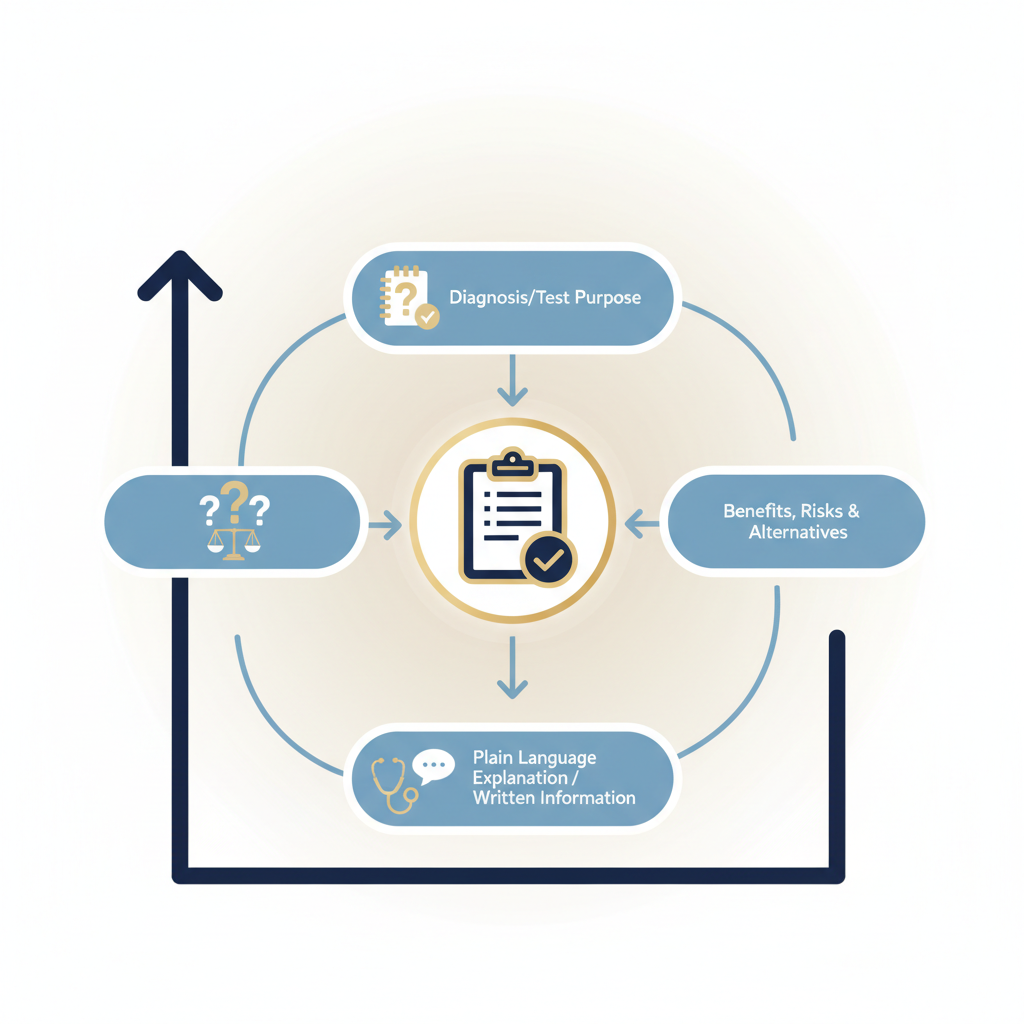
Explore health education step by step
Use the educational guides and practical tools to choose your next learning step.