France Wellness Trends: A Myth-versus-Fact Guide for the Modern Resident
Author: Feras Alayed
Published:
Category: health-literacy
Reading Time: 6 minutes
Living in France presents a beautiful contradiction. On one hand, you are surrounded by the legendary 'art de vivre'—long lunches, fresh boulangerie scents, and a culture that prizes quality over quantity. On the other hand, the global explosion of wellness trends has not spared the Hexagon. From 'cures détox' in Parisian boutiques to complex intermittent fasting protocols discussed in Lyon’s cafes, it is easy to feel overwhelmed. Many residents find themselves caught between the desire to optimize their health and the difficulty of sustaining rigid, often contradictory, wellness advice.
The Challenge of Sustainability in the Land of Gastronomy
The primary struggle for many in France isn't a lack of information; it's the sheer volume of it. You might start a new routine with high hopes, only to find that it clashes with the social fabric of French life or lacks the scientific backing you expected. Sustainable health isn't about following the latest 'bio' fad blindly. It is about building a foundation of health literacy that allows you to make informed choices that fit your lifestyle. This is where understanding the difference between a passing trend and a evidence-aware practice becomes vital.
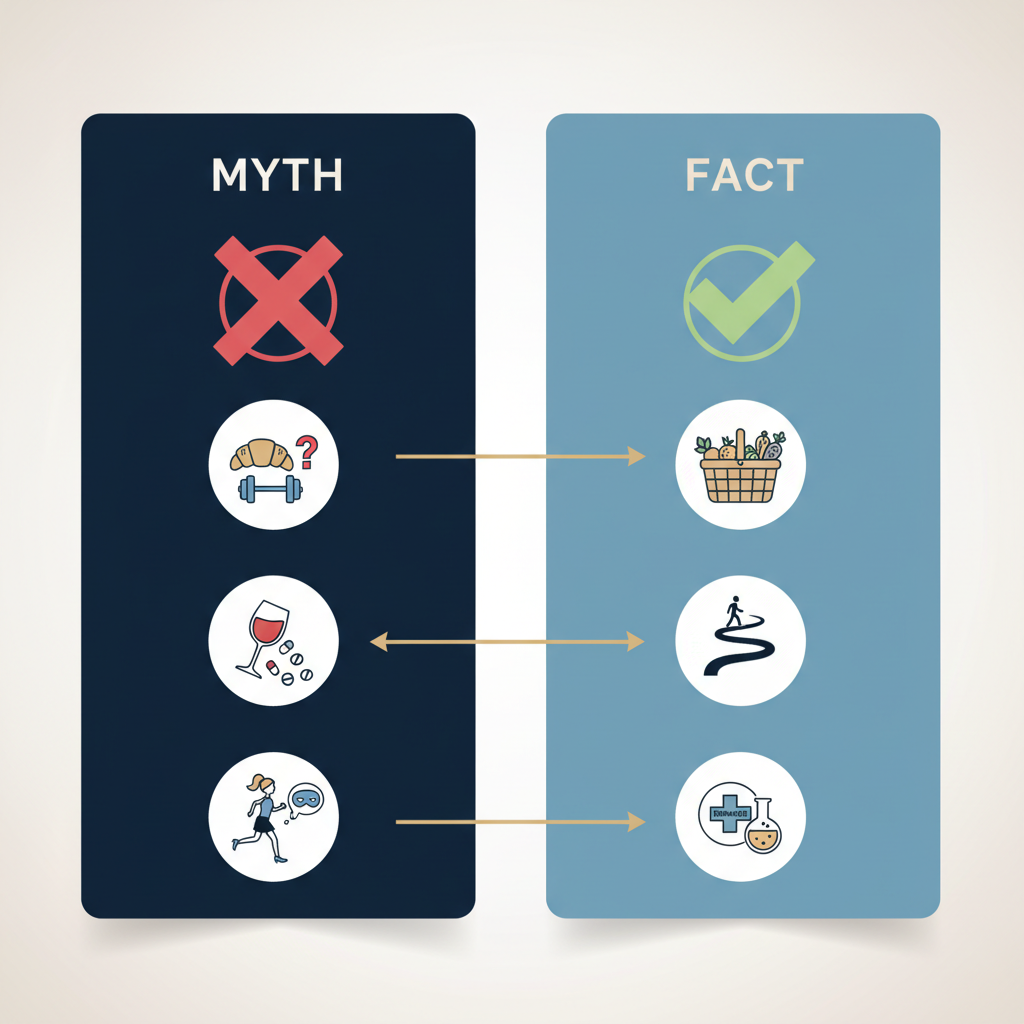
Myth vs. Fact: Navigating Popular Wellness Trends in France
Myth 1: The 'French Paradox' Means Lifestyle Choices Don't Matter
The Myth: Because of the 'French Paradox,' you can consume high amounts of saturated fats and wine without needing to worry about metabolic health or blood sugar levels.
The Fact: While historical observations noted lower rates of certain health issues in France despite rich diets, modern lifestyle changes have shifted this landscape. Metabolic health is a universal concern. Organizations like Santé publique France emphasize that balance, portion control, and physical activity remain the cornerstones of health. Relying on a 'paradox' to bypass healthy habits is a misunderstanding of how the body processes energy. Monitoring your patterns through a food and mood journal can provide more personalized insights than relying on cultural generalizations.
Myth 2: 'Détox' Products are Essential for Seasonal Health
The Myth: To stay healthy during the change of seasons in France, you must purchase specific detox teas or supplements to 'cleanse' your liver.
The Fact: The human body is equipped with a sophisticated detoxification system—the liver and kidneys. According to ANSES (the French Agency for Food, Environmental and Occupational Health & Safety), there is no scientific evidence that 'detox' products provide additional benefits for healthy individuals. Instead, supporting these organs through adequate hydration and high-fiber intake is a more sustainable approach. Fiber helps organize the transit of waste and supports a healthy gut microbiome, which is far more effective than a three-day tea cleanse.
Myth 3: Intermittent Fasting is a 'Cure-All' for Metabolic Issues
The Myth: Skipping breakfast or following a strict 16:8 window will automatically reverse metabolic concerns and allow for unrestricted eating during the 'on' hours.
The Fact: While meal timing can be a helpful tool for organizing daily routines, it is not a magic cure. The quality of food consumed during the eating window is paramount. In France, where social meals are central, rigid fasting can sometimes lead to social isolation or binge-eating patterns. A structured approach, such as a meal timing journal, can help you find a rhythm that respects both your biology and your social life without promising unrealistic medical outcomes.
Evaluating Trends: The French Health Literacy Framework
When you encounter a new wellness trend in France, it is helpful to evaluate it through the lens of established health authorities. This protects you from misinformation and helps you invest your time in practices that actually support your goals.
- Check with ANSES: Before starting any restrictive diet or new supplement regimen, look for reports from the French Agency for Food, Environmental and Occupational Health & Safety. They provide rigorous assessments of nutritional risks.
- Consult Haute Autorité de Santé (HAS): For information on medical practices and health screenings, HAS is the gold standard for clinical guidelines in France.
- Focus on Measurements: In France, blood sugar is typically measured in mmol/L. Understanding these values in a clinical context with your doctor is more useful than following a generic online trend.
Practical Element: The Wellness Trend Litmus Test
Before adopting a new wellness trend, ask yourself these four questions based on French health literacy standards:
- Is it sustainable? Can I see myself doing this in six months while living my normal life in France?
- Does it have a local evidence base? Have organizations like Santé publique France or ANSES commented on this practice?
- Does it replace professional advice? If a trend tells you to ignore your doctor or stop a prescribed treatment, it is a red flag.
- Is it a 'quick fix'? Health is a long-term journey. Be wary of any trend promising rapid, guaranteed results.
Building family health literacy is also a key step in ensuring that these habits are passed down and supported within the home, creating a culture of wellness that transcends temporary fads.
Navigating Professional Partnerships
As you explore wellness, you will likely encounter influencers and content creators promoting various methods. It is important to look for transparency. Understanding the ethical framework behind health content can help you distinguish between a paid advertisement and genuine educational material. Always prioritize information that encourages you to consult with healthcare professionals.
Conclusion: Your Path to Evidence-Aware Wellbeing
Wellness in France doesn't have to be a choice between rigid restriction and total indulgence. By applying a critical eye to wellness trends and utilizing structured supports like the structured reflection approach, you can create a lifestyle that is both enjoyable and health-conscious. Remember that the goal is not perfection, but a series of informed, sustainable choices that support your long-term vitality.
If you are ready to move beyond the myths and start a structured approach tailored to your needs, the first step is self-reflection and professional consultation.
Ready to take the next step in your health journey?
Assess your current habits and discover a structured path forward.
ابدأ تقييمك الصحيMedical Disclaimer
This article is for informational and educational purposes only and does not constitute medical advice, diagnosis, or treatment. Always seek the advice of your physician or other qualified health provider with any questions you may have regarding a medical condition. Never disregard professional medical advice or delay in seeking it because of something you have read in this guide. The wellness methods mentioned are lifestyle supports and are not intended to treat or cure any disease.
Frequently Asked Questions
What is the scope of this guide?
This guide is educational and helps readers organize questions and observations for further learning.
How should I use the information?
Use it to review terminology, note personal questions, and identify sources that require verification.
When should I seek professional guidance?
Discuss personal symptoms, medicines, diagnoses, or treatment decisions with a licensed professional.
Further Education
- Explore the metabolic health education hub
- Learn how to read research summaries
- Use the educational health assessment
Explore health education with care
Use ATHAR’s educational guides and practical tools to choose your next learning step.