Gulf Health Literacy Guide: Starting a Sleep Habit Journal
Author: Feras Alayed
Published:
Category: sleep-journal-gulf
Reading Time: 10 minutes
Introduction to Health Literacy and Sleep Documentation
Health literacy is the cornerstone of empowering individuals to make informed decisions about their well-being. In the context of quality of life, sleep documentation emerges as a powerful educational tool that goes beyond mere hour-logging. Understanding how our daily lifestyles impact the quality of our rest requires a simplified scientific methodology that begins with self-awareness. At ATHAR, we believe that health education starts with enabling individuals to monitor their bodies and understand the signals they send. Sleep journaling is not just a to-do list; it is a living record that helps you discover the links between your daytime behaviors and your body's nighttime restorative quality.
When we discuss health literacy in the field of sleep, we mean the ability to access, understand, appraise, and apply sleep-related information. A sleep journal helps transform a general feeling of "tiredness" into tangible data that can be discussed with professionals. For example, instead of saying "I don't sleep well," health literacy enables you to say, "I notice that my sleep latency increases on days when I have heavy meals late at night." This shift in expression reflects a deeper awareness of physiological health.
The goal of this guide is to provide you with the tools necessary to begin a scientific documentation journey of your sleep. We focus here on the educational aspect, showing you how to read your own patterns without passing prior judgments or offering curative promises. Documentation is the first step toward understanding, and understanding is the first step toward better health management. By committing to daily note-taking, you will become more capable of distinguishing environmental and behavioral factors that might be overlooked in the hustle and bustle of daily life.
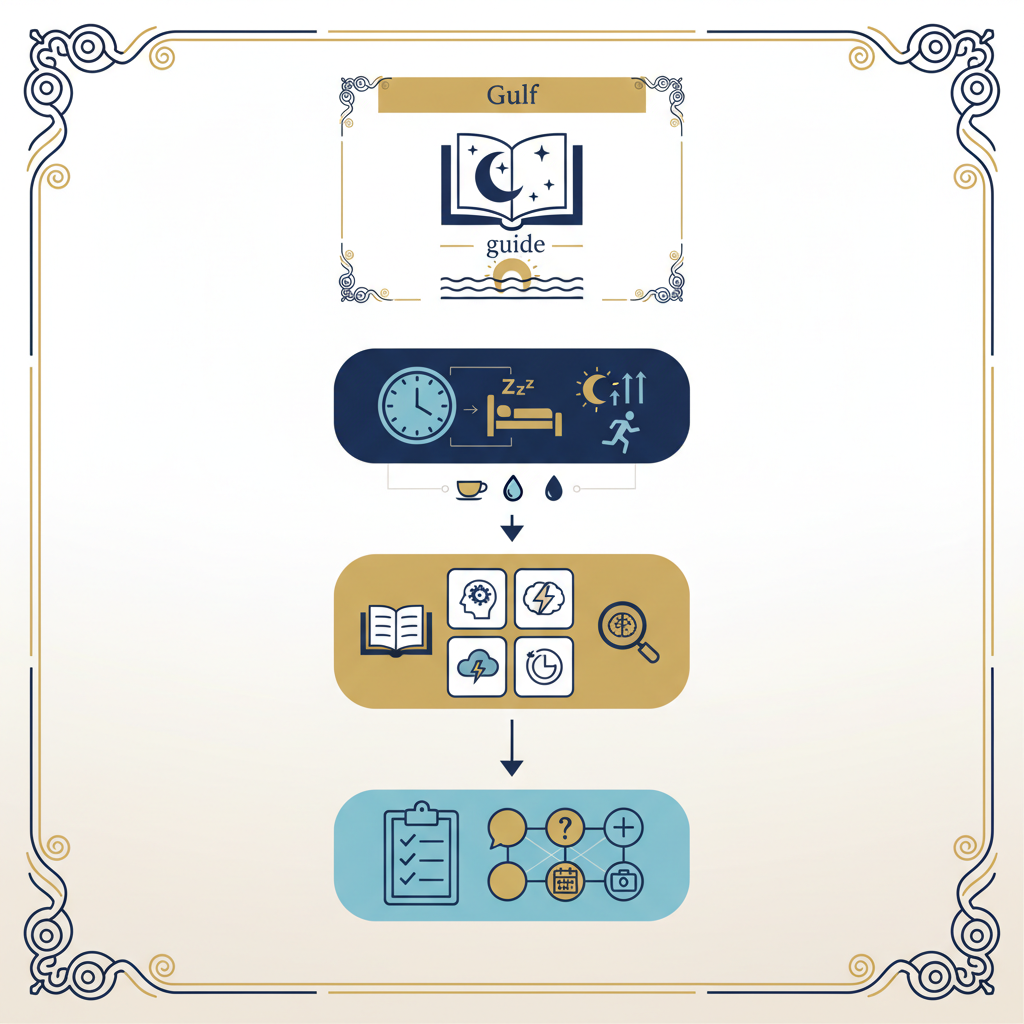
Understanding Terminology: Sleep Latency vs. Sleep Efficiency
To get the most out of a sleep journal, one must first understand the basic scientific terms used by sleep medicine experts. The first and most important term is "Sleep Latency". This term refers to the period of time it takes to transition from full wakefulness to actual sleep once the lights are turned off. Educationally, tracking this number helps you understand how quickly your nervous system relaxes. If this time is too long or excessively short, it may indicate environmental or psychological factors worth noting in your journal.
The second term is "Sleep Efficiency", which is a percentage calculated by dividing the total actual sleep time by the total time spent in bed. For example, if you spend 8 hours in bed but only sleep for 6 hours, your sleep efficiency is 75%. Understanding this term helps you realize that being in bed does not necessarily mean getting rest. The goal of health education here is to clarify that quality often outweighs quantity in its vital importance.
Additionally, it is important to distinguish between the different sleep stages you might notice in smartwatch reports or when recording your feeling of rest. There is Rapid Eye Movement (REM) sleep and Non-REM deep sleep. While it is difficult to measure these stages accurately in a paper journal, you can record "dream quality" or "feeling of grogginess upon waking" as approximate indicators. Understanding these terms makes you a better reader of your body's data and transforms the sleep journal from a mere time log into an advanced analytical tool for understanding the vital processes occurring during the night.
The Anatomy of a Sleep Journal: Key Data Points to Record
To build an useful for documenting sleep-related observations journal, it must include specific elements that provide a comprehensive picture of your day and night. It is not just about when you close your eyes, but extends to the variables that precede it. First: Basic Data, including bedtime, approximate time of falling asleep, number of nighttime awakenings, and final wake-up time. This data forms the skeleton of your sleep pattern and allows you to calculate the sleep efficiency we discussed earlier.
Second: Daytime Variables. The journal should include a section for recording caffeine consumption (coffee, tea, soda) and its timing, as caffeine has a long half-life that can affect sleep even hours after consumption. Physical activity should also be noted; exercising early in the day differs in its impact from exercising just before bed. Third: Environmental and Mood Factors. Record the room temperature, noise level, and even the mental state before bed (such as feeling anxious or relaxed). Recording these details helps identify "triggers" that may hinder entering a deep sleep.
Fourth: Self-Assessment After Waking. It is very important to record how you feel in the morning. Do you feel refreshed? Do you suffer from "sleep inertia" (morning grogginess)? Did you feel dry mouth or a headache? These qualitative observations complement the quantitative data and provide deeper context. Using a simple table or daily checklist makes the recording process quick, taking no more than 5 minutes in the morning and evening, ensuring continuity in documentation.
Reading Labels: Understanding Ingredients in Nighttime Consumer Products
Within the framework of health literacy, the ability to read and understand product labels is a vital skill, especially for those marketed to improve nighttime quality of life. When looking at dietary supplements or herbal drinks, attention must be paid to the active ingredients list. Common ingredients include Magnesium, a mineral that plays a role in supporting nervous system functions, and Melatonin, a hormone naturally produced by the body to regulate the sleep-wake cycle. Understanding the difference between natural ingredients and additives helps you make conscious choices.
Caution should also be exercised when reading terms like "Proprietary Blend," where the amount of each individual ingredient is not disclosed. Educationally, we advise looking for products that clearly state the concentration of each substance (e.g., in milligrams or micrograms). Attention should also be paid to additives such as artificial sugars or colors, which may have unintended effects on some individuals. The goal here is not to recommend a specific product, but to empower you to understand what you are putting into your body and how its effect might appear in your sleep journal.
Furthermore, it is important to understand potential interactions. Some herbs like Chamomile or Valerian Root may interact with other medications or affect people differently. Reading the label also requires checking for quality certifications from independent third parties, ensuring that the content matches what is written on the package. By being observant in your sleep journal after trying a new product, you can monitor any changes in "sleep latency" or "waking quality," linking what you read on the label to your body's vital response.
Evaluating Online Information: How to Verify Sleep Health Claims
We live in an era overflowing with health information, but not all information is accurate or based on scientific foundations. To evaluate claims related to sleep health online, a critical approach must be followed. First, look for the Source: Is the information coming from an academic institution, a certified health organization, or a peer-reviewed study? Claims that use emotional language or promise immediate "magical results" often lack scientific rigor. Health literacy requires us to question the evidence supporting any advice we find on social media.
Second, pay attention to Conflicts of Interest. Is the article written for purely educational purposes, or does it aim to promote a specific product? At ATHAR, we emphasize the importance of neutrality. Reliable information is that which presents both potential benefits and risks based on available clinical studies, without exaggeration. One should also be wary of "personal testimonials"; what works for one person may not work for another due to genetic and environmental differences. Science relies on reproducible results in large groups of people.
Third, use the rule of History and Recency. Sleep science is evolving rapidly, and information that was accepted ten years ago may have been updated or replaced by newer studies. Always check the publication date or the last update of the article. When taking notes in your sleep journal based on advice read online, consider it a personal "observation experiment" and discuss the results with a health professional. The goal is for you to become a smart consumer of information, able to distinguish between scientific fact and personal or marketing opinions.
Preparing for Your Appointment: Using Your Journal to Ask Better Questions
A sleep journal serves as a bridge for effective communication between you and your doctor or health specialist. Instead of relying on memory, which can fail under the pressure of an appointment, the journal provides objective data covering weeks or months. Before the appointment, summarize your data: What is your average sleep duration? How many times do you wake up per week? Is there a recurring pattern of morning headaches? This summary makes the doctor's time more efficient and helps them reach a more accurate diagnosis or provide advice better suited to your condition.
Use the journal to formulate specific, observation-based questions. Instead of the general question "Why am I tired?", you can ask: "I noticed in my journal that my sleep efficiency drops significantly on days when I exercise after 8 PM; is there a physiological explanation for that?". Or "I notice that I always wake up at 3 AM and find it difficult to go back to sleep; what behavioral strategies do you recommend for this situation?". These questions reflect a high level of health literacy and make the dialogue with the specialist a true partnership in managing your health.
Additionally, you can use the journal to track the impact of any new medical recommendations. If the doctor suggests changing the timing of a certain medication or adjusting the sleep environment, record these changes and monitor their impact in the following days. This continuous documentation provides necessary feedback for the doctor at the next appointment to adjust the plan if needed. Remember that the doctor possesses medical expertise, but you are the expert on your daily bodily experience, and the sleep journal is the tool that integrates these two worlds together.
Adapting the Journal to Gulf Lifestyles: Social and Religious Timings
The lifestyle in the Gulf region is characterized by a unique specificity that directly affects sleep patterns, which your sleep journal should reflect. One of the most important factors is Social Timing; family gatherings and social events often extend into the late hours of the night, especially on weekends. A space should be allocated in the journal to record "social events" and note how late meals or strong lighting in Majalis affect sleep latency on those nights.
Another vital factor is Religious Timing, specifically the Fajr prayer. Many in the Gulf choose to wake up for prayer and then return to sleep, or stay awake until Fajr and then sleep. Documenting this pattern helps in understanding "Biphasic Sleep" and its impact on daytime alertness. The Holy Month of Ramadan also stands out as an exceptional period where eating and sleeping schedules change completely. Adapting the journal during Ramadan to monitor the impact of Suhoor and the timing of Taraweeh and Qiyam prayers provides valuable insights into how to restore body balance after the holy month.
Finally, the impact of Climate cannot be ignored. In high temperatures, many resort to long daytime naps. The duration and timing of the nap should be recorded in the journal, as late or very long naps may lead to difficulty sleeping at night. By understanding these cultural and environmental specificities, the sleep journal transforms from a general tool into a personal guide compatible with the reality of life in the Gulf, helping you find a healthy balance that respects your social and religious commitments without sacrificing the quality of your physical rest.
Educational Sleep Documentation Checklist
| Item | Educational Description | Documentation Notes |
|---|---|---|
| Lights-Out Time | The start of the actual sleep attempt | Record the time accurately |
| Sleep Latency | Time taken to fall asleep in minutes | Estimated based on awareness |
| Nighttime Awakenings | Number and duration of awakenings | Record the reason if any (noise, thirst) |
| Caffeine Consumption | Amount and last time consumed | Watch for hidden beverages |
| Physical Activity | Type of exercise and timing | Note the impact on sleep speed |
| Mood State | Level of stress or relaxation | Rating from 1 to 5 |

Explore health education step by step
Use the educational guides and practical tools to choose your next learning step.