Gut Health Microbiome America: The Microbiome That Affects Everything
Author: Feras Alayed
Published:
Updated:
Category: american-health
Reading Time: 11 minutes
Key Takeaways
- Your gut microbiome is a major, modifiable influence on metabolism, immune function, mental health, and cardiovascular risk — and U.S. data show the stakes are high. ([usdss.cdc.gov](https://usdss.cdc.gov/diabetes/report.html?utm_source=openai))
- Dietary fiber, fermented foods, and reduced ultra-processed food intake are the simplest, evidence-backed ways to nurture gut diversity; several prebiotic fibers are FDA‑GRAS. ([fda.gov](https://www.fda.gov/media/103454/download?utm_source=openai))
- Interventions such as probiotics, synbiotics, and fecal microbiota transplant (FMT) show promise in select settings, but results vary and more high-quality trials are needed. ([journals.plos.org](https://journals.plos.org/plosmedicine/article?id=10.1371%2Fjournal.pmed.1003051&utm_source=openai))
- Gut-derived metabolites (SCFAs, TMAO, bile-acid derivatives) are mechanisms linking microbes to blood sugar, inflammation, and heart disease — a focus area for prevention. ([nature.com](https://www.nature.com/articles/s41579-020-0433-9?utm_source=openai))
- Practical lifestyle approaches — a fiber-rich Mediterranean-style diet, sleep, stress management, and structured tools like the Feel Great system — may help people across the U.S. support metabolic and gut health. ([nature.com](https://www.nature.com/articles/s41591-020-01223-3?utm_source=openai))
TL;DR
Your gut microbiome influences almost every system in the body — metabolism, immune defense, mood, and cardiovascular risk. U.S. public‑health data show millions are at risk from metabolic disease; practical changes to diet and lifestyle (plus supportive products like Feel Great) may help improve microbial health and metabolic markers. ([usdss.cdc.gov](https://usdss.cdc.gov/diabetes/report.html?utm_source=openai))
🇺🇸 Want to take action now? Try Feel Great → | Chat with a coach →
Gut Health Revolution: How Your Microbiome Affects Everything
Introduction — A shocking United States statistic
As of the Centers for Disease Control and Prevention's continuously updated National Diabetes Statistics Report (most recently published March 11, 2026), more than 40 million Americans — about 12% of the U.S. population — are living with diabetes, and over 115 million adults show signs of prediabetes. That puts metabolic health and glucose regulation at the center of public health in America. ([usdss.cdc.gov](https://usdss.cdc.gov/diabetes/report.html?utm_source=openai))
Why the microbiome matters
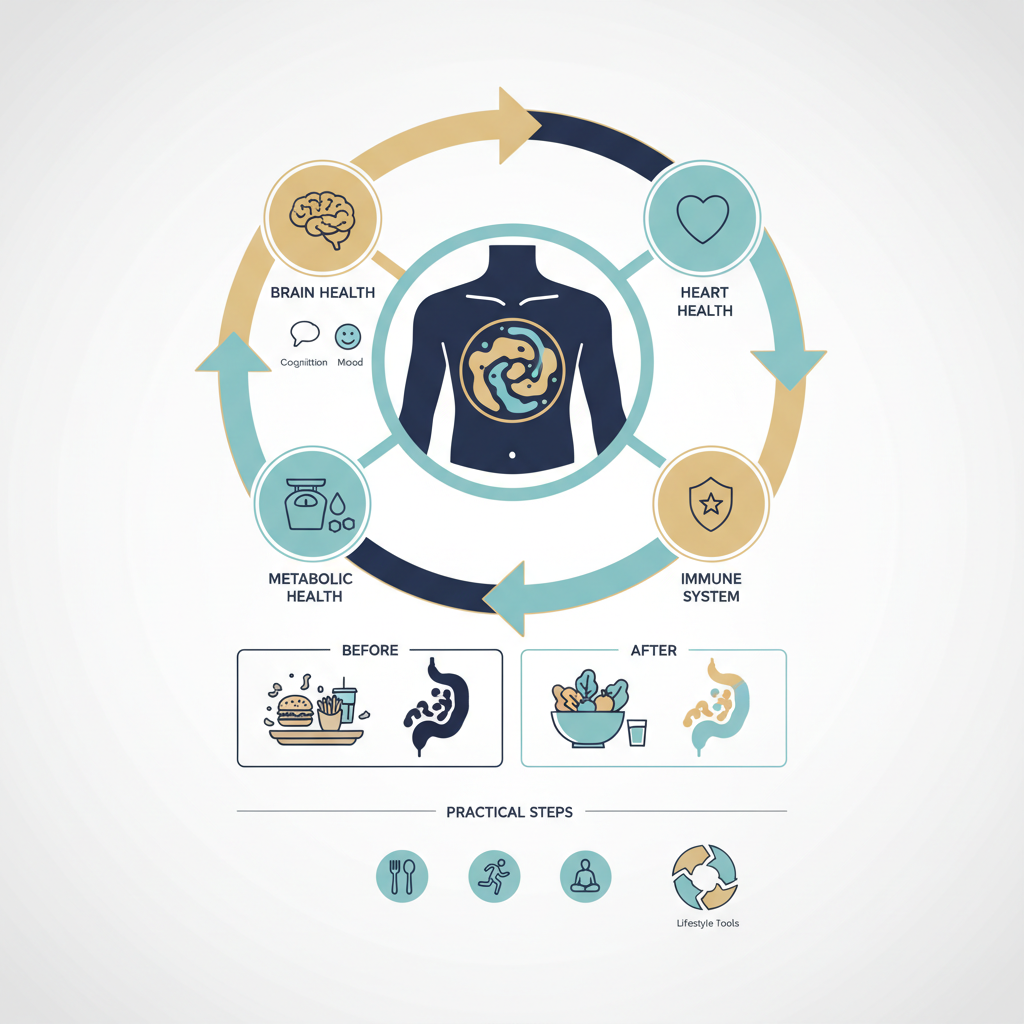
The gut microbiome is the trillions of bacteria, viruses, fungi and other microbes that live in the digestive tract. Far from being passive passengers, these microbes produce small molecules, train the immune system, break down fiber into short‑chain fatty acids (SCFAs), and influence how the body responds to food, stress, and medications. Modern reviews summarize microbiome links to metabolic disease, inflammation, cancer risk, and brain health. ([nature.com](https://www.nature.com/articles/s41579-020-0433-9?utm_source=openai))
Top mechanisms linking gut microbes to whole‑body health
- Microbial metabolites: SCFAs (butyrate, propionate, acetate) from fiber fermentation affect gut barrier integrity, insulin sensitivity and appetite signals. ([nature.com](https://www.nature.com/articles/s41579-020-0433-9?utm_source=openai))
- Microbial‑host signaling: Bacterial products interact with immune receptors and influence systemic inflammation — a driver of cardiovascular disease and diabetes. ([pmc.ncbi.nlm.nih.gov](https://pmc.ncbi.nlm.nih.gov/articles/PMC7829062/?utm_source=openai))
- Microbiome and xenobiotic metabolism: Gut microbes change how drugs and dietary compounds are metabolized, affecting efficacy and side effects. ([commonfund.nih.gov](https://commonfund.nih.gov/hmp?utm_source=openai))
- Gut–brain axis: Microbial changes can influence mood, cognition, stress responses and motivation via neural, immune and metabolic pathways. Meta‑analyses show modest benefits of probiotics on depressive symptoms in some trials. ([pmc.ncbi.nlm.nih.gov](https://pmc.ncbi.nlm.nih.gov/articles/PMC8695538/?utm_source=openai))
U.S. evidence — where microbiome research meets public health
U.S. institutions and agencies have invested heavily in microbiome science: the NIH Human Microbiome Project and follow‑on initiatives created standardized resources and datasets that underpin much of today's translational work. The CDC now frames microbial ecology as central to infection prevention and recognizes that antibiotics and other exposures can perturb the gut community for months. The American Heart Association and other U.S. professional groups emphasize the microbiome's role in cardiometabolic risk. ([commonfund.nih.gov](https://commonfund.nih.gov/hmp?utm_source=openai))
What the trials say — practical implications
Clinical trials and meta‑analyses reveal a nuanced picture:
- Fecal microbiota transplantation (FMT) has clear benefit in recurrent C. difficile infection and investigational results for metabolic outcomes are mixed — some RCTs show transient improvements in insulin sensitivity, others show minimal change. FMT remains a research tool for metabolic disease rather than routine therapy. ([journals.plos.org](https://journals.plos.org/plosmedicine/article?id=10.1371%2Fjournal.pmed.1003051&utm_source=openai))
- Probiotics and synbiotics: meta‑analyses report small to moderate improvements in some metabolic and mental‑health outcomes, particularly when multiple strains are used and treatment extends beyond 8–12 weeks; effects are heterogeneous. These products are not medications, and quality varies across brands. ([sciencedirect.com](https://www.sciencedirect.com/science/article/pii/S0261561421002776?utm_source=openai))
- Dietary change and fiber: robust evidence supports that higher intake of varied dietary fiber and whole‑food patterns like the Mediterranean diet favorably change the microbiome and are linked to lower cardiometabolic risk. Large population studies (including PREDICT) show the microbiome helps explain individual differences in post‑meal glycemic responses. ([nature.com](https://www.nature.com/articles/s41591-020-01223-3?utm_source=openai))
Practical, evidence‑based steps to better gut health in America
Below are actionable steps grounded in U.S. and international research — suitable for people navigating U.S. healthcare, insurance, and daily life.
1) Focus on fiber diversity (10+ plant foods/week)
Aim for a mix of soluble and insoluble fibers: beans, oats, barley, onions, leeks, garlic, apples, berries, artichokes and a variety of vegetables. Prebiotic fibers such as inulin and fructooligosaccharides (FOS) have demonstrated prebiotic effects and are listed in FDA GRAS notices for food use. Gradually increase intake to avoid gas and bloating. ([fda.gov](https://www.fda.gov/media/103454/download?utm_source=openai))
2) Include fermented foods and consider targeted probiotics
Fermented dairy (yogurt, kefir), fermented vegetables (sauerkraut, kimchi) and other cultured foods can add live microbes and support diversity. For specific conditions (e.g., occasional antibiotic‑associated diarrhea or IBS), high‑quality multi‑strain probiotic products, taken for 8–12 weeks, may be considered — discuss coverage and copays with your insurer, as supplements are typically out‑of‑pocket in the U.S. and not covered by Medicare/Medicaid. ([pubmed.ncbi.nlm.nih.gov](https://pubmed.ncbi.nlm.nih.gov/37516516/?utm_source=openai))
3) Reduce ultra‑processed foods and excess red meat
Processing and additives can alter microbial communities; AHA and other reviews link red‑meat derived microbial metabolites (e.g., TMAO pathway) to higher cardiovascular risk. Choosing whole‑food protein sources, more plants, and a Mediterranean‑style pattern is a proven public‑health approach. ([newsroom.heart.org](https://newsroom.heart.org/news/increased-heart-disease-risk-from-red-meat-may-stem-from-gut-microbe-response-to-digestion?utm_source=openai))
4) Mind medications and antibiotics
Antibiotics can wipe out beneficial species and increase risk for opportunistic infections such as C. difficile; use antibiotics only when medically necessary and follow your clinician's guidance. The CDC documents that microbiome perturbations from antibiotics can persist for months. ([cdc.gov](https://www.cdc.gov/c-diff/resources/gut-microbiome.html?utm_source=openai))
5) Lifestyle: sleep, stress, movement
Sleep disruption, chronic stress and inactivity affect microbial diversity and metabolic health. Practical sleep hygiene, stress reduction (mindfulness, therapy), and moderate daily activity are evidence‑based ways to support the gut–brain and gut–metabolic axes. ([health.harvard.edu](https://www.health.harvard.edu/healthy-aging-and-longevity/healthy-gut-healthier-aging?utm_source=openai))
Comparison table — interventions at a glance
| Intervention | Strength of Evidence | Typical Effect | U.S. practical notes |
|---|---|---|---|
| Dietary fiber & whole foods | High (cohort + RCTs) | Improved SCFA production, lower post‑meal glucose | Primary strategy; food is often covered by food budgets, not insurance. ([nature.com](https://www.nature.com/articles/s41591-020-01223-3?utm_source=openai)) |
| Fermented foods | Moderate | Increased microbial diversity in some studies | Low cost, safe for most; beware of added sugars/sodium. |
| Probiotics / synbiotics | Low–moderate (heterogeneous) | Small improvements in metabolic or mood outcomes in some trials | Quality varies; out‑of‑pocket in the U.S.; discuss with clinician. ([sciencedirect.com](https://www.sciencedirect.com/science/article/pii/S0261561421002776?utm_source=openai)) |
| FMT (fecal transplant) | High for C. diff; investigational for metabolic disease | Clear benefit for recurrent C. diff; mixed for insulin resistance | Usually only in research centers or specialized clinics in the U.S.; not routine for metabolic disease. ([journals.plos.org](https://journals.plos.org/plosmedicine/article?id=10.1371%2Fjournal.pmed.1003051&utm_source=openai)) |
| Targeted personalized nutrition | Emerging (PREDICT / ZOE) | Improved postprandial control when individualized | Commercial programs exist; verify data privacy and costs. ([nature.com](https://www.nature.com/articles/s41591-020-01183-8?utm_source=openai)) |
How Feel Great Helps
Feel Great is not a medication — it is a lifestyle support system that complements the steps above and may help people manage post‑meal glucose responses and daily energy when used alongside diet and medical care. Key components and how they relate to gut and metabolic health:
- Balance: a soluble fiber matrix designed to support steady post‑meal glucose response by creating a viscous, fermentable substrate for gut microbes; soluble fibers are a proven route to increase SCFA production and feed beneficial bacteria. (Note: many prebiotic fibers like inulin/FOS are listed in FDA GRAS notices for food use.) ([fda.gov](https://www.fda.gov/media/103454/download?utm_source=openai))
- Unimate (yerba mate extract): a source of chlorogenic acids and caffeine‑free energy compounds that may help mental clarity and support activity levels that in turn benefit metabolic health; used as part of a lifestyle program rather than as a drug.
- 4‑4‑12 intermittent fasting protocol: a structured but flexible approach to timing eating windows that pairs with diet quality and may help lower overall glycemic load for many people when medically appropriate.
- Clinical backing: Feel Great references >50 clinical studies listed in PDR supporting components of the program; it is presented as a lifestyle support rather than a therapeutic drug. Free shipping across all 50 states is offered for consumer convenience. (Not a substitute for medical care.)
Always discuss supplements and major diet changes with your clinician, especially if you have diabetes, are on glucose‑lowering medications, are pregnant, immunocompromised, or have other chronic conditions. In the U.S., insurance coverage for supplements is rare and copays vary by plan; Medicare/Medicaid generally do not cover dietary supplements.
People Also Ask
Q: Can changing my diet really change my microbiome quickly?
A: Yes — large dietary shifts can alter the composition and function of the gut microbiome within days; sustained change over weeks-to-months gives more stable benefits. ([nature.com](https://www.nature.com/articles/s41591-020-0934-0?utm_source=openai))
Q: Will probiotics fix my gut permanently?
A: Probiotics can produce transient changes; long‑term results depend on diet, medications, and lifestyle. They are best used as one tool among many. ([sciencedirect.com](https://www.sciencedirect.com/science/article/pii/S0261561421002776?utm_source=openai))
Q: Are microbiome tests useful?
A: Research tools are improving, and some tests (including those informing personalized nutrition) show promise — but routine clinical use is still limited and interpretation requires caution. ([commonfund.nih.gov](https://commonfund.nih.gov/hmp?utm_source=openai))
Q: Do antibiotics permanently damage the microbiome?
A: Antibiotics can cause long‑lasting changes and raise short‑term infection risk (e.g., C. difficile). Recovery is possible with diet and time, but repeat exposures may blunt recovery. ([stacks.cdc.gov](https://stacks.cdc.gov/view/cdc/208060?utm_source=openai))
Q: Should I try FMT for weight loss or diabetes?
A: Currently, FMT is supported for recurrent C. difficile and remains experimental for metabolic conditions; discuss eligibility and risks with specialist centers. ([journals.plos.org](https://journals.plos.org/plosmedicine/article?id=10.1371%2Fjournal.pmed.1003051&utm_source=openai))
FAQ
1. How does the gut microbiome affect blood sugar?
Gut bacteria ferment fiber into short‑chain fatty acids that help regulate insulin sensitivity and gut barrier function; microbial composition also influences post‑meal glucose responses measured in mg/dL and long‑term metabolic risk. Personalized studies (PREDICT) showed the microbiome helps explain inter‑individual glucose variability. ([nature.com](https://www.nature.com/articles/s41579-020-0433-9?utm_source=openai))
2. Are there U.S. guidelines for using probiotics or prebiotics?
Regulatory guidance treats probiotics and prebiotic fibers primarily as foods or supplements. Several prebiotic fibers (inulin, FOS) have FDA GRAS determinations for use in foods; clinical guidance recommends evidence‑based, condition‑specific use and clinician discussion. ([fda.gov](https://www.fda.gov/media/103454/download?utm_source=openai))

3. Can gut health improve heart risk?
Evidence links gut‑derived metabolites and dysbiosis to heart disease pathways; AHA statements highlight the gut microbiome among modifiable cardiometabolic biomarkers, and diet patterns that support gut health (Mediterranean style) align with heart‑healthy recommendations. ([pmc.ncbi.nlm.nih.gov](https://pmc.ncbi.nlm.nih.gov/articles/PMC7829062/?utm_source=openai))
4. If I have diabetes, should I test my microbiome?
Testing may be informative in research or personalized programs, but routine clinical testing is not yet standard for diabetes care. Focus first on evidence‑based diabetes care (A1c, glucose mg/dL targets, medication, diet, activity) and discuss advanced testing with your endocrinologist. ([usdss.cdc.gov](https://usdss.cdc.gov/diabetes/report.html?utm_source=openai))
5. What are realistic expectations from a gut‑focused lifestyle program?
Expect gradual improvements in digestion, energy, and possibly smaller post‑meal glucose spikes when you combine fiber‑rich eating, fermented foods, sleep, movement and structured support (e.g., Feel Great). Clinical endpoints (weight, HbA1c) change more slowly and should be tracked with your clinician. ([nature.com](https://www.nature.com/articles/s41591-020-01223-3?utm_source=openai))
References & Scientific Sources
- CDC — National Diabetes Statistics Report (United States Diabetes Surveillance System). Published March 11, 2026. ([usdss.cdc.gov](https://usdss.cdc.gov/diabetes/report.html?utm_source=openai))
- Nature Reviews Microbiology — "Gut microbiota in human metabolic health and disease." 2021. ([nature.com](https://www.nature.com/articles/s41579-020-0433-9?utm_source=openai))
- NIH — Human Microbiome Project / Common Fund resources. (NIH Common Fund HMP pages). ([commonfund.nih.gov](https://commonfund.nih.gov/hmp?utm_source=openai))
- Mayo Clinic — Researchers develop tool that measures gut microbiome health; Mayo Clinic news and gut microbiome resources. ([newsnetwork.mayoclinic.org](https://newsnetwork.mayoclinic.org/discussion/mayo-researchers-develop-tool-that-measures-health-of-a-persons-gut-microbiome/?utm_source=openai))
- American Heart Association — Nutrigenomics and microbiome statement; AHA coverage of gut metabolites and cardiometabolic risk. ([pmc.ncbi.nlm.nih.gov](https://pmc.ncbi.nlm.nih.gov/articles/PMC7829062/?utm_source=openai))
- PREDICT / ZOE — "Microbiome connections with host metabolism" and ZOE PREDICT studies published in Nature Medicine (2020/2021) and related METHOD trial (2024). ([nature.com](https://www.nature.com/articles/s41591-020-01183-8?utm_source=openai))
- PLOS Medicine — FMT‑TRIM randomized pilot trial of fecal microbiota transplantation and metabolic outcomes. ([journals.plos.org](https://journals.plos.org/plosmedicine/article?id=10.1371%2Fjournal.pmed.1003051&utm_source=openai))
- Systematic reviews/meta‑analyses on probiotics and metabolic/mental outcomes (multiple PubMed and PMC reviews, 2021–2024). Examples: probiotics in metabolic syndrome and T2D, probiotics & depression meta‑analyses. ([sciencedirect.com](https://www.sciencedirect.com/science/article/pii/S0261561421002776?utm_source=openai))
- FDA GRAS notices for inulin and fructooligosaccharides (FOS) and related guidance on prebiotic fibers. ([fda.gov](https://www.fda.gov/media/103454/download?utm_source=openai))
- CDC — Microbial ecology and antibiotic perturbation resources emphasizing public‑health implications (C. difficile resources, microbial ecology pages). ([cdc.gov](https://www.cdc.gov/c-diff/resources/gut-microbiome.html?utm_source=openai))
- Selected clinical trials and reviews on FMT, probiotics and cardiometabolic outcomes (Papers and RCTs listed above). ([pubmed.ncbi.nlm.nih.gov](https://pubmed.ncbi.nlm.nih.gov/34226737/?utm_source=openai))
Medical Disclaimer
The information in this article is educational and not medical advice. It does not replace diagnosis or treatment by a qualified healthcare professional. If you have diabetes, heart disease, are pregnant, immunocompromised, or are taking prescription medications, consult your clinician before making major dietary, supplement, or medication changes. Feel Great products are dietary/lifestyle supports, not medications; discuss use with your healthcare team.
Related ATHAR paths
🇺🇸 Ready to Start Your Health Transformation?
Join thousands across United States who have improved their metabolic health with the Feel Great system. Backed by 50+ clinical studies and listed in the Physicians' Desk Reference (PDR).
✅ Free Shipping Across All 50 States | 90-Day Money-Back Guarantee