Health Literacy Guide for Al-Ahsa: Essential Knowledge Skills
Author: Feras Alayed
Published:
Updated:
Category: al-ahsa-health-literacy
Reading Time: 8 minutes
Health Literacy Guide for Al-Ahsa Readers: Essential Cognitive Empowerment Skills
1. The Concept of Health Literacy and Its Importance in Al-Ahsa
Health literacy is the fundamental pillar that enables individuals to make informed decisions regarding their health and quality of life. In a society characterized by strong social bonds and deep-rooted traditions like Al-Ahsa, health literacy goes beyond mere reading and writing; it encompasses the ability to access, understand, evaluate, and apply health information in daily contexts. Cognitive empowerment means an individual becomes an active partner in their health journey rather than a passive recipient of instructions. In the Al-Ahsa oasis, where traditional dietary habits intersect with modern lifestyles, there is a pressing need for critical awareness to distinguish between inherited practices that support health and those that may require modification based on modern science.
Health literacy consists of multiple levels. The first is Functional Literacy, which involves basic skills for reading medication leaflets and medical appointments. The second is Interactive Literacy, which includes extracting information and applying it to changing situations, such as adjusting a diet based on a nutritionist's advice. The third and most crucial is Critical Literacy, the ability to deeply analyze health information and participate in community action to improve public health. For Al-Ahsa residents, enhancing these levels helps bridge the gap between medical recommendations and home practices, ultimately leading to improved quality of life and the prevention of common health challenges.
Health literacy is not just an intellectual luxury; it is a vital tool for prevention and empowerment, allowing individuals to understand their body's language and communicate effectively with the healthcare system.
2. Decoding Medical Terminology: How to Understand Professional Language
Patients often feel confused in clinics due to complex medical jargon. To understand this language, one must realize that most medical terms are built from Latin or Greek roots, prefixes, and suffixes. For example, any word ending in "-itis" indicates inflammation, and any word starting with "Hyper-" means an increase or elevation, while "Hypo-" means a decrease. Understanding these simple rules demystifies medical reports. When a doctor speaks about "Metabolism," they are simply referring to the chemical processes by which the body converts food into energy. When they mention "Vital Signs," they mean basic measurements like blood pressure, heart rate, and temperature.
It is essential not to hesitate to ask for an "interpretive translation" of terms. Phrases like "Can you explain this in simple language?" or "What does this diagnosis mean for my daily activity?" can be very helpful. Understanding the difference between an "Acute" condition (appearing suddenly and briefly) and a "Chronic" condition (lasting a long time) helps set realistic treatment expectations. Furthermore, one should distinguish between "Symptoms" (what the patient feels) and "Signs" (what the doctor observes during an exam). This precise distinction facilitates communication and ensures the correct information is conveyed to the medical team, reducing the chances of diagnostic misunderstanding.
3. A Guide to Reading Food Labels and Explanatory Data in Local Markets
Food labels on products in Al-Ahsa markets are the primary source of information about what we put into our bodies. Correct reading starts with the Serving Size; many people read the calorie count believing it applies to the whole package, while it is often for a small portion. Attention must be paid to the ingredient list order; ingredients are listed in descending order by weight. If sugar or hydrogenated oils are at the top of the list, they are the primary components. One must also be wary of the multiple names for sugar, such as "High Fructose Corn Syrup," "Maltodextrin," or "Molasses," as they all fall under added sugars.
The "5/20" rule is an excellent educational tool for evaluating the Daily Value (DV). If a nutrient's percentage is 5% or less, it is considered low; if it is 20% or more, it is considered high. It is preferable to look for products with high percentages (20%+) of fiber, vitamins, and minerals, and low percentages (5%-) of saturated fats, sodium, and added sugars. In the local environment, the consumption of dates and their derivatives is high; therefore, labels should be read to ensure no unnecessary preservatives or artificial sugars are added, focusing on whole products that maintain their natural nutritional value without intensive chemical processing.
4. Habit Tracking Methodology: How to Create a Daily Lifestyle Log
Logging is the process of transforming subjective observations into objective data that can be analyzed. To create an effective log, complex tools are not necessary; a simple notebook or app will suffice. The log should focus on four main pillars: Nutrition, Physical Activity, Sleep, and Mental State. Instead of writing "I ate healthy food," it is better to write details like "Consumed two servings of leafy greens with lunch." This level of precision helps discover behavioral patterns. For instance, a person might notice they tend to consume more sugar on days they don't get enough sleep, and this connection is the essence of health awareness.
The methodology of logging relies on consistency, not perfection. The goal is not to record a perfect day but to record reality as it is to identify opportunities for improvement. "Habit Tracking" techniques can be used by checking off simple tasks like walking for 20 minutes or drinking enough water. Over time, this log becomes an important reference during visits to a doctor or nutritionist, providing an accurate picture of lifestyle that is not reliant on fallible memory. Seeing written progress enhances internal motivation and makes small changes feel like significant achievements worth sustaining, turning healthy behaviors into ingrained habits.
5. Appointment Preparation Skills: Essential Questions for Healthcare Providers
An effective medical visit begins before entering the examination room. Good preparation ensures the limited appointment time is used optimally. It is recommended to write a clear list of symptoms: When did they start? What makes them worse? What relieves them? Additionally, bring a list of all supplements and medications currently being taken. During the appointment, there are three core questions to ask (the "Ask Me 3" methodology): 1. What is my main problem? 2. What do I need to do? 3. Why is it important for me to do this? These questions ensure the patient leaves with a clear understanding of the treatment plan.
Furthermore, inquire about available alternatives and potential side effects of any proposed procedure. You can ask the doctor: "Are there lifestyle changes that can support this treatment?" or "Where can I find additional reliable information about my condition?". The patient also has the right to ask for clarification on lab results and what numbers outside the normal range signify. Taking notes during the session or requesting a written summary helps in remembering instructions accurately after leaving the clinic. Remember, the doctor is the expert in medicine, but you are the expert on your body and personal experience; collaboration between both is the key to health success.
6. Evaluating Digital Sources: How to Distinguish Reliable Information from Rumors
In the age of information explosion, distinguishing fact from fiction has become a survival skill. When searching for health information online, strict evaluation criteria must be applied. First, check the Source: Does the website end in .gov (government), .edu (academic), or .org (accredited non-profit)? Sites ending in .com may be commercial and aimed at selling a specific product. Second, look for the Date: Medical information evolves rapidly, so it is preferable to rely on articles published within the last three years. Third, look for Evidence: Does the article cite peer-reviewed scientific studies or rely on individual anecdotes and personal stories?
Beware of sensationalist headlines promising "miracle cures" or "instant results," as medical science is characterized by gradual progress and complexity. Rumors often use emotional language and rely on fear-mongering or exaggerated promises. Before sharing any health information on social media in Al-Ahsa family groups, ask yourself: Is this source reliable? Is there medical consensus on this information? Using fact-checking websites and referring to official Ministry of Health platforms is the first line of defense against misinformation. Digital literacy protects the community from practices that could be harmful or lead to delays in seeking necessary medical care.
7. Practical Steps to Enhance Cognitive Awareness within the Al-Ahsa Family
Health literacy begins at home, and the family in Al-Ahsa is the primary educational institution. To enhance this awareness, start by dedicating a "Health Corner" in the home containing simple measurement tools (like a blood pressure monitor or scale) along with a log to track readings periodically. Weekly shopping can be turned into an educational activity for children and youth by involving them in reading food labels and choosing healthy alternatives. It is also recommended to encourage open dialogue about mental and physical health, free from stigma, making children feel comfortable expressing any health issues they experience in their early stages.
Activating the role of family councils (Majalis) to discuss health topics based on reliable sources contributes to spreading awareness across different generations. Youth can assist the elderly in accessing official health apps, booking appointments, and understanding electronic reports. Adopting collective habits like walking in local parks or preparing traditional meals in healthier ways (reducing oils and sugars) reinforces a culture of prevention. Transforming health information from mere theoretical knowledge into a shared daily practice is what builds a strong, health-empowered community capable of facing future challenges with clear vision and firm awareness.
Glossary and Educational Checklist
| Term | Simple Meaning | Empowerment Checklist |
|---|---|---|
| Metabolism | Converting food into energy | Did you ask about the serving size? |
| Prevention | Stopping a problem before it happens | Did you log your physical activity today? |
| Vital Signs | Basic body measurements (BP, Pulse) | Did you prepare 3 questions for the doctor? |
| Added Sugars | Unnatural sugar added during processing | Did you check the information's update date? |

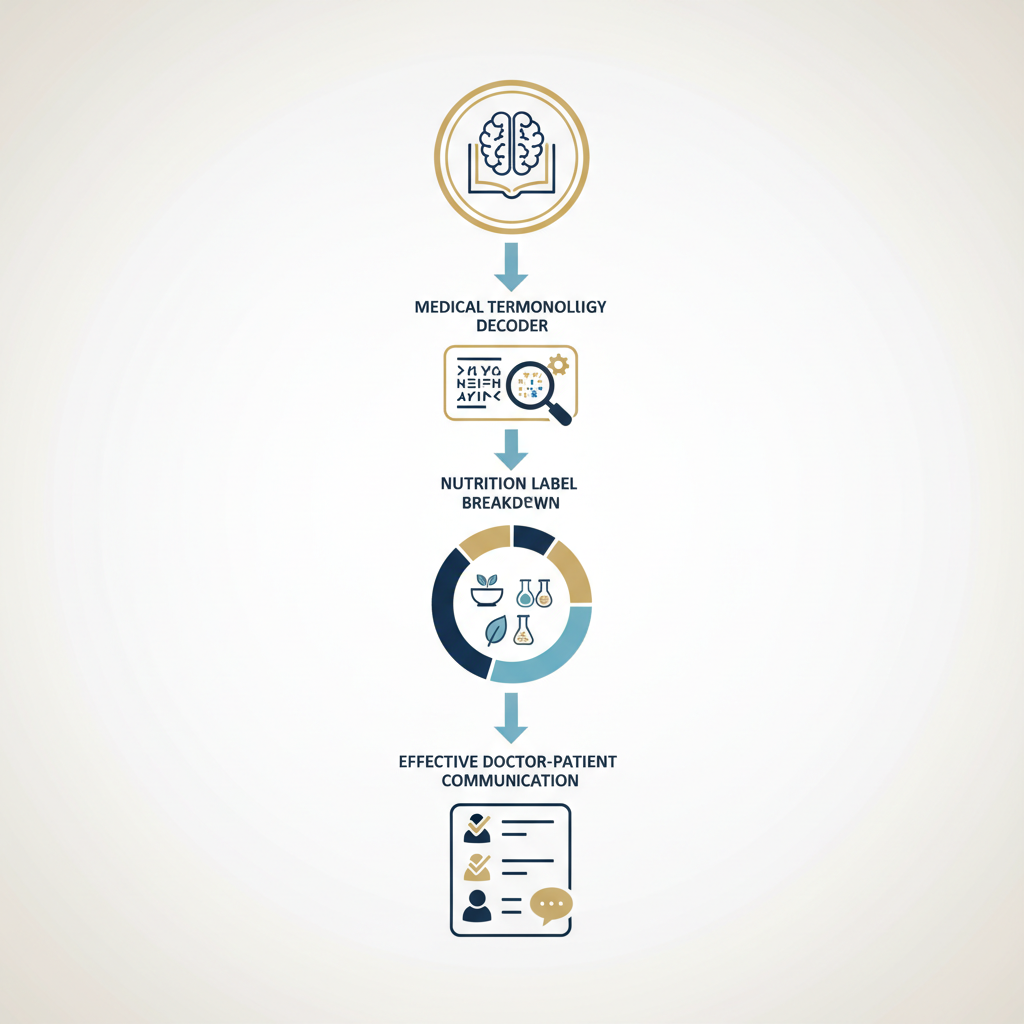
Explore health education step by step
Use the educational guides and practical tools to choose your next learning step.