Health Literacy Guide for Eastern Province: Enhancing Awareness
Author: Feras Alayed
Published:
Category: eastern-province-health-literacy
Reading Time: 10 minutes
Health Literacy Guide for Eastern Province Readers: Enhancing Awareness and Communication
1. Introduction to Health Literacy and Its Importance in Contemporary Saudi Society
Health literacy stands as the cornerstone of building a vibrant and prosperous society. It transcends basic reading and writing skills, encompassing the ability to access, understand, and utilize health information to make informed decisions. In the context of the Eastern Province, characterized by its diverse population and its leading role as a global industrial and economic hub, health literacy becomes an urgent necessity to keep pace with significant shifts in modern lifestyles. The transition from being a passive recipient of information to an active participant in managing personal health is the ultimate goal of modern health education programs championed by the ATHAR Center.
Life in the Eastern Province, with its fast-paced urban nature, requires a specific awareness of how to balance work demands with health well-being. Health literacy here means understanding how the surrounding environment, dietary habits, and physical activity levels impact long-term quality of life. A health-literate individual is someone capable of distinguishing between reliable scientific advice and misleading marketing claims, and someone who possesses the courage and confidence to interact with healthcare providers in a way that ensures they achieve the best possible outcomes.
Furthermore, health literacy plays a crucial role in enhancing the efficiency of the national health system. When community members understand how to prevent health issues before they occur, how to manage minor health conditions at home, and how to use medical services correctly, it reduces pressure on health facilities and allows resources to be directed toward more critical cases. Promoting health awareness in the Eastern Province is not just an individual responsibility; it is a collective effort aimed at raising public health standards and achieving the goals of Saudi Vision 2030 in building a society that enjoys a healthy and fulfilling life.
2. Decoding Common Medical Terminology: How to Understand Professional Language Clearly
Patients in clinics and hospitals often feel confused when hearing complex medical terms, which can lead to a misunderstanding of the diagnosis or treatment plan. Decoding these terms is the first step toward health empowerment. For instance, when a doctor speaks of a "Chronic" condition, they mean a condition that lasts for a long time and requires ongoing management, whereas an "Acute" condition refers to something that happened suddenly and for a short duration. Understanding this fundamental difference helps the patient set their expectations regarding the speed of recovery.
Another common term is "Metabolism", which refers to all the chemical processes that occur within the body to convert food into energy. When specialists talk about "metabolic health," they are referring to how efficiently the body processes sugar and fats. We also find the term "Resistance", such as insulin resistance, which means the body's cells do not respond effectively to hormones that regulate vital processes. Simplifying these concepts makes an individual more capable of understanding the root causes of the health challenges they may face.
It is also important to understand terms related to tests, such as "Reference Range", which are the intervals considered normal for most people but may vary based on individual circumstances. Learning this language does not mean becoming a doctor; it means possessing the tools to ask intelligent questions. Instead of remaining silent when hearing an unfamiliar term, the patient should ask the doctor to "translate" the term into simple language or use everyday examples. This interaction builds a bridge of trust and ensures that information has been correctly absorbed before leaving the clinic.
3. A Guide to Reading Health Labels and Instructions on Consumer Products
Nutritional and medical labels are the primary source of information a consumer needs to make daily decisions that affect their health. However, many ignore these labels or find them difficult to interpret. Correct reading of a food label begins by looking at the "Serving Size"; the nutritional information listed pertains to only one serving, while the entire package may contain multiple servings. Overlooking this point can lead to consuming double the amount of calories or ingredients without realizing it.
Attention must also be paid to the "Ingredients List", where ingredients are listed in descending order by weight. If sugar or one of its derivatives (such as corn syrup or maltodextrin) is at the top of the list, it means it is a primary ingredient. One should also be wary of food additives and preservatives that may affect the body's biological balance. Regarding the attached medical instructions (the package insert), it is essential to read the "Warnings" and "Drug Interactions" sections, as these sections clarify cases where the product should not be used or substances that may conflict with it.
Education in label reading also includes understanding locally and internationally approved health symbols. Choosing products high in fiber and protein and low in added sugars and trans fats is the essence of conscious nutrition. The ATHAR Center always advises allocating extra time during shopping to read these details, as the few minutes spent checking a label can protect you from long-term health problems. Remember that companies may use attractive marketing terms like "natural" or "organic," but the technical label is the only source of nutritional truth.
4. The Importance of Note-Taking: How to Create a Daily Log to Monitor Health Habits
Health note-taking is a powerful tool for improving self-awareness and providing doctors with accurate data. A personal health record is not just a list of what you ate; it is a map showing how your body reacts to various influences. Starting to record energy levels, sleep quality, and mood daily can reveal hidden patterns you might not notice in passing. For example, you might discover that your afternoon lethargy is linked to a specific type of morning meal.
To implement this effectively, a simple notebook or a digital application can be used. The log should include notes on physical activity (duration and type), water intake, and any sudden physical symptoms like headaches or joint pain. This type of documentation helps identify "triggers" that lead to a decline in health status. When you go to your medical appointment with an accurate log of the past two weeks, you save the doctor a lot of diagnostic time and help them develop a customized treatment plan that fits the reality of your daily life.
Additionally, logging helps promote self-discipline. Seeing the progress made in adhering to health habits written before you acts as a strong psychological motivator to continue. Monitoring habits is not an act of self-inspection; it is an act of self-care aimed at understanding the body's language. The ATHAR Center encourages Eastern Province residents to adopt this habit, especially given the pressures of work and modern life, to ensure that small signals sent by the body are not overlooked before they turn into larger problems.
5. Preparing for a Medical Appointment: A List of Essential Questions to Ask Your Provider
A medical visit is a precious opportunity to get answers, but time constraints and stress may prevent the patient from making the most of it. Prior preparation is key. Before going, write a list of your top three concerns or questions. Always start with the most important. Among the essential questions to ask: "What is the potential diagnosis for my condition?" and "Why specifically do I need this test or procedure?" Understanding the purpose of tests reduces anxiety and increases adherence to instructions.
Another vital question is: "What are the available alternatives to this treatment?" Every medical intervention has different options, and the patient has the right to know the pros and cons of each. Also, ask about "expected side effects" and how to deal with them if they appear. Do not hesitate to ask the doctor: "What will happen if I do nothing and wait?" This question helps evaluate the urgency of the condition and the necessity of immediate medical intervention.
Finally, ensure you understand the next steps clearly. Ask: "When should I expect the results?" and "When should I return for a follow-up?" Writing down the answers during the session or asking for a written summary ensures that important details are not forgotten. Remember that the doctor is a partner in your health journey, and effective communication starts with you having the courage to ask questions until you feel completely reassured. A patient who asks questions is a patient who receives better and safer care.
6. Criteria for Evaluating Health Information on the Internet and Social Media Platforms
In the digital information age, the internet has become the primary source for searching for health information, but this space is full of misleading or inaccurate information. To evaluate any health information, strict criteria must be followed. First, the Source: Is the information issued by a certified government agency, a university research center, or a well-known health organization? Avoid relying on personal blogs or social media accounts that promote specific products under the guise of medical advice.
Second, Currency: Medical science evolves at an incredible speed, and information that was acceptable five years ago may have changed today. Always check the publication date of the article or study. Third, Objectivity: Is the information balanced and does it present both pros and cons? If the information seems "too good to be true" or promises magical and instant cures, it is likely inaccurate. Reliable medical claims are always supported by scientific evidence and reviewed by peers in the medical field.
Fourth, Purpose of Publication: Does the site aim to educate or to sell a product? Sites that sell supplements or medications often provide biased information to serve their commercial goals. The ATHAR Center always recommends reviewing official national platforms such as the Saudi Ministry of Health portal for reliable information. Before applying any advice you find online, consult your personal doctor, as general information may not necessarily apply to your specific health condition and unique medical history.
7. Effective Communication Strategies Within Health Facilities to Ensure Information Clarity
Effective communication is a two-way process that requires skills from both the provider and the patient. One of the best strategies a patient can use is the "Teach-Back Method". After the doctor explains the treatment plan, you can say: "To make sure I understood correctly, can I re-explain what you said in my own words?". This method immediately reveals any misunderstanding and allows the doctor to correct the information before you leave the facility.
Clarity and honesty are the foundations of successful communication. Do not hide information about your dietary habits or lifestyle for fear of personal judgment; the doctor needs the full picture to be able to help you. Also, use positive body language and maintain eye contact, as this enhances the quality of the interaction and encourages the provider to offer a more detailed explanation. If there is a language barrier, ask for a professional medical interpreter and do not rely on non-specialized companions to translate precise terms.
In conclusion, remember that you are the most important member of your health team. Your possession of effective communication skills, your ability to evaluate information, and your keenness to understand details are all factors that contribute to improving your health outcomes. The ATHAR Center is committed to providing Eastern Province residents with the tools necessary to enhance this culture, believing that awareness is the first line of defense against disease and the best way to achieve a long and healthy life. The journey of health literacy begins with one step: the desire to learn and actively participate in everything related to your well-being.
Health Literacy Checklist
| Domain | Action Required | Verified |
|---|---|---|
| Terminology | Did you ask for an explanation of misunderstood medical terms? | ☐ |
| Labels | Did you check the serving size and added sugar in your purchases? | ☐ |
| Logging | Did you record your notes on energy and sleep for the last three days? | ☐ |
| Medical Appointment | Did you prepare a list of the three most important questions for your doctor? | ☐ |
| Digital Information | Did you verify that the health information source is an official entity? | ☐ |
| Communication | Did you use the "Teach-Back" technique to ensure you understood the plan? | ☐ |

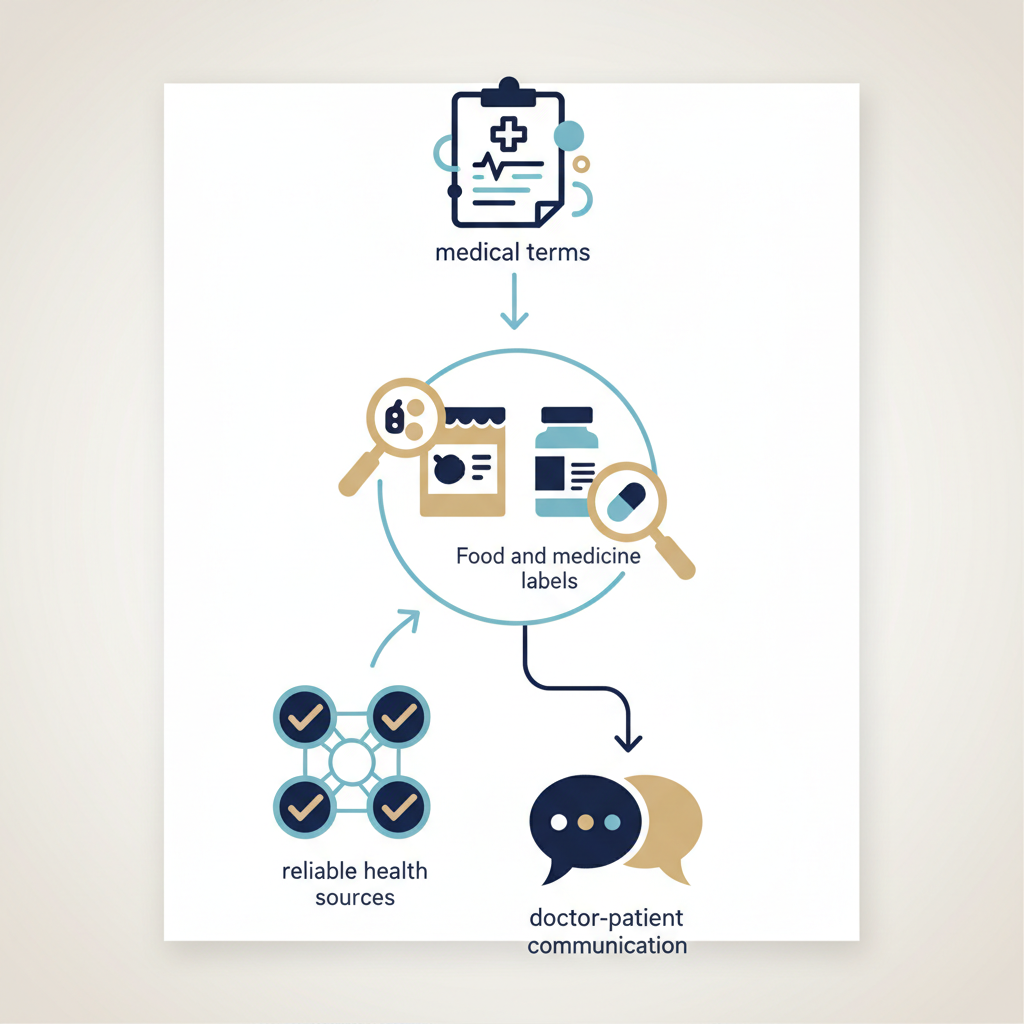
Explore health education step by step
Use the educational guides and practical tools to choose your next learning step.