Mindful Eating Environment Checklist: 10 Steps to Organize Your Space
Author: Feras Alayed
Published:
Updated:
Category: behavioral-nutrition
Reading Time: 10 minutes
Key Takeaways
- Your physical environment plays a crucial role in shaping your food choices and eating behaviors subconsciously.
- Implementing a mindful eating environment checklist helps shift focus from external distractions to internal hunger and fullness cues.
- Simple visual changes, like removing screens and optimizing tableware, support consistency in healthy habits.
- Mindful eating is not a cure for eating disorders but a supportive tool within a comprehensive lifestyle approach.
TL;DR
In a world full of distractions, eating in front of screens or while working has become the norm. This article provides a visual, practical 10-step checklist to organize your eating space. By adjusting lighting, reducing clutter, and managing digital boundaries, you can create an environment that supports mindfulness during meals, making healthier choices easier and more sustainable.
Introduction: The Modern Eating Challenge
Picture this scenario: You come home after a long day, sit on the couch, turn on the TV or scroll through your phone, and start eating your meal. Suddenly, you look down at an empty plate, unable to remember taking the last bite or even what it tasted like. This pattern of distracted eating is a daily reality for many. The issue isn't a lack of willpower; it's that your environment is designed to distract you. When we eat in a chaotic or highly stimulating setting, we lose touch with our body's natural signals. This is where utilizing a mindful eating environment checklist becomes essential. It acts as a practical tool to re-engineer your surroundings in a way that supports your goals, making mindful choices the path of least resistance.
What is a Mindful Eating Environment?
A mindful eating environment is a physical and psychological space intentionally designed to minimize distractions and enhance focus on the eating experience. It is more than just a tidy dining table; it is a cohesive system of visual and sensory cues that signals to your brain, 'This is time exclusively for nourishment.' It is important to define the boundaries of this concept: organizing your space will not cure complex medical conditions or clinical eating disorders. However, it serves as an excellent foundational step within a broader Behavioral Nutrition approach. By reducing external stimuli, you can more effectively engage in mindful eating practices, helping you notice when you are truly hungry and when you are comfortably full.
Why Environmental Design Beats Willpower
Relying solely on willpower to resist cravings is often exhausting and unsustainable. Our brains are wired to respond to environmental cues. If there is a bowl of candy on your desk, your brain's food reward system is triggered every time you see it, requiring constant mental energy to resist. Instead of fighting your environment, modifying it allows positive behaviors to happen almost automatically. Organizing your eating space helps regulate routines, supports consistency, and makes choices clearer, encouraging you to follow through without feeling deprived or stressed.
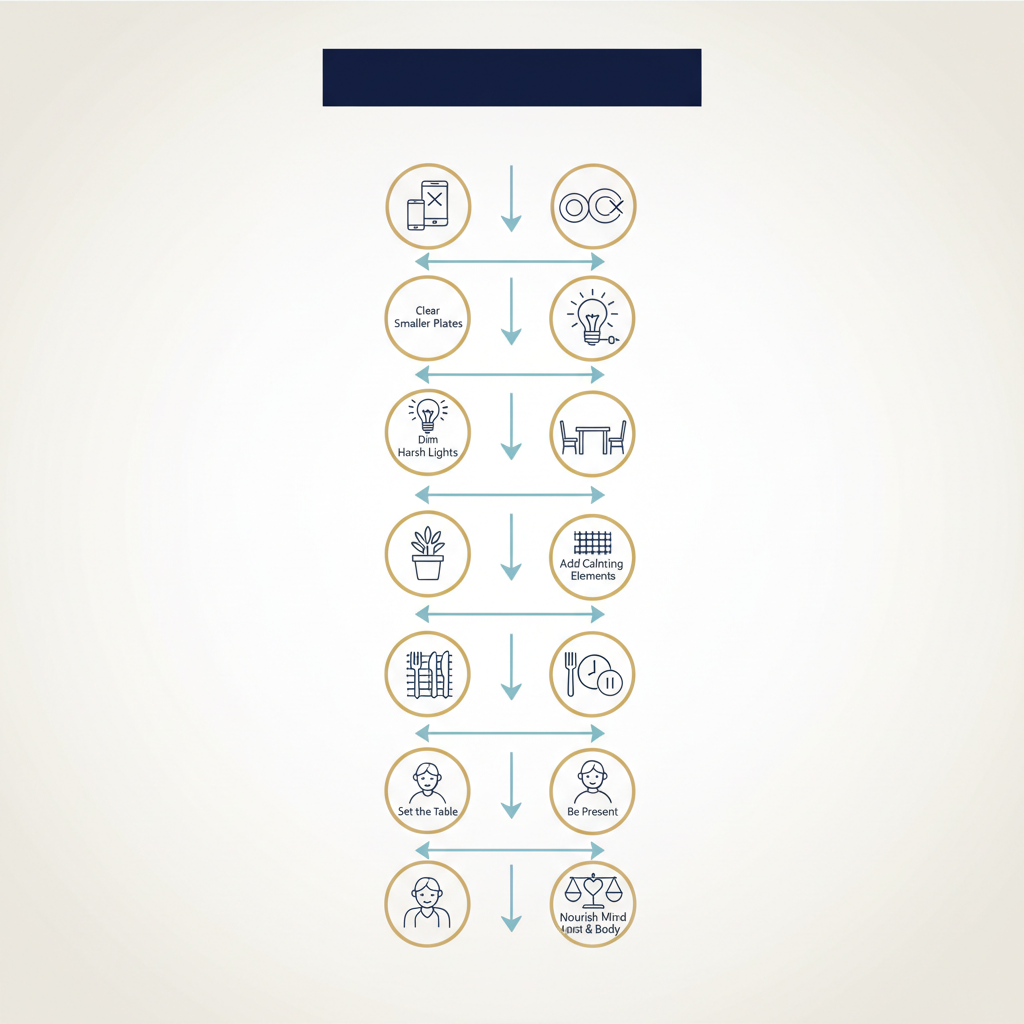
The Ultimate Mindful Eating Environment Checklist (10 Steps)
Use this visual checklist to evaluate and adjust your dining space. You don't have to implement everything at once; start with one or two steps and observe the difference.
[ ] 1. Designate a Specific Eating Zone
Why it matters: When you eat in bed or at your desk, your brain associates those spaces with food, which can trigger cravings even when you aren't hungry.
Actionable step: Choose a specific location (a dining table, a kitchen nook) and make it the only place you consume main meals.
[ ] 2. Clear Digital Distractions (The Screen Rule)
Why it matters: Screens steal your attention away from satiety cues, often leading to mindless overeating.
Actionable step: Make your eating zone a phone-free and TV-free area. If this is too hard, start with just one screen-free meal a day.
[ ] 3. Reduce Visual Clutter
Why it matters: A cluttered environment increases stress levels and distracts from the meal.
Actionable step: Remove papers, bills, and non-food items from the dining table before sitting down.
[ ] 4. Organize Food Visibility (Cue Management)
Why it matters: We eat what we see first. Constantly seeing highly processed foods triggers cravings.
Actionable step: Keep foods you want to limit out of sight (in opaque cabinets), and place supportive foods (like fruit) in plain view.
[ ] 5. Optimize Lighting and Ambiance
Why it matters: Harsh, bright lighting can make you eat faster, while softer lighting encourages relaxation and a slower pace.
Actionable step: Use warm, moderate lighting in your dining area to create a calming atmosphere.
[ ] 6. Choose Appropriate Tableware
Why it matters: The size and color of your plates can influence how you perceive portion sizes.
Actionable step: Use moderately sized plates. Color contrast between the food and the plate can help you better gauge the quantity.
[ ] 7. Create a 'Pause Station' (Water and Napkins)
Why it matters: Having water and napkins readily available encourages you to take brief pauses between bites, giving your brain time to register fullness.
Actionable step: Always place a glass of water and a napkin next to your plate, and try putting your fork down between bites.
[ ] 8. Manage Scents and Sensory Triggers
Why it matters: The sense of smell plays a huge role in preparing the digestive system and feeling satisfied.
Actionable step: Avoid strong artificial air fresheners in the dining area; let the natural aromas of the food be the primary stimulus.
[ ] 9. Align Seating and Posture
Why it matters: Slouching compresses the stomach and can affect digestion and comfort.
Actionable step: Sit in a comfortable chair with your back straight, ensuring the table height is appropriate for you.
[ ] 10. Plan the Post-Meal Transition
Why it matters: Lingering at the table after finishing can lead to mindless picking at leftovers.
Actionable step: Once you finish your meal, clear your plate immediately and transition to another activity or room.
Myths vs. Facts About Eating Spaces
| Common Myth | The Practical Fact |
|---|---|
| You need a fancy dining room to practice mindful eating. | Any dedicated, clean space works perfectly, even a small corner in the kitchen. |
| Mindful eating guarantees rapid weight loss. | It is a tool to support behavior and improve your relationship with food, not a weight-loss program. |
| You can never eat in front of the TV again. | The goal is awareness. You can consciously choose specific times, but the general rule is to minimize distractions. |
| Changing plate size instantly cures overeating. | It is a helpful visual aid, but it works best when combined with paying attention to internal hunger cues. |
Common Pitfalls and How to Correct Them
When trying to implement a mindful eating environment checklist, some fall into the perfectionism trap. A common mistake is trying to change everything in one day. This leads to overwhelm and abandoning the idea entirely. The Correction: Pick just one step, like keeping your phone off the table, and focus on it for a week before moving to the next. Another mistake is using the checklist as a tool for punishment or strict restriction. Remember, the goal is to learn how to change your relationship with food to be more positive and aware, not to create rigid rules that increase stress.
Daily Scenarios: Applying the Checklist
To make this practical, here is how you can apply this checklist in different scenarios:
Scenario 1: The Remote Worker
Challenge: The work desk is also the dining table.
Application: Before lunch, the worker closes the laptop screen (Step 2), lays down a small placemat to change the space's appearance (Step 1), and brings a glass of water (Step 7). This simple shift tells the brain that work time is paused and nourishment time has begun.
Scenario 2: A Parent with a Busy Family Schedule
Challenge: The dining table is cluttered with toys and homework.
Application: The family dedicates 3 minutes before dinner to clear the table of non-food items (Step 3). The lighting is slightly dimmed (Step 5) to calm the atmosphere after a loud day, helping everyone eat more peacefully.
Preparing for a Professional Consultation
If you find it extremely difficult to manage your eating behaviors despite improving your environment, it might be time to consult a dietitian or therapist. To organize your thoughts before the visit, ask yourself:
- Am I eating in response to physical hunger or stress and emotions? (See our guide on breaking emotional eating).
- At what times do I feel a loss of control over my food choices?
- Are there specific environmental triggers I cannot manage alone?
Documenting your observations will help the professional provide guidance tailored to your situation.
Frequently Asked Questions
Do I need to buy new tableware to apply this checklist?
No, you can use what you already have. The idea is how you utilize available items, such as choosing the smallest plates you own for snacks, or simply setting the table differently.
What if I live with people who don't care about mindful eating?
You can focus on your own space. Organize your section of the table, and focus on your plate and your body's cues. Your calmness and focus might inspire others over time.
Does the eating environment affect daily focus?
Yes, eating mindfully in a calm environment can improve digestion and reduce post-meal sluggishness, supporting your energy. You can also incorporate focus foods for brain performance into your structured meals.
Is this checklist a substitute for medical nutrition plans?
Absolutely not. This checklist is a tool to support positive behaviors, not a replacement for medical advice or treatment plans prescribed by licensed professionals, especially for conditions like insulin resistance or eating disorders.
How long does it take to get used to this new environment?
It varies from person to person. Building habits requires time and consistency. Focus on gradual progress rather than immediate perfection.
Conclusion and Next Step
Designing an environment that supports mindful eating is not a luxury; it is a practical, effective strategy to reduce distractions and enhance your connection to your body's signals. By implementing a mindful eating environment checklist, you are not imposing restrictions on yourself; you are removing the obstacles that prevent you from enjoying your food consciously and peacefully. Remember that these environmental changes are part of a comprehensive lifestyle aimed at sustainably supporting your overall well-being.
Medical Disclaimer: The information provided in this article is for educational and informational purposes only and does not constitute professional medical advice, diagnosis, or treatment. Always consult your physician or a licensed dietitian before making significant changes to your lifestyle.
Are you ready to see how your daily habits can support your goals? Start your health assessment internally now to discover the best steps for your lifestyle.
Further Education
- Explore the metabolic health education hub
- Learn how to read research summaries
- Use the educational health assessment

Ready to choose a clearer health starting point?
Start with a short educational assessment to explore tools and resources that may fit your goal. It is not a medical diagnosis.
Continue learning at Behavioral Nutrition.