Navigating Women's Health Appointment Questions in Canada: A Comprehensive Guide to Advocacy and Metabolic Wellness
Author: Feras Alayed
Published:
Category: womens-health
Reading Time: 7 minutes
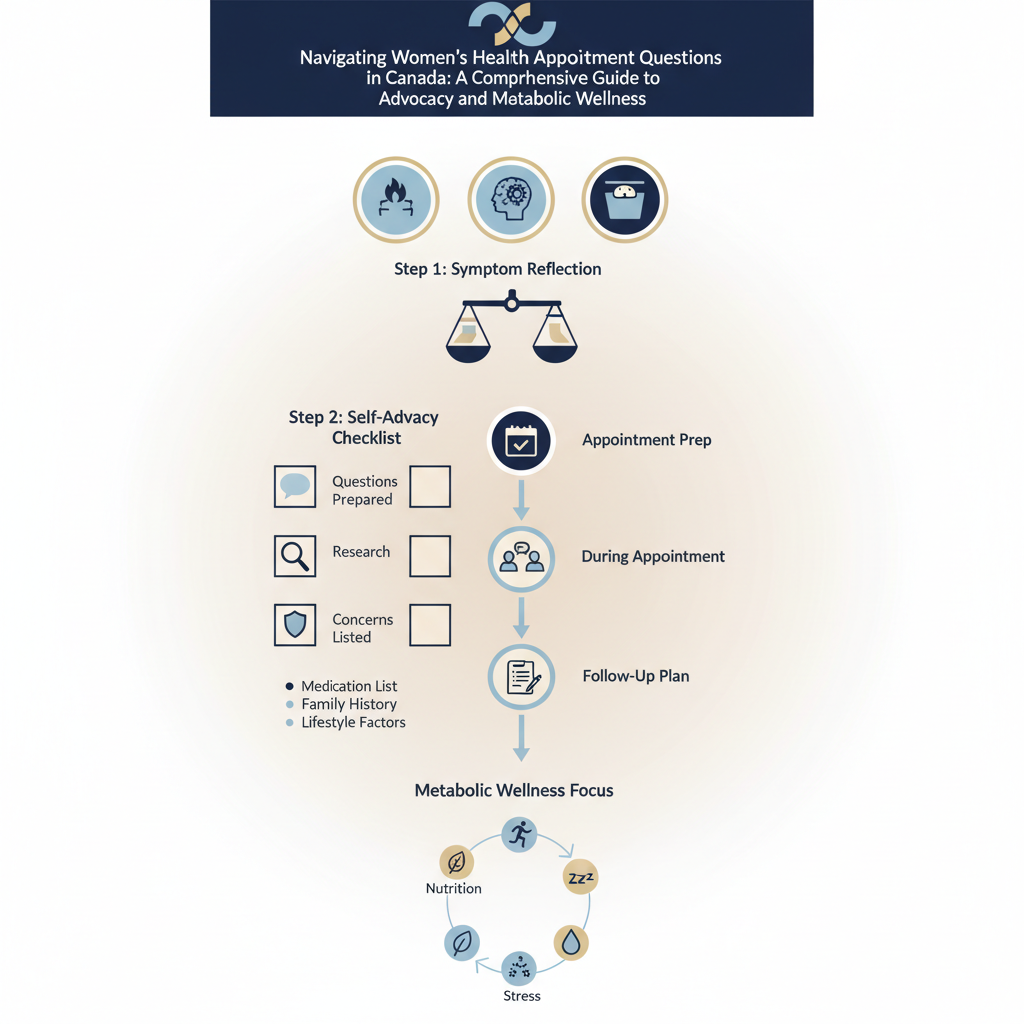
Key Takeaways
- Use Canadian-specific screening guidelines for Pap tests and mammograms.
- Track metabolic markers like fasting glucose in mmol/L.
- Prepare a written list of symptoms to stay focused during short visits.
- Advocate for clear follow-up timelines and result interpretations.
Introduction: The Challenge of the 15-Minute Appointment
For many women across Canada, from the busy streets of Toronto to the rural communities of the Maritimes, a primary care appointment can feel like a race against the clock. The Canadian healthcare system, while providing essential universal access, often operates on a high-volume model where a standard consultation lasts between 10 and 15 minutes. This time constraint can lead to missed opportunities for deep health discussions, leaving many feeling unheard or overwhelmed. The desired outcome for any patient is a clear understanding of their current health status and a collaborative plan for the future. However, sustaining this level of engagement is difficult when the system is strained. This is where health literacy and preparation become your most powerful tools. By entering your appointment with a structured set of women health appointment questions Canada, you shift the dynamic from passive recipient to active participant.
Preparing for Your Canadian Health Visit
Preparation begins long before you step into the clinic. In Canada, health records are often fragmented between different providers. Start by consolidating your personal health history, including any recent changes in your menstrual cycle, sleep patterns, or energy levels. Understanding educational questions for women's health visits can help you frame your concerns effectively. Write down your top three priorities. If you are managing weight or metabolic concerns, note your measurements in cm and kg. If you are exploring structured lifestyle supports, such as the structured reflection approach, be prepared to discuss how these fit into your daily routine without replacing medical advice. Remember, the goal is to build trust with your practitioner by providing clear, concise data.
General Health and Metabolic Markers
Reproductive and Hormonal Health Questions
Reproductive health needs change significantly across the lifespan. Whether you are navigating your 20s or entering your 50s, specific questions are necessary. Ask about the current Canadian Task Force on Preventive Health Care guidelines for cervical screening (Pap tests) and breast health. You might ask: 'Based on my age and risk factors, what is the recommended interval for my next screening?' For women over 40, hormonal shifts can impact everything from mood to metabolism. Discussing a balanced plate for hormonal shifts can be a helpful way to introduce lifestyle changes to your doctor. If you are experiencing symptoms of perimenopause, ask: 'How do my current symptoms align with typical perimenopausal transitions, and what non-pharmacological supports do you recommend for symptom management?' This is where the structured reflection approach, which focuses on timing and fibre intake, may be discussed as a supportive framework for maintaining energy levels during hormonal fluctuations.
Mental Health and the Canadian Climate
The Canadian climate, characterized by long winters and reduced sunlight, can significantly impact women's mental and hormonal health. Seasonal Affective Disorder (SAD) is a reality for many. During your appointment, consider asking: 'How might the lack of sunlight be affecting my Vitamin D levels and overall mood?' and 'What resources are available for mental health support within our provincial health plan?' Mental wellness is intrinsically linked to metabolic health. High stress can lead to cortisol spikes, which in turn affect blood sugar regulation. By using cognitive empowerment skills, you can better manage the psychological aspects of health journeys. Don't hesitate to discuss how your lifestyle choices, including diet and exercise, are impacting your mental clarity and emotional resilience.
Advocating for Referrals and Follow-ups
One of the most critical parts of the Canadian health journey is the follow-up. If a concern is not resolved, or if you require specialized care, you must know how to ask for a referral. Ask: 'If these symptoms persist, what is the next diagnostic step?' or 'Can you refer me to a specialist (e.g., endocrinologist, gynecologist) for a more detailed assessment?' Once an appointment is over, the work continues. Ensure you understand the follow-up process for test results. In many Canadian provinces, 'no news is good news' is the standard, but as an advocate for your own health, you should ask for a specific timeline for when results will be available and how you can access them (e.g., through an online patient portal).

Source Verification Checklist
When researching health information in Canada, use this checklist to ensure accuracy: 1. Does the information come from a .gc.ca or .ca (educational/government) domain? 2. Is the content reviewed by a Canadian-licensed healthcare professional? 3. Does the source use metric units (mmol/L, kg) consistent with Canadian standards? 4. Are the screening guidelines consistent with the Canadian Task Force on Preventive Health Care? 5. Does the site avoid making 'cure' or 'guaranteed' claims? If you encounter information that seems too good to be true, flag it for human review or discuss it with your doctor.
Medical Disclaimer
Take the Next Step in Your Health Journey
Ready to understand your metabolic needs better? Start by evaluating your current habits and goals.
ابدأ تقييمك الصحيFrequently Asked Questions
What is the scope of this guide?
This guide is educational and helps readers organize questions and observations for further learning.
How should I use the information?
Use it to review terminology, note personal questions, and identify sources that require verification.
When should I seek professional guidance?
Discuss personal symptoms, medicines, diagnoses, or treatment decisions with a licensed professional.
Further Education
- Explore the metabolic health education hub
- Learn how to read research summaries
- Use the educational health assessment
Explore the topic with reliable health education
Use ATHAR’s educational guides and practical tools to consider your next learning step.