Ozempic alternatives Canada natural: Shortage, evidence and practical options
Author: Feras Alayed
Published:
Updated:
Category: canadian-health
Reading Time: 11 minutes
Key Takeaways
- Canada experienced intermittent shortages of Ozempic (semaglutide) in 2023–2024; Health Canada monitored supply and worked with provinces and manufacturers to prioritise patients with diabetes. ([canada.ca](https://www.canada.ca/en/health-canada/services/drugs-health-products/drug-products/drug-shortages/information-consumers/supply-notices/ozempic.html?utm_source=openai))
- GLP‑1 and GIP/GLP‑1 drugs such as semaglutide (Ozempic/Wegovy) and tirzepatide (Mounjaro) show large average weight loss in clinical trials, but they are prescription medicines with cost, supply, and side‑effect considerations. ([nejm.org](https://www.nejm.org/doi/full/10.1056/NEJMoa2206038?utm_source=openai))
- Practical, evidence‑based natural strategies — dietary soluble fibre, time‑restricted eating (TRE), Canada’s Food Guide eating patterns, and consistent physical activity — can improve glycaemia, insulin sensitivity and support weight management. ([pubmed.ncbi.nlm.nih.gov](https://pubmed.ncbi.nlm.nih.gov/33162192/?utm_source=openai))
- The rising prevalence of overweight and obesity in Canada (recent data: two‑thirds of adults classified as overweight/obese in 2022–2024) increases demand for weight therapies and has driven public drug spending. ([www150.statcan.gc.ca](https://www150.statcan.gc.ca/n1/daily-quotidien/251002/dq251002b-eng.htm?HPA=1&utm_source=openai))
- For Canadians who can’t access GLP‑1s due to shortages, cost or eligibility, structured lifestyle strategies plus supportive products like the Feel Great system (Balance soluble‑fibre matrix, Unimate yerba‑mate, and the 4‑4‑12 protocol) may help support metabolic health when used under medical supervision. Not a medication — may help support post‑meal glucose response and appetite control.
TL;DR
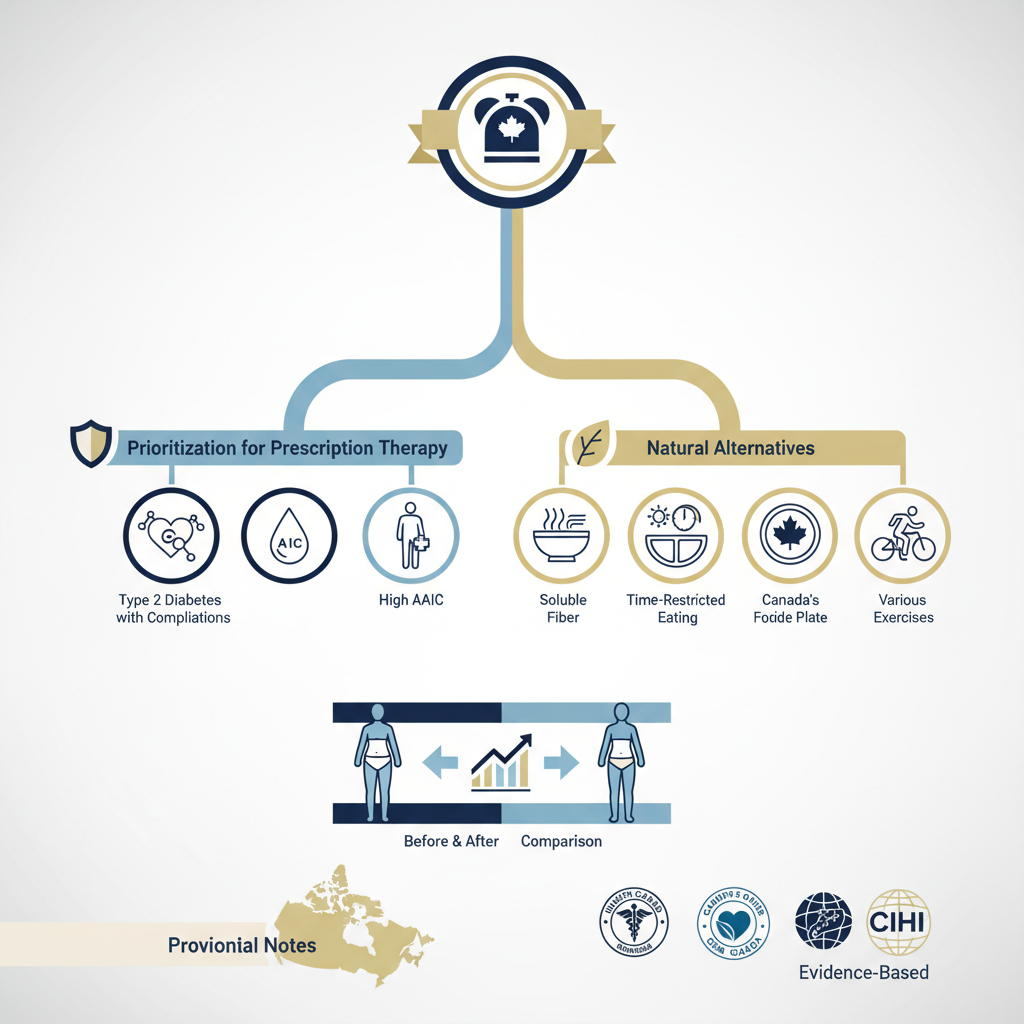
Intermittent Ozempic shortages in Canada (2023–2024) prompted Health Canada and provinces to prioritise supply for people with diabetes. While GLP‑1/GIP‑GLP‑1 medicines have strong RCT evidence for weight loss, evidence supports natural alternatives — soluble fibre, time‑restricted eating, Canada’s Food Guide patterns and exercise — as practical options for many Canadians. Talk with your family doctor or diabetes care team before making medication changes. ([canada.ca](https://www.canada.ca/en/health-canada/services/drugs-health-products/drug-products/drug-shortages/information-consumers/supply-notices/ozempic.html?utm_source=openai))
🇨🇦 Thousands of Canadians are using Feel Great to support their metabolic health naturally. Learn more & order here →
Introduction: The Canadian context
As GLP‑1s moved from diabetes care into public conversation about weight loss, Canada faced real supply consequences. Health Canada published supply notices and collaborated with Diabetes Canada, provincial authorities and manufacturers to protect access for people with type 2 diabetes. Meanwhile, Statistics Canada and federal surveys show a sharp rise in overweight and obesity: recent Canadian Health Measures Survey results for 2022–2024 indicate roughly two‑thirds of adults are now classified as overweight or living with obesity — a key driver behind rising interest in weight therapies. ([canada.ca](https://www.canada.ca/en/health-canada/services/drugs-health-products/drug-products/drug-shortages/information-consumers/supply-notices/ozempic.html?utm_source=openai))
What happened with Ozempic and other GLP‑1s?
Beginning in 2023, surging demand for semaglutide (Ozempic/Wegovy) and related agents led to intermittent shortages of specific pen strengths in Canada. Health Canada posted supply notices and convened stakeholders; provinces enacted measures to prioritise patients who need these medicines for diabetes. For example, British Columbia introduced limits on dispensing to protect supply for Canadian residents, and Quebec’s RAMQ authorised substitutions in response to interruptions. These steps were aimed at maintaining access for people with type 2 diabetes while manufacturers ramped supply. ([canada.ca](https://www.canada.ca/en/health-canada/services/drugs-health-products/drug-products/drug-shortages/information-consumers/supply-notices/ozempic.html?utm_source=openai))
How effective are prescription GLP‑1 and GIP/GLP‑1 medicines?
Semaglutide and tirzepatide are supported by large phase‑3 randomized trials showing substantial weight reductions when used alongside lifestyle interventions. Tirzepatide (SURMOUNT trials) produced mean weight losses in the double‑digit percentage range for many participants; semaglutide’s STEP trials also showed significant benefits for weight management. These medicines are clinically useful in appropriate patients, but are prescription‑only, can cause gastrointestinal side effects, and involve long‑term management decisions. ([nejm.org](https://www.nejm.org/doi/full/10.1056/NEJMoa2206038?utm_source=openai))
Who should be prioritised for GLP‑1 therapy?
- People with type 2 diabetes and high cardiovascular or renal risk where GLP‑1s are recommended for cardiorenal protection. ([guidelines.diabetes.ca](https://guidelines.diabetes.ca/cpg/chapter-13-2024-update?utm_source=openai))
- Patients for whom prior lifestyle interventions have not achieved clinical goals and where a prescriber deems medication appropriate.
- Those who can access long‑term follow‑up and can manage side effects and costs.
Natural, evidence‑based alternatives and complements
If GLP‑1s are unavailable, unaffordable, or not a suitable option, consider these evidence‑based strategies which are accessible across Canada (many ship coast‑to‑coast). All should be used with appropriate medical oversight when you are taking glucose‑lowering drugs.
Soluble (viscous) fibre — an affordable, well‑studied tool
High‑quality meta‑analyses show that supplemental soluble/viscous fibre (psyllium, oat β‑glucan, glucomannan) reduces fasting plasma glucose (FPG), HbA1c and postprandial glucose. One systematic review reported reductions in FPG of roughly 0.6–0.9 mmol/L and improvements in insulin resistance metrics in adults with type 2 diabetes. Practical sources: oats, legumes, psyllium husk, and purpose‑formulated soluble‑fibre products. Introduce fibre gradually and maintain hydration. ([pubmed.ncbi.nlm.nih.gov](https://pubmed.ncbi.nlm.nih.gov/33162192/?utm_source=openai))
Time‑restricted eating (TRE) and the 4‑4‑12 framework
TRE (a form of intermittent fasting) restricts daily eating to a consistent window and has demonstrated improvements in fasting glucose, insulin, triglycerides and blood pressure in randomized trials and meta‑analyses. Protocols vary; many Canadians find a 10–12 hour eating window feasible while others prefer shorter windows under clinician guidance. The Feel Great 4‑4‑12 approach is a structured TRE framework that pairs timing with balanced meals; clinical studies of TRE support metabolic benefits when combined with healthy food choices. ([bmjmedicine.bmj.com](https://bmjmedicine.bmj.com/content/bmjmed/5/1/e001071.full.pdf?utm_source=openai))
Follow Canada’s Food Guide — practical food pattern changes
Canada’s Food Guide recommends lots of vegetables and fruit, whole grains, and a variety of protein foods. Shifting plate composition, increasing protein and fibre at meals, and reducing highly processed foods are foundational strategies supported by Canadian dietary guidance. These changes help appetite control and provide nutrient support during weight loss. ([canada.ca](https://www.canada.ca/en/health-canada/services/food-guide.html?utm_source=openai))
Move regularly and preserve muscle
Regular aerobic exercise plus resistance training preserves lean mass during calorie restriction and improves insulin sensitivity. Canadian recommendations (150 minutes of moderate–vigorous activity weekly plus strength work twice weekly) are achievable with home or community programs. Heart & Stroke highlights the strong link between physical activity and cardiometabolic health. ([heartandstroke.ca](https://www.heartandstroke.ca/heart-disease/risk-and-prevention/lifestyle-risk-factors?utm_source=openai))
Practical 6‑step plan (Canada‑friendly)
- Talk to your family doctor or diabetes team before stopping or changing medications — provinces have different formulary rules and substitution policies. ([ramq.gouv.qc.ca](https://www.ramq.gouv.qc.ca/en/media/15786?utm_source=openai))
- Get baseline measures: weight, waist, fasting glucose and A1C; Diabetes Canada cites FPG ≥7.0 mmol/L for diabetes and defines IFG as 6.1–6.9 mmol/L. ([guidelines.diabetes.ca](https://guidelines.diabetes.ca/cpg/chapter3?utm_source=openai))
- Add viscous soluble fibre (oats, psyllium, glucomannan) gradually — a pragmatic supplemental dose may be 5–12 g/day extra, depending on product and tolerance. ([pubmed.ncbi.nlm.nih.gov](https://pubmed.ncbi.nlm.nih.gov/33162192/?utm_source=openai))
- Try a consistent TRE eating window (e.g., 10–12 hours) and adapt to work, family and Canadian seasons; the 4‑4‑12 is one clinician‑guided model. ([bmjmedicine.bmj.com](https://bmjmedicine.bmj.com/content/bmjmed/5/1/e001071.full.pdf?utm_source=openai))
- Follow Canada’s Food Guide for plate composition and increase daily movement. ([canada.ca](https://www.canada.ca/en/health-canada/services/food-guide.html?utm_source=openai))
- Use evidence‑based supportive products (e.g., a soluble‑fibre matrix, yerba‑mate extract) only after checking Health Canada labeling / NPN status and discussing with your clinician — these are adjuncts, not replacements for medical care. ([canada.ca](https://www.canada.ca/en/health-canada/services/food-guide.html?utm_source=openai))
How Feel Great may support Canadians (balance + Unimate + 4‑4‑12)
The Feel Great system is a lifestyle support toolkit: Balance is a soluble‑fibre matrix designed to help moderate post‑meal glucose excursions; Unimate is a yerba‑mate extract with chlorogenic acids to support alertness and energy in short‑term studies; and the 4‑4‑12 TRE protocol provides a consistent eating schedule. When used alongside whole‑food eating (Canada’s Food Guide), exercise and medical oversight, these elements may help individuals manage appetite and post‑meal glucose rises. They are not medications and should be used as part of a comprehensive plan agreed with your healthcare team. ([pubmed.ncbi.nlm.nih.gov](https://pubmed.ncbi.nlm.nih.gov/33162192/?utm_source=openai))
People also ask
- Is there still an Ozempic shortage in Canada? — Health Canada posts up‑to‑date supply notices; intermittent shortages occurred in 2023–2024 and provinces enacted protective measures. Check with your pharmacist. ([canada.ca](https://www.canada.ca/en/health-canada/services/drugs-health-products/drug-products/drug-shortages/information-consumers/supply-notices/ozempic.html?utm_source=openai))
- What natural alternatives exist to Ozempic? — Evidence supports soluble fibre, time‑restricted eating, diet quality per Canada’s Food Guide, and exercise as effective, low‑cost strategies. ([pubmed.ncbi.nlm.nih.gov](https://pubmed.ncbi.nlm.nih.gov/33162192/?utm_source=openai))
- Will a fibre supplement replace a prescription? — No. Supplements can be supportive but will not typically match the magnitude of weight loss seen in GLP‑1 RCTs; they may improve glucose control and appetite management. ([pubmed.ncbi.nlm.nih.gov](https://pubmed.ncbi.nlm.nih.gov/33162192/?utm_source=openai))
- Can I buy these supplements in any province? — Reputable vendors ship across Canada (BC to Newfoundland); check product labeling, Health Canada guidance and NPNs where relevant. ([canada.ca](https://www.canada.ca/en/health-canada/services/food-guide.html?utm_source=openai))
- Should I stop GLP‑1s and try TRE/fibre instead? — Don’t stop prescribed medicines without medical advice; many people benefit from combining medical and lifestyle approaches. ([guidelines.diabetes.ca](https://guidelines.diabetes.ca/cpg/chapter-13-2024-update?utm_source=openai))
FAQ
- Q: How are diabetes and prediabetes defined in Canada?
A: Diabetes Canada uses fasting plasma glucose (FPG) ≥7.0 mmol/L for diabetes; impaired fasting glucose (IFG) is defined as FPG 6.1–6.9 mmol/L, and A1C 6.0–6.4% is considered prediabetes in their guidance. Discuss individual interpretation with your clinician. ([guidelines.diabetes.ca](https://guidelines.diabetes.ca/cpg/chapter3?utm_source=openai)) - Q: What blood sugar targets should I aim for?
A: For many adults with type 2 diabetes, Diabetes Canada suggests fasting/preprandial targets ~4.0–7.0 mmol/L and 2‑hour postprandial targets of 5.0–10.0 mmol/L, depending on individual factors. ([diabetes.ca](https://www.diabetes.ca/health-care-providers/clinical-practice-guidelines/chapter-8?utm_source=openai)) - Q: Do provincial drug plans cover semaglutide/tirzepatide for weight?
A: Coverage varies by province and indication (diabetes vs obesity). Many public plans prioritise treatment for diabetes or specific criteria; check your provincial formulary or RAMQ in Quebec. ([ramq.gouv.qc.ca](https://www.ramq.gouv.qc.ca/en/media/15786?utm_source=openai)) - Q: What dose of viscous fibre is effective?
A: Clinical studies use variable doses; meta‑analyses suggest measurable effects with added viscous fibre in the ~5–12 g/day range depending on type (psyllium, β‑glucan, glucomannan). Start low and increase slowly to reduce GI side effects. ([pubmed.ncbi.nlm.nih.gov](https://pubmed.ncbi.nlm.nih.gov/33162192/?utm_source=openai)) - Q: Is TRE safe if I take glucose‑lowering medication?
A: TRE can change glucose patterns and may increase hypoglycaemia risk if you take insulin or insulin secretagogues. Do TRE only under clinician guidance with appropriate monitoring. ([bmjmedicine.bmj.com](https://bmjmedicine.bmj.com/content/bmjmed/5/1/e001071.full.pdf?utm_source=openai))
References & scientific sources
- Health Canada — Supply of Ozempic and other GLP‑1 receptor agonists: notice and updates. ([canada.ca](https://www.canada.ca/en/health-canada/services/drugs-health-products/drug-products/drug-shortages/information-consumers/supply-notices/ozempic.html?utm_source=openai))
- Diabetes Canada — Clinical Practice Guidelines and statements on GLP‑1 supply. ([diabetes.ca](https://www.diabetes.ca/media-room/news/response-to-the-anticipated-ozempic-supply-disrupt?form=donate&s_appealCode=1058-350%3A+11984+%2F+30110+%2F+DM-NAT+ONLINE+Landing+Page+2025+%2F+Online+donation&utm_source=openai))
- Statistics Canada — Canadian Health Measures Survey, prevalence of overweight and obesity, 2022–2024. ([www150.statcan.gc.ca](https://www150.statcan.gc.ca/n1/daily-quotidien/251002/dq251002b-eng.htm?HPA=1&utm_source=openai))
- Canadian Institute for Health Information (CIHI) — Ozempic the leading medication driving growth in public drug spending. ([cihi.ca](https://www.cihi.ca/en/news/ozempic-the-leading-medication-driving-growth-in-public-drug-spending-in-canada?utm_source=openai))
- NEJM — Tirzepatide (SURMOUNT) trials for obesity. ([nejm.org](https://www.nejm.org/doi/full/10.1056/NEJMoa2206038?utm_source=openai))
- PubMed / systematic review — Soluble fibre supplementation improves glycaemic control. ([pubmed.ncbi.nlm.nih.gov](https://pubmed.ncbi.nlm.nih.gov/33162192/?utm_source=openai))
- BMJ Medicine — Systematic review and network meta‑analysis on time‑restricted eating and metabolic outcomes. ([bmjmedicine.bmj.com](https://bmjmedicine.bmj.com/content/bmjmed/5/1/e001071.full.pdf?utm_source=openai))
- Health Canada — Canada’s Food Guide. ([canada.ca](https://www.canada.ca/en/health-canada/services/food-guide.html?utm_source=openai))
- Heart & Stroke Foundation — lifestyle risk factors and physical activity guidance. ([heartandstroke.ca](https://www.heartandstroke.ca/heart-disease/risk-and-prevention/lifestyle-risk-factors?utm_source=openai))
- BC Government news release — protecting semaglutide supply. ([news.gov.bc.ca](https://news.gov.bc.ca/releases/2023HLTH0046-000554?utm_source=openai))
Medical disclaimer
This article is informational and written for a Canadian audience. It is not medical advice. Do not stop, start, or change prescription medicines without talking to your healthcare provider. For drug shortage questions and provincial coverage, contact your pharmacist or provincial drug plan. The Feel Great system and any supplements are lifestyle supports and are not medicines; they may help support metabolic patterns but should be used under clinical guidance when you take glucose‑lowering drugs.

Related ATHAR paths
🇨🇦 Ready to Start Your Health Transformation?
Join thousands of Canadians who have improved their metabolic health with the Feel Great system. Backed by 50+ clinical studies and listed in the Physicians' Desk Reference (PDR).
✅ Ships to all provinces: BC, Alberta, Saskatchewan, Manitoba, Ontario, Quebec, New Brunswick, Nova Scotia, PEI, Newfoundland & Labrador | 90-Day Money-Back Guarantee