Break the Stress-Eating Cycle: stress eating cycle breaking strategies
Author: Feras Alayed
Published:
Updated:
Category: mental-nutrition
Reading Time: 11 minutes
Key takeaways
- The stress-eating cycle ties stress to reward-driven eating and impaired emotion regulation. ([cambridge.org](https://www.cambridge.org/core/services/aop-cambridge-core/content/view/C69DF0C844DFF0DD87E99ECFA7B50D98/S0029665120000166a.pdf/emotional_eating_and_obesity_in_adults_the_role_of_depression_sleep_and_genes.pdf?utm_source=openai))
- The gut–brain axis is a modifiable pathway linking diet to mood and resilience. ([pubmed.ncbi.nlm.nih.gov](https://pubmed.ncbi.nlm.nih.gov/33693453/?utm_source=openai))
- Effective strategies include trigger mapping, cognitive reappraisal, short mindfulness interventions, structured exercise, and targeted dietary changes. ([pubmed.ncbi.nlm.nih.gov](https://pubmed.ncbi.nlm.nih.gov/34261994/?utm_source=openai))
- Small, measurable daily steps produce durable change when combined and supported socially or digitally.
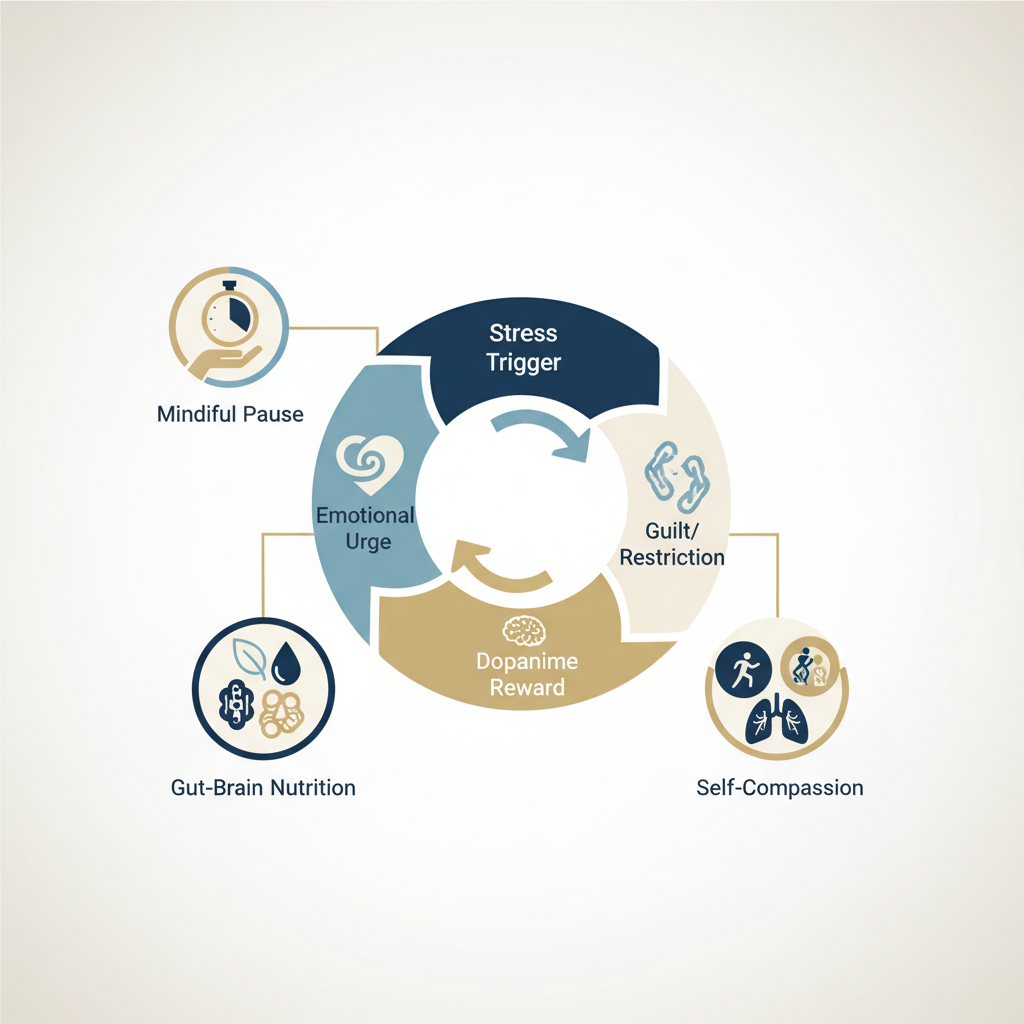
Introduction: Why "stress eating cycle breaking strategies" matters
"Stress eating cycle breaking strategies" is a focused topic within the Mental Health & Nutrition pillar because it bridges behavior, biology, and daily habit design. This supporting article gives you practical, evidence-based methods to interrupt stress-driven eating—rooted in neuroscience, nutritional psychiatry, and behavioral medicine. We aim for applicability in diverse everyday settings and cultural contexts.
Why focus here? Stress-driven and emotional eating affect more than body weight: they impact mood stability, cognitive function, and long-term metabolic health. Since 2020, literature in nutritional psychiatry and gut–brain science has grown rapidly, linking dietary patterns and the microbiome to mood and stress responses. ([bmj.com](https://www.bmj.com/content/369/bmj.m2382?utm_source=openai))
Understanding the Stress-Eating Cycle (300–500 words)
The stress-eating cycle typically follows: a stressor (work deadline, family conflict) → negative affect (anxiety, boredom) → consumption of energy-dense 'comfort' foods → transient relief via reward pathways → subsequent guilt, low energy, or dysregulated blood sugar → renewed stress and repetition. Over time, these episodes can become automatic cues—certain times of day, people, or moods become conditioned triggers for eating. Observational and clinical research links emotional or stress-related eating to higher rates of obesity and mood disturbance, highlighting the cycle as a therapeutic target. ([cambridge.org](https://www.cambridge.org/core/services/aop-cambridge-core/content/view/C69DF0C844DFF0DD87E99ECFA7B50D98/S0029665120000166a.pdf/emotional_eating_and_obesity_in_adults_the_role_of_depression_sleep_and_genes.pdf?utm_source=openai))
From a clinical standpoint, stress-eating is a form of emotion regulation. Rather than a failure of willpower, it is often the brain’s fast solution to reduce distress. Recognizing this reduces shame and opens the door to practical interventions focused on skills and environment rather than blame.
Neural and Hormonal Mechanisms (300–500 words)
Several biological mechanisms underpin stress-driven eating. The mesolimbic dopamine circuit mediates reward sensitivity; stress increases cortisol and catecholamines that can enhance appetite for palatable foods. Shifts in insulin sensitivity and leptin signaling during chronic stress may also heighten hedonic eating. Further, inflammation and gut-derived metabolites can alter neurotransmitter pathways implicated in mood and craving. Reviews highlight these endocrine, neural, and immune pathways as plausible mechanisms linking stress, diet, and mood. ([pubmed.ncbi.nlm.nih.gov](https://pubmed.ncbi.nlm.nih.gov/32827123/?utm_source=openai))
Understanding these mechanisms explains why purely cognitive advice ("just say no") often fails—the body is producing signals that bias decision-making toward immediate reward. Interventions that target physiological states (sleep, nutrition, activity) alongside cognitive skills tend to be more effective.
Gut–Brain Axis and the Mood–Food Connection (300–500 words)
The gut–brain axis describes bidirectional communication between the gut, its resident microbiota, and the brain, via neural, hormonal, and immune routes. Diet shapes microbial composition; microbes produce metabolites that influence inflammation and neurotransmitter systems (e.g., tryptophan–serotonin pathways). Reviews from 2020–2021 emphasize the potential of diet and microbiome-targeted therapies to influence mood and anxiety symptoms, though larger randomized trials are still needed. ([pmc.ncbi.nlm.nih.gov](https://pmc.ncbi.nlm.nih.gov/articles/PMC8560095/?utm_source=openai))
Practically, this supports dietary recommendations that stabilize blood sugar and provide substrates for favorable microbial metabolism: fiber-rich plant foods, fermented foods, healthy fats (omega-3s), and reduced ultra-processed foods. While not a panacea, such approaches can reduce inflammation and provide physiological resilience against stress-triggered cravings. ([pubmed.ncbi.nlm.nih.gov](https://pubmed.ncbi.nlm.nih.gov/33693453/?utm_source=openai))
Evidence-Based Behavioral Strategies (300–500 words)
Behavioral strategies are central to interrupting stress-eating. Key steps:
- Trigger mapping: Track mood, context, and food to identify reliable triggers over 2 weeks.
- Delay-and-decide: Delay immediate action by 10–15 minutes and select from pre-made, healthy options.
- Brief mindfulness/self-compassion interventions: Short, digitally delivered programs showed reductions in stress-related eating in randomized trials. ([pubmed.ncbi.nlm.nih.gov](https://pubmed.ncbi.nlm.nih.gov/33162922/?utm_source=openai))
- Environmental design: Remove or make tempting foods less accessible; pre-portion treats.
- Replacement responses: Create non-food coping strategies—call a friend, go for a 10-minute walk, or practice a breathing exercise.
Combining these approaches with supportive physical changes (regular meals, sleep, and exercise) yields the best outcomes. Trials that layered mindful eating with weight-loss programs or exercise reported meaningful decreases in hedonic eating episodes. ([pubmed.ncbi.nlm.nih.gov](https://pubmed.ncbi.nlm.nih.gov/34261994/?utm_source=openai))
Nutritional Interventions & Mood-Supporting Nutrients (300–500 words)
Dietary steps that reduce stress-driven eating include:
- Balanced meals with protein, complex carbs, and healthy fats to stabilize blood glucose.
- High-fiber plant foods to support a beneficial microbiome. ([pubmed.ncbi.nlm.nih.gov](https://pubmed.ncbi.nlm.nih.gov/33693453/?utm_source=openai))
- Omega-3 fatty acids (EPA/DHA) associated with modest mood benefits in some trials.
- Limiting added sugars and ultra-processed foods to reduce inflammation and mood volatility. ([bmj.com](https://www.bmj.com/content/369/bmj.m2382?utm_source=openai))
- Consider fermented foods or targeted probiotics as adjuncts—evidence is promising but preliminary. ([pubmed.ncbi.nlm.nih.gov](https://pubmed.ncbi.nlm.nih.gov/33271426/?utm_source=openai))
A practical tip: prepare 'stress-proof' meals and snacks (e.g., whole-grain sandwiches with lean protein, Greek yogurt with fruit and nuts) and keep them accessible when you anticipate busy or stressful hours.
Mind–Body Techniques: Mindfulness, Sleep, and Exercise (300–500 words)
Three non-dietary levers significantly affect stress-eating:
- Sleep: Adequate sleep reduces impulsivity and appetite for calorie-dense foods.
- Exercise: Regular moderate activity reduces hedonic eating and improves mood; randomized studies show decreased episodes among those who maintain exercise programs. ([pubmed.ncbi.nlm.nih.gov](https://pubmed.ncbi.nlm.nih.gov/34261994/?utm_source=openai))
- Mindfulness and brief self-compassion practice: Digital and brief face-to-face interventions reduce stress and emotional eating in clinical studies. ([pubmed.ncbi.nlm.nih.gov](https://pubmed.ncbi.nlm.nih.gov/33162922/?utm_source=openai))
Implementable routines: 10 minutes of guided breathing each morning, a 20–30 minute walk mid-day, and a 30–60 minute wind-down before bed (no screens) can materially reduce the physiological drivers of stress-eating.
A Practical Daily Plan (with a patient vignette) (300–500 words)
Five-step daily plan:
- Morning: Protein-forward breakfast + 5–10 min breathing/brief journaling.
- Pre-lunch: Mood check-in and water.
- Lunch: Balanced plate + 10 min post-meal movement.
- Afternoon: Use a pre-packed healthy snack and a 10-minute mindful pause during triggers.
- Evening: Ritualized wind-down and consistent sleep schedule.
Patient vignette: A working parent reduced stress-eating episodes from frequent daily occurrences to occasional events after 8 weeks of this integrated approach—mindful pauses, food prep, and an exercise routine—mirroring outcomes seen in short trials combining mindfulness and lifestyle change. ([pubmed.ncbi.nlm.nih.gov](https://pubmed.ncbi.nlm.nih.gov/31724424/?utm_source=openai))
Myths vs Facts (5+)
- Myth: Stress-eating equals weak willpower. Fact: It’s often a biological coping mechanism and is modifiable with skill-based and environmental interventions. ([cambridge.org](https://www.cambridge.org/core/services/aop-cambridge-core/content/view/C69DF0C844DFF0DD87E99ECFA7B50D98/S0029665120000166a.pdf/emotional_eating_and_obesity_in_adults_the_role_of_depression_sleep_and_genes.pdf?utm_source=openai))
- Myth: Skipping meals reduces stress-eating. Fact: Skipping often increases binge risk; structured meals are protective. ([bmj.com](https://www.bmj.com/content/369/bmj.m2382?utm_source=openai))
- Myth: Supplements are a quick fix. Fact: Some supplements (probiotics, omega-3s) show promise but are adjunctive to behavior change. ([pubmed.ncbi.nlm.nih.gov](https://pubmed.ncbi.nlm.nih.gov/33271426/?utm_source=openai))
- Myth: Exercise alone suffices. Fact: Exercise helps but works best combined with diet and psychological tools. ([pubmed.ncbi.nlm.nih.gov](https://pubmed.ncbi.nlm.nih.gov/34261994/?utm_source=openai))
- Myth: Change must be instant. Fact: Gradual, consistent changes yield durable results.
Expert Tips & Common Mistakes
Expert tips
- Start with measurement: 2 weeks of tracking informs targeted change.
- Design your environment: make the healthy choice the easy choice.
- Use short, repeatable psychological tools rather than long sessions you won’t keep.
- Pair nutritional changes with behavioral supports (alarms, buddy systems).
- Celebrate small wins to reinforce new habits.
Common mistakes
- Relying solely on willpower without changing cues or routines.
- Expecting immediate, total change after a single attempt.
- Ignoring sleep or stress management while focusing only on diet.
- Neglecting social support or professional help when needed.
- Using food as the only reward system—develop non-food rewards too.
FAQ (8–12 questions)
- How is stress-eating different from binge eating disorder? Stress-eating may be episodic and context-driven; binge eating disorder involves recurrent episodes with loss of control and marked distress—professional assessment is needed for diagnosis.
- Can short mindfulness programs really help? Yes—randomized trials of brief self-compassion and mindful-eating programs show reduced stress-eating episodes. ([pubmed.ncbi.nlm.nih.gov](https://pubmed.ncbi.nlm.nih.gov/33162922/?utm_source=openai))
- Are probiotics a cure for mood issues? No—some strains show small benefits as adjuncts, but evidence is preliminary. ([pubmed.ncbi.nlm.nih.gov](https://pubmed.ncbi.nlm.nih.gov/33271426/?utm_source=openai))
- What is the fastest practical change I can make? Implement a 10-minute daily pause and prepare one healthy snack you enjoy for stressful moments.
- How long to see change? Some people see improvements in 4–8 weeks with consistent practice and support. ([pubmed.ncbi.nlm.nih.gov](https://pubmed.ncbi.nlm.nih.gov/31724424/?utm_source=openai))
- Should I quit sugar entirely? Not necessarily—reducing ultra-processed and high-sugar foods is most practical; total elimination can backfire.
- Is exercise essential? It helps regulation and reduces episodes, but the form and dose can be adapted to your life. ([pubmed.ncbi.nlm.nih.gov](https://pubmed.ncbi.nlm.nih.gov/34261994/?utm_source=openai))
- When to see a professional? If eating behaviors cause severe distress, weight-related health problems, or if you suspect an eating disorder, consult a clinician.
Selected References (PubMed/BMJ - 2020+)
- Diet and the Microbiota-Gut-Brain Axis: Sowing the Seeds of Good Mental Health. ([pubmed.ncbi.nlm.nih.gov](https://pubmed.ncbi.nlm.nih.gov/33693453/?utm_source=openai))
- Being My Own Companion in Times of Social Isolation—14-Day self-compassion RCT (2020). ([pubmed.ncbi.nlm.nih.gov](https://pubmed.ncbi.nlm.nih.gov/33162922/?utm_source=openai))
- Mindfulness-based weight loss interventions and stress/compulsive eating outcomes (2020). ([pubmed.ncbi.nlm.nih.gov](https://pubmed.ncbi.nlm.nih.gov/31724424/?utm_source=openai))
- 12-wk Exercise RCT on hedonic eating (2021). ([pubmed.ncbi.nlm.nih.gov](https://pubmed.ncbi.nlm.nih.gov/34261994/?utm_source=openai))
- The role of the microbiota-gut-brain axis in neuropsychiatric disorders (2021). ([pubmed.ncbi.nlm.nih.gov](https://pubmed.ncbi.nlm.nih.gov/32667590/?utm_source=openai))
- The Gut-Brain Axis: Literature Overview and Psychiatric Applications (2021). ([pmc.ncbi.nlm.nih.gov](https://pmc.ncbi.nlm.nih.gov/articles/PMC8560095/?utm_source=openai))
- Food and mood: how do diet and nutrition affect mental wellbeing? | BMJ (2020). ([bmj.com](https://www.bmj.com/content/369/bmj.m2382?utm_source=openai))
- The gut microbiota in anxiety and depression—systematic review (2020). ([pubmed.ncbi.nlm.nih.gov](https://pubmed.ncbi.nlm.nih.gov/33271426/?utm_source=openai))
- Change in emotional eating after bariatric surgery—systematic review (2020). ([pubmed.ncbi.nlm.nih.gov](https://pubmed.ncbi.nlm.nih.gov/32671964/?utm_source=openai))
- Emotional eating and obesity: role of depression, sleep, and genes (Proc Nutr Soc, 2020). ([cambridge.org](https://www.cambridge.org/core/services/aop-cambridge-core/content/view/C69DF0C844DFF0DD87E99ECFA7B50D98/S0029665120000166a.pdf/emotional_eating_and_obesity_in_adults_the_role_of_depression_sleep_and_genes.pdf?utm_source=openai))
- Gut Microbiota and Neuroplasticity (2021). ([pubmed.ncbi.nlm.nih.gov](https://pubmed.ncbi.nlm.nih.gov/34440854/?utm_source=openai))
Medical Disclaimer
This article is informational and not a substitute for personalized medical advice. If you experience severe eating problems, mood disorders, or suicidal thoughts, seek immediate professional help.

Related ATHAR paths
Want a Personalized Plan?
Book a free consultation with Feras Alayed to get a health plan tailored to your condition.
Book Your Free Consultation