Diabetes Medication Costs Canada: Prices, Coverage & Alternatives
Author: Feras Alayed
Published:
Updated:
Category: canadian-health
Reading Time: 8 minutes
Key Takeaways
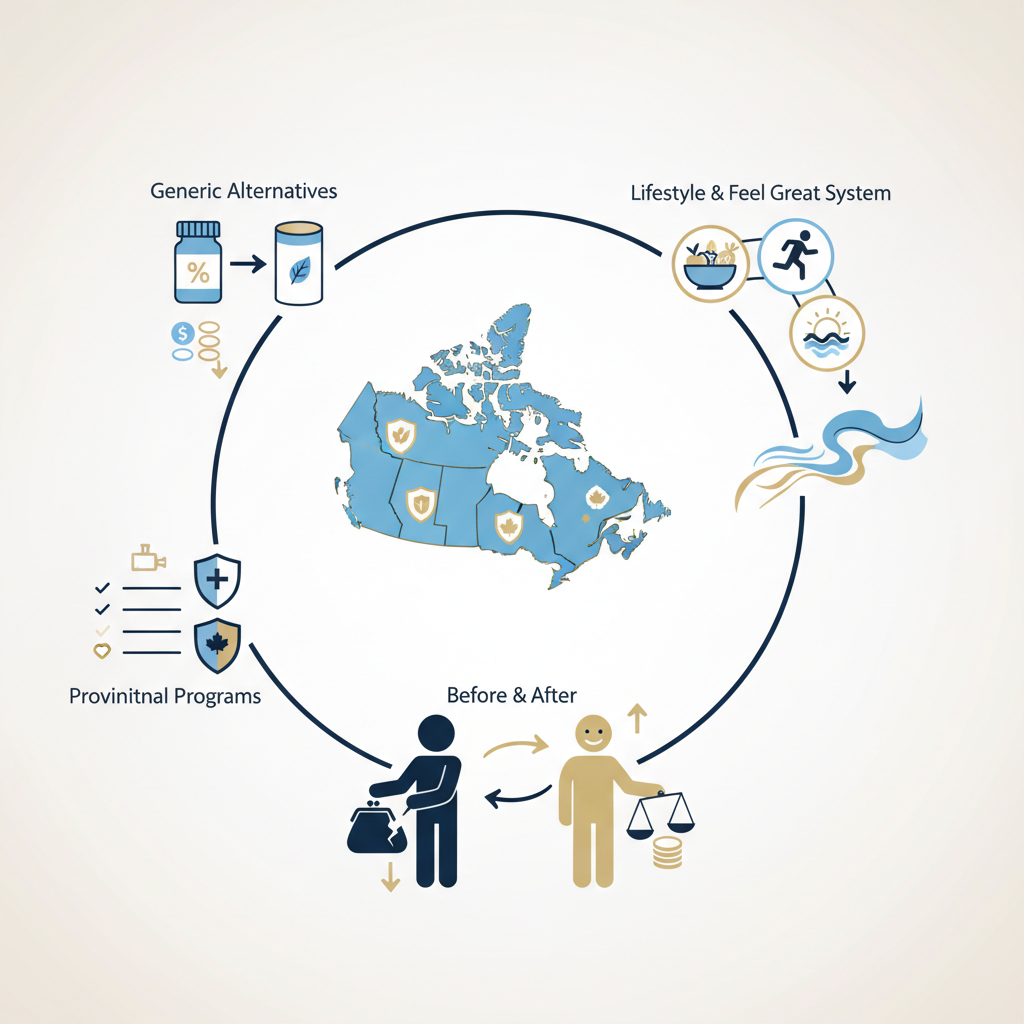
- Diabetes medication costs in Canada vary widely by drug class and provincial coverage — older drugs like metformin are inexpensive, while GLP‑1 and SGLT2 agents are substantially more costly.
- About 1 in 10 Canadians live with diabetes or prediabetes (see Statistics Canada, CIHI, Diabetes Canada).
- Provincial drug plans (Ontario, BC, Alberta, Quebec) and private insurance determine out‑of‑pocket costs; many patients use manufacturer assistance or pharmacy programs.
- Lifestyle strategies (weight loss, diet according to Canada’s Food Guide, activity) and supportive systems such as Feel Great may help manage post‑meal glucose response and reduce long‑term medication needs in some people.
- Always discuss medication changes with your family doctor or primary care provider; explore generics, provincial formularies, and shipping options across Canada (from BC to Newfoundland) to lower costs.
TL;DR
"diabetes medication costs Canada" depends on drug type and coverage — metformin is cheap, GLP‑1/SGLT2 are expensive. Review provincial plans, generics, manufacturer supports, and consider evidence‑based lifestyle changes and supportive systems like Feel Great as part of a comprehensive approach. Talk to your provider before changing medications.
🇨🇦 Thousands of Canadians are using Feel Great to support their metabolic health naturally. Learn more & order here →
Introduction — A Shocking Canadian Statistic
Diabetes affects roughly 1 in 10 Canadians, according to Statistics Canada and the Canadian Institute for Health Information (CIHI). That prevalence makes diabetes medication costs — and access to affordable medicines — a national health and economic priority.
Why Costs Vary So Much
Several factors determine what you pay out of pocket in Canada:
- Drug class: Generic, older medicines (metformin, gliclazide) are inexpensive; newer classes (GLP‑1 receptor agonists, SGLT2 inhibitors) carry much higher list prices.
- Coverage: Provincial formularies (e.g., Ontario Drug Benefit, BC PharmaCare, Alberta Blue Cross, RAMQ in Quebec), private insurance and employer plans all change your final cost. See Health Canada for national policy context.
- Innovator vs generic: Brand products often cost many times more than generics; switching to an approved generic where clinically appropriate can substantially reduce spending.
- Shipping and supply: Pharmacy delivery and availability across provinces (from BC to Newfoundland) affect price and access, especially for rural patients.
Typical Canadian Price Ranges (approximate)
Prices vary by formulation, dosage, and pharmacy. These are general ranges to help planning (CAD/month):
| Drug category | Examples | Approximate monthly cost (CAD) |
|---|---|---|
| Older oral agents | Metformin | $5–$30 |
| Sulfonylureas | Gliclazide | $10–$50 |
| SGLT2 inhibitors | Empagliflozin, Canagliflozin | $120–$400+ |
| GLP‑1 receptor agonists | Semaglutide (Ozempic/Wegovy), Liraglutide | $400–$1,200+ |
| Insulins | Basal, bolus (varies) | $50–$600+ depending on type/units |
Sources: CIHI cost summaries, Diabetes Canada resources, pharmacy price surveys (2022–2025).
Provincial Differences — What to Watch
Provincial coverage rules affect whether a medication is free, partially covered, or fully out-of-pocket:
- Ontario: Ontario Drug Benefit covers eligible groups (seniors, social assistance, some special programs). Younger adults often rely on private insurance.
- British Columbia: PharmaCare uses income and special authorizations to cover specific agents.
- Alberta: Coverage depends on program (e.g., Alberta Blue Cross), with some special authorization possible for newer drugs.
- Quebec: RAMQ provides basic drug insurance for many residents; private plans still common.
Always check your provincial formulary and ask your pharmacist about special authorization paperwork and manufacturer patient support programs.
Alternatives and Strategies to Reduce Costs
- Ask about generics: Generic substitutions can cut costs substantially.
- Manufacturer assistance: Many manufacturers provide temporary copay cards or patient support.
- Bulk supplies and mail-order: Buying 90‑day supplies or using mail-order pharmacies (shipping across Canada, BC–Newfoundland) can lower per-month prices.
- Medication review: Periodic review by a pharmacist or clinician can identify redundant or low‑value therapies.
- Lifestyle interventions: Weight reduction (even 5–10%), diet changes aligned to Canada’s Food Guide, increased activity, and structured behavioural support may reduce medication needs in some cases.
What Clinical Targets Look Like in Canada (mmol/L)
- Self-monitoring preprandial glucose targets commonly used: 4.0–7.0 mmol/L;
- Post‑prandial targets often cited: <10.0 mmol/L;
- Typical A1c target for many adults: ≤7% (53 mmol/mol), individualized as per Diabetes Canada guidance.
Reference: Diabetes Canada Clinical Practice Guidelines.
Evidence on Newer, Costly Agents — Benefits vs Cost
Over the last 5 years, meta‑analyses and RCTs have shown GLP‑1 receptor agonists and SGLT2 inhibitors can improve glycaemic control, cardiovascular and renal outcomes in specific populations (see NEJM, Lancet trials and systematic reviews). However, these clinical benefits must be weighed against higher acquisition costs and individual patient values. Economic evaluations in Canadian contexts are emerging and often show greater value in high‑risk populations (e.g., established CVD).
Role of Supportive Systems: How Feel Great Helps
Feel Great is a lifestyle support system intended as an adjunct — not a medication. Key components and how they relate to metabolic health:
- Balance (soluble fibre matrix): Designed to slow carbohydrate absorption and blunt post‑meal glucose excursions — reasonable phrasing: it may help manage post‑meal glucose response when used with diet and exercise.
- Unimate (yerba mate extract): A source of chlorogenic acids and natural stimulants that may help mental clarity and energy for lifestyle changes.
- 4‑4‑12 intermittent fasting protocol: A structured meal‑timing approach that can complement dietary modifications and weight loss strategies.
- Evidence base: Company materials note 50+ clinical studies listed in PDR; consult product labels and Health Canada registration details and look for NPN numbers where relevant on packaging.
Important: Feel Great products are not medications and are not intended to replace prescribed diabetes drugs. Speak to your provider before changing therapy; products may be available with shipping to all provinces (BC to Newfoundland) through authorized channels.
Practical Steps — What You Can Do This Week
- Review your current medication list; ask your pharmacist about generics and price comparisons.
- Check provincial formulary and eligibility (Ontario, BC, Alberta, Quebec each differ).
- Ask your clinician about stepping up/down medication only under supervision and whether a lifestyle‑first approach could be trialed safely.
- Explore patient support programs from manufacturers and community resources (diabetes education centres across provinces).
- If interested in supplements/supports like Feel Great, verify Health Canada registration (NPN) and discuss interactions with medications.
People Also Ask
- How much do diabetes medications cost in Canada without insurance?
- Does provincial coverage pay for GLP‑1 or SGLT2 drugs?
- Can diet and exercise reduce my medication needs?
- Are there patient assistance programs in Canada for diabetes medicines?
- Where can I buy diabetes medicines shipped across Canada (BC to Newfoundland)?
FAQ
- Can I stop medication if I lose weight?
Never stop prescribed medications without discussing with your clinician. If metabolic improvements occur, medication adjustments must be supervised to avoid hypo‑ or hyperglycaemia.
- How do I find the best price for my diabetes medicine?
Compare local pharmacies, ask about generic alternatives, check provincial formularies, and explore manufacturer assistance.
- Will my private insurance cover GLP‑1 drugs?
Coverage varies. Check plan formularies and prior‑authorization requirements; some insurers restrict newer, high‑cost agents.
- Do supplements like those in Feel Great have Health Canada NPNs?
Products regulated as natural health products in Canada have an NPN on the label. Check the product packaging or vendor site for the NPN and consult Health Canada databases.
- Where can I get help paying for my medicines in Canada?
Look into provincial drug plans, manufacturer support programs, community health centres, and charitable foundations. Your pharmacist and diabetes education centre can help navigate options.
References & Scientific Sources
- Diabetes Canada Clinical Practice Guidelines — https://www.diabetes.ca
- Health Canada — prescription drug policy and consumer information — https://www.canada.ca/en/health-canada.html
- Canadian Institute for Health Information (CIHI) — Diabetes reports — https://www.cihi.ca
- Statistics Canada — health indicators and diabetes prevalence — https://www.statcan.gc.ca
- Heart & Stroke Foundation of Canada — diabetes & cardiovascular risk — https://www.heartandstroke.ca
- NEJM & Lancet trials on GLP‑1 agents (STEP, SUSTAIN series) — https://www.nejm.org, https://www.thelancet.com
- Recent systematic reviews/meta‑analyses on SGLT2 and GLP‑1 cardiovascular outcomes — PubMed (2021–2025) — https://pubmed.ncbi.nlm.nih.gov
- Harvard Health — Diabetes medications overview — https://www.health.harvard.edu
- Mayo Clinic — Diabetes medication guide — https://www.mayoclinic.org
- CMAJ and provincial pharmaco‑economics reports on drug costs (selected 2021–2025 analyses) — https://www.cmaj.ca
Medical Disclaimer
This article is for informational purposes only and does not constitute medical advice. Always consult your family doctor, diabetes specialist, or pharmacist before changing medications. Provincial policies vary (Ontario, BC, Alberta, Quebec) — check local formularies and programs for exact coverage details.
Related ATHAR paths
🇨🇦 Ready to Start Your Health Transformation?
Join thousands of Canadians who have improved their metabolic health with the Feel Great system. Backed by 50+ clinical studies and listed in the Physicians' Desk Reference (PDR).
✅ Ships to all provinces: BC, Alberta, Saskatchewan, Manitoba, Ontario, Quebec, New Brunswick, Nova Scotia, PEI, Newfoundland & Labrador | 90-Day Money-Back Guarantee