Metabolic Syndrome Prevalence USA: Why 1 in 3 Americans Are at Risk
Author: Feras Alayed
Published:
Updated:
Category: american-health
Reading Time: 10 minutes
Key Takeaways
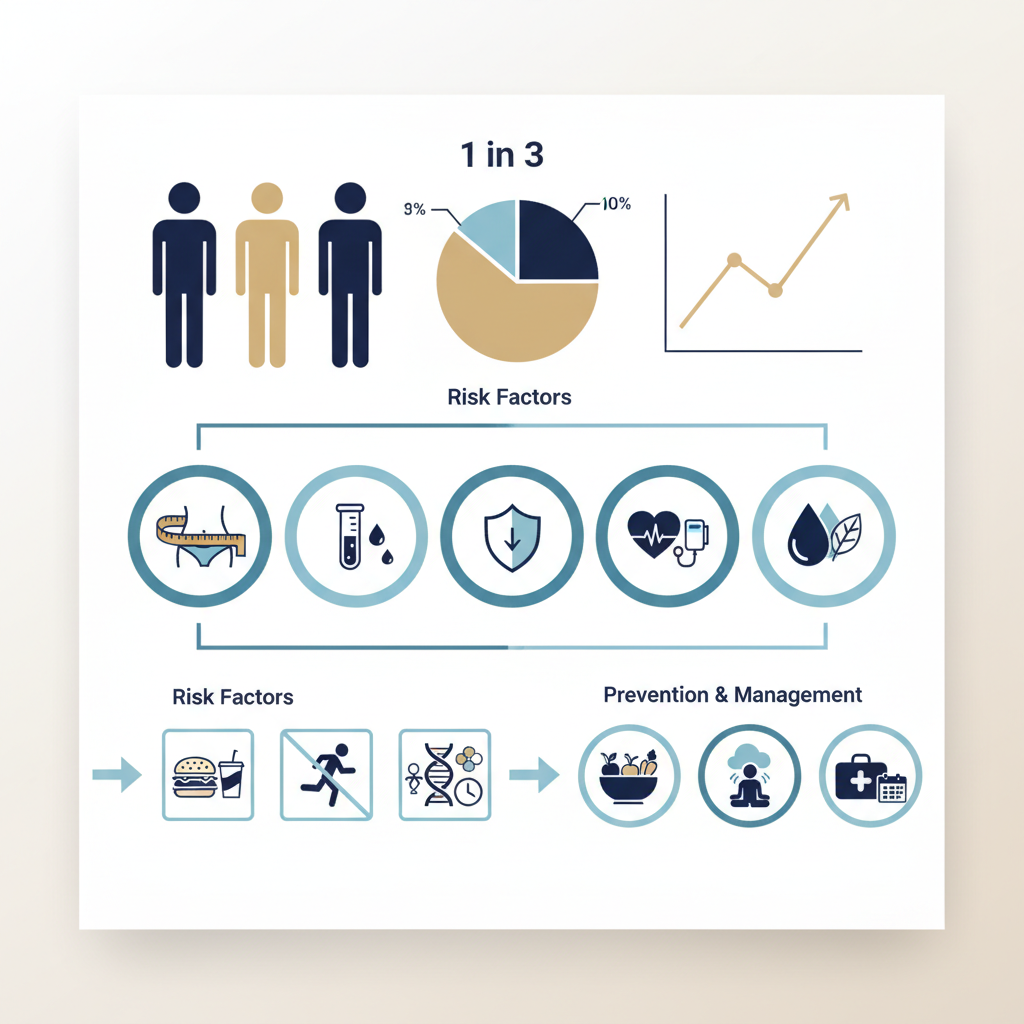
- About 1 in 3 U.S. adults meets standard criteria for metabolic syndrome — roughly in the low-to-mid 30% range (age-adjusted NHANES estimates). ([jamanetwork.com](https://jamanetwork.com/journals/jama/fullarticle/2842706?resultClick=1&utm_source=openai))
- Metabolic syndrome is defined as 3 or more of: abdominal obesity, high triglycerides (≥150 mg/dL), low HDL, elevated blood pressure (≥130/85 mmHg) and elevated fasting glucose (≥100 mg/dL). ([ncbi.nlm.nih.gov](https://www.ncbi.nlm.nih.gov/books/NBK278936/?utm_source=openai))
- Rates vary by age, race/ethnicity and socioeconomic status — and trends show increases in younger adults and some minority groups. ([pmc.ncbi.nlm.nih.gov](https://pmc.ncbi.nlm.nih.gov/articles/PMC7312413/?utm_source=openai))
- Lifestyle-first strategies (diet + exercise, weight loss, structured programs) show the strongest evidence to lower metabolic risk. Systematic reviews/meta-analyses favor combined interventions. ([academic.oup.com](https://academic.oup.com/eurjpc/advance-article/doi/10.1093/eurjpc/zwaf167/8089874?utm_source=openai))
- Feel Great (a lifestyle support system) offers a soluble-fiber matrix, yerba mate extract (Unimate), and a 4-4-12 intermittent fasting protocol as non-medication tools that may help improve post-meal glucose response and energy patterns when used alongside medical care; free shipping across all 50 states is available. (Not a medication.)
TL;DR
Metabolic syndrome prevalence in the USA is about 1 in 3 adults. It's a cluster of common, modifiable risk factors that raise risk for type 2 diabetes and cardiovascular disease. Population data (NHANES/CDC) and multiple systematic reviews show lifestyle programs combining diet and exercise are most effective to reduce risk; targeted, evidence-aligned tools such as fiber-rich meals, controlled feeding patterns, and safe botanical extracts may be useful adjuncts. ([jamanetwork.com](https://jamanetwork.com/journals/jama/fullarticle/2842706?resultClick=1&utm_source=openai))
🇺🇸 Want to take action now? Try Feel Great → | Chat with a coach →
Metabolic Syndrome: Why 1 in 3 Americans Are at Risk
Shocking U.S. statistic: Recent population analyses using National Health and Nutrition Examination Survey (NHANES) cycles show metabolic syndrome prevalence in U.S. adults remains in the ballpark of one-in-three — a public-health burden affecting tens of millions of Americans. ([jamanetwork.com](https://jamanetwork.com/journals/jama/fullarticle/2842706?resultClick=1&utm_source=openai))
What is metabolic syndrome? A clear, clinical definition
Metabolic syndrome (MetS) is a clinical construct used to describe a cluster of metabolic risk factors that commonly occur together. Diagnostic criteria from major U.S. and international groups require the presence of at least 3 of 5 features: increased waist circumference (population-specific cutoffs), triglycerides ≥150 mg/dL, HDL cholesterol <40 mg/dL in men or <50 mg/dL in women, blood pressure ≥130/85 mmHg (or on treatment), and fasting glucose ≥100 mg/dL (or on glucose‑lowering therapy). These thresholds are widely used in NHANES analyses and clinical guidance. ([ncbi.nlm.nih.gov](https://www.ncbi.nlm.nih.gov/books/NBK278936/?utm_source=openai))
How common is it in the United States?
Summary of the data: multiple, population-weighted NHANES analyses and national reports estimate overall MetS prevalence in U.S. adults at roughly 30–38%, depending on the NHANES cycles and the harmonized definition used. A recent national trend analysis covering 2013–2023 reported an age-adjusted prevalence in the mid-to-high 30% range, with some upward trends in specific subgroups (younger adults, Hispanic and Asian participants in some cycles). ([jamanetwork.com](https://jamanetwork.com/journals/jama/fullarticle/2842706?resultClick=1&utm_source=openai))
Related context: the CDC’s National Diabetes Statistics Report estimates roughly 40 million Americans have diagnosed or undiagnosed diabetes and over 100 million U.S. adults have prediabetes — numbers that overlap substantially with MetS because elevated fasting glucose is one MetS component. ([usdss.cdc.gov](https://usdss.cdc.gov/diabetes/report.html?cid=4981908&scid=4893036&services=75&tc=175823899621689&topics=25&types=BSC.Article&utm_source=openai))
Who is most affected?
- Age: prevalence rises with age, but concerning increases appear in younger adults (20–39 years) in recent cycles. ([pmc.ncbi.nlm.nih.gov](https://pmc.ncbi.nlm.nih.gov/articles/PMC7312413/?utm_source=openai))
- Race & ethnicity: prevalence differs between groups; some Hispanic and Asian subgroups show rising rates in recent NHANES cycles. ([pubmed.ncbi.nlm.nih.gov](https://pubmed.ncbi.nlm.nih.gov/36906842/?utm_source=openai))
- Socioeconomic status: food insecurity, limited access to preventive care, and lower income are associated with higher MetS prevalence. ([dietaryguidelines.gov](https://www.dietaryguidelines.gov/sites/default/files/2024-12/DA_Report_Prevalence_of_Chronic_Health_Conditions_508c.pdf?utm_source=openai))
Why do so many Americans meet MetS criteria?
Metabolic syndrome is driven by common, interacting factors: rising rates of obesity and central (abdominal) fat, sedentary lifestyles, diets high in refined carbs and ultra-processed foods, sleep disruption, and social determinants of health (access to healthy food, neighborhood safety, work schedules). The U.S. adult obesity rate — near 40% in many recent estimates — is a major upstream driver because central adiposity is tightly linked to insulin resistance and the MetS cluster. ([cdc.gov](https://www.cdc.gov/obesity/adult-obesity-facts/index.html?utm_source=openai))
What are the health implications?
While MetS itself is not a single disease, having metabolic syndrome raises long-term risk for type 2 diabetes and cardiovascular disease, and is associated with nonalcoholic fatty liver disease and some cancers. Clinicians use MetS to flag people who would benefit from targeted preventive care and lifestyle programs. ([ncbi.nlm.nih.gov](https://www.ncbi.nlm.nih.gov/books/NBK278936/?utm_source=openai))
Evidence-based approaches that may reduce metabolic risk
High-quality systematic reviews and meta-analyses show that combined diet + exercise (multimodal) programs produce the most consistent improvements across MetS components — waist circumference, blood pressure, triglycerides, HDL, and fasting glucose — versus diet-only, exercise-only, or medication alone when the aim is risk-reduction in broadly at-risk populations. Structured programs that include behavioral support have the best long-term outcomes. ([academic.oup.com](https://academic.oup.com/eurjpc/advance-article/doi/10.1093/eurjpc/zwaf167/8089874?utm_source=openai))
Practical steps (actionable, evidence-aligned)
- Get tested: measure fasting glucose, A1c, fasting lipid panel (triglycerides, HDL) and blood pressure; ask for waist circumference measurement. Use mg/dL units for glucose and lipids. ([usdss.cdc.gov](https://usdss.cdc.gov/diabetes/report.html?cid=4981908&scid=4893036&services=75&tc=175823899621689&topics=25&types=BSC.Article&utm_source=openai))
- Prioritize a combined lifestyle program: aim for moderate weight loss (5–10% body weight), combine aerobic exercise (≥150 min/week) and resistance training, and follow a nutrient-dense dietary pattern (Mediterranean-style or DASH-like patterns have the most evidence). ([pmc.ncbi.nlm.nih.gov](https://pmc.ncbi.nlm.nih.gov/articles/PMC6873964/?utm_source=openai))
- Focus on carbohydrate quality and soluble fiber: replacing refined carbs with whole foods, vegetables, and soluble fiber improves post-meal glucose and triglyceride responses. ([pmc.ncbi.nlm.nih.gov](https://pmc.ncbi.nlm.nih.gov/articles/PMC12899630/?utm_source=openai))
- Address sleep, stress and smoking: these modify insulin sensitivity and cardiovascular risk. Behavioral counseling and community programs can help. ([ncbi.nlm.nih.gov](https://www.ncbi.nlm.nih.gov/books/NBK164395/?utm_source=openai))
- Work with your healthcare team: blood pressure and lipid medications may be appropriate if lifestyle changes alone don’t achieve targets; Medicare, Medicaid, and private insurance rules vary for coverage and copays — ask your insurer and care team. ([pmc.ncbi.nlm.nih.gov](https://pmc.ncbi.nlm.nih.gov/articles/PMC10725812/?utm_source=openai))
Screening: who should be tested and when?
Screening for abnormal glucose (fasting plasma glucose or A1c) is recommended for adults with overweight/obesity and other risk factors, and many guidelines suggest screening starting at age 35–45 or earlier with risk factors. Given the MetS prevalence and rising rates in younger adults, clinicians increasingly consider earlier screening when risk factors are present. Use fasting glucose thresholds of 100–125 mg/dL to identify impaired fasting glucose (prediabetes). ([pmc.ncbi.nlm.nih.gov](https://pmc.ncbi.nlm.nih.gov/articles/PMC10725812/?utm_source=openai))
What the data show about interventions that work
Large randomized and community trials (and multiple meta-analyses) indicate that lifestyle programs modeled on diabetes prevention principles (weight loss through calorie quality and activity) lower the incidence of diabetes and improve MetS components. Interventions that combine diet + exercise + behavioral support consistently outperform single-component strategies. ([pmc.ncbi.nlm.nih.gov](https://pmc.ncbi.nlm.nih.gov/articles/PMC12899630/?utm_source=openai))
How Feel Great Helps (non-drug lifestyle support)
Note: Feel Great is not a medication. It’s presented as a lifestyle support system that may help people who are working to reduce metabolic risk alongside medical care.
- Balance: a soluble-fiber matrix designed to reduce post-meal glucose excursions by slowing carbohydrate absorption and improving satiety. Soluble fibers are widely studied for post-prandial glucose moderation. ([pmc.ncbi.nlm.nih.gov](https://pmc.ncbi.nlm.nih.gov/articles/PMC12899630/?utm_source=openai))
- Unimate (yerba mate extract): a standardized yerba mate extract rich in chlorogenic acids and naturally occurring caffeine intended to support energy and mental clarity. Yerba mate extracts and chlorogenic acid-containing ingredients have historical use in foods and are listed in U.S. FDA substances and FEMA/EAFUS listings; clinical and preclinical studies examine chlorogenic acids’ effects on glucose metabolism, though evidence is mixed and best interpreted as supportive, not therapeutic. ([hfpappexternal.fda.gov](https://hfpappexternal.fda.gov/scripts/fdcc/index.cfm?id=MATELEAVES&set=FoodSubstances&utm_source=openai))
- 4-4-12 intermittent fasting protocol: a behavioral timing strategy (example: 4 hours eating window, 4 hours fasting, 12 hours overnight fast pattern adapted to an individual's schedule) intended to simplify meal timing and reduce late-night eating. Intermittent fasting and time-restricted eating trials show promising effects on weight, insulin sensitivity and triglycerides in many settings, but responses vary by person and long-term data are evolving. Use under clinician guidance, especially if you take medications for glucose or blood pressure. ([link.springer.com](https://link.springer.com/article/10.1007/s13300-021-01005-1?utm_source=openai))
- Evidence & safety: Feel Great materials reference a body of clinical studies; botanical extracts such as yerba mate are included in FDA food-substance listings or FEMA GRAS flavor uses; consumers with health conditions or on medications should discuss botanical supplements and meal-pattern changes with their clinician. Free shipping across all 50 states is available for the program (consumer logistics). ([hfpappexternal.fda.gov](https://hfpappexternal.fda.gov/scripts/fdcc/index.cfm?id=MATELEAVES&set=FoodSubstances&utm_source=openai))
Bottom line: used as part of a broader, evidence-based lifestyle plan and medical supervision, fiber-first strategies, mindful meal timing, and safe food-derived botanical extracts may play a role in reducing post-meal glucose peaks and supporting sustainable behavior change. These are complements to — not replacements for — standard medical care.
Comparison table: common intervention approaches (overview)
| Approach | Typical effect on MetS components | Evidence strength |
|---|---|---|
| Combined diet + exercise + behavior | Reduces waist, BP, triglycerides; improves fasting glucose | High (systematic reviews/meta-analyses). |
| Diet-only (Mediterranean/DASH) | Improves lipids, blood pressure, some glucose benefit | Moderate to high. |
| Exercise-only | Improves insulin sensitivity, lowers BP and waist with sufficient volume | Moderate. |
| Pharmacotherapy (as directed) | Targeted reductions (BP, LDL, glucose) | High for individual targets; limited for reversing MetS without lifestyle change. |
| Structured support tools (fiber blends, botanical extracts) | May reduce post-meal glucose spikes, support satiety and adherence | Low-to-moderate; adjunctive evidence growing. |
People Also Ask
- What is the single best test for metabolic syndrome? — There’s no single test; clinicians use a panel (waist circumference, fasting glucose in mg/dL, triglycerides in mg/dL, HDL, blood pressure) to determine whether someone meets 3 of 5 criteria. ([ncbi.nlm.nih.gov](https://www.ncbi.nlm.nih.gov/books/NBK278936/?utm_source=openai))
- Can metabolic syndrome be reversed? — Many people improve or normalize risk factors with sustained weight loss, diet + exercise and targeted medical care; long-term maintenance is the key. ([pmc.ncbi.nlm.nih.gov](https://pmc.ncbi.nlm.nih.gov/articles/PMC12899630/?utm_source=openai))
- Does metabolic syndrome always lead to diabetes? — Not always, but it substantially raises the risk of developing type 2 diabetes over time. Early intervention lowers that risk. ([usdss.cdc.gov](https://usdss.cdc.gov/diabetes/report.html?cid=4981908&scid=4893036&services=75&tc=175823899621689&topics=25&types=BSC.Article&utm_source=openai))
- Is metabolic syndrome genetic? — Genetics influence body fat distribution and insulin sensitivity, but behavior and environment are major drivers; both matter. ([ncbi.nlm.nih.gov](https://www.ncbi.nlm.nih.gov/books/NBK278936/?utm_source=openai))
- Should I stop supplements if I have metabolic syndrome? — Discuss all supplements with your clinician, especially if you take medications for glucose, cholesterol, or blood pressure; some botanical extracts interact with drugs. ([dailymed.nlm.nih.gov](https://dailymed.nlm.nih.gov/dailymed/drugInfo.cfm?audience=consumer&setid=93d28357-5f32-4ac8-ba97-9311720a06be&utm_source=openai))
FAQ
- Q: How is fasting glucose reported? A: Fasting plasma glucose is reported in mg/dL in the United States; impaired fasting glucose is 100–125 mg/dL and diabetes is ≥126 mg/dL on two separate tests (or A1c criteria). ([usdss.cdc.gov](https://usdss.cdc.gov/diabetes/report.html?cid=4981908&scid=4893036&services=75&tc=175823899621689&topics=25&types=BSC.Article&utm_source=openai))
- Q: Do children get metabolic syndrome? A: Adolescents can have MetS features; definitions differ in pediatrics. If concerned, see a pediatric clinician. ([ncbi.nlm.nih.gov](https://www.ncbi.nlm.nih.gov/books/NBK278936/?utm_source=openai))
- Q: Will Medicare cover a lifestyle program? A: Medicare covers some intensive behavioral counseling for obesity and diabetes prevention programs in certain circumstances; coverage, copays and program lists vary — check your plan. ([pmc.ncbi.nlm.nih.gov](https://pmc.ncbi.nlm.nih.gov/articles/PMC10725812/?utm_source=openai))
- Q: Is yerba mate safe? A: Yerba mate leaf is listed in FDA Substances Added to Food and FEMA GRAS flavor listings for conventional uses; as with any supplement, talk to your clinician about safety and interactions. ([hfpappexternal.fda.gov](https://hfpappexternal.fda.gov/scripts/fdcc/index.cfm?id=MATELEAVES&set=FoodSubstances&utm_source=openai))
- Q: What blood pressure counts as a MetS component? A: Blood pressure ≥130/85 mmHg or use of antihypertensive medication counts as one component in most diagnostic definitions. ([ncbi.nlm.nih.gov](https://www.ncbi.nlm.nih.gov/books/NBK278936/?utm_source=openai))
References & Scientific Sources
- Trends and Prevalence of the Metabolic Syndrome Among US Adults (2013–2023). JAMA / PubMed analysis. ([jamanetwork.com](https://jamanetwork.com/journals/jama/fullarticle/2842706?resultClick=1&utm_source=openai))
- Prevalence of metabolic syndrome in the United States, NHANES 2011–2018 — peer-reviewed analysis. ([pubmed.ncbi.nlm.nih.gov](https://pubmed.ncbi.nlm.nih.gov/36906842/?utm_source=openai))
- Prevalence of the Metabolic Syndrome in the United States, 2003–2012 (JAMA). ([jamanetwork.com](https://jamanetwork.com/journals/jama/fullarticle/2293286?utm_source=openai))
- National Diabetes Statistics Report — CDC (U.S. data on diabetes & prediabetes). ([usdss.cdc.gov](https://usdss.cdc.gov/diabetes/report.html?cid=4981908&scid=4893036&services=75&tc=175823899621689&topics=25&types=BSC.Article&utm_source=openai))
- Metabolic syndrome — Mayo Clinic overview and clinical guidance. ([mayoclinic.org](https://www.mayoclinic.org/diseases-conditions/metabolic-syndrome/symptoms-causes/syc-20351916?utm_source=openai))
- Heart Disease and Stroke Statistics — American Heart Association (AHA) statistical update. ([heart.org](https://www.heart.org/-/media/Files/Professional/Quality-Improvement/Get-With-the-Guidelines/Get-With-The-Guidelines-AFIB/AFib-Month-23/Heart-Disease-and-Stroke-Statistics-2023.pdf?utm_source=openai))
- Supervised & multi-modal lifestyle interventions systematic reviews and meta-analyses (European Journal of Preventive Cardiology; Frontiers; MDPI). ([academic.oup.com](https://academic.oup.com/eurjpc/advance-article/doi/10.1093/eurjpc/zwaf167/8089874?utm_source=openai))
- Systematic reviews on exercise and metabolic outcomes (PMCID). ([pmc.ncbi.nlm.nih.gov](https://pmc.ncbi.nlm.nih.gov/articles/PMC6873964/?utm_source=openai))
- FDA Substances Added to Food entry for mate (yerba mate) and GRAS references. ([hfpappexternal.fda.gov](https://hfpappexternal.fda.gov/scripts/fdcc/index.cfm?id=MATELEAVES&set=FoodSubstances&utm_source=openai))
- Yerba mate genotoxicity and safety review (recent PMC article). ([pmc.ncbi.nlm.nih.gov](https://pmc.ncbi.nlm.nih.gov/articles/PMC11066526/?utm_source=openai))
Medical Disclaimer: This article is for informational purposes only and does not provide medical advice. It does not replace consultation with licensed healthcare professionals. If you have or suspect a medical condition (including diabetes or high blood pressure), consult your clinician before making changes to medication, diet, or exercise. Product mentions (e.g., Feel Great components) are described as lifestyle support tools and are not a substitute for medical treatment.

Related ATHAR paths
🇺🇸 Ready to Start Your Health Transformation?
Join thousands across United States who have improved their metabolic health with the Feel Great system. Backed by 50+ clinical studies and listed in the Physicians' Desk Reference (PDR).
✅ Free Shipping Across All 50 States | 90-Day Money-Back Guarantee