A Practical Spanish Grocery Comparison Checklist: Navigating Supermarkets for Better Health
Author: Feras Alayed
Published:
Updated:
Category: nutrition
Reading Time: 8 minutes
The Spanish Supermarket Paradox: Abundance vs. Awareness
Living in Spain offers unparalleled access to the Mediterranean lifestyle, often cited as a benchmark for longevity. However, walking into a modern Spanish supermarket—whether it is a Mercadona, Carrefour, or Lidl—can present a confusing paradox. While the fresh produce sections are vibrant, the middle aisles are increasingly filled with ultra-processed foods that can derail even the best intentions. Many residents find that despite the availability of fresh ingredients, their energy levels fluctuate and their health goals remain elusive.
The challenge often lies in decision fatigue. When you are trying to balance work, family, and a new life in Spain, choosing between three different brands of gazpacho or five types of olive oil becomes a chore. Previous attempts to 'eat clean' often fail because they lack a structured system for comparison. Without a clear framework, it is easy to fall for marketing claims like 'natural' or 'artesano' that may not reflect the actual nutritional value of the product.
Understanding the Spanish Regulatory Landscape
Before diving into the checklist, it is essential to understand who sets the standards for the food on your table. In Spain, the Agencia Española de Seguridad Alimentaria y Nutrición (AESAN), under the Ministerio de Sanidad, is responsible for food safety and nutrition guidelines. They oversee the implementation of labeling laws and public health campaigns like the NAOS Strategy, which aims to reduce obesity through healthy eating and physical activity.
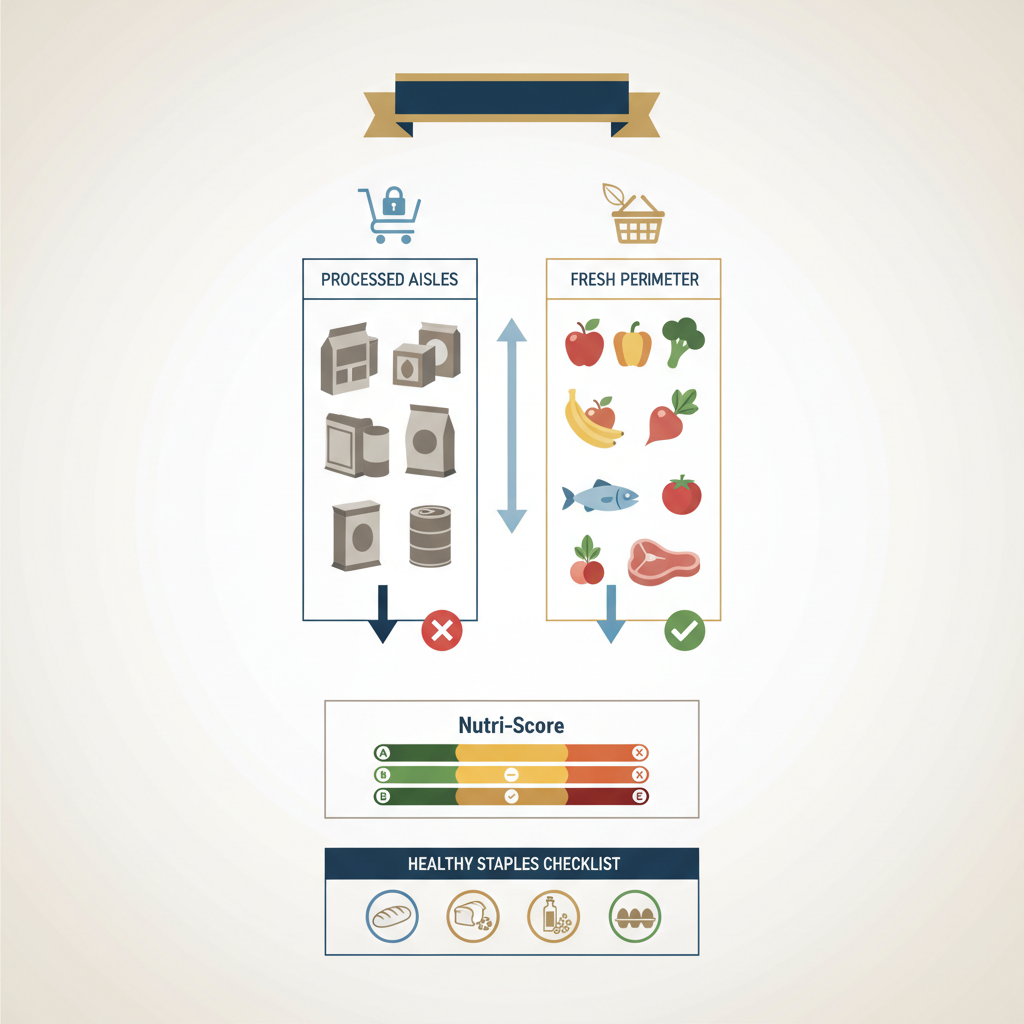
One tool you will frequently encounter is the Nutri-Score. This front-of-pack labeling system ranks foods from A (green, more nutrient-dense) to E (dark orange, less nutrient-dense). While helpful as a quick reference, it is not infallible. For instance, some high-quality fats like olive oil may receive a lower grade than a processed cereal due to the algorithm's focus on caloric density. Therefore, a true healthy grocery comparison in Spain requires looking beyond the letter and into the ingredient list.
The Practical Spanish Grocery Comparison Checklist
Use this checklist to evaluate items in your cart. The goal is not perfection, but informed decision-making that supports stable blood sugar levels (aiming for a steady range, typically measured in mg/dL during medical check-ups) and sustained energy.
1. The Ingredient List (The 'Rule of Three')
- Check the first three ingredients: Ingredients are listed by weight. If sugar, refined flour, or seed oils are in the top three, the product is likely highly processed.
- Identify 'Hidden' Sugars: In Spain, look for terms like jarabe de glucosa, fructosa, dextrosa, or concentrado de zumo.
- Additive Awareness: While additives are regulated by the EU, a shorter list generally indicates a less processed food.
2. The Produce Section (Seasonality and Source)
- Is it 'Kilómetro 0'?: Local Spanish produce often has higher nutrient density because it is picked closer to peak ripeness.
- Variety of Colors: Aim for at least three different colors in your vegetable basket to ensure a range of phytonutrients.
3. The Dairy and Alternatives Aisle
- Yogurt Comparison: Compare the 'Azúcares' (Sugars) line on the nutritional table. A plain Greek yogurt (yogur griego natural) should ideally have no added sugars, only the naturally occurring lactose (usually around 4g per 100g).
- Plant Milks: Many Spanish brands add sugar to almond or oat milk. Look for 'sin azúcares añadidos'.
4. The Protein Counter
- Processed Meats: When buying jamón or pavo, check the percentage of actual meat. High-quality options will be 90% meat or higher. Lower-quality versions often contain starches (fécula de patata) and sugars.
- Canned Fish: Spain is famous for its conservas. Compare tuna or sardines in water versus sunflower oil (aceite de girasol). Extra virgin olive oil (AOVE) is the preferred fat source.
Integrating Structure: The structured reflection approach and Consistency
For example, using a structured routine can help you manage the timing of your meals, which is particularly important in Spain where dinner is often served late. By focusing on high-fiber starters or specific nutritional supports before a meal, you can help stabilize your body's response to the carbohydrates in a typical Spanish diet. For more on how to build these habits, you might find our habit stacking guide useful for maintaining consistency.
Navigating Blood Sugar and Metabolic Health in Spain
A primary goal of a healthy grocery comparison in Spain is to support metabolic health. When we consume high-glucose foods, our blood sugar can spike significantly above the standard fasting range of 70-100 mg/dL. Frequent spikes can lead to energy crashes and long-term health challenges. By using the checklist to choose high-fiber, whole-food options, you are effectively choosing foods that have a slower impact on your blood glucose.
If you are unsure how your current diet is affecting your markers, it is vital to consult a healthcare professional. Preparing for these visits is key; consider reviewing our essential health questions guide to make the most of your time with a Spanish doctor.
Practical Shopping Tips for the Spanish Expat
To make your grocery comparison more effective, consider these local tips:
- Read the 'Por 100g' Column: Spanish labels always provide data per 100g. This is the only way to accurately compare two different brands, as 'serving sizes' are subjective and vary by manufacturer.
- Understand 'Integral': In Spain, for a bread to be labeled 100% integral (whole grain), it must actually be made with 100% whole grain flour. This is a stricter regulation than in many other countries.
- The Oil Aisle: Always prioritize Aceite de Oliva Virgen Extra (AOVE). If the label just says 'Aceite de Oliva', it is a refined blend. For a deeper dive into how labels impact specific organs, see our supermarket guide to liver health.
Conclusion: Your Path to Health Literacy
Health is not a destination but a series of small, informed choices made in the aisles of your local supermarket. By using a healthy grocery comparison Spain checklist, you take control of your environment. You move away from the confusion of marketing and toward the clarity of evidence-aware nutrition.
Remember that tools like the structured reflection approach are there to support your lifestyle, not replace the need for whole foods and professional medical advice. As you become more adept at reading Spanish labels and understanding the requirements set by AESAN, you will find it easier to navigate the unique food culture of Spain while staying true to your health goals.

Take the next step: If you want to see how your current habits align with your health goals, consider taking a structured assessment to identify your primary areas for improvement.
Ready to optimize your routine?
Discover which lifestyle adjustments best suit your unique needs in Spain.
ابدأ تقييمك الصحيFrequently Asked Questions
Is Nutri-Score reliable for all foods in Spain?
Nutri-Score is a helpful general guide, but it can be misleading for single-ingredient healthy fats like olive oil or for complex processed foods that have been 'engineered' to meet specific criteria. Always check the ingredient list as your primary source of truth.
How do I find high-fiber foods in a Spanish supermarket?
Look for the 'Fibra' line on the nutritional table. Aim for products with more than 6g of fiber per 100g to be considered 'high fiber.' Legumes (alubias, lentejas, garbanzos) are excellent local staples for this.
What does 'Sin Azúcares Añadidos' actually mean?
It means no sucrose or syrups were added during processing. However, the product may still contain high amounts of natural sugars (like lactose in milk or fructose in fruit juice), which still impact your blood sugar levels.
Where can I find official Spanish dietary guidelines?
The AESAN website provides the 'Guías alimentarias para la población española,' which offers evidence-based recommendations tailored to the Spanish lifestyle and food availability.
Further Education
- Explore the metabolic health education hub
- Learn how to read research summaries
- Use the educational health assessment
Explore health education with care
Use ATHAR’s educational guides and practical tools to choose your next learning step.