Anti‑Inflammatory Diet Canada: Complete Guide to Eat & Reduce Inflammation
Author: Feras Alayed
Published:
Updated:
Category: canadian-health
Reading Time: 9 minutes
Key Takeaways
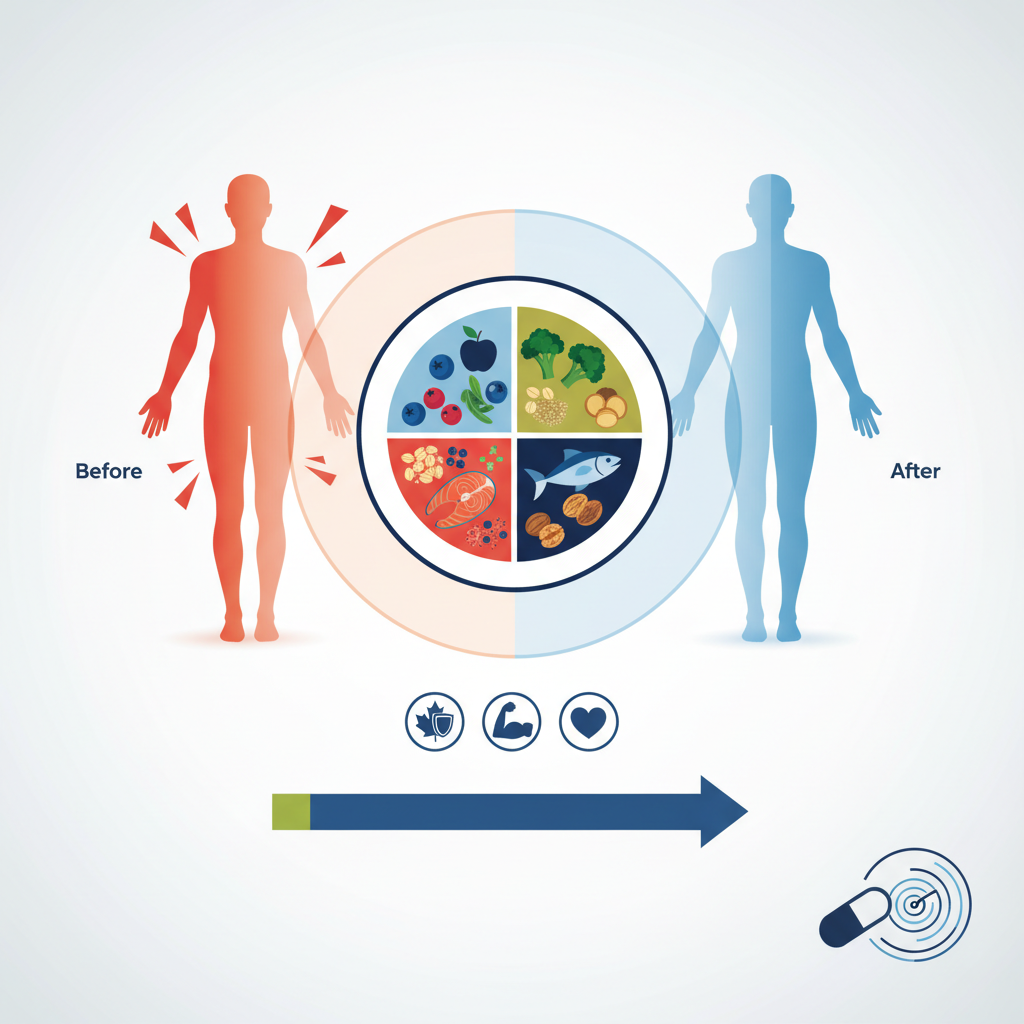
- An anti-inflammatory diet for Canada emphasises vegetables, fruits, whole grains, fatty fish, legumes and healthy plant fats — similar to Canada’s Food Guide and the Mediterranean pattern.
- Low-inflammatory dietary patterns (Mediterranean, DASH, plate model) are associated with reductions in inflammatory markers (CRP, IL‑6) in RCTs and meta-analyses. ([pubmed.ncbi.nlm.nih.gov](https://pubmed.ncbi.nlm.nih.gov/35831971/?utm_source=openai))
- Canada faces rising obesity and chronic disease prevalence (68% of adults overweight/obese in 2022–2024), which increases the public-health urgency to adopt anti-inflammatory eating. ([www150.statcan.gc.ca](https://www150.statcan.gc.ca/n1/daily-quotidien/251002/dq251002b-eng.htm?HPA=1&utm_source=openai))
- No single “magic” food — durable daily patterns, less ultra‑processed food, exercise, sleep and stress management are key to lowering chronic inflammation. ([canada.ca](https://www.canada.ca/en/health-canada/services/food-guide.html?utm_source=openai))
- The Feel Great system can be used as a supportive lifestyle tool (Balance fibre matrix, Unimate, and the 4‑4‑12 protocol) to help metabolic health and post-meal glucose responses — but it is not a medication.
TL;DR
Adopt a Canada‑friendly anti‑inflammatory eating pattern built around Canada’s Food Guide — more plants, whole grains, fish, legumes and healthy fats — to lower inflammatory markers and chronic‑disease risk. This guide gives practical steps, Canadian data, and how Feel Great can complement your plan. ([canada.ca](https://www.canada.ca/en/health-canada/services/food-guide.html?utm_source=openai))
🇨🇦 Thousands of Canadians are using Feel Great to support their metabolic health naturally. Learn more & order here →
Anti‑Inflammatory Diet Canada — A Complete Guide for Canadians
Introduction — A shocking Canadian statistic
Chronic low‑grade inflammation contributes to heart disease, type 2 diabetes, non‑alcoholic fatty liver disease and cognitive decline. In Canada, more than two‑thirds (68%) of adults aged 18–79 were classified as overweight or having obesity in the 2022–2024 Canadian Health Measures Survey — a rise from pre‑pandemic levels — amplifying the national burden of inflammation‑related disease. ([www150.statcan.gc.ca](https://www150.statcan.gc.ca/n1/daily-quotidien/251002/dq251002b-eng.htm?HPA=1&utm_source=openai))
What is an anti‑inflammatory diet?
There is no single prescriptive menu called "the anti‑inflammatory diet". Instead, the term describes dietary patterns that prioritise whole, minimally processed plant foods, fibre, polyphenols and omega‑3 fats while reducing ultra‑processed foods, added sugars and processed meats. Prominent evidence‑based patterns include the Mediterranean diet, DASH, and Canada’s Food Guide plate model. Randomised trials and systematic reviews show these patterns can lower inflammatory markers such as hs‑CRP and IL‑6 compared with typical Western diets. ([pubmed.ncbi.nlm.nih.gov](https://pubmed.ncbi.nlm.nih.gov/36039924/?utm_source=openai))
Canadian context: why this matters now
Rising rates of overweight/obesity and related chronic conditions in Canada make dietary solutions essential. Provincial differences in food access, seasonal availability (long winters, less sunlight), and healthcare resources mean that practical recommendations must be adaptable from BC to Newfoundland. The national guidance — Canada’s Food Guide — aligns well with anti‑inflammatory principles and is a practical starting point for Canadians. ([www150.statcan.gc.ca](https://www150.statcan.gc.ca/n1/daily-quotidien/251002/dq251002b-eng.htm?HPA=1&utm_source=openai))
Core components: what to eat (and why)
- Vegetables & fruits: high in fibre, vitamins and polyphenols that modulate oxidative stress and inflammation. Include berries, dark leafy greens and cruciferous vegetables. ([heartandstroke.ca](https://www.heartandstroke.ca/articles/how-to-build-a-heart-healthy-plate?utm_source=openai))
- Whole grains: oats, barley, quinoa and brown rice provide fibre and improve glycaemic response. ([canada.ca](https://www.canada.ca/en/health-canada/services/food-guide/explore/dietary-guidelines/section-1-foundation-healthy-eating.html?utm_source=openai))
- Legumes & plant proteins: beans, lentils and tofu supply protein, fibre and favourable phytochemicals. ([heartandstroke.ca](https://www.heartandstroke.ca/articles/the-anti-inflammatory-diet?utm_source=openai))
- Fatty fish: salmon, trout, sardines are rich in EPA/DHA; meta‑analyses show omega‑3s may reduce certain inflammatory markers. ([heartandstroke.ca](https://www.heartandstroke.ca/articles/the-benefits-of-omega-3-fats?utm_source=openai))
- Extra‑virgin olive oil & nuts: high‑polyphenol olive oil and walnuts supply anti‑inflammatory lipids. ([pubmed.ncbi.nlm.nih.gov](https://pubmed.ncbi.nlm.nih.gov/36039924/?utm_source=openai))
- Fermented foods: yogurt, kefir and fermented vegetables may support the microbiome and immune function.
- Spices & beverages: turmeric (curcumin), ginger and green tea contain bioactive compounds that have been associated with lower markers of inflammation. ([health.harvard.edu](https://www.health.harvard.edu/diet-and-nutrition/fighting-inflammation-with-food?utm_source=openai))
Foods to minimise or avoid
Ultra‑processed foods, sugar‑sweetened beverages, processed meats, refined grains and industrial trans fats are consistently associated with higher inflammatory potential and worse cardiometabolic outcomes. Replacing these with whole, minimally processed alternatives reduces the dietary inflammatory index and long‑term risk. ([heartandstroke.ca](https://www.heartandstroke.ca/articles/the-anti-inflammatory-diet?utm_source=openai))
Evidence snapshot — what the science shows
High‑quality evidence (systematic reviews and RCTs) indicates that the Mediterranean diet is among the most effective dietary patterns to lower circulating CRP and other inflammatory cytokines; umbrella and meta‑analytic reviews support an association between lower dietary inflammatory index (DII) scores and reduced cardiometabolic risk. Nevertheless, study heterogeneity, intervention lengths and populations vary; not every trial shows large effects, and adherence is a major determinant of benefit. ([pubmed.ncbi.nlm.nih.gov](https://pubmed.ncbi.nlm.nih.gov/36039924/?utm_source=openai))
Practical targets & Canadian clinical measures
If you have metabolic disease or diabetes, work with your healthcare team to set targets. Diabetes Canada suggests fasting/preprandial glucose targets commonly between 4.0–7.0 mmol/L and 2‑hour postprandial targets often in 5.0–10.0 mmol/L for many people depending on individual goals. Use these glucose targets alongside clinical outcomes rather than as the sole marker of dietary success. ([diabetes.ca](https://www.diabetes.ca/resources/tools---resources/managing-your-blood-sugar?form=donate&s_appealCode=1058-350%3A+11866+%2F+30110+%2F+DM-NAT+ONLINE+Landing+Page+2024+%2F+Online+donation&utm_source=openai))
Weekly meal examples (Canada‑friendly)
One-day sample consistent with Canada’s Food Guide:
- Breakfast: Whole‑grain oats with blueberries, ground flax and plain yogurt.
- Snack: Carrot sticks + hummus.
- Lunch: Plate model salad — mixed greens, quinoa, roasted vegetables, canned wild salmon, olive oil & lemon dressing.
- Snack: Handful of walnuts and an orange.
- Dinner: Lentil‑vegetable stew with barley and a side of steamed kale.
Adjust for regional availability (fresh vs frozen local produce). Shipping and grocery services in Canada make frozen, canned (no added salt/sugar) and dried legumes accessible from BC to Newfoundland. ([canada.ca](https://www.canada.ca/en/health-canada/services/canada-food-guide/resources/resources-download.html?utm_source=openai))
Comparison table: Mediterranean vs DASH vs Canada’s Food Guide
| Feature | Mediterranean | DASH | Canada’s Food Guide |
|---|---|---|---|
| Primary aim | Cardiometabolic health; anti‑inflammatory | Lower BP; cardiometabolic risk | Population dietary guidance; balance & diversity |
| Evidence for lowering CRP | Strong (RCTs & meta‑analyses). ([pubmed.ncbi.nlm.nih.gov](https://pubmed.ncbi.nlm.nih.gov/36039924/?utm_source=openai)) | Moderate (improves risk factors). ([heartandstroke.ca](https://www.heartandstroke.ca/articles/the-many-benefits-of-the-dash-diet?utm_source=openai)) | Aligned with anti‑inflammatory principles. ([canada.ca](https://www.canada.ca/en/health-canada/services/food-guide.html?utm_source=openai)) |
| Best for | General cardiometabolic prevention | Hypertension & metabolic syndrome | Broad population-level healthy eating |
Behavioural & seasonal considerations (Canadian realities)
Long winters, indoor lifestyles and variable food access influence vitamin D status, physical activity and food choices in Canada. Practical tips: use frozen berries and vegetables (nutrient‑dense), consider vitamin D screening/supplementation in autumn/winter after discussing with a clinician, and prioritise community supports (local co‑ops, farmers’ markets, food programs) when affordability is an issue. ([canada.ca](https://www.canada.ca/en/health-canada/services/food-guide.html?utm_source=openai))
How Feel Great fits in (metabolic, insulin resistance, and post‑meal glucose)
Feel Great is a lifestyle support system (not a medication). Key components relevant to anti‑inflammatory goals include:
- Balance — a soluble fibre matrix intended to reduce post‑meal glycaemic spikes and promote satiety; modulating postprandial glucose is relevant because glycaemic variability contributes to oxidative stress and inflammation.
- Unimate — a yerba mate extract containing chlorogenic acids and polyphenols that may support energy and cognitive clarity within a lifestyle plan.
- 4‑4‑12 intermittent fasting protocol — a structured timing approach that some people use to improve metabolic markers when combined with nutritious foods.
- Evidence base — Feel Great references >50 clinical studies in its PDR materials; use as an adjunct to dietary pattern change and clinical care.
Always coordinate supplements or fasting with your healthcare provider, especially if you take glucose‑lowering medications or anticoagulants.
People Also Ask
- Can an anti‑inflammatory diet reduce arthritis pain? — It may help symptom burden for some individuals but is adjunctive to medical therapy. ([pubmed.ncbi.nlm.nih.gov](https://pubmed.ncbi.nlm.nih.gov/34648598/?utm_source=openai))
- Do I need blood tests to see if the diet is working? — Markers like hs‑CRP may track systemic inflammation but should be interpreted with clinical context. ([pmc.ncbi.nlm.nih.gov](https://pmc.ncbi.nlm.nih.gov/articles/PMC10563751/?utm_source=openai))
- Is the anti‑inflammatory diet safe during pregnancy? — Basic principles are safe, but specific supplements or changes should be reviewed with prenatal care providers.
- How soon can I expect benefits? — Some people notice symptom or energy improvements in weeks; measurable changes in inflammatory markers typically take 8–12+ weeks with adherence. ([pubmed.ncbi.nlm.nih.gov](https://pubmed.ncbi.nlm.nih.gov/35831971/?utm_source=openai))
- Are plant‑based diets always anti‑inflammatory? — Many plant‑forward diets lower inflammation, but ultra‑processed plant foods can be pro‑inflammatory; focus on whole foods. ([pubmed.ncbi.nlm.nih.gov](https://pubmed.ncbi.nlm.nih.gov/33873204/?utm_source=openai))
FAQ
- Should I take omega‑3 supplements? Food sources are preferred (fatty fish, walnuts, flax). Supplements can be considered when dietary intake is low; check Health Canada NPN labelling and consult a clinician. ([heartandstroke.ca](https://www.heartandstroke.ca/articles/the-benefits-of-omega-3-fats?utm_source=openai))
- Can I follow this diet on a budget? Yes — use frozen produce, canned legumes, whole grains in bulk, and seasonal shopping; Canada’s Food Guide resources include budget‑friendly tips. ([canada.ca](https://www.canada.ca/en/health-canada/services/canada-food-guide/resources/resources-download.html?utm_source=openai))
- Is intermittent fasting required? No — it can be an optional tool (4‑4‑12 protocol) that some people combine with anti‑inflammatory eating for metabolic benefits. Monitor medication timing.
- Will this diet affect my A1C? For people with diabetes, shifting to a low‑inflammatory pattern often helps glycaemic control; monitor A1C and glucose targets with your care team. ([diabetes.ca](https://www.diabetes.ca/resources/tools---resources/managing-your-blood-sugar?form=donate&s_appealCode=1058-350%3A+11866+%2F+30110+%2F+DM-NAT+ONLINE+Landing+Page+2024+%2F+Online+donation&utm_source=openai))
- How does sleep/stress relate to inflammation? Poor sleep and chronic stress increase inflammatory signalling; diet works best combined with sleep improvement, stress reduction and physical activity. ([hsph.harvard.edu](https://hsph.harvard.edu/news/healthy-lifestyle-choices-inflammation/?utm_source=openai))
References & Scientific Sources
Selected Canadian sources and international evidence cited throughout the guide:

- Health Canada — Canada’s Food Guide & Healthy Eating Recommendations. ([canada.ca](https://www.canada.ca/en/health-canada/services/food-guide.html?utm_source=openai))
- Diabetes Canada — Clinical Practice Guidelines; Managing your blood sugar (glucose targets in mmol/L). ([diabetes.ca](https://www.diabetes.ca/health-care-providers/clinical-practice-guidelines/chapter-8?utm_source=openai))
- Statistics Canada — Canadian Health Measures Survey results (2022–2024) on overweight & obesity prevalence. ([www150.statcan.gc.ca](https://www150.statcan.gc.ca/n1/daily-quotidien/251002/dq251002b-eng.htm?HPA=1&utm_source=openai))
- CIHI — Chronic disease prevalence and health system context. ([cihi.ca](https://www.cihi.ca/en/health-system-context-series-ontario?utm_source=openai))
- Heart & Stroke Foundation of Canada — Anti‑inflammatory diet resources. ([heartandstroke.ca](https://www.heartandstroke.ca/articles/the-anti-inflammatory-diet?utm_source=openai))
- Systematic review: Mukherjee M.S. et al., Effect of anti‑inflammatory diets on inflammatory markers — systematic review of RCTs. ([pubmed.ncbi.nlm.nih.gov](https://pubmed.ncbi.nlm.nih.gov/35831971/?utm_source=openai))
- Dietary Inflammatory Index and elevated CRP — systematic review & meta‑analysis (PMC). ([pmc.ncbi.nlm.nih.gov](https://pmc.ncbi.nlm.nih.gov/articles/PMC10563751/?utm_source=openai))
- Review: The anti‑inflammatory effects of a Mediterranean diet. ([pubmed.ncbi.nlm.nih.gov](https://pubmed.ncbi.nlm.nih.gov/36039924/?utm_source=openai))
- Umbrella review: Dietary patterns and CRP (2023–2024). ([pubmed.ncbi.nlm.nih.gov](https://pubmed.ncbi.nlm.nih.gov/39364652/?utm_source=openai))
- Harvard Health — Quick‑start guides on anti‑inflammatory eating. ([health.harvard.edu](https://www.health.harvard.edu/diet-and-nutrition/quick-start-guide-to-an-antiinflammation-diet?utm_source=openai))
- Mayo Clinic resources on foods that reduce inflammation. ([mayoclinichealthsystem.org](https://www.mayoclinichealthsystem.org/hometown-health/speaking-of-health/want-to-ease-chronic-inflammation?utm_source=openai))
Medical disclaimer
This article is educational and not a substitute for professional medical advice, diagnosis or treatment. Consult your family physician, registered dietitian, or pharmacist before making significant dietary changes or starting supplements — especially if you have diabetes, are pregnant, breastfeeding, on prescription medications, or have chronic health conditions. The glucose values and clinical targets cited reference Diabetes Canada guidance and should be personalised by your care team. ([diabetes.ca](https://www.diabetes.ca/resources/tools---resources/managing-your-blood-sugar?form=donate&s_appealCode=1058-350%3A+11866+%2F+30110+%2F+DM-NAT+ONLINE+Landing+Page+2024+%2F+Online+donation&utm_source=openai))
Related ATHAR paths
🇨🇦 Ready to Start Your Health Transformation?
Join thousands of Canadians who have improved their metabolic health with the Feel Great system. Backed by 50+ clinical studies and listed in the Physicians' Desk Reference (PDR).
✅ Ships to all provinces: BC, Alberta, Saskatchewan, Manitoba, Ontario, Quebec, New Brunswick, Nova Scotia, PEI, Newfoundland & Labrador | 90-Day Money-Back Guarantee