Australia Wellness Trends: A Myth-versus-Fact Guide for the Modern Aussie
Author: Feras Alayed
Published:
Category: health-literacy
Reading Time: 7 minutes
It is 7:00 AM in a bustling Sydney suburb. Sarah, a 34-year-old marketing manager, is staring at her kitchen counter. On one side sits a vibrant green celery juice she saw on a trending TikTok video; on the other, a cup of traditional black coffee. She feels exhausted, despite following a 'detox' protocol for three weeks. Like many Australians, Sarah is caught in the whirlwind of wellness trends in Australia, where the line between evidence-based health and clever marketing often blurs.
Sarah’s struggle isn't unique. We live in an era where 'wellness' is a multi-billion dollar industry, yet many of us feel more confused than ever. We try the latest fasting windows, buy the newest superfoods, and track every heartbeat, yet the desired outcome—consistent energy and a sense of vitality—remains elusive. Previous attempts often fail because they are sold as 'quick fixes' rather than sustainable lifestyle structures. This guide aims to bridge that gap, helping you navigate the noise with a focus on health literacy and realistic expectations.
The Reality of Wellness Culture in Australia
In Australia, we are fortunate to have robust health resources like Healthdirect and the Australian Department of Health and Aged Care. However, social media often moves faster than official guidelines. For many, the problem isn't a lack of information; it's the difficulty of discerning what is applicable to their specific life. When we talk about wellness, we aren't talking about a cure for a disease. We are talking about the daily habits that support our body's natural processes.
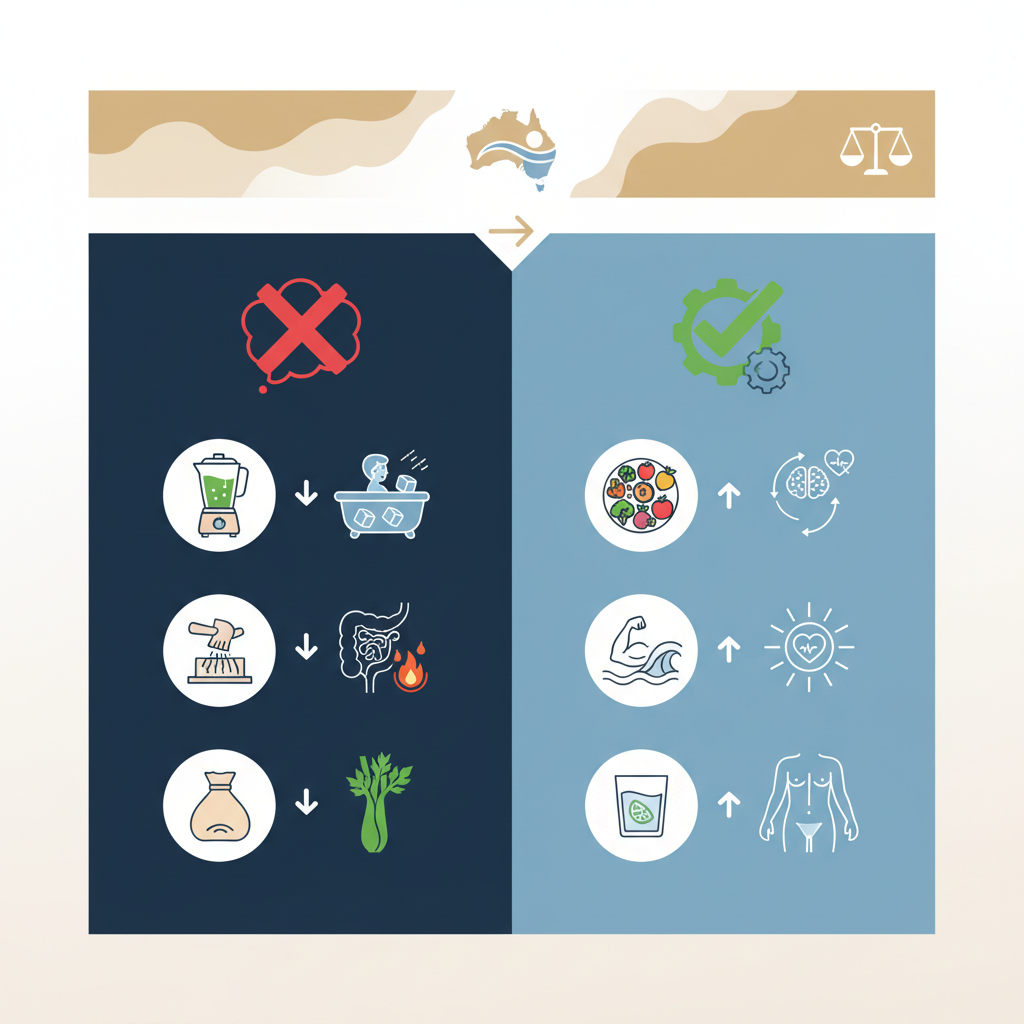
Trend 1: Intermittent Fasting – Metabolic Magic or Just Meal Timing?
The Myth: Intermittent fasting (IF) is a 'starvation diet' that only works by reducing calories, or conversely, that it allows you to eat whatever you want as long as it's within an eight-hour window.
The Fact: Intermittent fasting is less about 'what' you eat and more about 'when' you eat, allowing the body periods of lower insulin levels. For Australians monitoring their metabolic health, understanding blood sugar levels—measured in mmol/L—is crucial. When we eat constantly, our bodies stay in a 'fed' state, primarily burning glucose. Fasting encourages the body to tap into stored energy.
Trend 2: The Fiber Revolution – More Than Just Digestion
The Myth: Fiber is just for 'staying regular' and you can get enough from a standard Australian diet.
The Fact: Most Australians fall short of the recommended daily fiber intake (25g for women, 30g for men). According to Food Standards Australia New Zealand (FSANZ), fiber is essential for more than just bowel health; it plays a significant role in how our bodies process carbohydrates. Soluble fiber, in particular, creates a gel-like substance in the gut that slows the absorption of sugars, helping to maintain steadier blood sugar levels (measured in mmol/L).
The trend of 'fiber supplementation' has grown because modern processed foods are often stripped of this nutrient. A structured approach, such as using a fiber matrix like Balance before a meal, acts as a tool to organize your nutritional intake. It doesn't replace the need for vegetables, but it provides a consistent baseline that makes healthy choices easier to sustain in a busy environment.
Trend 3: Biohacking vs. Foundational Habits
The Myth: You need expensive gadgets, cold plunges, and complex supplement stacks to be 'well.'
The Fact: While 'biohacking' is a major trend in Melbourne and Brisbane's fitness communities, the most effective 'hacks' are actually foundational habits. Quality sleep, movement, and managing the glucose response to meals are the pillars of longevity. For those interested in the science, learning how to read longevity research is a vital skill. It helps you distinguish between a study done on mice and a peer-reviewed human clinical trial.
The structured reflection approach emphasizes this distinction. It doesn't promise a 'new you' overnight. Instead, it offers a way to simplify these foundational habits—fasting and fiber—into a repeatable daily routine. This shift from 'hacking' to 'structuring' is what leads to long-term consistency.
Navigating the Australian Health Landscape
When you encounter a new wellness trend, how do you evaluate it? In Australia, we have specific frameworks to help:
- Healthdirect: A government-funded service that provides quality-assured health information. If a trend claims to cure a condition, check it here first.
- FSANZ: They regulate what can be said on food labels. If a product makes a 'health claim,' it must meet specific criteria.
- General Practitioners (GPs): Always consult your GP before starting a new fasting regimen or significant dietary change, especially if you are managing conditions like Type 2 diabetes or heart disease.
Understanding health literacy is not just for specific regions; it is a global necessity. Whether you are in Al-Ahsa or Adelaide, the ability to question the evidence behind a trend is your best defense against misinformation.
Practical Element: The "Trend Litmus Test"
Before Sarah (our Sydney professional) buys another 'detox' tea, she can use this checklist to evaluate any wellness trend:
- Does it promise a 'cure' or 'reversal'? If yes, be skeptical. Real health improvements are gradual.
- Is there a structured way to follow it? Trends that are vague are harder to sustain than those with a clear protocol.
- Does it align with Australian Dietary Guidelines? Check if it encourages whole foods and adequate fiber.
- How does it affect my daily routine? If it requires 3 hours of prep, it likely won't last.
- What does the evidence say? Look for independent research rather than just company-sponsored testimonials.
Conclusion: Moving Beyond the Hype
Wellness in Australia shouldn't be a source of stress. By focusing on health literacy and adopting structured supports like the structured reflection approach, you can move away from the 'myth of the month' and toward a sustainable lifestyle. Remember, the goal isn't perfection; it's finding a routine that makes the healthy choice the easy choice.
If you are ready to stop guessing and start following a structured path tailored to your lifestyle, the first step is understanding your current baseline.
ابدأ تقييمك الصحي
Take our health literacy assessment to see which structured approach best fits your daily routine.
Frequently Asked Questions
What is the scope of this guide?
This guide is educational and helps readers organize questions and observations for further learning.
How should I use the information?
Use it to review terminology, note personal questions, and identify sources that require verification.
When should I seek professional guidance?
Discuss personal symptoms, medicines, diagnoses, or treatment decisions with a licensed professional.
Explore health education with care
Use ATHAR’s educational guides and practical tools to choose your next learning step.