Evaluating Health Claims: A Guide for the Informed Gulf Reader to Verify Information
Author: Feras Alayed
Published:
Category: research-literacy-arabic
Reading Time: 9 minutes
Health Claim Evaluation Skills: A Conscious Gulf Reader's Guide to Information Verification
1. Introduction: The Importance of Health Literacy in the Digital Age
In the era of information explosion, access to health information has become easier than ever. However, this vast availability carries significant challenges regarding the accuracy and reliability of shared content. For readers in the Arabian Gulf, where social media platforms are exceptionally active, it has become essential to possess critical thinking and analytical skills to distinguish between evidence-based medical advice and marketing claims or baseless rumors. Health literacy is not just about knowing medical facts; it is the ability to seek, understand, evaluate, and correctly apply information to improve quality of life. When we discuss health literacy, we refer to a toolkit of mental strategies that protect individuals from falling victim to misinformation that could lead to poor health decisions. The goal of this guide is to empower readers to transition from passive consumers of information to conscious investigators capable of asking the right questions. We live in a digital environment where advertisements often blend with educational content, making the lines between fact and fiction blurry. Therefore, enhancing health literacy is the first line of defense against unscientific practices. Adopting a constructive skeptical mindset does not mean rejecting everything new, but rather demanding proof before belief. In the following sections, we will deconstruct the mechanisms of evaluating health claims, from understanding complex terminology to managing dialogues with specialists, ensuring your journey toward wellness is built on solid, reliable foundations.
2. Understanding Basic Scientific Terms in Arabic Content
Health claims are often wrapped in scientific-sounding terms to lend them an air of credibility. Understanding the true meaning of these terms is key to exposing exaggerated claims. It is crucial for the reader to distinguish between a "clinical study" and a "personal observation." A clinical study follows strict protocols and ethical oversight, while a personal observation is merely an individual experience that cannot be generalized. Furthermore, the concept of "correlation vs. causation" stands out as one of the most important principles; just because there is a link between consuming a substance and an improved health condition does not necessarily mean the substance caused the improvement—other factors may be involved. Another term is "bioavailability," which refers to how well the body can absorb and use a substance, which is quite different from its mere presence in a product. Caution is also needed with the word "natural," as it does not automatically mean "safe"; many natural substances can be toxic or interact negatively with medications. The following table explains some common terms and their educational meanings:
| Scientific Term | Simplified Educational Meaning |
|---|---|
| Peer-Review | The process of evaluating research by independent experts before publication to ensure quality. |
| Randomized Controlled Trials (RCT) | Studies where participants are randomly assigned to groups to reduce bias and ensure accuracy. |
| Statistical Sample | The group of individuals included in a study; larger samples generally increase reliability. |
| Metabolism | Chemical processes within the body that convert food into energy. |
Recognizing these differences helps in reading health articles with a discerning eye, allowing the reader to distinguish between flowery language and data-backed facts. Scientific terms are not just complex words; they are tools for describing reality precisely, and their misuse is a red flag that must be noted.
3. Red Flags: How to Spot Unverified Health Claims
Many unverified health claims rely on psychological strategies to attract consumers. The most prominent of these are promises of "instant results" or "miracle cures." Science is inherently cumulative and slow; any claim promising to solve chronic health issues in a few days should immediately trigger skepticism. Another sign is the use of "individual testimonials" instead of scientific data. Personal success stories, while inspiring, are not scientific evidence because they lack control and oversight and may be paid for or result from the placebo effect. One should also be wary of products claiming to treat a long and diverse list of unrelated diseases; scientific treatments are usually specific and targeted. Look for "emotional language"; claims using phrases like "a secret doctors are hiding" or "a suppressed revolutionary discovery" aim to provoke conspiracy theories rather than present facts. Additionally, the absence of documented scientific references or reliance on very old or irrelevant references is a strong indicator of a weak claim. The reader should always ask: Who benefits from this claim? If the source is the seller of the product, the potential for bias is very high. Awareness of these red flags acts as a primary filter, preventing misinformation from entering your knowledge system, saving you time and effort while protecting your health from uncalculated risks.
4. Evaluating Sources: Distinguishing Between Official and Unofficial Platforms
Not all platforms discussing health are equal in credibility. To evaluate any source, start by looking at the "domain" of the website; sites ending in .gov (government), .edu (academic), or .org (accredited non-profits) are generally more reliable than commercial .com sites aimed at profit. In our region, the official websites of health ministries and regulatory bodies are the primary references for verified information. When reading from social media, verify the "identity of the author" and their specialization; being an influencer with millions of followers does not make someone a health expert. Look for the author's CV and whether they have published research in reputable scientific journals. Also, pay attention to the "publication date"; medical information evolves rapidly, and what was considered a fact five years ago may have been updated or debunked today. Scientific methodology also requires a reliable source to present "side effects" or limitations of the information, whereas unreliable sources focus only on the positives.
Always remember that trust is not granted based on the speaker's fame, but on the strength of the evidence they provide and its alignment with general scientific consensus.Evaluating sources requires extra effort, but it is a necessary investment to ensure the safety of the information upon which you base your health decisions.
5. Label Reading Skills and Understanding Ingredient Lists
Labels on health and food products are the "identity cards" that reveal the truth of what they contain. The first skill to learn is that ingredients are listed in "descending order" by weight; the first ingredient on the list is present in the largest amount. If sugar or preservatives are at the top of the list, this gives you a clear indication of the product's quality. Attention must also be paid to the "serving size." Calories or ingredient percentages are often shown for a very small portion that does not reflect realistic consumption, misleading the consumer about the actual amount ingested. Look for "alternative names"; sugar, for example, may appear as maltodextrin, corn syrup, or sucrose. It is also important to understand the difference between "expiration date" and "best before," where the former relates to safety and the latter to quality. The following checklist helps when reading any label:
- Are the ingredients clear and known, or just complex chemical symbols?
- What is the order of the primary ingredients in the list?
- Does the product contain artificial additives or unnecessary colors?
- Do the claims on the front of the package match the facts in the ingredient table?
Mastering label reading transforms you from an emotional buyer influenced by attractive packaging into a technical buyer who analyzes actual content, an essential part of health self-management.
6. Preparing Effective Questions for Healthcare Providers
A visit to a doctor or nutritionist is the perfect opportunity to verify any health claim you have encountered. For this visit to be productive, you must come prepared with a list of specific questions. Instead of the general question "Is this product good?", try asking: "What scientific evidence supports the use of this ingredient for my specific health condition?" or "Are there potential interactions between this supplement and the medications I am currently taking?". It is also important to ask about the "safe dosage" and "recommended duration of use," as what is safe for a short period may not be so in the long term. Inquire about "available alternatives" that might be more effective, less expensive, and backed by stronger evidence. Do not hesitate to ask for clarification on terms you do not understand; as a health service recipient, you have the right to fully understand what is being offered to you. Effective dialogue with a healthcare provider builds a bridge of trust and ensures that decisions are the result of collaboration between the doctor's expertise and the informed patient's preferences. Remember that your healthcare provider is your partner; the more precise your questions, the better the answers you will receive to make science-based decisions away from the noise of advertisements.
7. The Importance of Personal Health Journaling
Health awareness is incomplete without accurate self-monitoring. Keeping notes in a personal health journal helps you discover patterns you might not notice in passing. This journal should include the supplements you take or dietary changes, while monitoring "physical response," "changes in energy levels," or "sleep quality." This is not just diary entry; it is the collection of personal data that helps when reviewing with a doctor to provide an accurate picture of your condition. When trying any new health advice (after ensuring its safety), record the start date, the expected goal, and how you actually felt after two weeks or a month. This approach helps you avoid "confirmation bias," where we sometimes convince ourselves we are improving simply because we spent money on a product. A health journal provides tangible evidence of what works for you and what doesn't, making you more independent and capable of evaluating claims based on your documented experience supported by medical opinion. In conclusion, the journey of health awareness is a continuous process of learning, critiquing, and monitoring. By possessing these skills, you become the primary person responsible and the strongest advocate for your health and wellness in a world full of conflicting information.

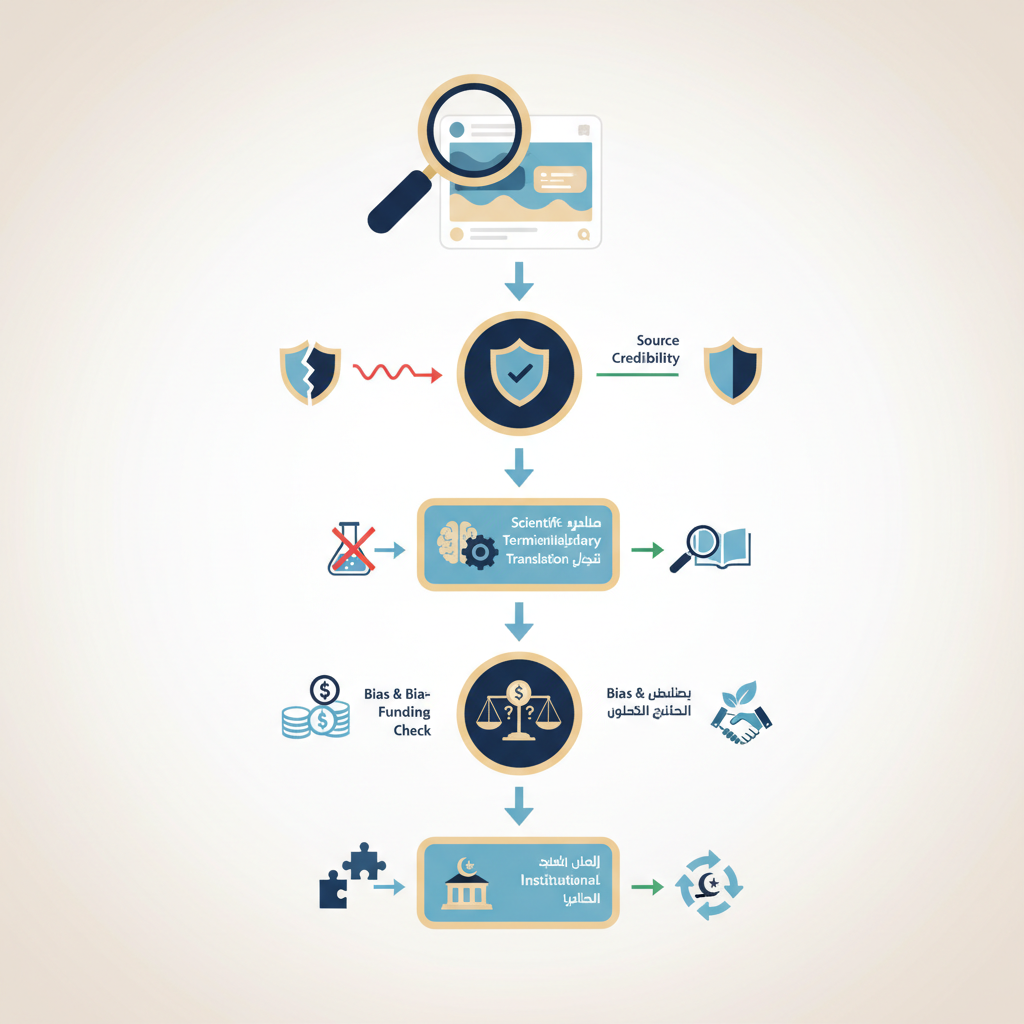
Explore health education step by step
Use the educational guides and practical tools to choose your next learning step.