Health Literacy Guide for Al-Ahsa: Skills for Understanding Medical Info
Author: Feras Alayed
Published:
Updated:
Category: al-ahsa-health-literacy
Reading Time: 9 minutes
Health Literacy Guide for Al-Ahsa Residents: Skills for Understanding Medical Information
1. The Concept of Health Literacy and Its Importance in Modern Saudi Society
Health literacy is defined as the ability to obtain, understand, process, and subsequently use basic health information to make informed health decisions. In the context of modern Saudi society, specifically in the Al-Ahsa region, health literacy is no longer a cognitive luxury but an urgent necessity to keep pace with the significant transformations in the healthcare system. An individual possessing health literacy skills means they can effectively navigate the healthcare system, comprehend complex medical instructions, and interact positively with medical staff. This literacy is not limited to reading and writing; it extends to the ability to analyze risks and benefits, understand medication dosages, and grasp the concepts of prevention before treatment. A health-literate individual is an active partner in their therapeutic journey, where their awareness contributes to reducing medical errors resulting from misunderstanding and leads to improved general health outcomes. Given the digital transformation in the Kingdom, it has become essential for Al-Ahsa residents to possess the tools necessary to filter the vast amount of information available online and distinguish between scientific facts and unsubstantiated claims. Enhancing health literacy contributes to building a vital society capable of managing its health challenges efficiently, reducing the burden on primary healthcare facilities and increasing the quality of life for individuals and families. Health literacy is the bridge that connects medical recommendations to practical application in daily life, serving as the primary driver for empowering individuals to control their personal health trajectories.
2. Decoding Common Medical Terms in Reports and Consultations
Medical reports often seem written in an obscure language, which can cause anxiety for the patient. However, most of these terms rely on consistent linguistic roots, often Latin or Greek, and understanding them facilitates much of the communication process. For example, the suffix -itis always denotes the presence of inflammation, as in arthritis or sinusitis. The suffix -ology refers to the study or science of a specific field, such as cardiology. It is also important to distinguish between terms describing a condition: Acute refers to a condition that starts suddenly and lasts for a short time, while Chronic means a condition that persists for a long duration and requires ongoing management. When reading laboratory results, we find terms like Benign, which indicates no cancerous risk, and Malignant, which indicates the opposite. One must also understand Metabolism, the process by which the body converts food into energy; understanding this term helps in grasping how medications or foods affect body functions. Knowing these codes enables the visitor to ask more precise questions to the doctor, such as inquiring about the meaning of an elevation in a specific marker and whether it falls within the Reference Range specific to their age and health status. The goal of learning these terms is not self-diagnosis but building a common language with the medical team that ensures essential information is not lost in translation between scientific and colloquial language.
3. A Practical Guide to Reading and Understanding Consumer and Food Labels
Reading food labels is a fundamental skill in health literacy, as it is the window through which we see what enters our bodies. When examining any product, one should start with the Serving Size, as all information on the label is based on this serving, not necessarily the entire package. Next, look at the order of ingredients; ingredients are listed in descending order by weight, so if sugar or hydrogenated oils are at the beginning of the list, they are the primary components of the product. It is necessary to pay attention to the different names for sugar, which may appear as corn syrup, maltose, or dextrose. Focus should also be placed on Dietary Fiber and its presence in good proportions to support digestive health, comparing it to the total carbohydrate content. Regarding fats, one must distinguish between saturated fats and Trans Fats, which are recommended to be avoided as much as possible. Labels on non-food consumer products, such as supplements or care products, also require careful reading; look for expiration dates, correct storage methods, and warnings regarding potential interactions. Awareness of labels protects the consumer from marketing deception, where terms like "natural" or "organic" might be written on the front, while the ingredient list on the back reveals a different reality. Dedicating extra minutes in the store to read these details is a long-term investment in preventing health problems associated with unbalanced nutrition.
4. The Importance of Tracking Daily Habits in Habit Journals
Tracking daily habits is a powerful tool for improving health self-awareness. When an individual in Al-Ahsa records their sleep patterns, water intake, physical activity levels, and meal types, they build a personal database that no laboratory test can provide with similar accuracy. These records, known as Habit Journals, help in discovering links between behaviors and health symptoms. For instance, a person might notice that headaches recur on days when water intake is low or sleep is disrupted. Recording mood and stress levels also provides a comprehensive view of mental health and its connection to physical health. For individuals monitoring specific conditions, these journals serve as an accurate reference during doctor visits, rather than relying on memory, which can fail under the time pressure of a clinic. The journal can also include notes on how the body responds to certain foods or lifestyle changes. The act of journaling itself promotes self-discipline and makes the individual more responsible for their daily decisions. The journal does not need to be complex; a simple notebook or an electronic application suffices, provided there is consistency and honesty in recording data. Over time, these records become an empowerment tool that allows the individual and healthcare providers to understand the full picture of health and design more personalized and effective care plans.
5. How to Prepare an Effective and Organized List of Questions Before a Healthcare Visit
Patients often feel overwhelmed during a medical appointment, leading to the omission of essential inquiries. Therefore, prior preparation is the key to a successful visit. It is recommended to follow the "Ask Me 3" methodology, which involves asking three main questions: What is my main problem?, What do I need to do?, and Why is it important for me to do this?. Before the appointment, write a list of all symptoms you are experiencing, when they started, and what makes them worse or better. Also, prepare a list of all medications and supplements you are currently taking with their exact dosages. Do not hesitate to ask the doctor about available alternatives or potential side effects of any proposed procedure. It is also important to inquire about how to read the results of requested tests and what the next step is after the results appear. If there is a term you do not understand, ask the doctor to explain it in simpler language or with a diagram. Organizing these questions on paper or a phone reduces anxiety and ensures the limited clinic time is used effectively. Remember that the doctor is a partner in your care, and clear questions help them provide a more accurate diagnosis and a treatment plan that fits your lifestyle. Good preparation transforms the visit from merely receiving medical orders into an interactive dialogue based on mutual understanding and cooperation.
6. Criteria for Evaluating Health Information Sources Online and on Social Media
In the digital information age, health advice is easily accessible at the click of a button, but not all information is accurate or safe. To evaluate any online health source, strict criteria must be applied. First, Source and Authority: Is the information issued by a reliable government agency, an academic institution, or a global health organization? Sites ending in .gov or .edu are often more reliable. Second, Currency: Medicine is a constantly evolving science, so check the publication date or the last update of the information. Third, Objectivity: Is the site intended to educate or to sell a specific product? Sites promoting miracle products or immediate results should be viewed with caution. Fourth, Scientific Evidence: Is the information supported by clinical studies and clear scientific references? Personal stories or individual experiences presented as general facts should be avoided. On social media platforms, the number of followers should not be considered evidence of the accuracy of information; influencers are not necessarily health professionals. It is essential to cross-reference information from multiple reliable sources before adopting any advice. Digital health literacy means healthy skepticism of exaggerated claims and relying on the official platforms of the Saudi Ministry of Health and its affiliated entities, which provide documented information tailored to the local environment and approved standards.
7. Enhancing Effective Communication with Health Cadres in Al-Ahsa Care Centers
Effective communication is the cornerstone of providing high-quality healthcare. In Al-Ahsa healthcare centers, the social fabric is characterized by mutual appreciation and respect, which can be leveraged to enhance the dialogue between the patient and the medical staff. Effective communication begins with active listening; that is, listening to the doctor's instructions carefully and without interruption, then rephrasing what you understood to ensure its accuracy. A visitor should not be shy about requesting a translator or clarification if there are language barriers or difficult technical terms. On the other hand, the visitor must be honest and transparent about their habits and medical history, as hiding information can lead to inaccurate medical decisions. Using positive body language, such as eye contact, fosters trust between both parties. It is also encouraged to involve family members in the discussion if it helps in understanding and implementing the treatment plan at home. Building an ongoing relationship with a family doctor at a primary care center facilitates the communication process, as the doctor becomes familiar with the family's health history as a whole. Communication is not just the transfer of information; it is a trust-building process that ensures patient adherence to the treatment plan and their satisfaction with the service provided. Through open and organized dialogue, many health challenges can be overcome, achieving the best possible outcomes for the Al-Ahsa community.
Educational Glossary Table
| Term | Simplified Meaning |
|---|---|
| Metabolism | How the body converts food and drink into energy. |
| Vital Signs | Basic measurements such as heart rate, blood pressure, and temperature. |
| Primary Prevention | Actions taken to prevent a disease from occurring in the first place. |
| Drug Interactions | The effect of two or more drugs on each other when taken together. |
| Reference Range | The normal limits for laboratory test results. |

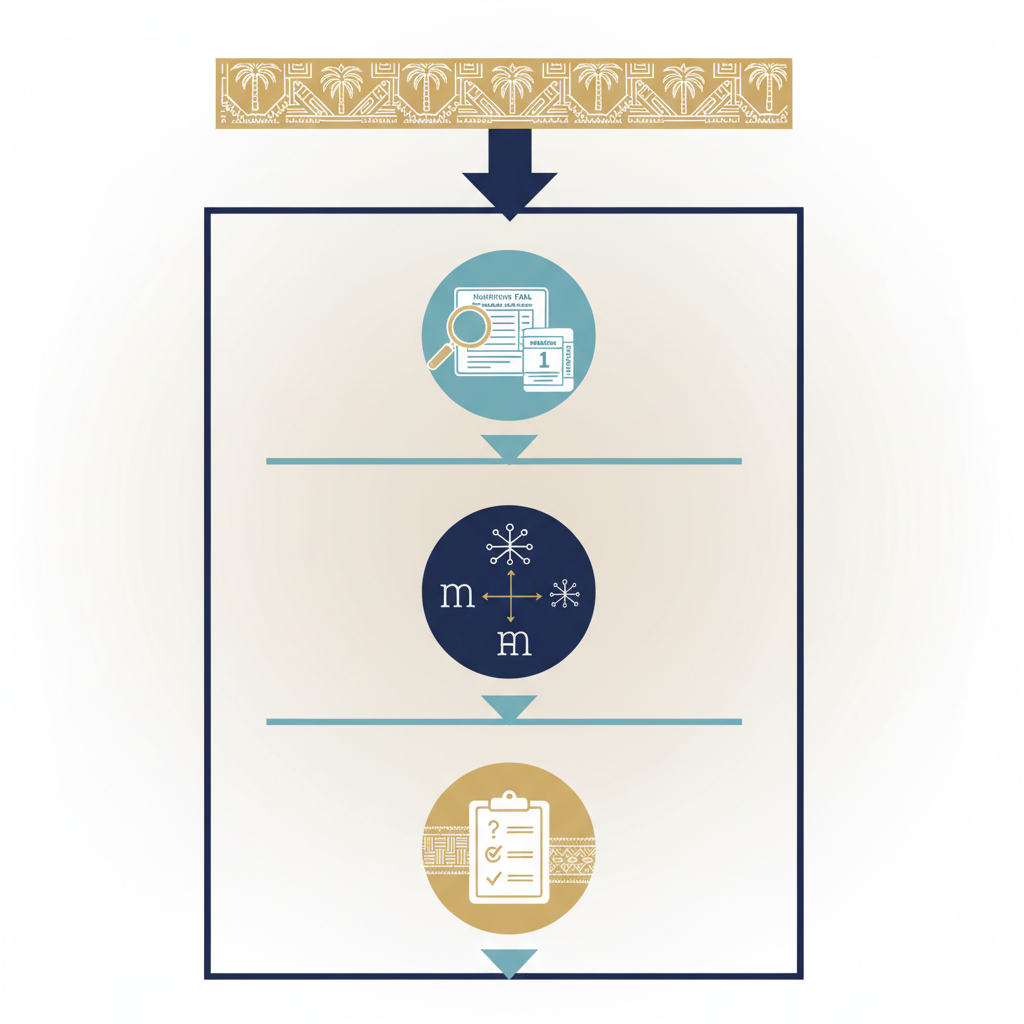
Explore health education step by step
Use the educational guides and practical tools to choose your next learning step.