How to Evaluate Coaching, Accountability, and Privacy in Wellness Programs
Author: Feras Alayed
Published:
Updated:
Category: feel-great-program
Reading Time: 4 minutes
Why do we seek support in the wellness journey?
We often start with great enthusiasm, buying tools and setting plans, only to find ourselves back at square one after a few weeks. The problem is usually not a lack of willpower, but the absence of a supportive structure that transforms big goals into simple, sustainable daily steps. In a world full of conflicting information, finding a reliable support system becomes a necessity, not just a luxury. Understanding how to evaluate this support, ensuring the quality of follow-up, and protecting your privacy are the fundamental pillars that guarantee a safe and successful journey.
The Power of Accountability: Why do we commit when someone is watching?
Accountability is the hidden engine behind success in any behavioral change. Psychological studies indicate that humans tend to keep their promises more when they announce them to someone else or are part of a community that shares the same goals. However, not all types of accountability are equal. Effective accountability is that which builds self-discipline in you and does not make you entirely dependent on others. When evaluating any wellness program, look for a system that provides tools to track your progress yourself, with a human or community element to encourage you in moments of lethargy.
Criteria for Evaluating Coaching and Follow-up
When you join a program that provides coaching or guidance, you should keep several basic points in mind to ensure you get true value:
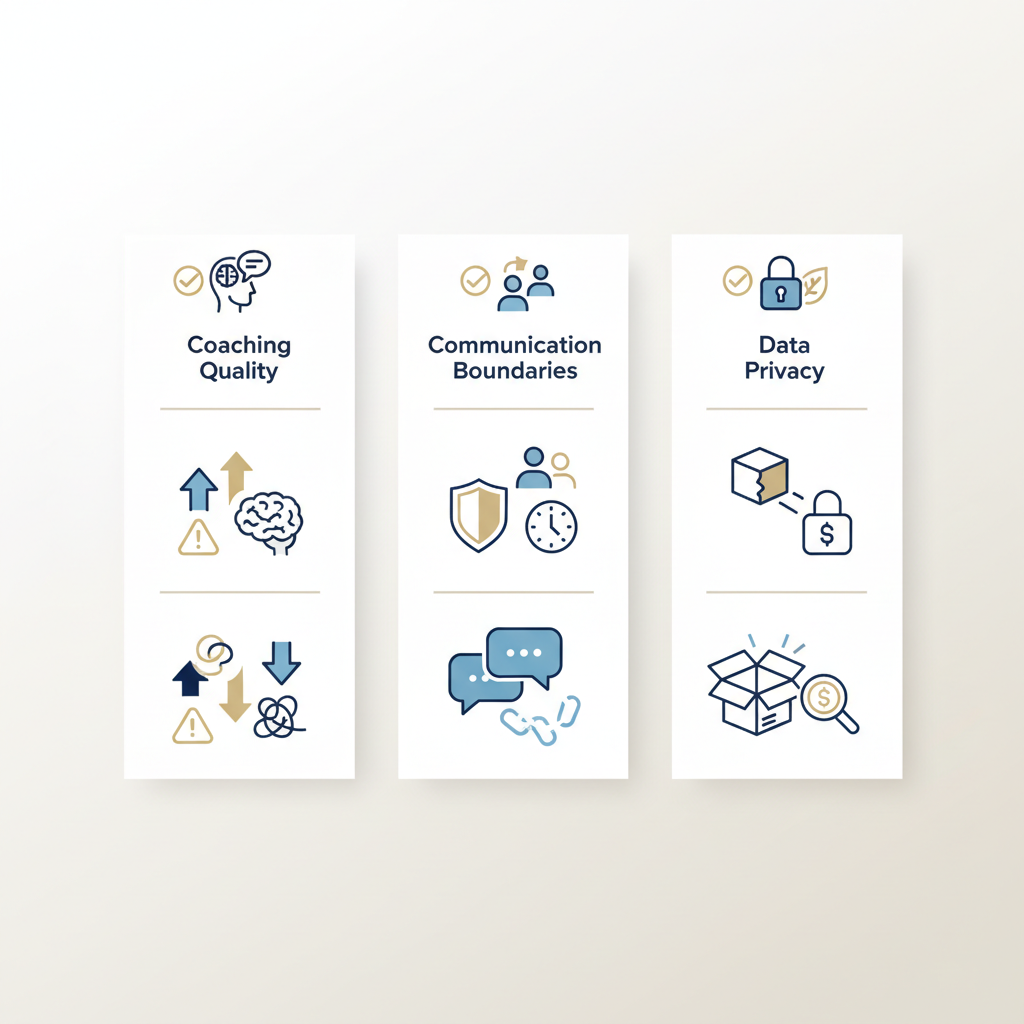
- Clarity in Roles: A health coach is not a doctor or a therapist. Their primary job is to help you organize your routine, motivate you, and facilitate your understanding of the available tools. If a coach starts diagnosing diseases or prescribing medications, this is a red flag that warrants caution.
- Communication Quality: Are responses prompt and professional? Does the coach encourage you to ask questions and verify information? Good communication builds trust and reduces the stress associated with change.
- Empowerment, Not Dependency: A successful program is one that teaches you how to walk alone eventually. Look for a mentor who explains "why" we do this, not just "what" to do.
Privacy and Data Security: Your Primary Right
In the digital age, your health and personal data are your most valuable assets. Before sharing any information about your dietary habits or measurements, you must verify the program's privacy policy. You should always ask: Where is my data stored? Who can access it? Is it used for marketing purposes without permission? Professional programs set strict boundaries and ensure that your information remains confidential and used only to improve your personal experience within the program.
Setting Boundaries: When is communication useful?
Constant communication can be a double-edged sword. Too many notifications and messages can lead to "wellness burnout," where you feel pressure instead of motivation. A balanced program is one that respects your time and provides space for implementation without disturbance. Make sure the program allows you to control the pace of communication and provides clear channels for obtaining support only when needed, making commitment a natural part of your day rather than an additional burden.
Feel Great as a Structural Framework and Behavioral Support
Within this context of seeking continuity, the Feel Great program stands out as an option that focuses on organizing the daily routine. The program does not present itself as a medical treatment, but as a practical tool that helps people stick to their habits. By providing a clear timeframe and using products that complement the routine, the program helps make daily steps clearer and more consistent. Many users find that having a specific system reduces "decision fatigue," making it easier for them to persist in their healthy choices for longer periods.
The program is essentially based on the idea of simplifying the routine; it provides tools that support consistency, which is the most important element in any wellness journey. However, it remains essential to always review official product labels, understand the ingredients, and discuss the suitability of this routine for your specific circumstances with a licensed professional, especially if you suffer from certain health conditions or take specific medications.
Practical Steps to Verify Before Starting Any Program
- Read Official Information: Do not rely solely on what is said on social media. Request official brochures and review the terms and conditions.
- Ask About the Supportive Community: Is there a positive community you can interact with? Group support is often the strongest motivator for continuity.
- Define Your Goals Clearly: Are you looking to organize your time? Or improve your dietary habits? Knowing your goal helps you evaluate whether the program provides the right tools for you.
- Consult Professionals: General information is the starting point, but your individual case always deserves the opinion of a licensed professional who knows your health history.
Conclusion: Wellness is a Journey, Not a Destination
Choosing the right support system is an investment in your future. Look for a program that respects your mind, protects your privacy, and provides you with the tools that make commitment easy and enjoyable. Always remember that the goal is to build a sustainable lifestyle that you can enjoy every day, not just follow strict rules for a temporary period. Awareness is your first key, and continuous verification is your guarantee of success.
Start with a clear, sustainable step

The educational pathway helps you clarify your goal and build a more organized routine before choosing your next step.
Start and choose your next step