النظام الغذائي الكندي ومقاومة الأنسولين: ما الذي يجب تغييره؟
Author: Feras Alayed
Published:
Updated:
Category: canadian-health
Reading Time: 12 minutes
Key Takeaways
- Insulin resistance is common in Canada: trends suggest millions of Canadians have prediabetes or diabetes risk factors; diet is a major modifiable driver (Diabetes Canada, CIHI).
- Shifting from refined carbohydrates and added sugars toward higher-fibre, protein-rich and unsaturated-fat choices may help lower post-meal glucose excursions (use mmol/L for blood glucose goals).
- Canada’s Food Guide, Mediterranean-style patterns, and increased soluble fibre intake are evidence-based dietary approaches that may help metabolic health.
- Behavioural tools — meal timing (4-4-12 intermittent fasting), portion control, protein at breakfast, and walking after meals — provide practical, low-cost strategies across provinces.
- The Feel Great system (Balance soluble-fibre matrix, Unimate yerba mate, and the 4-4-12 protocol) can be used as a lifestyle support option — it is not a medication and users should check Health Canada NPNs and consult local healthcare providers.
TL;DR
Insulin resistance underlies much of the rising burden of prediabetes and type 2 diabetes in Canada. Practical dietary changes — less refined carbs and added sugar, more soluble fibre, lean protein, unsaturated fats, and regular physical activity — combined with timing strategies (like 4-4-12) may help manage post-meal glucose responses (measured in mmol/L). Use Canada’s Food Guide and provincial resources; discuss changes with your family doctor or provincial diabetes programmes.
🇨🇦 آلاف الكنديين يستخدمون Feel Great لدعم صحتهم الأيضية بشكل طبيعي. اعرف المزيد واطلب من هنا ←
The Canadian Diet and Insulin Resistance: What to Change
Shocking Canadian statistic: Diabetes Canada projects that by 2025 up to 11 million Canadians will be living with diabetes or prediabetes — a clear signal that insulin resistance and diet-related risk factors are widespread across provinces from British Columbia to Newfoundland (Diabetes Canada, CIHI).
Why this matters in Canada
Insulin resistance — when cells respond less effectively to insulin — raises post-meal blood glucose and can progress to prediabetes and type 2 diabetes. The Canadian healthcare system spends billions on diabetes care, and provincial programmes vary: Ontario and Alberta have different diabetes education resources, British Columbia offers specific nutrition counselling through provincial clinics, and Quebec has its own integrated primary-care pathways. Early dietary changes are among the most accessible interventions to reduce risk and may help lower fasting glucose and post-prandial spikes (measured in mmol/L).
What blood glucose numbers mean (in mmol/L)
- Normal fasting plasma glucose: generally <6.1 mmol/L (check provincial lab reference ranges).
- Impaired fasting glucose / prediabetes: often around 6.1–6.9 mmol/L (guideline thresholds vary slightly).
- Diabetes diagnostic fasting glucose: >=7.0 mmol/L (confirm with repeat testing and A1C measurement).
Use your provincial lab and Diabetes Canada guidance to interpret results; your family doctor or a walk-in clinic (common in many provinces) can order tests and interpret them in context.
How the typical Canadian diet contributes to insulin resistance
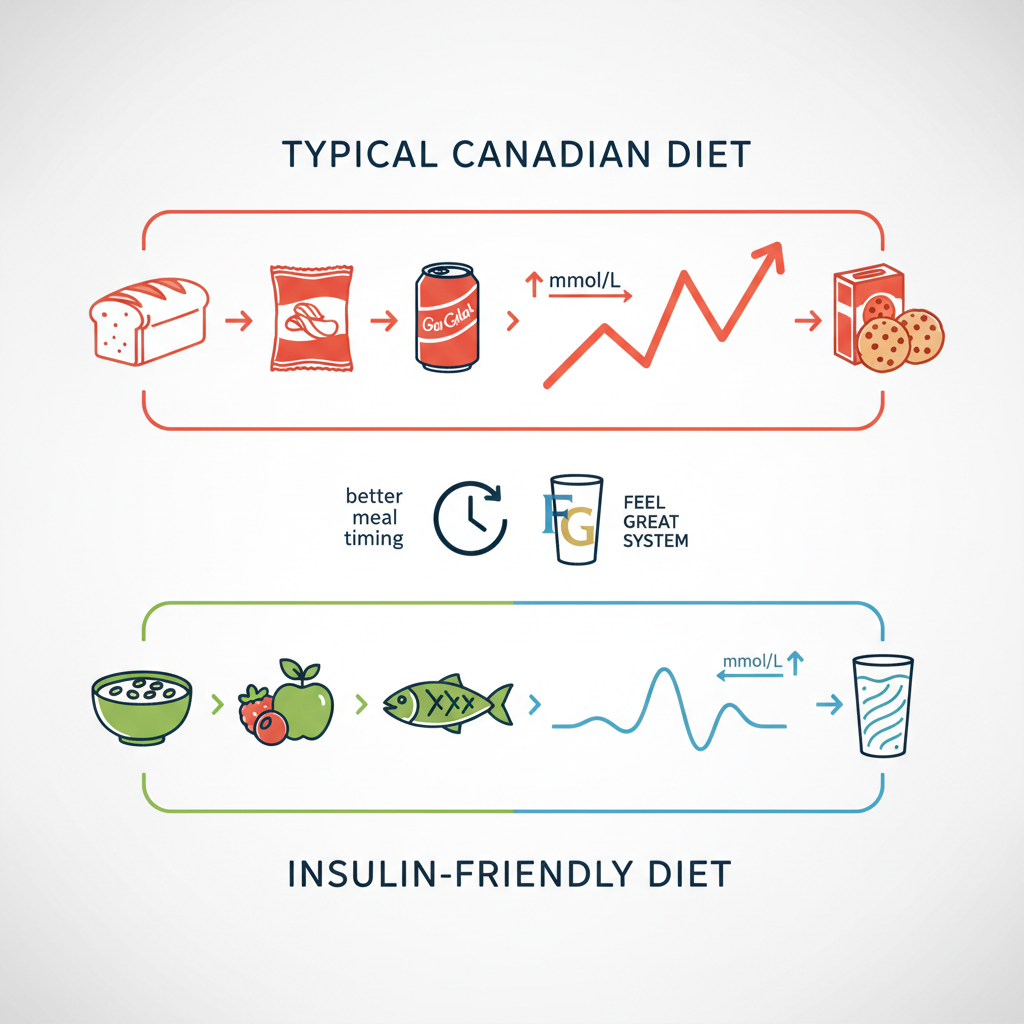
Canadian dietary patterns often include high amounts of refined carbohydrates and sugary beverages, insufficient soluble fibre, and periods of sedentary behaviour during long winters. Contributing factors include:
- High intake of refined grains and added sugars (baked goods, pastries, sweetened beverages).
- Low intake of whole grains, legumes, vegetables, and fruit — sources of soluble fibre.
- Frequent snacking on processed convenience foods with high glycaemic load.
- Seasonal inactivity during winter months reducing insulin sensitivity (vitamin D insufficiency may also play a role).
Evidence-based dietary patterns to consider (Canadian context)
1. Follow Canada’s Food Guide as a foundation
Canada’s Food Guide emphasises vegetables and fruits, whole grain foods, and protein choices that include plant-based sources and lean meats. This pattern aligns with research showing that diets high in fibre, whole grains, and legumes are associated with lower insulin resistance and lower cardiometabolic risk (Health Canada — Canada’s Food Guide).
2. Mediterranean-style eating
The Mediterranean diet — rich in olive oil, nuts, vegetables, legumes, whole grains, fish and moderate in dairy — has strong RCT and meta-analysis evidence for improving glycaemic control and reducing progression to diabetes. It is adaptable to Canadian foods (use canola oil along with olive oil; local fish from BC or Atlantic provinces) and is recommended in many Canadian practice guidelines.
3. Higher soluble fibre and legumes
Soluble fibre (oats, barley, psyllium, legumes, apples) forms a gel in the gut and can slow carbohydrate absorption and blunt post-prandial glucose rises. Increasing soluble fibre intake gradually can be particularly effective for improving post-meal glucose in mmol/L.
4. Reduce refined carbohydrate load and added sugar
Cutting back on sugar-sweetened beverages, white bread, pastries, and many processed snack foods reduces rapid glucose excursions. Replace with whole-food alternatives and consider portion control strategies.
Practical swaps and portion tips for Canadians (province-friendly)
- Swap white bread and bagels for 100% whole-grain or two-slice smaller portions; pair with protein (eggs, Greek yoghurt) at breakfast to lower post-meal glucose.
- Replace soda and sweetened coffees with water, unsweetened tea, or carbonated water with citrus. For cold winters, enjoy warm herbal teas or yerba mate (see Feel Great Unimate below).
- Add a half-cup of legumes (lentils, chickpeas, baked beans) 3–4 times weekly; they are inexpensive and widely available across Canada.
- Choose fatty fish (salmon, trout) 2x weekly — accessible across coastal provinces and widely available frozen in markets from BC to Newfoundland.
- Include 1–2 tablespoons of soluble-fibre-rich foods (oats, ground flaxseed, or a fibre supplement) with meals to reduce glucose peaks.
Meal timing and the 4-4-12 approach (how intermittent timing may fit)
Time-restricted eating and structured meal patterns can change glucose profiles. The Feel Great 4-4-12 protocol (a 4-hour eating window, then 4 hours light fast, then a 12-hour overnight fast pattern adapted for lifestyle) is one practical option that some Canadians use. Evidence from RCTs and meta-analyses indicates that intermittent fasting or time-restricted eating may reduce fasting glucose and insulin in some adults, especially when combined with improved food quality and physical activity. Always adapt timing to work, family schedules, and provincial care recommendations.
Physical activity, sleep, and seasonal considerations
Regular activity improves insulin sensitivity. Simple strategies that work across provinces:
- Walk 10–15 minutes after meals — helps reduce post-meal glucose peaks.
- Strength training 2x per week improves muscle glucose uptake.
- Address vitamin D in long Canadian winters (check local provincial guidance and labs) as deficiency may correlate with metabolic risk.
Food and medication interactions — what to discuss with your healthcare provider
If you take glucose-lowering medication or insulin, dietary changes and fasting can affect blood glucose in mmol/L — discuss any planned changes with your family doctor, pharmacist, or provincial diabetes education programme (available in many provinces). Walk-in clinics can help with urgent questions, but continuity with a family doctor or a diabetes educator is ideal.
How to make changes that last — behavioural tips tailored to Canadian life
- Start with one swap per week (e.g., replace one sugary drink with water).
- Plan meals around frozen or canned legumes and vegetables for cost and accessibility across provinces.
- Use local seasonal produce (root vegetables in winter, berries in summer) to keep costs down and support adherence.
- Track fasting and post-meal glucose in mmol/L for 1–2 weeks to see patterns — many provincial labs and pharmacies can lend or sell glucose monitors.
- Seek community resources: Diabetes Canada, provincial health services, and Heart & Stroke programs offer nutrition counselling and educational resources.
How Feel Great may fit into a Canadian plan
Feel Great is a lifestyle support system that combines three pillars: Balance (a soluble-fibre matrix designed to help manage post-meal glucose responses), Unimate (yerba mate extract containing chlorogenic acids for sustained energy and mental clarity), and the 4-4-12 intermittent timing protocol. It is not a medication. Some clinical studies (see PDR listing) explore components like soluble fibre and yerba mate for metabolic outcomes. Users in Canada should confirm Health Canada Natural Product Numbers (NPNs) on product labels and consult their family physician or provincial diabetes educator before combining with glucose-lowering medication. The system may help as a dietary and behavioural complement — for example, Balance provides soluble fibre at meals to blunt post-prandial rises measured in mmol/L, and Unimate may provide a low-sugar energy option to replace sweetened beverages.
People Also Ask
- What is insulin resistance and how is it diagnosed in Canada?
Insulin resistance is when cells respond less to insulin and is often inferred from fasting glucose, A1C, and clinical risk factors. Fasting plasma glucose >=7.0 mmol/L is used to diagnose diabetes; 6.1–6.9 mmol/L often signals impaired fasting glucose (prediabetes). Confirm with your family doctor or provincial lab guidelines. - Does Canada’s Food Guide recommend low-carb diets?
Canada’s Food Guide emphasises balanced choices: vegetables, whole grains, and protein — it doesn’t promote extreme low-carb patterns but encourages reducing refined carbohydrates and added sugar. - Which foods most quickly raise blood glucose in mmol/L?
High-glycaemic foods and sugary beverages (sweetened drinks, white bread, many snack foods) cause rapid post-prandial rises. Pair carbohydrates with protein or fibre to blunt the response. - Are supplements necessary to manage insulin resistance?
Supplements like soluble-fibre products may help blunt glucose spikes but are optional. Focus first on whole-food changes, and consult Health Canada guidance and your healthcare team. - Do provincial health programmes cover nutrition counselling?
Coverage varies by province — many provinces (Ontario, BC, Alberta, Quebec) provide publicly funded diabetes education and nutrition counselling through primary-care networks or specialized clinics. Check provincial health websites or ask your family doctor.
FAQ
- How quickly will diet changes affect fasting glucose (mmol/L)?
Some people see improvements in fasting glucose within weeks; meaningful, sustained changes generally occur over months with consistent diet and activity. Monitor with your healthcare team. - Is intermittent fasting safe for older adults in Canada?
Time-restricted eating can be safe for many older adults but requires medical review if on multiple medications, with frailty, or at risk of hypoglycaemia. Discuss with your family doctor or geriatric services in your province. - Can I use Feel Great products if I live in remote northern communities?
Feel Great and many natural product companies ship across Canada (BC to Newfoundland and everywhere in between). Confirm shipping, returns, and product NPN labelling before ordering. - What are realistic glycaemic targets?
Targets depend on age, comorbidities and medications. For many non-pregnant adults, aiming for fasting glucose below the impaired range and A1C targets set by Diabetes Canada is reasonable — always individualise with your clinician. - Where can I find culturally appropriate meal plans?
Diabetes Canada, provincial health authorities, and local dietitians offer culturally tailored resources for Indigenous, South Asian, Chinese, and other communities — contact provincial health services or diabetes education centres.
Comparison Table: Dietary Approaches and Evidence (summary)
| Approach | Key features | Evidence rank | Canadian fit |
|---|---|---|---|
| Canada’s Food Guide pattern | Vegetables, whole grains, protein choices | Guideline consensus | Widely recommended; adaptable across provinces |
| Mediterranean-style | High unsaturated fats, legumes, fish, whole grains | Systematic reviews > RCTs | Adaptable with local foods (canola, salmon) |
| Higher soluble fibre | Oats, psyllium, legumes, Balance-type blends | RCTs > Meta-analyses | Easy, cost-effective; available in all provinces |
| Low-carbohydrate | Reduced carbs, variable fat/protein | RCTs mixed; beneficial short-term for weight & glucose | May be chosen with supervision; check provincial coverage for counselling |
References & Scientific Sources
- Diabetes Canada. Diabetes in Canada — Facts and figures. https://www.diabetes.ca
- Health Canada. Canada’s Food Guide. https://www.canada.ca/en/health-canada/services/canada-food-guide.html
- Canadian Institute for Health Information (CIHI). Diabetes and related health system impacts. https://www.cihi.ca
- Heart & Stroke Foundation of Canada. Diet and heart health resources. https://www.heartandstroke.ca
- Public Health Agency of Canada (PHAC). Healthy eating and chronic disease prevention. https://www.canada.ca/en/public-health.html
- Statistics Canada. Health statistics and chronic disease prevalence. https://www.statcan.gc.ca
- Sabate J, Oda K, Ros E. Nut consumption and metabolic health: systematic review. (BMJ/Meta-analyses) — PubMed.
- Mediterranean diet and diabetes risk: Recent systematic reviews and RCTs — Lancet / NEJM / Cochrane summaries (PubMed links).
- Soluble fibre and post-prandial glycaemia: meta-analyses of RCTs — American Journal of Clinical Nutrition / Cochrane.
- Intermittent fasting and glucose metabolism: recent RCTs and meta-analyses (2021–2025) — JAMA/Internal Medicine/PubMed.
- CMAJ — Canadian studies on diet and cardiometabolic risk: https://www.cmaj.ca
- Selected clinical material on yerba mate and chlorogenic acids: PubMed RCTs and systematic reviews.
Note: For specifics, see the linked national sources above and consult the peer-reviewed articles on PubMed, Cochrane, and leading medical journals.

Action Plan — 30-day starter checklist (Canada-tailored)
- Week 1: Swap one sugary drink per day for water; add a vegetable at two meals daily.
- Week 2: Add a soluble-fibre source to breakfast (oats, ground flax, or a Balance-style serving); walk 10 minutes after dinner.
- Week 3: Include legumes 3 times weekly; replace a white bread meal with whole grain or a smaller portion.
- Week 4: Trial a 4-4-12 timing pattern for 1–2 weeks while monitoring fasting glucose (mmol/L) and symptoms; consult your clinician.
Where to get help in Canada
- Start with your family doctor or provincial primary-care networks (Ontario Health, Alberta Health Services, BC Health, Quebec Health).
- Contact Diabetes Canada and local diabetes education centres for nutrition counselling and community resources.
- Visit provincial dietitian directories if you need one-on-one counselling — some provinces offer publicly funded visits for people living with diabetes.
Medical Disclaimer
This article is informational and does not replace personalised medical advice. Speak with your family doctor, pharmacist, or a provincial diabetes educator before changing medications, starting supplements, or beginning fasting-based meal timing. If you have diabetes, are pregnant, or have complex medical conditions, seek tailored clinical care.
مسارات مرتبطة داخل ATHAR
🇨🇦 هل أنت مستعد لبدء تحولك الصحي؟
انضم لآلاف الكنديين الذين حسّنوا صحتهم الأيضية مع نظام Feel Great. مدعوم بأكثر من 50 دراسة سريرية ومدرج في مرجع الأطباء (PDR).
✅ شحن لجميع المقاطعات: بريتش كولومبيا، ألبرتا، ساسكاتشوان، مانيتوبا، أونتاريو، كيبك، نيو برونزويك، نوفا سكوشا، جزيرة الأمير إدوارد، نيوفاوندلاند | ضمان استرداد 90 يوم