نصائح صحة الشتاء في كندا: إبقاء الأيض نشطًا طوال الموسم
Author: Feras Alayed
Published:
Updated:
Category: canadian-health
Reading Time: 12 minutes
Key Takeaways
- Winter in Canada alters activity, sunlight exposure and metabolic signals — staying active and attentive to nutrition helps keep metabolism resilient. ([www150.statcan.gc.ca](https://www150.statcan.gc.ca/n1/daily-quotidien/251017/dq251017b-eng.pdf?utm_source=openai))
- Small changes—layered outdoor activity, resistance training, and protein + soluble fibre at meals—can help stabilise post-meal glucose in mmol/L ranges recommended by Diabetes Canada. ([diabetes.ca](https://www.diabetes.ca/DiabetesCanadaWebsite/media/FilesUploaded/Quick_Reference_Guide_PRINT_10_24-2.pdf?utm_source=openai))
- Vitamin D intake (daily 400 IU where sunlight is limited) and sleep/circadian hygiene are practical winter strategies recommended by Health Canada and other authorities. ([canada.ca](https://www.canada.ca/en/health-canada/services/nutrients/vitamin-d.html?utm_source=openai))
- Cold exposure and winter exercise can activate brown adipose tissue (BAT) and transiently increase energy expenditure, but benefits vary by person and should be applied safely. ([pmc.ncbi.nlm.nih.gov](https://pmc.ncbi.nlm.nih.gov/articles/PMC9273773/?utm_source=openai))
- Feel Great (Balance, Unimate and the 4-4-12 protocol) may support metabolic resilience as part of a broader lifestyle plan — it is not a medication; check product NPNs and consult your health provider.
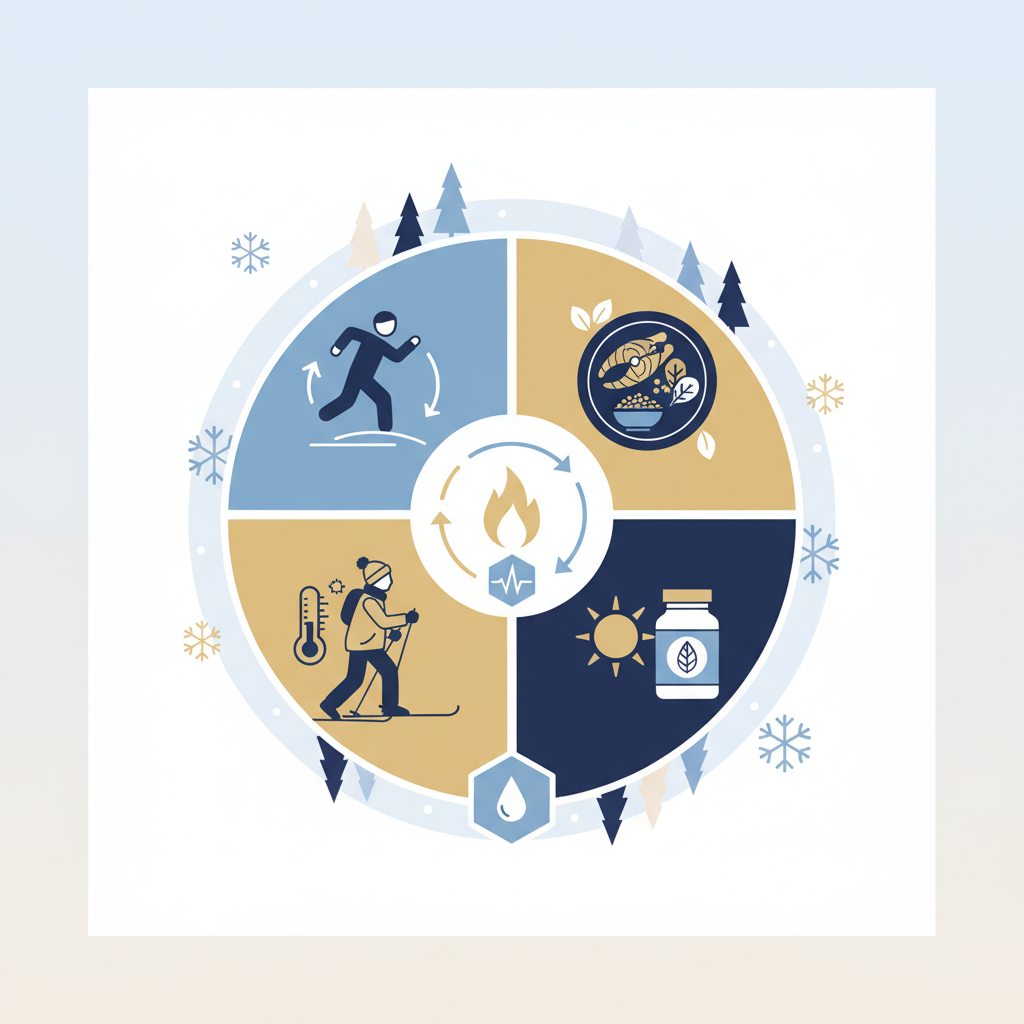
TL;DR
Winter health in Canada requires a mix of practical movement, food choices aligned with Canada’s Food Guide, vitamin D awareness and safe cold-adaptive strategies to keep metabolism active and blood glucose stable (targets and screening per Diabetes Canada). This article gives evidence-based, Canada-specific tips for staying metabolically active all winter.
🇨🇦 آلاف الكنديين يستخدمون Feel Great لدعم صحتهم الأيضية بشكل طبيعي. اعرف المزيد واطلب من هنا ←
Winter Health in Canada: Staying Metabolically Active
Introduction — a startling Canadian winter fact: In Canada, nearly half of adults are not meeting recommended physical activity levels in recent measures, and winter months are associated with higher cardiovascular events and changes in weight and blood pressure—trends that affect metabolic health. Staying metabolically active in long Canadian winters is therefore a public-health and personal priority. ([www150.statcan.gc.ca](https://www150.statcan.gc.ca/n1/daily-quotidien/251017/dq251017b-eng.pdf?utm_source=openai))
Why winter matters for metabolism
The Canadian winter brings shorter daylight hours, colder temperatures, and lifestyle shifts (more indoor time, seasonal foods, briefing daylight exposure). These changes affect circadian rhythm, vitamin D status, physical activity and, ultimately, metabolic signals like insulin sensitivity and resting energy expenditure. Public-health data show season-linked changes in activity and cardiometabolic risk factors that make proactive winter strategies worthwhile. ([canada.ca](https://www.canada.ca/en/health-canada/services/food-guide.html?utm_source=openai))
What happens physiologically?
- Reduced daylight and lower vitamin D synthesis can affect mood, energy and possibly inflammation; Health Canada recommends a daily 400 IU (10 µg) vitamin D supplement for many Canadians in months with limited sun exposure. ([canada.ca](https://www.canada.ca/en/health-canada/services/nutrients/vitamin-d.html?utm_source=openai))
- Cold exposure triggers non-shivering thermogenesis via brown adipose tissue (BAT) in many adults — briefly increasing glucose and fatty acid uptake and raising energy expenditure. Evidence is growing but variable between individuals. ([pmc.ncbi.nlm.nih.gov](https://pmc.ncbi.nlm.nih.gov/articles/PMC9273773/?utm_source=openai))
- Activity patterns shift: national surveillance indicates many adults and youth do not meet the 150 minutes/week moderate-to-vigorous activity guideline, and sedentary time often rises in winter. Keeping to 150 minutes weekly is important for metabolic health. ([www150.statcan.gc.ca](https://www150.statcan.gc.ca/n1/pub/82-003-x/2023010/article/00002-eng.pdf?utm_source=openai))
Canadian winter health tips that support metabolism
Below are practical, evidence-aligned tips tailored to Canadian provinces and lifestyles (indoor and outdoor options). Each is linked to Canadian guidelines or high-quality research where possible.
1. Move regularly — aim for the 150-min weekly target (and add resistance work)
Canada’s physical-activity guidance and national surveillance emphasise 150 minutes per week of moderate-intensity activity plus muscle-strengthening twice weekly. In winter, split that into short daily sessions (e.g., 20–30 minutes) if weather or time are limiting. Resistance training preserves lean mass and resting metabolism; even 2 × 20 minute home sessions weekly help. ([www150.statcan.gc.ca](https://www150.statcan.gc.ca/n1/daily-quotidien/251017/dq251017b-eng.pdf?utm_source=openai))
2. Use layered outdoor activity safely
Layering clothing, warming up longer than usual, and choosing non-slip footwear keeps outdoor activity safe. Heart & Stroke warns that heavy exertion like shovelling may precipitate cardiac events in vulnerable people—warm up, pace yourself, or ask for help. For Canadians in provinces with heavy snow (Ontario, Quebec, BC, Alberta, Atlantic provinces), consider swapping a heavy outdoor chore for a brisk walk or snowshoeing at a comfortable intensity. ([heartandstroke.ca](https://www.heartandstroke.ca/articles/stay-heart-healthy-in-the-winter?utm_source=openai))
3. Maintain protein + soluble fibre at meals to stabilise post-meal glucose
Eating adequate protein and soluble fibre slows glucose absorption and supports satiety—helpful when indoor comfort foods and holiday treats are accessible. Diabetes Canada lists postprandial glucose targets and guidance for monitoring; using meal strategies that moderate the post-meal glucose rise can help people at risk of impaired fasting glucose (6.1–6.9 mmol/L) or diabetes (fasting ≥7.0 mmol/L). ([diabetes.ca](https://www.diabetes.ca/DiabetesCanadaWebsite/media/FilesUploaded/Quick_Reference_Guide_PRINT_10_24-2.pdf?utm_source=openai))
4. Mind vitamin D and sunlight analogues
Health Canada recommends that many Canadians take 400 IU (10 µg) vitamin D daily in months with little effective sun exposure; routine testing may be appropriate if you have risk factors (very dark skin, limited dietary intake, or bone-health concerns). Consider safe outdoor breaks on sunny winter days and dietary choices aligned with Canada’s Food Guide (fortified foods like milk alternatives, oily fish) to support vitamin D and overall nutrition. ([canada.ca](https://www.canada.ca/en/health-canada/services/nutrients/vitamin-d.html?utm_source=openai))
5. Prioritise sleep and circadian routines
Shorter days can shift circadian rhythms and appetite hormones (leptin, ghrelin). Maintain consistent wake/sleep times, timed daylight exposure (morning light when possible), and avoid late-night heavy meals to support metabolic regulation. Research links circadian disruption to insulin resistance and weight gain; winter is a time to protect your rhythm intentionally. ([pubmed.ncbi.nlm.nih.gov](https://pubmed.ncbi.nlm.nih.gov/32252102/?utm_source=openai))
6. Use cold safely as a metabolic booster — cautiously
Intermittent mild cold exposure (cooler indoor temps, brisk outdoor walks, or controlled cold-water exposure) can activate BAT and increase short-term energy expenditure in some people. Systematic reviews show cold exposure can raise resting energy expenditure transiently, but responses vary by age, BMI and acclimatisation — it’s not a weight-loss panacea. Avoid aggressive cold exposure if you have cardiovascular disease, uncontrolled hypertension, or Raynaud’s. Discuss with your clinician. ([pmc.ncbi.nlm.nih.gov](https://pmc.ncbi.nlm.nih.gov/articles/PMC9273773/?utm_source=openai))
7. Build a winter-specific action plan by province and healthcare access
Canada’s health system is provincially delivered. Access to walk-in clinics, primary care follow-up and allied health (dietitians, physiotherapy) varies by province—Ontario, BC and Alberta have different virtual care options and seasonal program availability. Use provincial public-health resources for vaccination clinics and community programs; if you have a family doctor, schedule a winter check-in focused on blood pressure, glucose (in mmol/L) and activity plans. CIHI and Statistics Canada note important provincial variation in chronic disease prevalence — tailor your plan locally. ([cihi.ca](https://www.cihi.ca/sites/default/files/document/health-system-context-series-population-health-man-report-en.pdf?utm_source=openai))
Practical weekly winter plan (sample)
- Monday: 30-min brisk indoor or outdoor walk; add 10 minutes resistance band session.
- Tuesday: Strength circuit 20–30 minutes (home bodyweight/resistance bands).
- Wednesday: Outdoor activity (ski, skate, fast walk) 30–45 minutes; 10 minutes mobility work.
- Thursday: Short HIIT or stair session 20 minutes (moderate intensity) plus protein-rich meals.
- Friday: Restorative movement — yoga or long walk; daylight exposure in morning.
- Weekend: One longer activity (hike, snowshoeing), one household chore day (pace shovelling), and plan meals that follow Canada’s Food Guide proportions. ([canada.ca](https://www.canada.ca/en/health-canada/services/food-guide.html?utm_source=openai))
How cold exposure and winter exercise affect blood glucose (what the research says)
Controlled studies and systematic reviews indicate that acute cold can increase energy expenditure and prompt glucose uptake into brown adipose tissue, transiently lowering blood glucose in some contexts. However, the long-term metabolic benefits depend on frequency, intensity and individual factors such as BMI and baseline insulin sensitivity. Cold-activation strategies should be complementary to diet and exercise, not a primary therapy for metabolic disease. ([pmc.ncbi.nlm.nih.gov](https://pmc.ncbi.nlm.nih.gov/articles/PMC9273773/?utm_source=openai))
Safety flags — when to see care this winter
- Chest pain, shortness of breath, syncope during exertion — seek emergency care (call 911). Heart attacks are more frequent in winter months; don’t ignore symptoms. ([heartandstroke.ca](https://www.heartandstroke.ca/articles/dont-fall-victim-to-the-holiday-heart-attack?utm_source=openai))
- New persistent fasting glucose readings ≥7.0 mmol/L, or repeated postprandial spikes—see your primary care provider for screening and management per Diabetes Canada. ([diabetes.ca](https://www.diabetes.ca/health-care-providers/clinical-practice-guidelines/chapter-3?utm_source=openai))
- Severe seasonal low mood (SAD) affecting sleep, appetite or daily function — discuss with your family doctor or provincial mental-health resources. Canadian mental-health organisations can help with winter support resources. ([www150.statcan.gc.ca](https://www150.statcan.gc.ca/n1/daily-quotidien/251017/dq251017b-eng.pdf?utm_source=openai))
How Feel Great helps (a Canadian-friendly, evidence-aligned connection)
Feel Great is a lifestyle support system — not a medication — designed to be used alongside healthy eating, movement and medical care. In the winter, components that people commonly use include:
- Balance: a soluble-fibre matrix formulated to moderate post-meal glucose absorption and increase satiety. Including soluble fibre with meals may help blunt postprandial glucose peaks, which aligns with Diabetes Canada’s focus on managing postprandial glucose. Always follow label guidance and check for a Health Canada Natural Product Number (NPN) on packaging if available. (Note: check your product label for NPNs; do not assume every product has one.) ([diabetes.ca](https://www.diabetes.ca/DiabetesCanadaWebsite/media/FilesUploaded/Quick_Reference_Guide_PRINT_10_24-2.pdf?utm_source=openai))
- Unimate: a yerba-mate based ingredient containing chlorogenic acids and polyphenols that may help energy and focus without stimulant-level dosing; users report improved adherence to activity plans. Evidence on plant polyphenols and metabolic markers is growing (see peer-reviewed literature), but they are supportive lifestyle aids and not treatments. ([pubmed.ncbi.nlm.nih.gov](https://pubmed.ncbi.nlm.nih.gov/35640259/?utm_source=openai))
- The 4-4-12 protocol: a structured intermittent fasting framework many Canadians use to simplify eating windows and reduce late-night snacking in winter — when circadian disruption and evening eating may undermine metabolic health. Intermittent fasting approaches can influence glucose profiles in some studies, but individual responses vary; consult your clinician before starting, especially if you have diabetes or take glucose-lowering medication. ([pubmed.ncbi.nlm.nih.gov](https://pubmed.ncbi.nlm.nih.gov/35816192/?utm_source=openai))
Feel Great ships across Canada (BC to Newfoundland) via standard national couriers; shipping options and provincial delivery timelines are listed at point of purchase. Always review product labels for Health Canada NPNs and consult your primary care provider before adding supplements to a regimen.
People also ask
- Can cold exposure raise my metabolism and help lose weight? — Mild cold exposure raises short-term energy expenditure and activates brown fat in some people, but long-term weight-loss effects are small and variable; use cold exposure as a complementary approach under guidance. ([pmc.ncbi.nlm.nih.gov](https://pmc.ncbi.nlm.nih.gov/articles/PMC9273773/?utm_source=openai))
- How much vitamin D should I take in the Canadian winter? — Health Canada suggests many people take 400 IU (10 µg) daily when sun exposure is limited; higher doses warrant medical advice and testing. ([canada.ca](https://www.canada.ca/en/health-canada/services/nutrients/vitamin-d.html?utm_source=openai))
- Are winter workouts safe for people with high blood pressure? — Yes, with precautions: dress in layers, warm up well, avoid sudden intense exertion (like heavy shovelling) and check with your clinician if blood pressure is uncontrolled. Heart & Stroke provides winter safety guidance. ([heartandstroke.ca](https://www.heartandstroke.ca/articles/stay-heart-healthy-in-the-winter?utm_source=openai))
- How do I monitor blood glucose in winter? — Follow Diabetes Canada guidance: fasting blood glucose and postprandial checks as recommended by your provider; target ranges for many people with diabetes are fasting 4.0–7.0 mmol/L and 2-hour postprandial 5.0–10.0 mmol/L (individualise with your clinician). ([diabetes.ca](https://www.diabetes.ca/DiabetesCanadaWebsite/media/FilesUploaded/Quick_Reference_Guide_PRINT_10_24-2.pdf?utm_source=openai))
- Is intermittent fasting safe in winter? — It can be for many adults, but people with diabetes, pregnant women, or those on certain medications should consult their health provider first. Evidence shows metabolic benefits in some trials but individual needs differ. ([pubmed.ncbi.nlm.nih.gov](https://pubmed.ncbi.nlm.nih.gov/35816192/?utm_source=openai))
FAQ
- Q: Will turning my thermostat lower help my metabolism? A: Slightly cooler indoor temps may increase non-shivering thermogenesis in some people, but expect modest and individual results. Do not underheat homes for vulnerable people (older adults, infants). ([pmc.ncbi.nlm.nih.gov](https://pmc.ncbi.nlm.nih.gov/articles/PMC9273773/?utm_source=openai))
- Q: What glucose level means I should see a doctor? A: Repeated fasting blood glucose ≥7.0 mmol/L or a random glucose ≥11.1 mmol/L should prompt clinical review per Diabetes Canada. ([diabetes.ca](https://www.diabetes.ca/health-care-providers/clinical-practice-guidelines/chapter-3?utm_source=openai))
- Q: Are hot saunas an alternative? A: Saunas influence circulation and may aid relaxation; they do not directly replace exercise or dietary strategies for metabolism. Contrast therapies (sauna + cold) are popular but should be used cautiously in cardiovascular disease. ([journals.plos.org](https://journals.plos.org/plosone/article/file?id=10.1371%2Fjournal.pone.0085876&type=printable&utm_source=openai))
- Q: Should I take a glucose monitor this winter? A: If you have diabetes or risk factors, monitoring per your clinician’s plan is useful. Continuous glucose monitoring may be recommended for some people by their diabetes care team. ([guidelines.diabetes.ca](https://guidelines.diabetes.ca/cpg/chapter-9-2021-update?utm_source=openai))
- Q: How do provincial differences affect winter plans? A: Access to programs, virtual care, and community services differs by province—check provincial health portals for local exercise programmes, vaccination sites, and primary-care access. CIHI and StatCan report provincial variation in chronic disease burdens that inform local priorities. ([cihi.ca](https://www.cihi.ca/sites/default/files/document/health-system-context-series-population-health-man-report-en.pdf?utm_source=openai))
References & Scientific Sources
Canadian resources (key): Health Canada — Vitamin D and Canada’s Food Guide; Diabetes Canada — Clinical Practice Guidelines and Quick Reference; Heart & Stroke Foundation — winter safety and risk; CIHI — population health context; Statistics Canada — physical activity and seasonal patterns. ([canada.ca](https://www.canada.ca/en/health-canada/services/nutrients/vitamin-d.html?utm_source=openai))

Selected international research and reviews: systematic reviews and meta-analyses on cold exposure and brown adipose tissue (PubMed), translational BAT reviews, vitamin D RCTs and meta-analyses on mood and metabolic markers, Harvard and Mayo Clinic practical guidance on winter activity and vitamin D. ([pmc.ncbi.nlm.nih.gov](https://pmc.ncbi.nlm.nih.gov/articles/PMC9273773/?utm_source=openai))
- Health Canada — Vitamin D guidance and Canada’s Food Guide. ([canada.ca](https://www.canada.ca/en/health-canada/services/nutrients/vitamin-d.html?utm_source=openai))
- Diabetes Canada — Clinical Practice Guidelines & Quick Reference (glucose targets and diagnostic thresholds in mmol/L). ([diabetes.ca](https://www.diabetes.ca/health-care-providers/clinical-practice-guidelines/chapter-3?utm_source=openai))
- Heart & Stroke Foundation of Canada — Winter heart health and safety. ([heartandstroke.ca](https://www.heartandstroke.ca/articles/stay-heart-healthy-in-the-winter?utm_source=openai))
- Statistics Canada — Winter activity patterns and physical activity surveillance. ([www150.statcan.gc.ca](https://www150.statcan.gc.ca/n1/pub/82-003-x/2023010/article/00002-eng.htm?utm_source=openai))
- CIHI — health system context and chronic disease variation across provinces. ([cihi.ca](https://www.cihi.ca/sites/default/files/document/health-system-context-series-population-health-man-report-en.pdf?utm_source=openai))
- Effect of Acute Cold Exposure on Energy Metabolism and Activity of Brown Adipose Tissue in Humans: systematic review and meta-analysis. ([pmc.ncbi.nlm.nih.gov](https://pmc.ncbi.nlm.nih.gov/articles/PMC9273773/?utm_source=openai))
- Brown Adipose Tissue-A Translational Perspective (review). ([pubmed.ncbi.nlm.nih.gov](https://pubmed.ncbi.nlm.nih.gov/35640259/?utm_source=openai))
- The effect of vitamin D supplementation on depressive symptoms — systematic review/meta-analysis. ([pubmed.ncbi.nlm.nih.gov](https://pubmed.ncbi.nlm.nih.gov/35816192/?utm_source=openai))
- Harvard Health and Mayo Clinic resources on winter workouts and vitamin D. ([health.harvard.edu](https://www.health.harvard.edu/healthy-aging-and-longevity/the-wonders-of-winter-workouts?utm_source=openai))
Medical Disclaimer
This article is informational and not a substitute for personalised medical advice. If you have health conditions (diabetes, heart disease, hypertension, pregnancy, or are taking medications), consult your family physician or local provincial health services before making major changes. For urgent symptoms (chest pain, severe shortness of breath, severe hypoglycaemia), call 911 or go to your nearest emergency department.
مسارات مرتبطة داخل ATHAR
🇨🇦 هل أنت مستعد لبدء تحولك الصحي؟
انضم لآلاف الكنديين الذين حسّنوا صحتهم الأيضية مع نظام Feel Great. مدعوم بأكثر من 50 دراسة سريرية ومدرج في مرجع الأطباء (PDR).
✅ شحن لجميع المقاطعات: بريتش كولومبيا، ألبرتا، ساسكاتشوان، مانيتوبا، أونتاريو، كيبك، نيو برونزويك، نوفا سكوشا، جزيرة الأمير إدوارد، نيوفاوندلاند | ضمان استرداد 90 يوم