Canadian diet insulin resistance: What to change to lower glucose (mmol/L)
Author: Feras Alayed
Published:
Updated:
Category: canadian-health
Reading Time: 12 minutes
Key Takeaways
- Insulin resistance is widespread in Canada: projections indicate up to 11 million Canadians could be living with diabetes or prediabetes by 2025 — diet is a key modifiable driver (Diabetes Canada, CIHI).
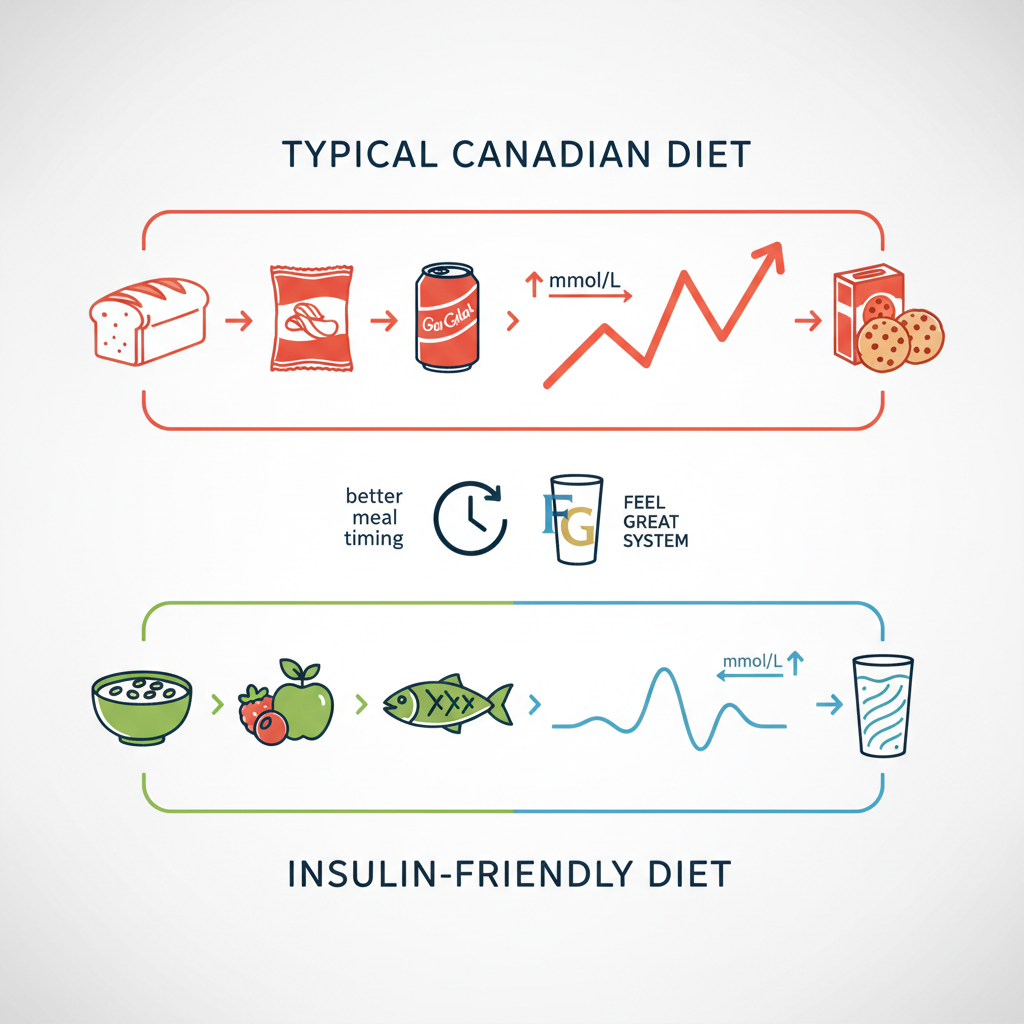
- Shifting away from refined carbohydrates and added sugars toward higher-soluble-fibre, lean protein, and unsaturated fats may help blunt post-meal glucose responses (use mmol/L for blood glucose monitoring).
- Canada’s Food Guide, Mediterranean-style eating, and increased soluble fibre intake are evidence-based approaches that may help metabolic health across provinces.
- Behavioural tools — structured meal timing (4-4-12), post-meal walking, and portion control — are practical strategies across Canadian contexts (urban or rural, BC to Newfoundland).
- The Feel Great system (Balance fibre matrix, Unimate yerba mate extract, and the 4-4-12 protocol) may be used as a lifestyle support option — it is not a medication; check Health Canada NPNs and consult local healthcare providers.
TL;DR
Insulin resistance underlies much of Canada’s rising burden of prediabetes and type 2 diabetes. Practical dietary changes — fewer refined carbs and added sugars, more soluble fibre, protein-focused meals, and unsaturated fats — plus modest timing and activity changes may help lower fasting and post-meal glucose (measured in mmol/L). Use Canada’s Food Guide and provincial resources; discuss medication changes with your family physician.
🇨🇦 Thousands of Canadians are using Feel Great to support their metabolic health naturally. Learn more & order here →
The Canadian Diet and Insulin Resistance: What to Change
Shocking Canadian statistic: Diabetes Canada projects that by 2025 as many as 11 million Canadians could be living with diabetes or prediabetes — a powerful reminder that insulin resistance and diet-related risk factors are widespread across provinces from British Columbia to Newfoundland (Diabetes Canada, CIHI).
Why this matters in Canada
Insulin resistance means body tissues respond less effectively to insulin, leading to higher blood glucose after meals and over time increasing risk for prediabetes and type 2 diabetes. In Canada, rising rates increase healthcare costs and strain provincial services. Early dietary and behavioural changes are among the most accessible interventions to reduce risk and may help lower fasting glucose and post-prandial spikes measured in mmol/L. Primary-care access varies provincially: many Canadians use family doctors, walk-in clinics, or provincial diabetes education programmes (Ontario Health, Alberta Health Services, BC Health, and Quebec health networks).
What blood glucose numbers mean (in mmol/L)
- Normal fasting plasma glucose: generally <6.1 mmol/L (refer to provincial lab reference ranges).
- Impaired fasting glucose / prediabetes: often around 6.1–6.9 mmol/L (cut-offs vary by guideline).
- Diabetes diagnostic fasting glucose: >=7.0 mmol/L (require confirmation with repeat testing and A1C).
Talk with your family doctor or provincial lab services to interpret your results. Use mmol/L when tracking glucose in Canada.
How the typical Canadian diet contributes to insulin resistance
Common dietary patterns in Canada that increase insulin resistance risk include high consumption of refined carbohydrates and sugar-sweetened beverages, low intake of soluble fibre, and increased sedentary time during long winters. Factors include accessibility of processed convenience foods and seasonal inactivity.
Evidence-based dietary patterns to consider (Canadian context)
1. Canada’s Food Guide as your baseline
Canada’s Food Guide emphasises vegetables and fruits, whole-grain foods, and protein choices including plant-based options. This balanced pattern aligns with evidence that diets high in fibre and whole foods may help improve metabolic markers (Health Canada).
2. Mediterranean-style eating
The Mediterranean diet — rich in olive oil, nuts, legumes, vegetables, whole grains and fish — has consistent evidence (systematic reviews and RCTs) for improving glycaemic control and lowering diabetes risk. It is adaptable to Canadian foods (eg. using canola oil, local fish) and is recommended by Canadian clinicians for cardiometabolic health.
3. Emphasise soluble fibre and legumes
Soluble fibre sources (oats, barley, psyllium, legumes, apples) slow carbohydrate absorption and blunt post-prandial glucose rises. Increasing soluble-fibre intake gradually can reduce glucose spikes and may lower insulin demand.
4. Reduce refined carbohydrate load and added sugars
Reducing soda, sweetened coffee drinks, white bread and pastries lowers rapid glucose excursions. Replace them with whole-food alternatives and combine carbohydrates with protein and fibre to minimise post-meal mmol/L surges.
Practical swaps and portion tips for Canadians (province-friendly)
- Swap white bagels or sliced bread for 100% whole-grain versions or reduce portion size; pair with protein (eggs, cottage cheese) at breakfast.
- Replace sugary drinks with water, unsweetened tea, or yerba mate (an option in Feel Great’s Unimate) to reduce daily added sugar intake.
- Add a half-cup of legumes (lentils, chickpeas) several times weekly — cost-effective and available across Canada.
- Choose fatty fish like salmon or trout (plentiful in coastal provinces and widely available frozen) twice a week.
- Include 1–2 tablespoons of a soluble-fibre source (oats, psyllium, or a Balance-style blend) at meals to blunt post-prandial glucose.
Meal timing and the 4-4-12 approach (intermittent timing)
Meal timing affects glucose patterns. The Feel Great 4-4-12 protocol (a structured eating/fasting pattern) is one timing approach some Canadians adopt. Trials and meta-analyses indicate time-restricted eating may lower fasting glucose and insulin in some people, especially when paired with improved diet quality and physical activity. If you take glucose-lowering medications, review timing changes with your clinician to avoid hypoglycaemia.
Activity, sleep, and seasonal influences in Canada
Physical activity improves insulin sensitivity. Simple, climate-adjusted recommendations:
- Walk 10–15 minutes after meals (indoors or outdoors) to reduce post-prandial glucose peaks.
- Strength training twice weekly enhances muscle glucose uptake.
- Monitor vitamin D particularly in long winter months — discuss supplementation based on provincial guidance and labs.
Food–drug considerations and when to consult
If you take insulin or other glucose-lowering drugs, diet or timing changes can alter mmol/L glucose levels and medication needs. Discuss planned changes with your family doctor, pharmacist, or provincial diabetes educator. Many provinces have diabetes education centres integrated into primary care or hospital systems.
Behavioural strategies to sustain change
- Start with one manageable swap per week (e.g., water for one sugary drink).
- Use frozen or canned (low-sodium) vegetables and legumes for accessibility across provinces.
- Shop seasonal produce to lower cost and improve variety throughout Canada’s climate.
- Monitor fasting and 2-hour post-meal glucose in mmol/L for 1–2 weeks to understand your personal response.
- Seek support: Diabetes Canada resources, provincial dietitian directories, and community programs.
How Feel Great may help (realistically and safely)
Feel Great is a lifestyle support system combining Balance (a soluble-fibre matrix), Unimate (yerba mate extract rich in chlorogenic acids) and the 4-4-12 meal timing protocol. Balance provides soluble fibre at meals that may help blunt post-prandial glucose rises (measured in mmol/L). Unimate offers a low-sugar beverage alternative for sustained energy and clarity. The 4-4-12 timing protocol gives a structured approach to eating windows. Feel Great is not a medication. Users in Canada should check product labels for Health Canada Natural Product Numbers (NPNs) and consult their family physician or provincial diabetes educator before combining with medications that affect blood glucose.
People Also Ask
- What causes insulin resistance?
Diets high in refined carbohydrates and added sugars, excess weight, physical inactivity, and genetic factors contribute to insulin resistance. - Can I reverse insulin resistance with diet alone?
Many people improve insulin sensitivity substantially with diet, weight loss, and activity; the degree of change depends on individual factors and monitoring with your healthcare team. - Are low-carb diets recommended in Canada?
Low-carb approaches can improve short-term glucose control and weight in some people, but Canada’s Food Guide focuses on balanced, whole-food choices. Personalisation with a clinician is recommended. - How often should I check glucose in mmol/L?
If you have prediabetes or diabetes, follow your clinician’s plan. For self-monitoring, some check fasting and 2-hour post-meal values for short periods to observe diet effects. - Where can I find provincial support?
Provincial health websites (Ontario Health, Alberta Health Services, BC Health, Quebec Health) list diabetes education programs and resources; Diabetes Canada also provides searchable local programmes.
FAQ
- Will cutting carbs make my fasting glucose (mmol/L) normal immediately?
Changes can be seen within weeks, but sustainable improvement takes consistent changes in diet and activity over months. - Is the Feel Great system safe with my diabetes medication?
Talk to your prescribing clinician or pharmacist before starting supplements or fasting protocols; adjustments may be needed. - Do I need a dietitian in Canada?
Dietitians can personalise plans and many provinces offer access through diabetes education centres or primary-care teams. - How does fibre lower post-meal glucose?
Soluble fibre slows gastric emptying and carbohydrate absorption, reducing the size of post-prandial glucose peaks in mmol/L. - Can children develop insulin resistance?
Yes — childhood obesity and unhealthy diets can lead to insulin resistance. Paediatric care teams should be involved for children.
References & Scientific Sources
- Diabetes Canada. https://www.diabetes.ca — national data and guidance on diabetes and prediabetes in Canada.
- Health Canada. Canada’s Food Guide. https://www.canada.ca/en/health-canada/services/canada-food-guide.html
- Canadian Institute for Health Information (CIHI). https://www.cihi.ca — data on diabetes prevalence and health system impacts.
- Heart & Stroke Foundation of Canada. https://www.heartandstroke.ca
- Statistics Canada. Health statistics and chronic disease prevalence. https://www.statcan.gc.ca
- Public Health Agency of Canada. https://www.canada.ca/en/public-health.html
- Recent systematic review: Mediterranean diet and diabetes risk — PubMed, Cochrane Library (2021–2025 reviews).
- Systematic reviews on soluble fibre and post-prandial glycaemia — American Journal of Clinical Nutrition / Cochrane (2021–2024).
- Intermittent fasting RCTs and meta-analyses (2021–2025) — JAMA/Internal Medicine/PubMed.
- Peer-reviewed RCTs on yerba mate and chlorogenic acids — PubMed (selected trials).
- CMAJ — Canadian studies on diet and cardiometabolic risk. https://www.cmaj.ca
For direct clinical guidance, consult Diabetes Canada, provincial health services, and peer-reviewed articles listed on PubMed, Cochrane, NEJM, Lancet and BMJ.

Medical Disclaimer
This article provides general information and does not replace medical advice from a qualified healthcare provider. Before changing medications, starting supplements (check product Health Canada NPNs), or beginning fasting-based eating patterns, consult your family doctor, pharmacist, or provincial diabetes educator. If you experience symptoms like severe dizziness, fainting, or signs of hypo- or hyperglycaemia, seek urgent care through your provincial health services.
Related ATHAR paths
🇨🇦 Ready to Start Your Health Transformation?
Join thousands of Canadians who have improved their metabolic health with the Feel Great system. Backed by 50+ clinical studies and listed in the Physicians' Desk Reference (PDR).
✅ Ships to all provinces: BC, Alberta, Saskatchewan, Manitoba, Ontario, Quebec, New Brunswick, Nova Scotia, PEI, Newfoundland & Labrador | 90-Day Money-Back Guarantee