Health Entrepreneur Mindset Success: Build an Evidence-Based Health Business
Author: Feras Alayed
Published:
Updated:
Category: business-opportunity
Reading Time: 7 minutes
Key Takeaways
- The health entrepreneur mindset success combines scientific literacy, empathy, and commercial discipline.
- The global wellness market exceeds trillions and favors evidence-backed products and subscription models.
- Feel Great (Balance + Unimate + 4-4-12) pairs clinical evidence with a no-inventory, recurring-revenue business model.
- Skills such as team building, educational marketing, and measurable outcome tracking increase your chance of long-term results — results vary.
- Individual results vary. Success requires consistent effort. Prioritize health transformation first; business growth follows.
TL;DR
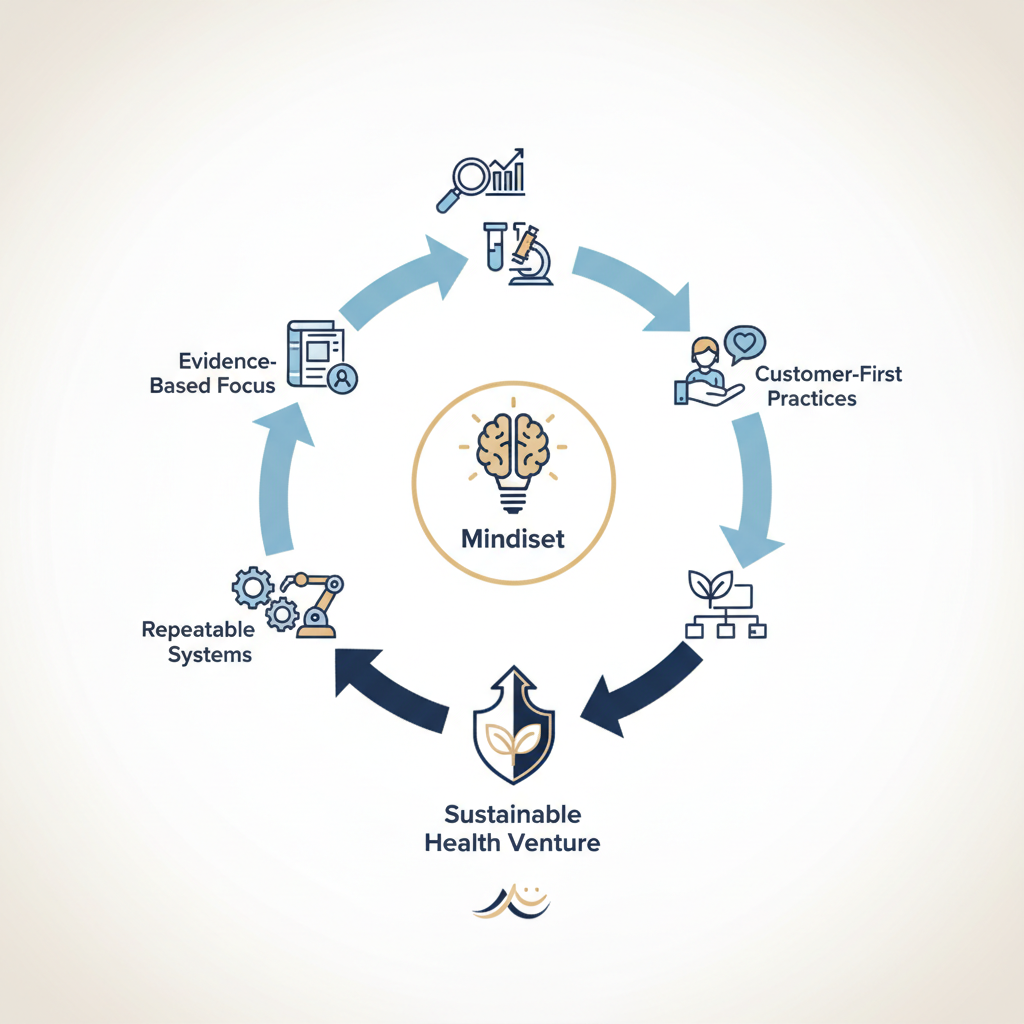
Health entrepreneur mindset success requires combining evidence-based product knowledge with customer-first practices and repeatable business systems. The market rewards measurable health outcomes and subscription-based relationships.
💼 Thousands of entrepreneurs are building health businesses with Feel Great. Learn more about the opportunity →
The Mindset of Successful Health Entrepreneurs: Turning Evidence into Sustainable Impact
Consumers increasingly expect health solutions that are scientifically valid, convenient, and outcome-driven. According to the Global Wellness Institute, the global wellness economy surpassed $4.4 trillion in recent years, with notable growth in supplements, digital health, and subscription services. For entrepreneurs, the deciding factor between a good idea and a sustainable business is often mindset — the set of practices and values that align scientific credibility with commercial scalability.
Why Mindset Matters in the Health Sector
Health products and services sell more than convenience — they sell a promise of improved wellbeing. That promise requires trust, and trust is built on evidence, transparency, and repeatable results. Entrepreneurs who understand the underlying biology, regulatory expectations, and measurement frameworks are better positioned to scale responsibly and avoid reputational or compliance risks.
Core Components of the Health Entrepreneur Mindset
1. Scientific Literacy
You do not have to be a clinician, but you must be able to read abstracts, evaluate study quality, and translate findings into practical, compliant messages. The Feel Great system is supported by more than 50 clinical studies — a foundation that simplifies honest, evidence-based conversations with customers and partners.
2. Customer-First Orientation
Successful health entrepreneurs treat themselves as partners in transformation. This means building assessment tools, offering support, and measuring outcomes. When the primary goal is improving health, repeat purchases and referrals become a natural byproduct.
3. Growth Mindset and Iterative Learning
Test, measure, iterate. Use pilot programs, solicit feedback, and pivot quickly based on outcomes. Learning from failures is not optional — it is a structural part of scaling a health business.
4. Commercial Skills
Marketing that educates, operations that deliver, and financial systems that track unit economics are essential. For direct selling or network models, learn how to attract repeat customers and manage logistics without accumulating inventory.
5. Ethical Focus and Compliance
Strong ethics and regulatory awareness protect your business. Avoid clinical claims that are unsupported, respect customer privacy, and be transparent about what products can and cannot do.
Market Signals: Why Now Is an Opportunity (With Prudence)
- Grand View Research projects the global dietary supplements market to reach roughly $230 billion in the coming years, growing at a compound annual growth rate (CAGR) above 7%.
- Statista data shows a sustained shift toward digital health and subscription models post-2020, increasing demand for convenient, science-backed solutions.
- McKinsey highlights consumer demand for evidence, personalization, and seamless digital experiences — drivers of recurring revenue models.
Comparison: Traditional Sales Mindset vs. Health Entrepreneur Mindset
| Aspect | Traditional Sales Mindset | Health Entrepreneur Mindset |
|---|---|---|
| Primary Focus | Single transactions | Long-term health outcomes |
| Value Proposition | Features and price | Evidence-based benefits and measurable results |
| Customer Lifetime | One-off purchase | Recurring engagements and subscriptions |
| Risk Management | Reactive | Proactive compliance and transparency |
Five Practical Skills to Build the Mindset
- Regular Scientific Reading: Dedicate weekly time to read clinical summaries and industry reports.
- Educational Marketing: Create content that explains why a product works and how results are measured.
- Outcome Measurement: Implement customer health metrics and track improvements.
- Integrated Team Building: Recruit experts in compliance, customer success, and content.
- Time and Boundary Management: Balance delivering hands-on support with scalable systems.
How This Connects to Feel Great (Product Value + Business Model)
Feel Great aligns with the mindset described above by delivering both clinical backing and a practical business structure:
- Unicity has more than 25 years of history, over $1B in revenue, presence in 60+ countries, and is PDR-listed — credentials that provide institutional credibility to partners.
- The Feel Great system (Balance + Unimate + 4-4-12 protocol) is supported by 50+ clinical studies, enabling credible health claims grounded in research.
- No inventory is required; products ship directly to customers, reducing logistical burdens and capital needs.
- Recurring revenue comes from satisfied customers who continue purchasing — there is potential to earn through building a loyal base, but results vary and depend on consistent effort.
- Global market access from day one allows entrepreneurs to test multiple markets with corporate support and compliance frameworks.
Roadmap: From Mindset to Sustainable Revenue (Actionable Steps)
- Phase 1 — Knowledge Foundation (0–3 months):
- Learn the science behind your product and create a standard outcome measurement set.
- Phase 2 — Market Testing & Content (3–6 months):
- Run educational campaigns, pilot customer cohorts, and track conversion and retention metrics.
- Phase 3 — Scale & Systems (6–18 months):
- Deploy CRM, subscription management, and customer success processes to grow CLTV and retention.
Key Performance Indicators (KPIs) to Track
- Customer retention rate
- Customer lifetime value (CLTV)
- Conversion rate from education to purchase
- Measurable health outcomes (sleep quality, energy, symptom scores)
- Customer acquisition cost (CAC)
Risks & Pitfalls
Regulatory differences across markets, high consumer expectations, and the need for robust scientific substantiation are common challenges. Avoid overstating benefits and focus on measurable outcomes. Building trust takes time, especially in health.
People Also Ask
- What traits define a successful health entrepreneur?
- Can I start a health business without medical credentials?
- Should I sell products or services in health entrepreneurship?
- How important are clinical studies in building credibility?
- How do I evaluate a supplement company's credibility?
FAQ
- Do I need medical qualifications to start a health business?
No. Medical qualifications are not always required, but collaborating with healthcare professionals or advisors improves credibility and reduces risk.
- Which marketing channels work best for health products?
Educational content, email nurturing, and partnerships with credible practitioners often outperform purely promotional tactics.

- How long until I build a recurring customer base?
Expect a variable timeline — commonly 6–18 months to develop reliable subscription revenue, depending on product-market fit and customer experience.
- Is a no-inventory model viable?
Yes. Direct-to-customer shipping reduces capital requirements and operational complexity, enabling focus on customer outcomes and growth.
- How should I measure health outcomes?
Use simple, repeatable metrics relevant to your offering (sleep scores, energy, symptom scales), and track progress over time with customer consent.
References & Further Reading
- Global Wellness Institute — Global Wellness Economy Monitor (2023–2025 updates)
- Grand View Research — Dietary Supplements Market Report
- Statista — Digital Health & Subscription Trends
- McKinsey & Company — Consumer Health Insights
- Unicity Corporate Information & Clinical Study Compendium
- Peer-reviewed clinical studies on the Feel Great protocol (selected RCTs and observational studies)
Bottom Line
The health entrepreneur mindset success is not an innate trait but a cultivated blend of scientific respect, customer obsession, and disciplined business execution. Tools like the Feel Great system offer a practical pathway by combining clinical evidence with a scalable, no-inventory model — providing potential to earn while focusing on delivering measurable health improvements.
Disclaimer
Individual results vary. Success requires consistent effort. This article is for educational and business guidance purposes only. It is not medical advice. Consult a qualified healthcare professional before starting any health program. No income guarantees are made; claims of guaranteed income or easy money are not supported. Potential to earn exists, but outcomes depend on many variables and sustained effort.
Related ATHAR paths
💼 Ready to Start Your Health Business?
Join thousands of health entrepreneurs who are building sustainable income while helping others transform their health with the Feel Great system. Backed by 50+ clinical studies, listed in the PDR, and available in 60+ countries.
✅ No inventory required | Work from anywhere | 90-Day Money-Back Guarantee | Available in 60+ countries