Health Investment Portfolio Strategy: Diversify Beyond Stocks
Author: Feras Alayed
Published:
Updated:
Category: business-opportunity
Reading Time: 8 minutes
Key Takeaways
- A health investment portfolio strategy expands traditional diversification to include assets that deliver measurable health and wellness value.
- The global wellness economy is multi‑trillion-dollar and nutraceuticals/digital health segments show high growth — creating durable market demand. ([globalwellnessinstitute.org](https://globalwellnessinstitute.org/press-room/press-releases/the-global-wellness-economy-reaches-a-new-peak-of-6-3-trillion-and-is-forecast-to-hit-9-trillion-by-2028/?utm_source=openai))
- Prioritize assets with proven health outcomes, recurring revenue (subscriptions/direct-to-consumer), and low operational friction (no inventory models).
- Investing in prevention and metabolic health has economic impact because chronic disease costs are large and rising. ([cdc.gov](https://www.cdc.gov/nccdphp/priorities/diabetes-interventions.html?utm_source=openai))
- Focus on health transformation first, business model second. Individual results vary. Success requires consistent effort.
TL;DR
Building a health investment portfolio strategy means diversifying beyond stocks into evidence-backed health products, subscription services, and scalable wellness businesses. These assets pair consumer demand and recurring revenue potential within a multi‑trillion-dollar wellness market. ([globalwellnessinstitute.org](https://globalwellnessinstitute.org/press-room/press-releases/the-global-wellness-economy-reaches-a-new-peak-of-6-3-trillion-and-is-forecast-to-hit-9-trillion-by-2028/?utm_source=openai))
💼 Thousands of entrepreneurs are building health businesses with Feel Great. Learn more about the opportunity →
Health Investment Portfolio Strategy: Diversifying Beyond Stocks
Introduction
Traditional portfolios focus on equities, bonds, and cash. A complementary approach — the health investment portfolio strategy — intentionally allocates capital into assets that create measurable health outcomes while generating financial returns. This reflects a global shift: consumers increasingly spend on prevention, nutrition, and digital health solutions, and industry reports place the global wellness economy in the multi‑trillion dollar range. ([globalwellnessinstitute.org](https://globalwellnessinstitute.org/press-room/press-releases/the-global-wellness-economy-reaches-a-new-peak-of-6-3-trillion-and-is-forecast-to-hit-9-trillion-by-2028/?utm_source=openai))
Why Add Health to Your Investment Mix?
There are three core reasons to include health-related assets in a diversified portfolio: demand resilience (people prioritize health spending), potential for recurring revenue (subscriptions, repeat purchases), and systemic economic impact (reducing costs of chronic disease). These characteristics can produce cash flows less correlated to equity markets while delivering social value.
Market Evidence and Industry Signals
- The global wellness economy reached record size in recent years and continues to expand across segments such as healthy eating, nutrition & weight loss, and personalized prevention. ([globalwellnessinstitute.org](https://globalwellnessinstitute.org/press-room/press-releases/the-global-wellness-economy-reaches-a-new-peak-of-6-3-trillion-and-is-forecast-to-hit-9-trillion-by-2028/?utm_source=openai))
- Estimates for the nutraceuticals (dietary supplements/functional foods) market show annual values in the hundreds of billions and robust CAGR forecasts — signaling sustained consumer demand. ([grandviewresearch.com](https://www.grandviewresearch.com/industry-analysis/nutraceuticals-market?utm_source=openai))
- Chronic disease is expensive: in the U.S., diabetes alone represents hundreds of billions in annual costs, underscoring the economic value of preventive solutions. ([cdc.gov](https://www.cdc.gov/nccdphp/priorities/diabetes-interventions.html?utm_source=openai))
Framework: Five Pillars of a Health Investment Portfolio Strategy
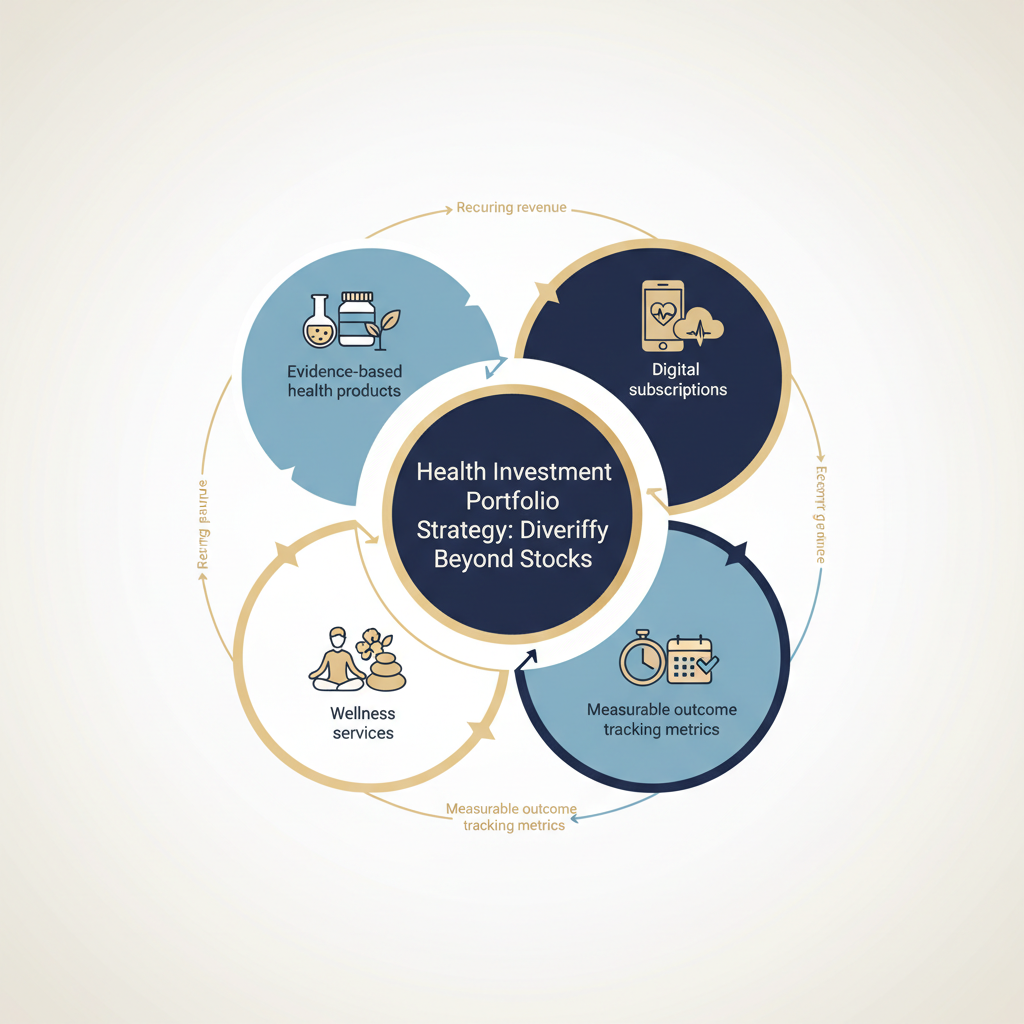
Constructing a health-focused allocation requires a framework that balances patient outcomes with business fundamentals. Use these five pillars:
- Equity and Funds in Health-Related Public Markets: Healthcare, nutritional companies, and selective healthcare ETFs provide liquid exposure.
- Recurring-Revenue Operational Assets: Subscription platforms for nutrition or prevention programs—these create predictable cash flow.
- Evidence-Based Products: Products backed by clinical studies (improved retention and reduced regulatory friction).
- Services and Intellectual Property: Professional education, coaching certifications, and proprietary protocols create high-margin revenue streams.
- Alternative Wellness Assets: Wellness real estate, curated health travel, and hardware wearables diversify into less-correlated asset classes.
Example Allocation Matrix (Illustrative)
| Category | Guideline Allocation | What to Look For |
|---|---|---|
| Public equities / ETFs (health & nutrition) | 20–35% | Stable margins, diversified revenue, regulatory transparency |
| Subscription / DTC businesses | 20–30% | High retention, scalable channels, low inventory |
| Evidence-backed product lines | 15–25% | Clinical data, strong repeat purchase metrics |
| Services & education | 10–20% | IP-driven, margin-accretive, repeatable |
| Alternative wellness assets | 5–10% | Real-estate or experiential assets for diversification |
How to Evaluate Health Opportunities — A Due Diligence Checklist
- Clinical Evidence: Are there peer-reviewed studies or robust trials supporting the health claims?
- Retention & Unit Economics: Customer Lifetime Value (LTV) vs Cost of Acquisition (CAC) — does the model produce positive payback?
- Regulatory & Compliance Risk: Is the product subject to evolving regulation (e.g., supplements, claims, data privacy for health apps)?
- Distribution Efficiency: Direct-to-consumer subscriptions and no-inventory fulfillment often reduce operational risk and improve margins.
- Scalability: Can the asset scale to new markets? Does it require highly localized regulatory approvals?
Comparing Health Assets vs Traditional Financial Assets
| Dimension | Traditional Assets (Stocks/Bonds) | Health Assets |
|---|---|---|
| Primary Return Driver | Market performance, macroeconomics | Customer outcomes, retention, regulatory trust |
| Correlation to Equities | High | Potentially lower (recurring revenue, defensive demand) |
| Operational Involvement | Low (passive) | Medium–High (business model management) |
| Time Horizon | Variable | Often medium-to-long (build trust & evidence) |
Implementation Roadmap: Practical Steps for Investors
- Clarify objectives: Define the role of health assets in your overall portfolio and risk tolerance.
- Pick focus areas: Start with two segments (e.g., nutraceuticals + subscription health services).
- Allocate small, measure, iterate: Begin with modest allocations, track retention, margins, and health outcomes.
- Leverage partnerships: Consider co-investment with operators who understand product development, regulatory pathways, and health marketing.
- Scale with evidence: Reinvest in assets that show both business traction and measurable health impact.
Operational Models That Work
Three operational patterns stand out:
- No-inventory DTC with subscription: Company ships direct to customers (or uses 3PL), lowering working capital needs and improving cash flow.
- Clinical-to-consumer pathway: Products first validated in studies, then scaled through consumer channels for trust and uptake.
- Service-led monetization: Offer coaching, professional training, and certification as high-margin extensions to product sales.
Case Studies & Use Cases (Illustrative)
- Startup subscription program: Nutrition + digital coaching that achieves 70%+ 6-month retention and steady ARR growth.
- Evidence-first supplement brand: Published studies enable premium pricing and better pharmacist/clinician adoption.
- Licensing an IP-driven protocol: A protocol licensed to practitioners creates recurring licensing fees and network effects.
Market Signals to Monitor
- Global wellness spending and segment growth forecasts (personal care, nutrition, prevention). ([globalwellnessinstitute.org](https://globalwellnessinstitute.org/press-room/press-releases/the-global-wellness-economy-reaches-a-new-peak-of-6-3-trillion-and-is-forecast-to-hit-9-trillion-by-2028/?utm_source=openai))
- Nutraceuticals market estimates and CAGR projections as leading indicators of consumer demand. ([grandviewresearch.com](https://www.grandviewresearch.com/industry-analysis/nutraceuticals-market?utm_source=openai))
- Direct-selling and subscription channel growth metrics which show distribution efficiency and recurring revenue potential. ([dsa.org](https://www.dsa.org/events/news/individual-press-release/us-direct-selling-association-releases-2025-growth-outlook-study-2024-data-shows-steady-interest-in-direct-selling?utm_source=openai))
People Also Ask
- What constitutes a health investment portfolio?
- Are supplements a reliable investment long-term?
- How does subscription revenue change risk profiles?
- Which metrics predict success for health businesses?
- How do I balance clinical evidence with market demand?
FAQ
- Is a health investment portfolio suitable for all investors? It may suit investors seeking diversification and exposure to consumer-resilient sectors, but it usually requires greater operational involvement than passive investing.
- Do I need clinical trials to invest? No — but products and services supported by evidence typically face lower regulatory friction and enjoy higher customer trust.
- How much can I allocate? Start with a conservative slice (e.g., 5–15% of non‑retirement assets) and adjust based on performance and comfort with active management.
- What are the tax implications? Standard capital gains and income tax rules apply; consider consulting a tax advisor for product-specific structures.
- How long until I see returns? Health businesses often require a medium-term horizon (2–5 years) to build evidence, brand trust, and retention.
How This Connects to Feel Great (Value First, Business Second)
Successful health ventures prioritize measurable transformation. Example: the Feel Great system — combining Balance, Unimate, and a 4-4-12 protocol — positions clinical evidence and customer outcomes at the center of its model, while leveraging direct-to-consumer shipping and recurring purchases to build sustainable revenue. The lesson: health-first products drive retention, and retention creates a reliable business foundation. (This is informational, not a guarantee of financial results.) Individual results vary. Success requires consistent effort.
Risks & Limitations
Risks include regulatory changes, variable individual outcomes, competition, and the need for continuous scientific validation. Investors should expect active monitoring and readiness to pivot based on data.

Conclusion
A health investment portfolio strategy can complement traditional allocations by capturing durable consumer demand, recurring revenue models, and social impact through prevention. Adopt a disciplined, evidence-first approach: start small, measure health and financial KPIs, and scale the exposures that deliver both measurable health outcomes and sustainable business economics.
References
- Global Wellness Institute — Global Wellness Economy reports and data. ([globalwellnessinstitute.org](https://globalwellnessinstitute.org/press-room/press-releases/the-global-wellness-economy-reaches-a-new-peak-of-6-3-trillion-and-is-forecast-to-hit-9-trillion-by-2028/?utm_source=openai))
- Grand View Research — Nutraceuticals Market Analysis. ([grandviewresearch.com](https://www.grandviewresearch.com/industry-analysis/nutraceuticals-market?utm_source=openai))
- Fortune Business Insights — Nutraceuticals Market Report. ([fortunebusinessinsights.com](https://www.fortunebusinessinsights.com/nutraceuticals-market-102530?utm_source=openai))
- U.S. Centers for Disease Control and Prevention (CDC) — Diabetes costs and prevention. ([cdc.gov](https://www.cdc.gov/nccdphp/priorities/diabetes-interventions.html?utm_source=openai))
- Direct Selling Association and WFDSA reports — direct selling market size and growth. ([dsa.org](https://www.dsa.org/events/news/individual-press-release/us-direct-selling-association-releases-2025-growth-outlook-study-2024-data-shows-steady-interest-in-direct-selling?utm_source=openai))
Legal & Health Disclaimers
Individual results vary. Success requires consistent effort. This article is for informational purposes and is not investment or medical advice. Consult a licensed financial advisor and healthcare professional before making investment or health decisions.
Related ATHAR paths
💼 Ready to Start Your Health Business?
Join thousands of health entrepreneurs who are building sustainable income while helping others transform their health with the Feel Great system. Backed by 50+ clinical studies, listed in the PDR, and available in 60+ countries.
✅ No inventory required | Work from anywhere | 90-Day Money-Back Guarantee | Available in 60+ countries