Meal Timing Journal Basics: Your Comprehensive Guide to Mastering Intermittent Fasting
Author: Feras Alayed
Published:
Category: intermittent-fasting
Reading Time: 6 minutes
Key Takeaways
- Journaling is not just about numbers; it's a tool for increasing self-awareness of hunger patterns.
- A meal timing log helps you identify environmental triggers that lead to eating outside your window.
- Consistency in journaling is more important than absolute precision in the beginning.
Why Documentation is the Secret to Fasting Success
When you start exploring the world of intermittent fasting, the idea seems simple: don't eat for a certain period, then eat within a specific window. However, as with any behavioral change journey, the details are in the execution. This is where meal timing journal basics emerge as an indispensable tool. Journaling transforms fasting from mere time constraints into a conscious learning experience.
Many beginners ask essential questions before considering fasting, such as: Will I feel extremely hungry? Or how will I balance work and meal times? The answers to these questions don't just come from books; they come from your personal data recorded daily. When you note that you felt hungry at 11 AM after a sugar-rich dinner the night before, you are building a database that helps you make better decisions in the future.
In many cultures where social activities revolve around food, journaling helps you see the "gaps" in your schedule. Are you eating because you are truly hungry, or because the family gathered for coffee and sweets? Understanding these patterns is the first step toward full control over your daily routine.
Core Components of a Perfect Fasting Log
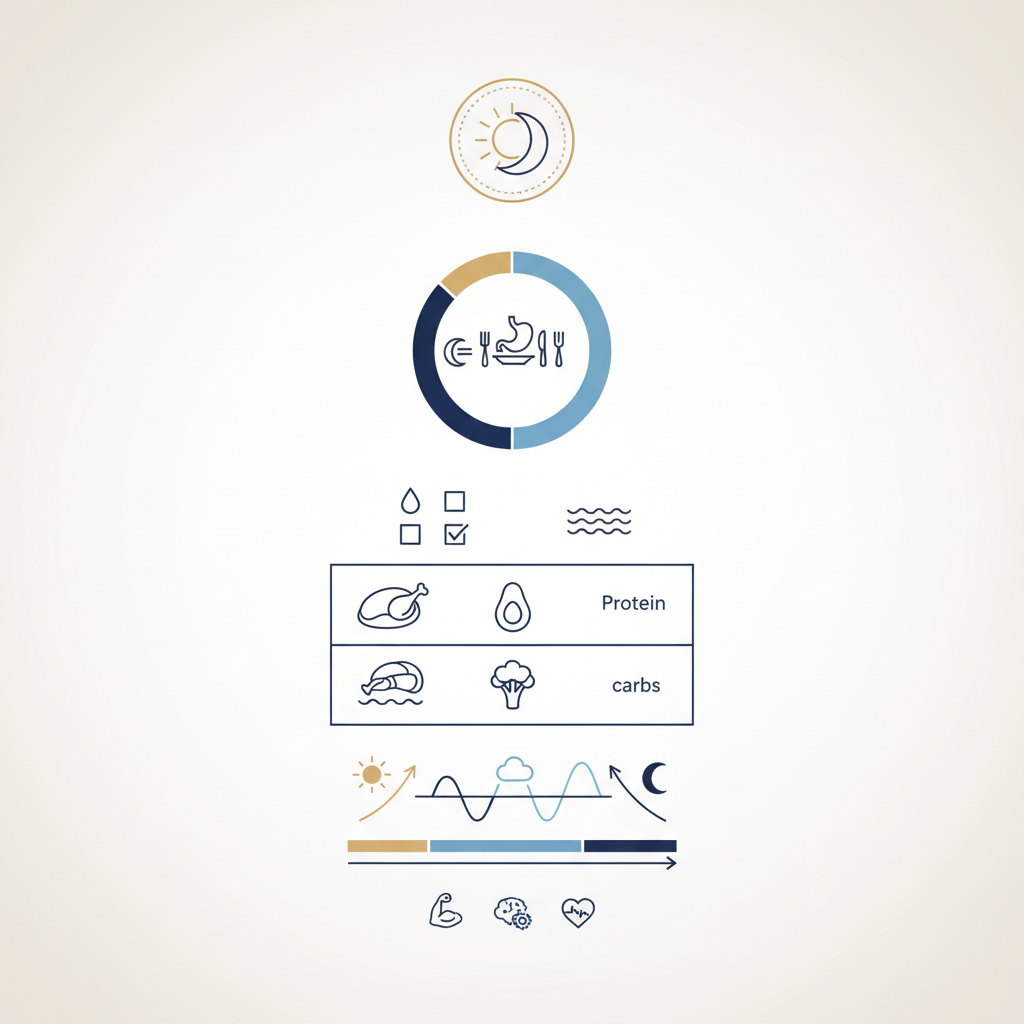
To get the most out of meal timing journal basics, it's not enough to write "ate at 2 PM." An effective log should include elements that help you link cause and effect. Here’s what your log should include:
- Start and End Time: Precisely record when the first bite entered your mouth and when you stopped completely.
- Hunger Level Before the Meal: Use a scale of 1 to 10. Were you starving or just eating because the window opened?
- Mood: Were you stressed, happy, or bored? Emotions play a huge role in meal timing.
- Meal Quality (General): No need to count calories precisely, but note if the meal was "heavy" or "light."
Recording these details directly helps you understand the relationship between intermittent fasting and blood sugar control. For example, you might notice that the meals you use to break your fast affect your energy levels for the rest of the day. If you start with a high-fiber, high-protein meal, you might find the next day's fast much easier.
Navigating Social Events and Cultural Hospitality
One of the biggest challenges for those committed to intermittent fasting is social hospitality. How do you log your meals when you are invited to a late dinner? Or when a family gathering starts at a time different from your usual schedule?
This is where the flexibility provided by journaling comes in. Instead of feeling guilty, use the log to document these exceptions. Meal timing journal basics teach you that the goal is consistency, not perfection. If you have to change your eating window to fit a social occasion, record it and notice how it affected your feelings the next day. Did you feel lethargic? Was it easy to return to your old schedule?
The real challenge isn't in changing the time, but in losing awareness of what we eat during those gatherings. A paper or digital log acts as a mental "brake" that makes you think before taking that extra piece of dessert outside your set time.
Comparison: Paper vs. Digital Journaling
| Feature | Paper Journal (Notebook) | Digital Journal (Apps) |
|---|---|---|
| Ease of Use | Requires carrying a notebook | Always at hand (Smartphone) |
| Focus | Reduces screen distraction | May lead to annoying notifications |
| Analysis | Requires manual review | Provides automatic charts |
| Privacy | Very high | Depends on app policy |
Analyzing Data and Evaluating Personal Progress
After two weeks of following meal timing journal basics, you will possess a treasure trove of information. Don't look at the log as a to-do list, but as a roadmap. Look for recurring patterns. Do you notice that you always break your fast early on Tuesdays? Perhaps work stress on that day is the cause.
Evaluation doesn't mean judging yourself as a failure; it means adjusting the plan to fit your reality. Intermittent fasting is not a one-size-fits-all mold, and journaling times is the only way to tailor this mold to your specific life. You can always return to the intermittent fasting education hub for more ideas on how to improve your schedule based on what you discovered in your log.
Fact vs. Myth: Misconceptions About Journaling
- Myth: Journaling takes too much time.
Fact: It takes no more than two minutes after each meal. The secret is simplicity. - Myth: I must record every single calorie.
Fact: In meal timing journal basics, timing and hunger cues are much more important than precise calorie numbers initially. - Myth: If I forget to journal for a day, the experiment has failed.
Fact: Journaling is a support tool, not an exam. Start again at the very next meal.
Frequently Asked Questions About Meal Journaling
A: Yes, it is preferable to log your usual eating times for 3 days before starting fasting. This gives you a clear picture of your starting point and helps you choose the most suitable fasting window for your lifestyle.
A: Record every time food enters your mouth. Discovering small "grazing" is one of the most important benefits of journaling, as it makes you realize how many times you break your fast without noticing.
A: The best one is the one you stick to. Some prefer apps for ease of tracking, while others find manual writing provides a deeper sense of reflection and commitment.
A: It is recommended, especially in the beginning. Good hydration plays a crucial role in reducing the feeling of false hunger during fasting hours.
Medical Disclaimer: The information in this article is for educational and informational purposes only and is not intended to provide medical or diagnostic advice. Always consult your physician or a qualified nutritionist before starting any new diet or lifestyle change, especially if you have chronic health conditions.
Related Articles:
- Essential Questions Before Considering Fasting: A Comprehensive Guide
- Intermittent Fasting and Blood Sugar Control: How Fasting Affects Glucose Regulation

Explore health education
Review the educational guides and practical tools related to this topic.
Explore the education hub