How to Reduce Sugar Cravings Naturally: 7 Scientifically Proven Strategies
Author: Feras Alayed
Published:
Updated:
Category: behavioral-nutrition
Reading Time: 10 minutes
How to Reduce Sugar Cravings Naturally: 7 Scientifically Proven Strategies
If you’ve ever sworn off sweets in the morning only to find yourself elbow-deep in a cookie bag by 3 p.m., you’re not alone. Sugar cravings are common, compelling, and—when they hit daily—can feel impossible to outmaneuver. The good news is they’re not a character flaw. They’re the predictable result of biology, environment, and habits working together.
This article explains what actually drives sugar cravings and offers seven evidence-based strategies to reduce them without white-knuckling willpower. You’ll get clear explanations, practical steps, common mistakes to avoid, and what the science says—so you can build meals, routines, and environments that make lower-sugar choices feel easy, not punitive.
For a deeper dive into why cravings happen in the first place, see Why Do I Crave Sugar Every Day?
Why We Crave Sugar: A Brief Science Primer
Sugar taps into ancient reward circuits designed to prioritize quick energy. When you eat sweet foods, your brain releases dopamine, a neurotransmitter that reinforces “do that again.” At the same time, rapidly absorbed carbohydrates can cause a sharp rise and fall in blood glucose and insulin. When glucose dips, your brain—ever vigilant about fuel—nudges you toward fast sugar again, creating a push-pull loop of cravings and quick fixes.[2],[12]
Hormones also influence cravings. Sleep loss can increase ghrelin (a hunger hormone), decrease leptin (a satiety hormone), and amplify appetite for high-sugar, high-fat foods.[7] Stress elevates cortisol, which can heighten reward-driven eating, particularly for ultra-palatable snacks.[8] And diets heavy in ultra-processed foods tend to increase calorie and sugar intake without much satiety, making the cycle harder to break.[10]
WHO guidance: Aim to keep “free sugars” below 10% of daily energy intake; reducing to 5% offers additional benefits.[1]
The strategies below address these drivers: smoothing glucose swings, improving satiety signals, lowering stress reactivity, and setting up environments that make the nourishing choice the easy choice.
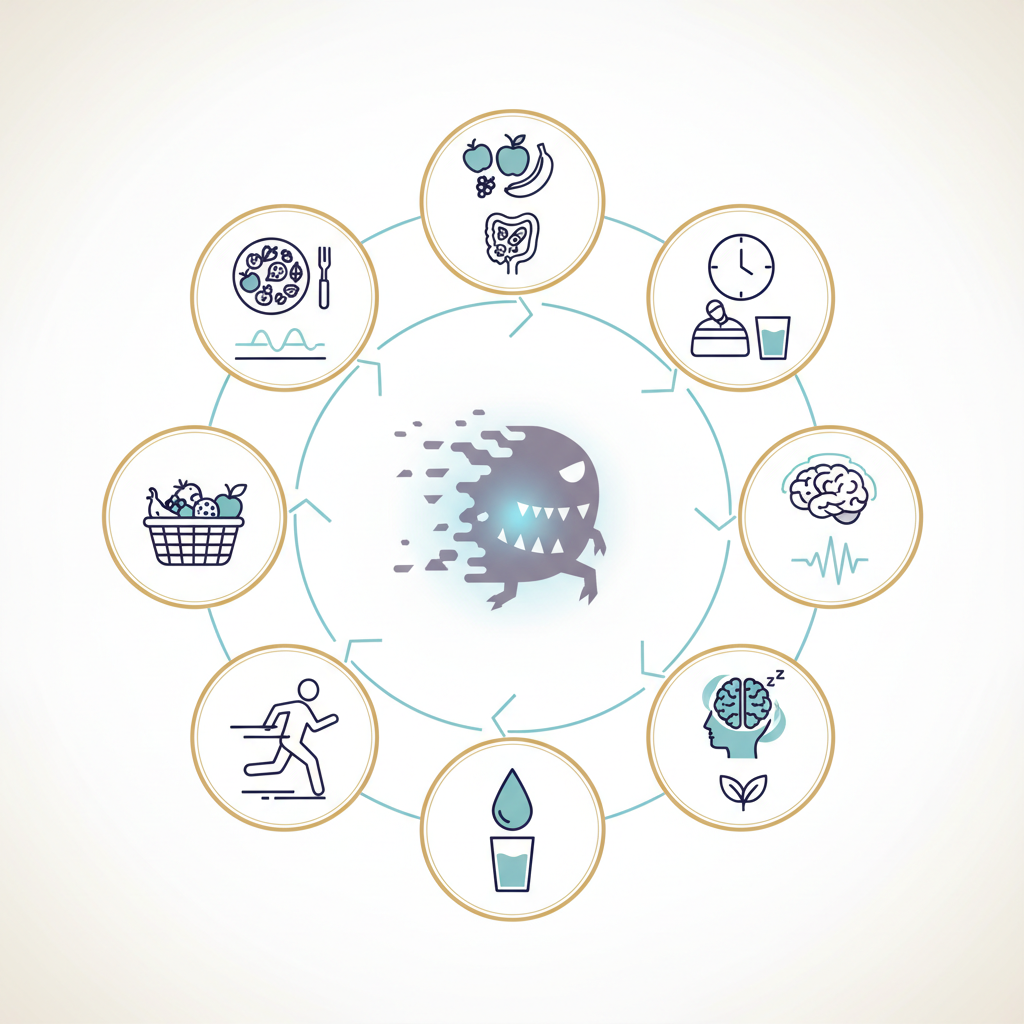
The 7 Strategies to Reduce Sugar Cravings—Backed by Science
1) Build Craving-Resistant Plates: Protein, Fiber, and Healthy Fats
Why it works
Protein and viscous fiber slow digestion and support satiety hormones (like GLP-1 and PYY), making you feel fuller, longer. Higher-protein eating patterns can reduce spontaneous calorie intake and hunger.[3] Pairing protein and fiber with healthy fats further steadies energy, reducing the mid-afternoon crash that often triggers a sugar hunt.[2]
How to do it
- Use a “3-part plate”: 1) palm-sized protein, 2) two fists of non-starchy vegetables, 3) a cupped-hand portion of high-fiber carbs (beans, lentils, intact whole grains) or fruit, plus 1-2 thumbs of healthy fats (extra-virgin olive oil, nuts, seeds, avocado).
- Breakfast ideas: Greek yogurt with berries and chia; veggie omelet with olive oil and a slice of whole-grain toast; tofu scramble with spinach and avocado.
- Lunch/dinner ideas: Lentil and veggie bowl with tahini; salmon with roasted broccoli and quinoa; bean chili with a side salad.
- Snack ideas: Apple + almond butter; hummus + carrots; edamame; a cheese stick with cherry tomatoes.
Common mistakes
- “Healthy” but low-protein breakfasts (just fruit or a plain bagel) producing a mid-morning sugar dip.
- Salads without a protein anchor—leading to a pastry run later.
- Fiber without fluids. If you add beans and whole grains, also increase water to keep digestion comfortable.
2) Smooth the “Glucose Rollercoaster” with Meal Order, A Splash of Vinegar, and a Short Walk
Why it works
Large glucose spikes can be followed by sharp drops that heighten hunger and cravings. Simple tactics—eating non-starchy vegetables and protein before starch, adding a bit of vinegar with meals, and moving after you eat—can reduce post-meal glucose and insulin responses.[4],[5],[6]
How to do it
- Eat in sequence: Vegetables and protein first, then starch. In people with type 2 diabetes, eating veggies/protein before carbohydrates reduced post-meal glucose and insulin spikes.[4]
- Add vinegar: 1 tablespoon of apple cider or red wine vinegar in a tall glass of water with meals (especially starchy ones) can blunt postprandial glycemia in some individuals.[5]
- Move 10 minutes: A 10–15 minute walk after meals can meaningfully lower post-meal glucose—especially after dinner.[6]
Common mistakes
- Relying solely on “brown” versions of refined carbs (e.g., brown sugar, brown bread) and expecting a major difference in cravings.
- Adding vinegar on an empty stomach (may cause discomfort). Always dilute and take with food.
- Skipping movement because you can’t do 30 minutes. Tiny bouts add up.
To learn more about stabilizing insulin and glucose naturally, see How to Manage Insulin Resistance Naturally.
3) Hydration and Mineral Balance: Quiet “False Hunger”
Why it works
Mild dehydration can mimic fatigue and “snackiness,” and a dry mouth is sometimes misread as hunger. Hydration also helps fiber do its job, supports digestion, and may help you better perceive true appetite cues.[2]
How to do it
- Start your day with a tall glass of water. Aim for pale-yellow urine most of the day.
- Hydrate your fiber: Each time you add a high-fiber meal, add 1–2 extra cups of water.
- Electrolytes from whole foods: include leafy greens (magnesium, potassium), beans, yogurt/kefir (calcium), and a pinch of salt on meals if you sweat heavily or eat very low processed foods. Individuals with hypertension or kidney disease should follow medical advice.
Common mistakes
- Chugging water only when cravings hit. Aim for steady sips throughout the day.
- Confusing low energy for low blood sugar. First, try movement + water; then reassess if you need a protein-rich snack.
4) Sleep and Circadian Rhythm: Repair Your Appetite Signals
Why it works
Sleep restriction decreases leptin and increases ghrelin, shifting appetite toward high-sugar, high-fat foods and raising total calories the next day.[7] Even one late-night screen binge can nudge cravings up. Restoring sleep regularity helps recalibrate appetite hormones and reward sensitivity.
How to do it
- Target 7–9 hours of sleep. Consistent bed and wake times anchor circadian rhythms.
- Morning light, evening dimness. Get 5–10 minutes of daylight soon after waking; keep nights screen-dim and cool.
- Time caffeine and alcohol. Cut caffeine 8 hours before bed; avoid alcohol near bedtime to protect deep sleep.
- Wind-down buffer. Ten tech-free minutes before bed beats none. Try box breathing (4–4–4–4) or progressive muscle relaxation.
5) Soothe Stress to Soothe Sugar Urges
Why it works
Under stress, cortisol sensitizes the brain’s reward regions, biasing choices toward quick-dopamine foods (think candy bars, not chickpeas). In studies, people who secreted more cortisol in response to stress ate more ultra-palatable snacks.[8]
How to do it
- Two-minute exhale drills: 6 slow breaths (inhale 4, exhale 6–8). Longer exhales activate the parasympathetic “calm” branch.
- Urge surfing: Notice the craving as a wave; set a 10-minute timer and ride it without acting. Most urges crest and fall within minutes.
- Swap “nervous energy” with “movement energy”: 20 air squats, 30-second plank, or a brisk block walk flips your state quickly.
- Label, then choose: Say “I’m experiencing a craving” (not “I am craving”). Then choose from a pre-written list of 3 quick alternatives.
Common mistakes
- White-knuckling stress with willpower alone. Skills beat willpower in the long run.
- Skipping meals when stressed, then rebounding with sugar later.
6) Reshape Your Environment and Habits (So Willpower Isn’t the Plan)
Why it works
Cravings are cue-dependent. If candy is on your desk, your brain will ask for it—often. Adjusting cues and friction points shifts behavior with less effort. In one inpatient trial, ultra-processed foods led to higher calorie and sugar intake compared with minimally processed options available ad libitum.[10]
How to do it
- Out of sight, out of mouth: Keep sweets in opaque containers on high shelves. Place fruit, nuts, and water in arm’s reach.
- Shop your defaults: Make a standing grocery list with 2–3 go-to proteins, 4–5 vegetables, 2 legumes, and 2 grains. Defaults reduce decision fatigue.
- If–then plans: “If I want dessert after dinner, then I’ll make mint tea first; if I still want it after 10 minutes, I’ll have a square of 70% dark chocolate with yogurt.”
- Pre-portion treats: Buy single-serve or portion into small containers. Reduce “hand-to-mouth” loops.
Common mistakes
- Keeping trigger foods on the counter “for kids or guests.” Your brain sees them too.
- Making six changes at once. Start with the highest-impact cue (e.g., your desk drawer) and iterate.
7) Feed Your Gut, Retrain Your Palate
Why it works
Fiber-rich foods feed gut microbes that produce short-chain fatty acids (SCFAs), which support satiety hormones and may reduce energy intake.[9] Gradually lowering the sweetness of foods and drinks can recalibrate taste preferences in a matter of weeks, making formerly “normal” sweets taste overly sweet.
How to do it
- Fiber variety challenge: Aim for 20–30 different plant foods per week (vegetables, fruits, legumes, whole grains, nuts, seeds, herbs). Diversity nourishes a more resilient microbiome.[9]
- Fermented foods: Include plain yogurt/kefir, unsweetened kombucha, kimchi, sauerkraut, or tempeh.
- Step-down sweetness: Reduce sugar in coffee/tea by 25% each week. Swap flavored yogurt for plain + fruit; cut juice with sparkling water.
- Try bitters: Arugula, radicchio, dandelion greens, or a squeeze of lemon before meals can shift taste perception toward savory.
For more on microbiome support, explore Gut Health.
Choosing sweeteners wisely
Non-sugar sweeteners can help some people transition away from added sugars, but long-term benefits for weight or metabolic health are uncertain. The WHO advises against routine use of non-sugar sweeteners for weight control, emphasizing whole-food approaches instead.[11]
| Sweetener | Sweetness vs. Sugar | Pros | Caveats for Cravings | Best Use |
|---|---|---|---|---|
| Table Sugar (sucrose) | 1x | Predictable taste, texture | Can spike glucose/insulin; triggers more cravings for some[2],[12] | Use sparingly; pair with meals, not alone |
| Honey/Maple Syrup | ~1–1.2x | Flavor complexity | Still added sugars; similar metabolic effects per gram[2] | Small amounts in dressings or marinades |
| Stevia/Monk Fruit | 100–200x | Very low calorie | May maintain preference for very sweet tastes | Short-term bridge while stepping down sweetness |
| Allulose/Erythritol | ~0.7x (allulose), ~0.7x–1x (erythritol) | Minimal impact on glucose | GI upset at higher doses in some; mixed data on appetite | Occasional baking or transition recipes |
Common mistakes
- Over-relying on diet desserts. They can keep your “sweetness dial” turned up.
- Adding fiber supplements without food variety or fluids—focus on whole foods first.
Want a structured, habit-based approach? Browse Behavioral Nutrition for more frameworks and tools.
Common Pitfalls When Trying to Reduce Sugar Cravings
- Going “all-or-nothing” overnight: Big restriction can backfire. Start with one meal upgrade and one environment change.
- Skipping meals: Long gaps often lead to “see sugar, eat sugar.” Plan protein-rich anchors.
- Relying on “health halos”: Organic or gluten-free doesn’t mean low-sugar.
- Trying to out-will cravings at 9 p.m.: Change what happens at 9 a.m. (protein, fiber, movement, hydration, sleep cues).
When to Seek Professional Help
If you experience loss of control around eating, frequent binge episodes, or purging behaviors, reach out to a qualified clinician. People with diabetes or hypoglycemia should work with their healthcare teams when adjusting meals or adding vinegar and post-meal activity. This article is educational and not a substitute for personalized medical advice.
Scientific Evidence at a Glance
- Meal sequence matters: Eating vegetables and protein before carbohydrates reduced postprandial glucose and insulin in adults with type 2 diabetes.[4]
- Vinegar can blunt glucose rise: Small, controlled studies show vinegar with meals may reduce postprandial glycemia in healthy adults.[5]
- Light post-meal movement helps: 10–15 minute walks after meals lowered postprandial glucose in older adults at risk for impaired glucose tolerance.[6]
- Sleep loss amplifies cravings: Short sleep decreased leptin, increased ghrelin, and increased appetite for calorie-dense foods.[7]
- Gut signals influence appetite: Delivering propionate (an SCFA) to the colon increased satiety hormones and reduced energy intake/adiposity over time.[9]
FAQ: People Also Ask
1) What deficiency causes sugar cravings?
No single micronutrient deficiency reliably causes sugar cravings. Occasionally, low iron or magnesium can present with fatigue or muscle symptoms that people try to “treat” with sugar, but evidence that supplementing these specifically reduces sugar cravings is limited. Focus first on stabilizing meals (protein, fiber, fats), sleep, and stress. If you suspect a deficiency, speak with a clinician for testing rather than self-supplementing.
2) How long does it take to reduce sugar cravings?
Many people notice fewer and weaker cravings within 7–14 days of stabilizing meals and sleep, with further improvements over 4–8 weeks as taste preferences recalibrate. Gradual reductions in sweetness (e.g., cutting sugar in coffee by 25% weekly) accelerate adaptation.
3) Are artificial sweeteners better than sugar for cravings?
They can reduce immediate calorie and sugar exposure, but long-term benefits for weight or metabolic health are uncertain, and they may maintain a preference for sweetness in some people. The WHO advises against routine long-term use of non-sugar sweeteners for weight control.[11] If you use them, consider them as a short-term bridge while you reduce overall sweetness.
4) Is fruit okay if I’m trying to reduce sugar cravings?
Yes. Whole fruit delivers fiber, water, and polyphenols that slow absorption and support satiety.[2] Pair fruit with protein (e.g., apple + nuts) to reduce rapid glucose swings. Fruit juice, however, behaves more like sugar-sweetened beverages; dilute it or choose whole fruit.
5) Why do I crave sugar after meals?
Common drivers include high-glycemic meals that spike and crash glucose, low protein at the meal, habit cues (dessert after dinner), and stress or fatigue. Try meal sequencing (veggies/protein before starch), add a bit of vinegar, and take a 10-minute walk after eating.[4],[5],[6] Over a few weeks, step down the sweetness of your post-meal routine (e.g., mint tea + a square of dark chocolate).
6) Does quitting sugar “cold turkey” work?
It can reduce exposure quickly, but abrupt restriction may trigger rebound cravings in some people. A more sustainable plan is to fix the “upstream” drivers—protein/fiber at meals, sleep, stress skills—while gradually reducing sweetness. If you do go cold turkey, plan satisfying swaps and environment changes in advance.
7) Can a short walk really curb sugar cravings?
Yes—indirectly. Post-meal movement lowers glucose and insulin, which can reduce the dip that fuels later cravings.[6] Movement also changes your state and interrupts cue-driven snacking. Even 2–3 minutes of simple movements help when time is tight.
8) Are “brown” sugars or “natural” sweeteners healthier?
They may contain trace minerals or different flavors, but metabolically they act as added sugars. For cravings, what matters most is overall sweetness exposure and glucose stability—not the color of the sugar.[2]
Putting It All Together: A One-Week Reset Plan
Use this as a template, not a rulebook. Personalize based on your culture, preferences, and schedule.
- Daily anchors: Protein-rich breakfast; water before your “temptation window;” 10-minute post-meal movement.
- Meals: 3-part plate (protein + vegetables + fiber-rich carbs) with healthy fats. Eat veggies/protein first, then starch.
- Environment: Clear counters; pre-portion treats; keep a bowl of fruit and a water bottle visible.
- Sleep: Consistent lights-out; reduce caffeine after midday; 5 minutes of breathwork at night.
- Stress skills: Two-minute exhale drill whenever a craving hits; “urge surf” for 10 minutes before deciding.
- Sweetness step-down: Reduce sugar in coffee/tea by 25% each week; swap sweetened yogurt for plain + fruit.
Track what works for you. When cravings drop, make those strategies your new defaults.
CTA: Keep Momentum with Structured Support
Reducing sugar cravings is easier when your meals, routines, and environment do half the work for you. If you’d like practical, step-by-step guidance that builds these habits without extremes, explore the educational resources in our Feel Great program. Pair it with the frameworks in Behavioral Nutrition to design your personal, sustainable blueprint.
References
- World Health Organization. Guideline: Sugars intake for adults and children. 2015. https://www.who.int/publications-detail-redirect/9789241549028
- Harvard T.H. Chan School of Public Health. The Nutrition Source: Carbohydrates and Blood Sugar. https://www.hsph.harvard.edu/nutritionsource/carbohydrates/carbohydrates-and-blood-sugar/
- Weigle DS, et al. A high-protein diet induces sustained reductions in appetite, ad libitum caloric intake, and body weight. Am J Clin Nutr. 2005;82(1):41–48. https://pubmed.ncbi.nlm.nih.gov/16002798/
- Shukla AP, et al. Food order has a significant impact on postprandial glucose and insulin levels. Diabetes Care. 2015;38(7):e98–e99. https://pubmed.ncbi.nlm.nih.gov/25998284/
- Johnston CS, et al. Examination of the antiglycemic properties of vinegar in healthy adults. Ann Nutr Metab. 2010;56(1):74–79. https://pubmed.ncbi.nlm.nih.gov/19966300/
- DiPietro L, et al. Walking breaks after meals lower postprandial glucose in older adults. Diabetologia. 2013;56(10):2053–2055. https://pubmed.ncbi.nlm.nih.gov/23872951/
- Spiegel K, et al. Sleep curtailment is associated with decreased leptin, elevated ghrelin, and increased hunger. Ann Intern Med. 2004;141(11):846–850. https://pubmed.ncbi.nlm.nih.gov/15583226/
- Epel ES, et al. Stress and snack food consumption and the role of cortisol reactivity. Psychoneuroendocrinology. 2001;26(3):401–420. https://pubmed.ncbi.nlm.nih.gov/11337131/
- Chambers ES, et al. Targeted delivery of propionate to the colon on appetite and adiposity. Gut. 2015;64(11):1744–1754. https://pubmed.ncbi.nlm.nih.gov/26269551/
- Hall KD, et al. Ultra-Processed Diets Cause Excess Calorie Intake and Weight Gain. Cell Metab. 2019;30(1):67–77. https://pubmed.ncbi.nlm.nih.gov/31105044/
- World Health Organization. Non-sugar sweeteners: WHO guideline. 2023. https://www.who.int/publications/i/item/9789240073616
- Ludwig DS, et al. High glycemic index foods, overeating, and obesity. Pediatrics. 1999;103(3):E26. https://pubmed.ncbi.nlm.nih.gov/10049982/